History & archaeology
145 places
 History & archaeology
Statua del Nilo ("Corpo di Napoli")
Largo Corpo di Napoli
A river god reclining for centuries in a quiet square, whom Neapolitans call the Corpo di Napoli: he leans his bearded head among putti and a sphinx.
 ◆ History & archaeology
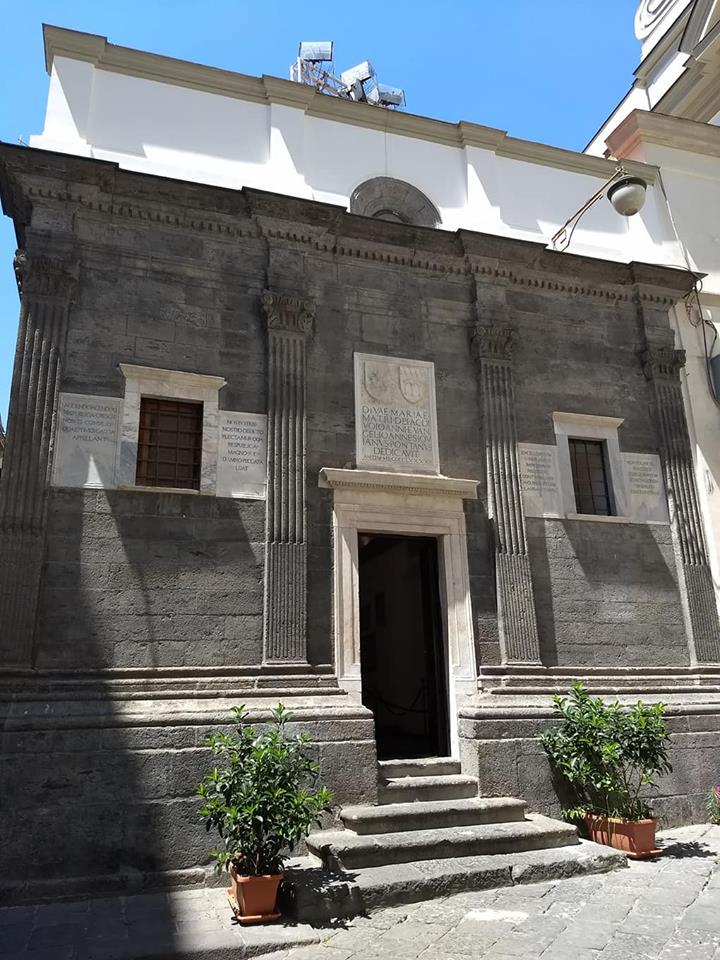
Cappella Pontano
Decumani
A small Renaissance temple on the decumanus, which the humanist Pontano had raised for his lost wife, still lined inside with Latin inscriptions dictated by his grief.
 ◆ History & archaeology
Sedile di Nilo
Decumani
On the corner of a small Spaccanapoli square survives the seat of the old Nilo quarter, where the nobles once gathered before the sedili of Naples vanished.
 ◆ History & archaeology
Port'Alba
Napoli
A seventeenth-century arch cut into the walls leads to the booksellers' street, where stalls of second-hand volumes pile up among yellowed pages and the shade of the old city.
 ◆ History & archaeology
Porta Capuana
zona Garibaldi
Between two cylindrical towers an arch of white marble opens like a Renaissance triumph, the old city gate facing the road to Capua.
 ◆ History & archaeology
Real Albergo dei Poveri
P.za Carlo III
An eighteenth-century colossus willed by Charles of Bourbon to shelter the poor of the Kingdom: a façade running more than three hundred metres, among the largest historic buildings in Europe.
 History & archaeology
Ipogei dei Cristallini
Sanità
Twelve metres below the Rione Sanità, Greek tombs of the 4th century BC with frescoes intact — Egyptian blues and trompe-l'oeil: Hellenistic Neapolis found again in a baron's garden.
 History & archaeology
Palazzo Sanfelice
Sanità
In the heart of the Sanità, Ferdinando Sanfelice signed his hawk-wing staircase: a baroque set piece of open flights, chosen again and again by the cinema for its theatrical sweep.
 History & archaeology
Quartieri Spagnoli
QS
A grid of alleys born in the sixteenth century for the Spanish troops: laundry strung overhead, votive shrines and, at the end of a small square, the great Maradona mural everyone comes looking for.
 History & archaeology
Piazza del Plebiscito
centro
The great square opens between the colonnade of the basilica of San Francesco di Paola and the Palazzo Reale: a hemicycle, equestrian statues and an emptiness that in Naples is close to a miracle.
 History & archaeology
Palazzo Reale
P.za Plebiscito
On the facade the kings of Naples keep watch from their niches over the empty sweep of Piazza del Plebiscito; inside, marble staircases and rooms that still smell of the court.
 History & archaeology
Teatro San Carlo
centro
The red and gold of the oldest working opera house in Europe, where since the eighteenth century the voice has risen towards the frescoed ceiling and the royal box.
 History & archaeology
Galleria Umberto I
centro
Beneath the dome of glass and iron the light falls on the marble floor; footsteps and echoes get lost in the octagon, among the shopfronts of the late nineteenth century.
 ◆ History & archaeology
Monte Echia / Pizzofalcone (ascensore)
S. Lucia
The tufo (volcanic tuff) hill where Partenope was born, the city's first nucleus: a lift rises up the cliff and at the top the gulf opens out from Santa Lucia to Vesuvius.
 ◆ History & archaeology
Parco Archeologico del Pausilypon
Posillipo
The imperial villa of Vedius Pollio looking over the Gaiola: theatre and odeion among the pines, there where the Romans called this place the pause from pain.
 History & archaeology
Anfiteatro Flavio
Pozzuoli
The third largest Roman amphitheatre, at Pozzuoli: above ground the tiers, but it is underground that it strikes you, in the intact passages from which the beasts rose.
 History & archaeology
Tempio di Serapide (Macellum)
Pozzuoli
Not a temple but the ancient Roman market: on the marble columns the holes bored by marine molluscs tell how much the Flegrean ground has risen and sunk over the centuries.
 History & archaeology
Antro della Sibilla
Bacoli
A long trapezoidal corridor carved into the tufo (volcanic tuff), cut by blades of light, where Virgil imagined the Sibyl prophesying among the shadows of the rock.
 History & archaeology
Parco di Cuma
Bacoli
The oldest Greek colony in Italy, with the temples of Apollo and Jupiter stretched across the acropolis between pines and sea, where history begins in silence.
 ◆ History & archaeology
Cento Camerelle
Bacoli
A labyrinth of cisterns on two levels dug into the tufo (volcanic tuff), also called Carceri di Nerone, where Roman water ran beneath a villa facing the gulf.
 History & archaeology
Terme di Baia e Castello Aragonese (Museo Campi Flegrei)
Bacoli
Terraces of imperial baths descending towards the sea, and above them the Castello Aragonese guards the statues brought back up from the sunken Baia.
 History & archaeology
Scavi di Ercolano
Ercolano
A Roman town petrified by volcanic mud, with wooden beams, beds and doors still in place: here time stopped more intact than anywhere.
 ◆ History & archaeology
Sedile Dominova
Sorrento
The only surviving noble sedile in Campania, an open sixteenth-century loggia with a frescoed dome and majolica tiles, today a club for the town's elders on the corner of two alleys.
 ◆ History & archaeology
Villa Fondi
Piano di Sorrento
The villa of the de Sangro family overlooking the gulf, with a garden sheer above the sea and the Georges Vallet archaeological museum gathering the finds of the peninsula.
 History & archaeology
Villa Jovis
Capri
On the highest, loneliest point of the island, the ruins of the villa from which Tiberius ruled the empire for ten years, among cisterns, terraces and the emptiness of the sea all around.
 History & archaeology
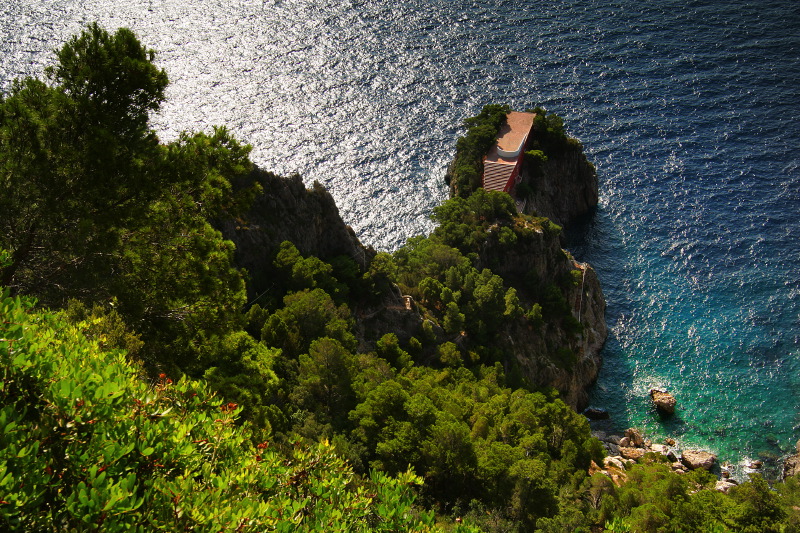
Villa Malaparte
Punta Massullo
Curzio Malaparte's red house glued to the rock of Punta Massullo, with the trapezoidal stairway climbing to the roof: a scene out of Godard's Le Mépris, suspended over the sea.
 ◆ History & archaeology
Casa Rossa
Anacapri
The Pompeian-red residence an American colonel wanted in Moorish style, today the keeper of the Roman statues recovered from the waters of the Grotta Azzurra.
 ◆ History & archaeology
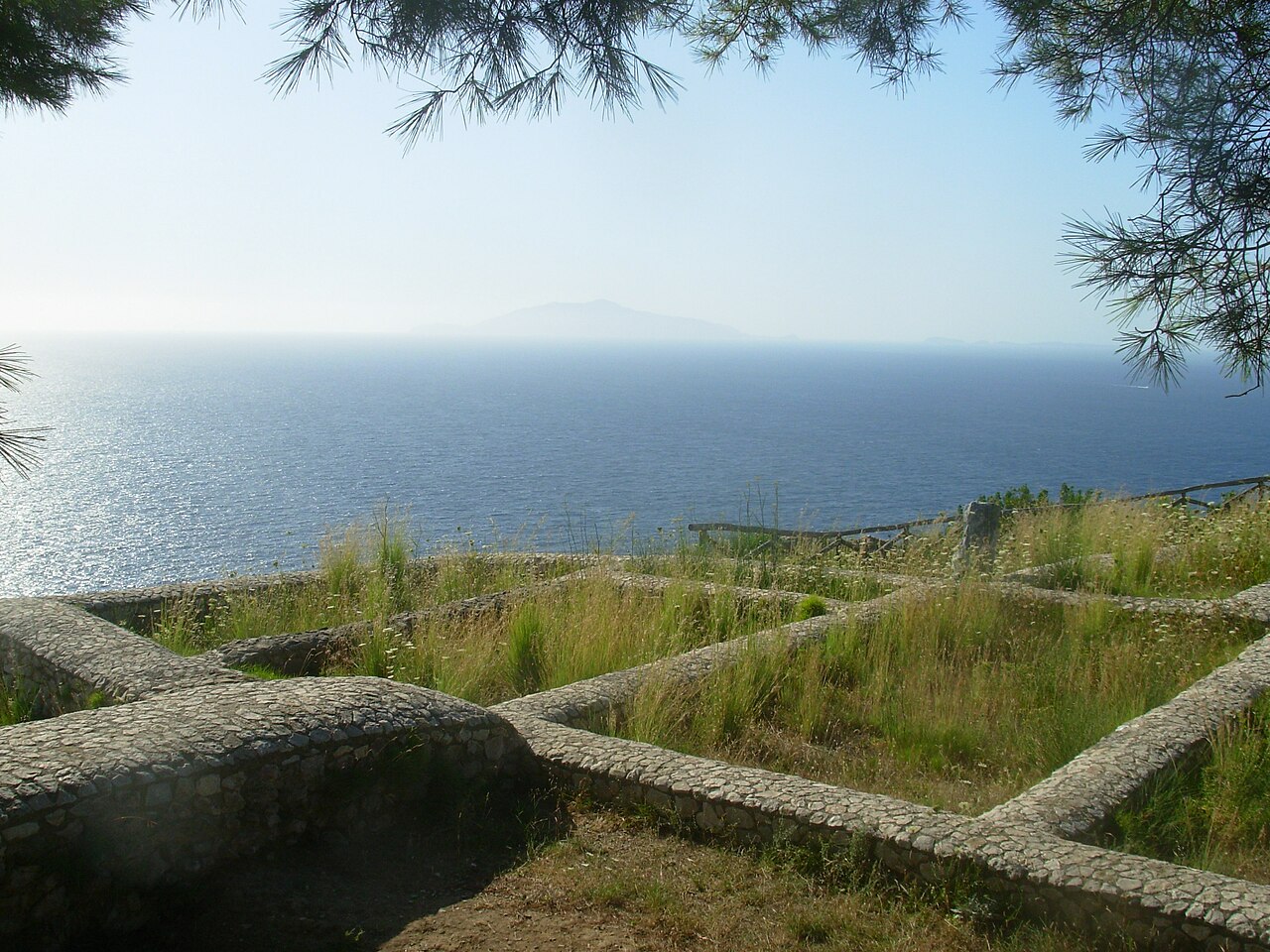
Villa Damecuta
Anacapri
The remains of an imperial Roman villa on a sheer promontory, among olive trees and a medieval tower, with the gaze stretching toward Ischia.
 ◆ History & archaeology
Grotta delle Felci
Capri
A prehistoric cave on the southern slope, where excavations have yielded traces of Neolithic people, reached by a path through the ferns.
 History & archaeology
Villa Rufolo
Ravello
The gardens that inspired Wagner's magic garden of Klingsor; in summer the stage hanging over the gulf turns music into a window on the sea.
 History & archaeology
Velia (Elea)
Ascea
The ancient Elea of the philosophers Parmenides and Zeno, where among olive trees and ruins opens the Porta Rosa, one of the first round arches of Magna Graecia.
 History & archaeology
Reggia di Caserta
Caserta
Vanvitelli's grand staircase, then three kilometres of garden climbing all the way to the waterfall, among fountains and mythological statues designed to astonish the Bourbons.
 History & archaeology
Belvedere di San Leucio
Caserta
Ferdinando IV's silken utopia: a factory-village where silk was woven for the courts of Europe, with the looms and the workers' houses gathered around the belvedere.
 History & archaeology
Acquedotto Carolino / Ponti della Valle
Valle di Maddaloni
Vanvitelli's arches cross the valley on three stacked tiers, carrying water to the Reggia: an aqueduct-bridge that looks like a stretch of ancient Rome set among the mountains.
 History & archaeology
Real Sito di Carditello
San Tammaro
A Bourbon lodge standing alone in the Caserta countryside, the heart of a royal estate given over to hunting and horse breeding, survivor of abandonment and reborn today.
 History & archaeology
Mitreo
S. Maria Capua Vetere
Beneath the city you go down into a dark crypt where Mithras slits the bull's throat on a frescoed wall and the vault kindles with stars: one of the oldest mithraea in the West.
 ◆ History & archaeology
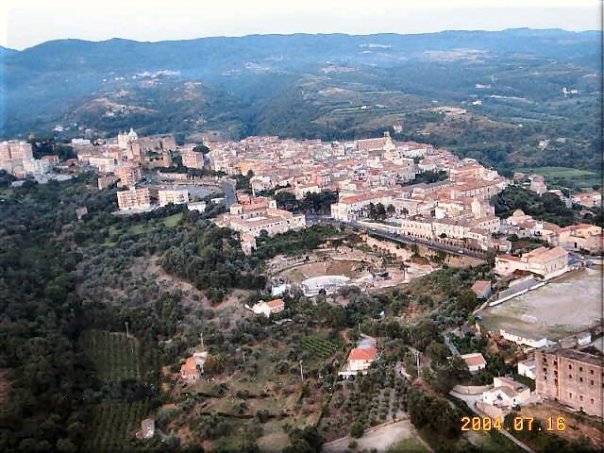
Sessa Aurunca (Ponte Ronaco, teatro, Settimana Santa)
Sessa Aurunca
The second Roman theatre of Campania, the Romanesque cathedral built from the stones of ancient temples, and the hooded rites of Settimana Santa (Holy Week): a city that lives on memory.
 ◆ History & archaeology
Teano (teatro romano)
Teano
One of the largest theatres in the Roman world, its eighty-metre cavea held up by ramping vaults: Teanum Sidicinum stood where the Appia met the Casilina.
 ◆ History & archaeology
Alife (mura romane e criptoportico)
Alife
A perfect rectangle of Roman walls with evenly spaced towers and, underground, the U-shaped Augustan cryptoporticus: vaulted galleries guarding a mystery never solved.
 History & archaeology
Teatro Romano e il Triggio
Benevento
The great Hadrianic theatre opens up all at once among the alleys of the Triggio, the oldest quarter, where Roman stone and medieval houses blur into one another.
 History & archaeology
Ponte Leproso
Benevento
On the ancient Via Appia the stone arches stride across the river Sabato: the same threshold that travellers bound for Rome once crossed to enter Benevento.
 ◆ History & archaeology
Conza della Campania (antica Compsa)
Conza della Campania (AV)
On the ruins of ancient Compsa, the village abandoned after the earthquake of 1980 is now an archaeological park: the Roman forum resurfaces among the empty houses, and just below the lake of Conza shines.
 ◆ History & archaeology
Prata Sannita
Prata Sannita (CE)
Clinging to the rock above the river Lete, the medieval borgo (old village) of Prata Sannita gathers its houses around the castle of the Pandone: stone alleys and bridges in the silence of the Matese.
 ◆ History & archaeology
Ponte delle Chianche
Buonalbergo (BN)
In the countryside of Buonalbergo stands the Ponte delle Chianche, the best-preserved bridge of the Via Traiana: arches of Roman brick still leap the stream along the route Trajan willed towards Brindisi.
 History & archaeology
Aeclanum
Mirabella Eclano (AV)
Along the old Via Appia, between the Calore and Ufita valleys, the walls, baths and circular market of a Samnite and Roman town hold out against the tall grass.
 ◆ History & archaeology
Anfiteatro e castello di Avella
Avella (AV)
The Roman amphitheatre stretched out on the plain and, higher up, the ruins of the castle guarding the Clanio valley: two ages of Avella a short distance apart.
 History & archaeology
Napoli Sotterranea
Napoli (NA)
Forty metres beneath the alleys, Greek quarries and Roman cisterns turned into shelters during the war: another Naples carved into the tufo (volcanic tuff), dark and cool.
 History & archaeology
Stadio Diego Armando Maradona
Napoli (NA)
At Fuorigrotta the old San Paolo now bears the name of Maradona: on match nights the whole city seems to hold its breath.
 History & archaeology
PAN — Palazzo delle Arti Napoli
Napoli (NA)
At Palazzo Roccella, among the elegant streets of Chiaia, the PAN hosts exhibitions of art, photography and comics, a civic space where contemporary research meets the city.
- History & archaeology
Reggia di Caserta — Collezione Terrae Motus
Caserta (CE)
In the halls of the Reggia di Caserta the Terrae Motus collection brings together the art born from the shock of the 1980 earthquake, from Warhol to Beuys, willed by the gallerist Lucio Amelio.
 ◆ History & archaeology
San Pietro Infine (Parco della Memoria)
San Pietro Infine (CE)
Left in ruins just as the 1943 battle reduced it, old San Pietro Infine is a memorial park where bullet-riddled walls recount the winter of the war.
 History & archaeology
Palazzo Reale di Portici
Portici (NA)
Commissioned by the Bourbons at the foot of Vesuvius, the palace looks out on the sea on one side and the volcano on the other, set in a park that runs down to the coast.
 History & archaeology
Anfiteatro Campano
Santa Maria Capua Vetere (CE)
Second in size only to the Colosseum, the arena where Spartacus trained still holds the underground corridors from which gladiators and beasts rose toward the light.
 History & archaeology
Parco Archeologico di Paestum
Capaccio-Paestum (SA)
Three Doric temples stand intact on the Sele plain, golden at sunset, Greek witnesses of a city that time has left in silence.
 History & archaeology
Arco di Traiano
Benevento (BN)
Golden marble carved dense with reliefs, the arch that celebrated Trajan still marks the entrance to the road that led toward Brindisi and the East.
 ◆ History & archaeology
Piscina Mirabilis
Bacoli (NA)
At Bacoli, forty-eight pillars hold up the vault of a Roman cistern dug into the tufo (volcanic tuff): the largest ever built, an underground cathedral that once quenched the Misenum fleet.
- ◆ History & archaeology
Anfiteatro romano e Necropoli di Avella
Avella (AV)
At Avella, the ancient Abella that gave its name to the hazelnut, the Roman amphitheatre and a necropolis of monumental tombs emerge at the foot of the Partenio mountains.
 ◆ History & archaeology
Area archeologica di Abellinum
Atripalda (AV)
A few steps from Avellino, the Civita district of Atripalda holds the ruins of Abellinum, with domus, walls and paved streets resurfacing beneath the modern town.
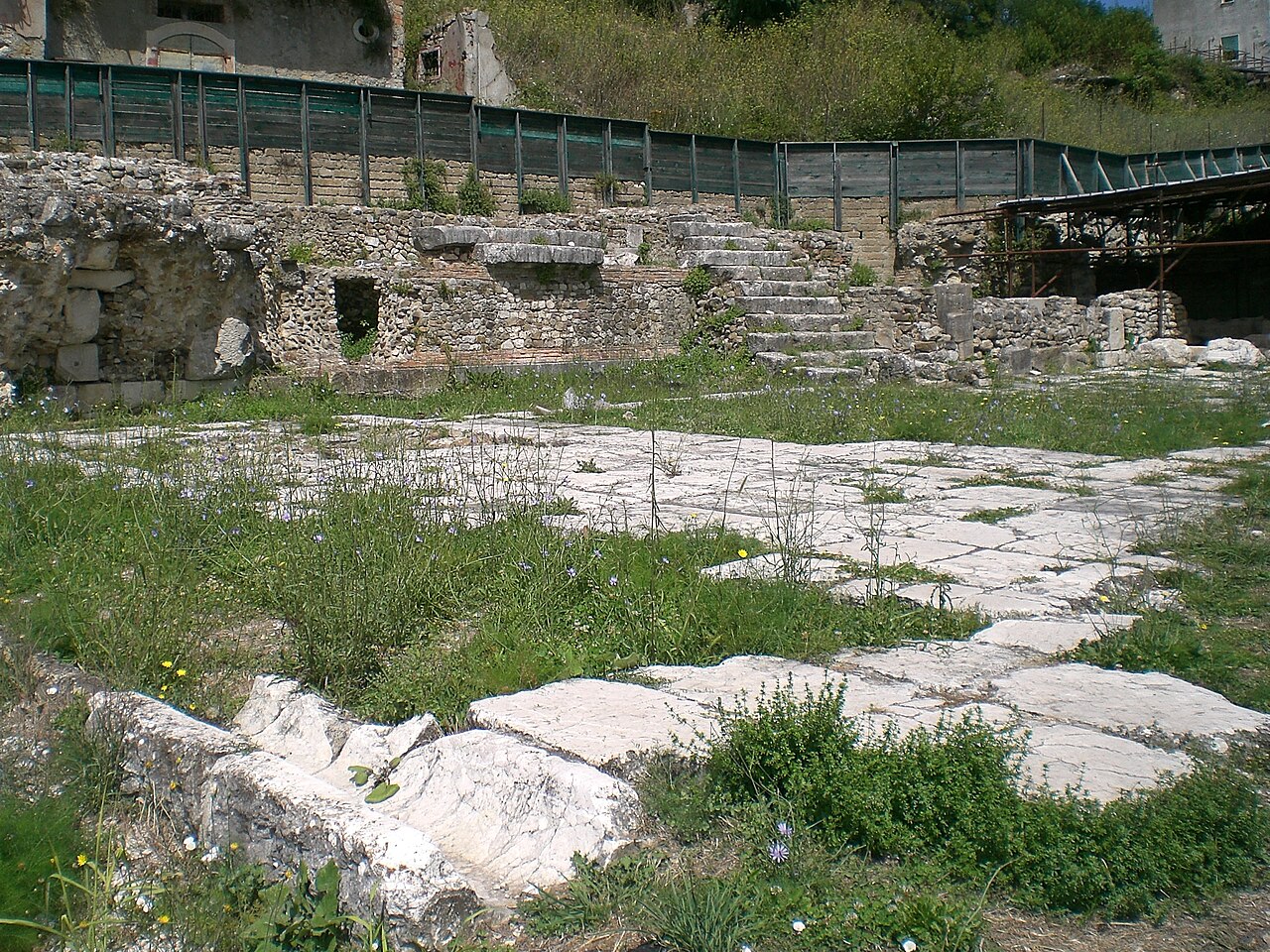 ◆ History & archaeology
Parco archeologico di Compsa
Conza della Campania (AV)
Beneath the ruins of the village destroyed by the 1980 earthquake, ancient Compsa has resurfaced, a Roman town on a hill suspended between the Ofanto river and the silence of Irpinia.
 ◆ History & archaeology
Antica Cales
Calvi Risorta (CE)
At Calvi Risorta rests Cales, the town that gave its name to a wine praised by the Romans, with amphitheatre, baths and a theatre immersed in the Caserta countryside.
 ◆ History & archaeology
Anfiteatro di Liternum
Giugliano in Campania (NA)
On the shores of Lake Patria, where Scipio Africanus chose voluntary exile and death, the amphitheatre and forum of Liternum remain, a Roman colony facing the coast.
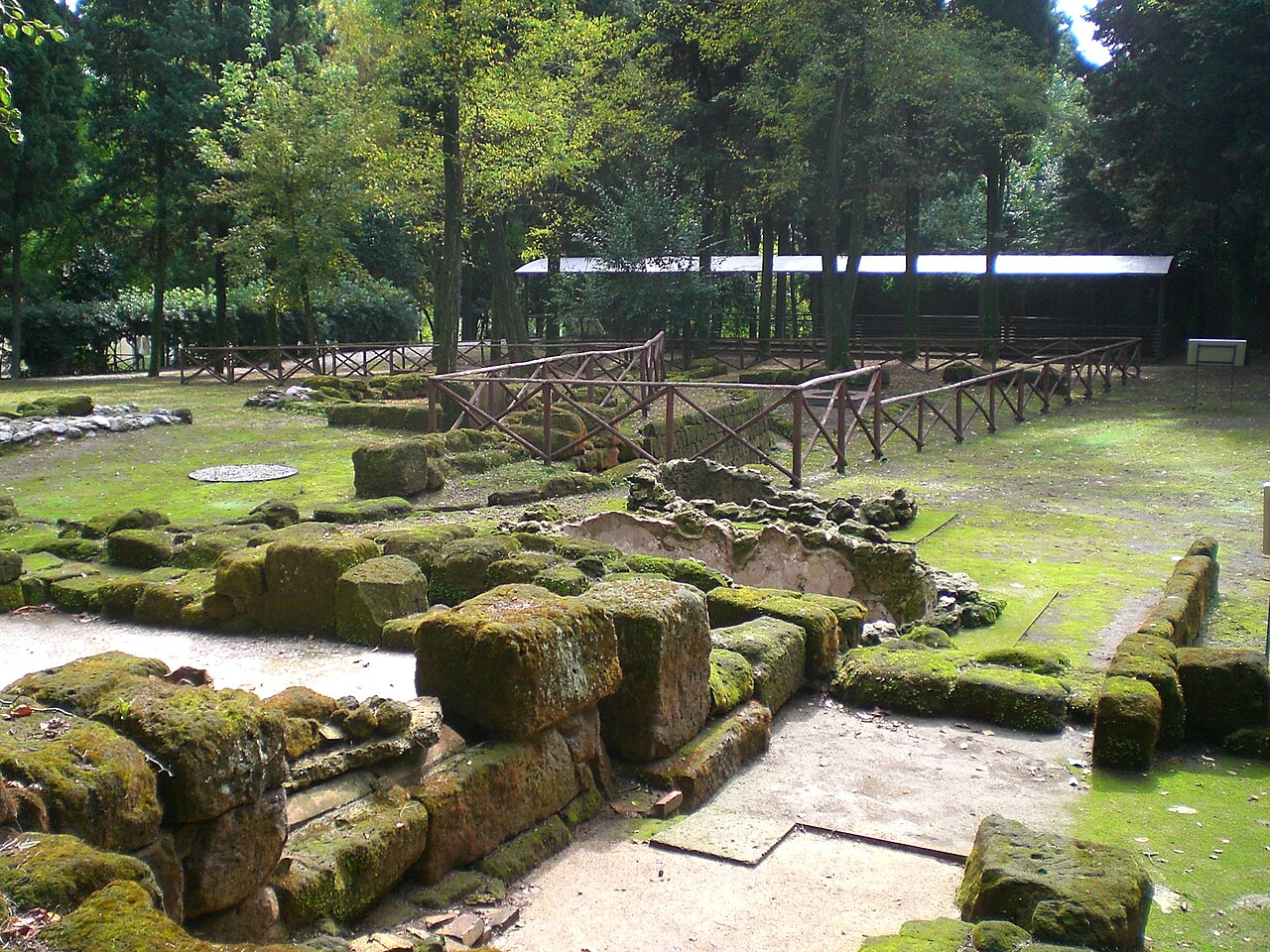 ◆ History & archaeology
Area archeologica di Fratte
Salerno (SA)
At the gates of Salerno, on the hill of Fratte, an Etruscan-Samnite settlement with its necropolis tells of the city that preceded the medieval port by centuries.
 History & archaeology
Villa Romana di Minori
Minori (SA)
The remains of a maritime villa from the imperial age, with its frescoed nymphaeum and the garden the sea once faced, now in the heart of the town.
 ◆ History & archaeology
Ponte di Santo Spirito
Casalbore (AV)
A pier and a few remains in the Miscano valley: this is all that survives of a Roman bridge on the via Traiana, the stretch of the Appia now recognised as a UNESCO heritage site.
 ◆ History & archaeology
Aequum Tuticum
Ariano Irpino (AV)
On the plateau of Sant'Eleuterio surface the baths, the tabernae and the paving of an ancient Roman posting station, where the via Traiana crossed the other great roads of the empire.
 History & archaeology
Teatro Romano di Benevento
Benevento (BN)
Built under Hadrian and able to hold thousands of spectators, the Roman theatre of Benevento still opens its stone tiers to performances, among the houses of the old town.
- History & archaeology
Acquedotto Carolino
Valle di Maddaloni (CE)
Vanvitelli's Ponti della Valle cross the gorge on three tiers of arches, carrying water to the Reggia in a feat of engineering that became landscape.
 ◆ History & archaeology
Area archeologica di Roccagloriosa
Roccagloriosa (SA)
On a height in the Cilento survive the walls of a Lucanian settlement, with the monumental tomb of an aristocratic woman and views over the Bussento valley.
- ◆ History & archaeology
Parco Archeologico di Liternum
Giugliano in Campania (NA)
By Lago Patria surface the forum, basilica and theatre of the Roman colony where Scipio Africanus chose voluntary exile and wished to be buried.
 ◆ History & archaeology
Scavi e Museo di Santa Restituta
Lacco Ameno (NA)
Beneath the basilica you descend into a layered underground: Greek kilns, an early Christian necropolis, tombs and oil lamps. Above is the martyr saint who arrived from the sea on a boat without oars; below are the real dead, one stratum after another.
 History & archaeology
Neapolis Sotterrata (San Lorenzo Maggiore)
Napoli (NA)
Beneath the cloister you walk along a real Greco-Roman street: the macellum, the bakers' shops, the laundry. The Neapolis of the 1st century, frozen beneath your feet.
 ◆ History & archaeology
Tempio italico e Castello Normanno di Casalbore
Casalbore (AV)
A Samnite sanctuary and a Norman tower a few steps apart: three thousand years of history stacked on a single hill.
 ◆ History & archaeology
Orto della Regina (mura megalitiche)
Roccamonfina (CE)
In the silence of a centuries-old chestnut wood appears a ring of cyclopean boulders 180 metres long, raised by the Aurunci or the Samnites: legend says princess Fina hid here, and the volcano still bears her name.
 History & archaeology
Ponte Real Ferdinando sul Garigliano
Sessa Aurunca (CE)
On 10 May 1832 the king climbed to the middle of the span and ordered two squadrons of lancers to trot across it, followed by sixteen artillery trains: Italy's first iron-chain suspension bridge had to prove it was not afraid. It is still there, with its cast-iron sphinxes.
 ◆ History & archaeology
Villa romana di Punta San Limato
Cellole (CE)
A Roman seaside villa swallowed up by a nineteenth-century masseria (fortified farm): in the frigidarium there is still a black-and-white mosaic of sea creatures, a few metres from the real waves.
 History & archaeology
Ex centrale nucleare del Garigliano
Sessa Aurunca (CE)
The white sphere of the reactor appears out of nowhere among the fields of the Garigliano: one of Italy's first nuclear power stations, switched on in 1964, shut down in 1982, and today being dismantled piece by piece. A fossil of a future that never arrived.
 ◆ History & archaeology
Mausoleo della Conocchia
Curti (CE)
A stone spindle sixteen metres high planted on the edge of the Appian Way, survivor of a city of the dead that today's traffic brushes past without seeing. Legend buries here Flavia Domitilla, the Christian matron exiled by Domitian.
 ◆ History & archaeology
Mausoleo delle Carceri Vecchie
San Prisco (CE)
For centuries the peasants swore that here, inside this brick drum on the Appia, the gladiators waited in chains for their turn in the arena. It was in fact an imperial tomb of the 1st century, and above the ancient entrance somebody built a chapel.
 ◆ History & archaeology
Arco di Adriano (Arco Campano)
Santa Maria Capua Vetere (CE)
Of three arches only two survive, mutilated, in the middle of a modern crossroads: this was the triumphal gate through which the Appia entered the second city of the empire. Today the brick piers stare at the traffic lights.
 History & archaeology
Arco del Sacramento
Benevento (BN)
Older than the Arco di Traiano and infinitely lonelier: a brick arch surfacing among the buildings of the Triggio quarter, with no crowd and no ticket office, the area of the Roman forum lying at its feet.
 History & archaeology
Obelisco egizio del Tempio di Iside
Benevento (BN)
Red Aswan granite planted in a Samnite square: the surviving twin of the obelisk that Domitian dedicated to Isis. The foreign goddess lit the magical fame of Benevento long before the janare (Benevento witches).
 ◆ History & archaeology
Bue Apis
Benevento (BN)
An Egyptian granite bull crouching at the corner of an avenue, ignored by the traffic. For centuries the people of Benevento called it 'o vove, the ox, and wound their superstitions around it: it is the most physical remnant of the cult of Isis.
 ◆ History & archaeology
Criptoportico dei Santi Quaranta
Benevento (BN)
Half-buried Roman corridors, gutted by the bombs of 1943 and never raised again: an imperial warehouse reduced to a skeleton among the houses, where the silence is older than the city.
 ◆ History & archaeology
Ruderi dei Morticelli
Benevento (BN)
Behind the Roman theatre, a monastery of the year 837 reduced to dust by the bombing, and before that turned into the burial ground of newborn children who had died. The people of Benevento still call it i Morticelli, the little dead, and the name weighs more than the stones.
 ◆ History & archaeology
Ponte delle Serretelle
Benevento (BN)
A humpback bridge that no longer leads anywhere: the torrent changed course and left it there, one arch collapsed and the roots eating it away. In 1113 men fought here against the Normans.
 ◆ History & archaeology
Ponte Valentino (via Traiana)
Benevento (BN)
A Roman bridge no one comes to see: ancient stone, the Calore below, and the feeling of being the only one ever to have found it.
 ◆ History & archaeology
Monte Acero e la cinta megalitica sannitica
Faicchio (BN)
Three kilometres of polygonal blocks, dry-laid and interlocked, have ringed the summit for twenty-six centuries, and no one up there will ask you for a ticket: from the Samnite arx the gaze plunges over the whole Valle Telesina.
 History & archaeology
Ponte Fabio Massimo (Ponte del Diavolo)
Faicchio (BN)
The bridge that legend has Fabius Maximus the Delayer cross as he chased Hannibal, and that the locals call the Devil's Bridge: below, the Titerno carves a dark gorge; the polygonal-work foundations are older than Rome.
 ◆ History & archaeology
Ponte di Annibale sul Titerno
Cerreto Sannita (BN)
Thirteen metres of round-arched stone over which, they say, Carthaginian elephants passed. An iron elephant on the provincial road is the only hint that history walked through here.
 ◆ History & archaeology
Ponte Maria Cristina
Solopaca (BN)
In 1835 it was Italy's second suspension bridge, its iron chains calculated down to thermal expansion. In 1943 the retreating Germans blew it up with people on it: what remains are the neo-Egyptian pylons and the marble lions guarding a bridge that no longer exists.
 ◆ History & archaeology
Ponte Ladrone (via Traiana)
Sant'Arcangelo Trimonte (BN)
A Roman bridge on the via Traiana with a name that sounds like a sentence handed down. All around, the fief of Montemalo, founded — so the story goes — by a colony of Dalmatian Slavs.
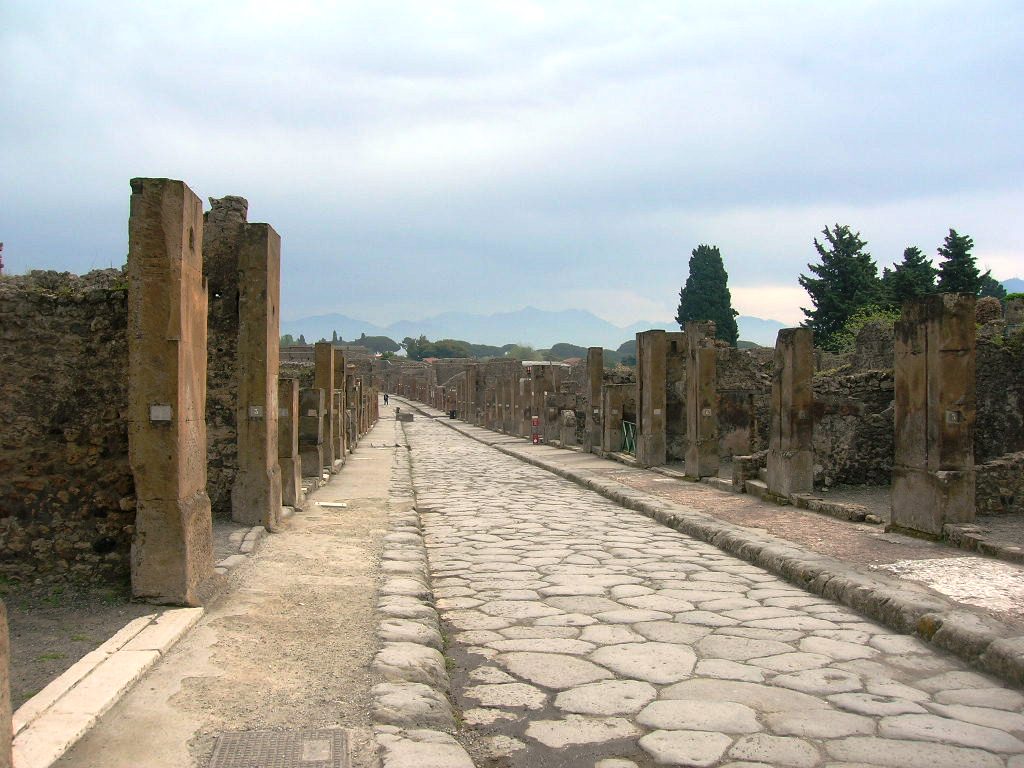 History & archaeology
Scavi di Pompei
Pompei (NA)
The Roman city stopped in AD 79 by the eruption of Vesuvius: paved streets, frescoed houses and the casts of the bodies, beneath the volcano that buried it. It is the most visited archaeological site in Italy after the Colosseum.
- ◆ History & archaeology
Grotta di Seiano
Posillipo
A Roman tunnel nearly eight hundred metres long bores through the hill in the dark, then opens onto the light of the Gaiola valley and the villa of Pausilypon.
- ◆ History & archaeology
Tomba di Agrippina
Bacoli
Not a tomb at all but the remains of a small Roman theatre by the sea, tied by legend to Agrippina, mother of Nero, killed at Bauli.
- ◆ History & archaeology
Grotta della Dragonara
Capo Miseno
An Augustan cistern carved into the tufo (volcanic tuff) of Capo Miseno, five naves and twelve pillars under a barrel vault, perhaps the reservoir of the imperial fleet.
- History & archaeology
Villa di Oplontis (Poppea)
Torre Annunziata
The villa d'otium attributed to Poppaea, Nero's wife, with frescoes of illusory gardens and a great pool facing rooms whose colours are still vivid.
- ◆ History & archaeology
Miglio d'Oro e Ville Vesuviane (Villa Campolieto)
Ercolano
The eighteenth-century residences of the Neapolitan nobility along the Miglio d'Oro, with Villa Campolieto and its elliptical portico facing the sea among stuccoes and gardens.
- ◆ History & archaeology
Villa Arbusto (Coppa di Nestore)
Lacco Ameno
The museum villa of Lacco Ameno holds the Coppa di Nestore, an 8th-century BC vessel incised with one of the oldest Greek verses ever found.
- ◆ History & archaeology
Auditorium Niemeyer
Ravello
A white wave of concrete with a single eye flung wide open on the coast: Oscar Niemeyer's Mediterranean vision, curved and foreign among the stones of Ravello.
- ◆ History & archaeology
Antichi Arsenali di Amalfi
Amalfi
Stone vaults opening onto the water, where the Republic built its galleys: the only medieval arsenal left on the coast, memory of Amalfi's sea power.
- ◆ History & archaeology
Acquedotto Medievale ("Ponti del Diavolo")
Salerno
Pointed arches stride across the valley in the old heart of Salerno: legend says the devil raised them in a single night.
- ◆ History & archaeology
Volcei — parco urbano e museo
Buccino (SA)
Buccino stands on ancient Volcei, a Lucanian and then Roman town: among its alleys surface necropolises, mosaics and walls, gathered in the museum that tells its many pasts.
- History & archaeology
Sapri: Spigolatrice e lungomare
Sapri (SA)
On her rock along the seafront, the Spigolatrice gazes at the gulf, an echo of Mercantini's verses and of Pisacane's expedition, which landed on this beach in 1857.
- ◆ History & archaeology
Roccagloriosa — area archeologica lucana
Roccagloriosa (SA)
On the ridges of the southern Cilento, the walls, houses and tombs of a Lucanian settlement of the 4th century BC resurface, kept in the village antiquarium.
- History & archaeology
Festa dei Gigli + Nola
Nola (NA)
Every June, wooden spires tens of metres high are carried shoulder-high through the streets in honour of San Paolino, in a festival recognised by Unesco.
- History & archaeology
Scavi di Stabia (Villa San Marco e Villa Arianna)
Castellammare di Stabia (NA)
Poised on the edge of the Varano hill, the patrician villas of Stabia preserve frescoes and gardens with the breath of the sea: Roman luxury buried by Vesuvius and left almost intact.
- ◆ History & archaeology
Palazzo Mediceo
Ottaviano (NA)
At the foot of Vesuvius, the ancient fortress that the Medici turned into a residence dominates Ottaviano; today it houses the park authority, suspended between medieval stone and gardens in the shadow of the volcano.
- ◆ History & archaeology
Allifae romana
Alife (CE)
At Alife the Roman walls still gird the town almost intact: two kilometres of ramparts, corner towers and the grid of cardo and decumano still lying beneath today's streets.
- ◆ History & archaeology
Sacrario di Mignano Monte Lungo
Mignano (CE)
On the ridge of Monte Lungo rest the soldiers who fell in December 1943, when the Italian army returned to fight alongside the Allies: a stone memorial looking over the Gustav Line.
- History & archaeology
Festa del Grano
Foglianise (BN)
Every August Foglianise weaves straw into monuments of golden wheat and carries them in procession for San Rocco: cathedrals and obelisks of ears of grain, peasant art handed down for generations.
- ◆ History & archaeology
Carnevale di Montemarano
Montemarano (AV)
In Montemarano carnival is a tarantella that never stops: lines of dancers follow the Pulcinella through the alleys to the hypnotic beat of the fife.
- ◆ History & archaeology
Scavi di Telesia
San Salvatore Telesino (BN)
On the plain where the Calore meets the Volturno, almost three kilometres of Roman walls and an amphitheatre dug into a hollow tell of Samnite Telesia, still largely buried.
- ◆ History & archaeology
Teatro-tempio di Pietravairano
Pietravairano (CE)
Atop Monte San Nicola, at over five hundred metres, a Roman theatre and temple fused into a single complex, rediscovered by chance from the air in the early 2000s.
- ◆ History & archaeology
Antica città di Volcei
Buccino (SA)
At Buccino, risen on ancient Volcei, one of the twelve Lucanian towns, the urban park weaves walls, forum and Roman mosaics into the alleys of the borgo that kept them safe.
- ◆ History & archaeology
Lanificio Borbonico
Napoli (NA)
Behind Porta Capuana, inside a former Renaissance convent, the old Bourbon factory that wove the uniforms of the Kingdom is reborn today as a space for art and craft.
- ◆ History & archaeology
Itinerario della memoria e della pace
Campagna (SA)
At Campagna, in a former convent, a path of photographs and documents recalls the camp where Giovanni Palatucci had many Jews interned to save them from deportation.
- ◆ History & archaeology
Santuario sannitico di Macchia Porcara
Casalbore (AV)
Beside a spring surface the remains of an Italic temple from the Samnite age, dedicated to Mefite, goddess of waters and fertility, and destroyed in the time of Hannibal.
- ◆ History & archaeology
Necropoli sannitiche di Carife
Carife (AV)
In the Irpinian Baronia, among the fields of Carife, the tombs of the Samnites re-emerge: hundreds of burials and grave goods from the 4th-3rd century BC, now gathered in the village museum.
- ◆ History & archaeology
Ponte Appiano (Ponte Rotto)
Apice (BN)
On the river Calore remain an arch and two piers of one of the largest Roman bridges in the region: here the via Appia joined Benevento to Aeclanum, in balance for two thousand years.
- ◆ History & archaeology
Teatro romano di Teanum Sidicinum
Teano (CE)
Among the olive trees re-emerges the cavea of the theatre of ancient Teanum Sidicinum, city of the Sidicini and then Roman, where the stone tiers still face the stage.
- ◆ History & archaeology
Monte Vico — acropoli di Pithekoussai
Lacco Ameno (NA)
On this promontory, in the 8th century BC, the Greeks of Euboea founded the first permanent settlement of the West. From here set out the alphabet that would become Rome's, and with it everything else.
- ◆ History & archaeology
LAPIS Museum — Acquedotto Augusteo del Serino
Napoli (NA)
Beneath the oldest basilica in Naples you descend into the aqueduct that Augustus had brought all the way here from the springs of Serino, and into the shelters where the city hid from the bombs.
- ◆ History & archaeology
Civita di Ogliara (ruderi)
Serino (AV)
A medieval settlement swallowed by the woods: dry-stone walls, a gutted tower, and the silence of a village no one has called by name for a long time.
- ◆ History & archaeology
Neviere di Piano Salto
Forino (AV)
Stone pits dug into the mountain where winter snow was packed down to be sold in summer to the nobles of Naples: a trade in cold, before refrigerators. Today they are empty mouths in the wood.
- ◆ History & archaeology
Ponte di Annibale
San Mango sul Calore (AV)
Legend says Hannibal crossed here with his elephants; archaeologists say it is Roman-medieval. The Calore has run beneath it for two thousand years, and the question does not interest it.
- ◆ History & archaeology
Mura delle Fate (mura megalitiche)
Raviscanina (CE)
A hundred metres or so of cyclopean blocks fitted without mortar, which the people could explain only by crediting them to the fairies. The Samnites laid them twenty-five centuries ago, and the fairies took the credit.
- ◆ History & archaeology
Parco Archeologico di Monte Cila
Piedimonte Matese (CE)
Five semicircles of megalithic walls, seven kilometres in all, raised in the 7th century BC and then forgotten in the myrtle scrub. From up there the Samnites watched the same plain you are watching.
- ◆ History & archaeology
Fortificazione sannitica di Mandra Castellone
Capriati a Volturno (CE)
On Monte Gallo, a Samnite polygonal wall circuit of the 4th century BC, from which two long arms of masonry run down to the valley like pincers. From up here the Samnites shut the Volturno valley to anyone who wanted to pass.
- History & archaeology
Taverna della Catena (l'incontro del 26 ottobre 1860)
Vairano Patenora (CE)
Here, at a dusty crossroads in front of an eighteenth-century tavern, the army's official war diary places the handshake that made Italy — while the schoolbooks go on calling it the meeting of Teano.
- ◆ History & archaeology
Ferriere borboniche del Savone
Teano (CE)
Along the Savone sleep the workshops where the Bourbons hammered the iron of Elba: arches, canals and wheels swallowed by brambles, the industrial archaeology that nobody ever comes to see.
- ◆ History & archaeology
Grotta di Audie Murphy
Mignano Monte Lungo (CE)
In this cleft in the rock the most decorated soldier in America hid for two days, between German fire and hunger: he came out alive, and wrote a book about it. Today it is a cave with a name carved above it and a silence that weighs on you.
- ◆ History & archaeology
Ponte Ronaco (Ponte Auruncus)
Sessa Aurunca (CE)
Twenty-one Roman arches striding across an entire valley, 176 metres of viaduct built under Trajan. On the basalt paving you still walk on stones trodden two thousand years ago, among brambles and silence.
- ◆ History & archaeology
Villa romana di San Rocco
Francolise (CE)
The finest Roman villa-farm in Campania: oil and wine were pressed here for the ager Falernus as early as the 2nd century BC. Excavated by the British School at Rome, then all but forgotten.
- ◆ History & archaeology
Trebula Balliensis — le mura poligonali
Pontelatone (CE)
A ring of cyclopean walls almost two kilometres long sleeps beneath the holm oaks, with a megalithic gate that looks made for giants. They call it the little Mycenae of the Terra di Lavoro, and almost nobody knows it exists.
- ◆ History & archaeology
Grotte delle Fate — santuario sannita di Monte Castellone
Pietramelara (CE)
Nine tunnels swallowed by the woods: a Samnite sanctuary of the 2nd century BC, razed to the ground by Sulla's soldiers. An eighteenth-century abbot called them hideous and frightful caves, where the people of Cales were said to have taken refuge during the Great Flood.
- History & archaeology
Ponte di Annibale e terme di Triflisco
Bellona (CE)
Here the Volturno narrows between the rocks, and memory says that Hannibal threw a bridge across to move his army over, the same army that loosed a herd of oxen with blazing horns against the Romans. Of the bridge only a few teeth of stone remain in the green water.
- ◆ History & archaeology
Cittadella sannita di Monte Santa Croce
Piana di Monte Verna (CE)
On the summit, behind a ring of Samnite walls, a Benedictine monastery has let itself fall stone by stone. Warriors and monks chose the same peak two thousand years apart, and the view explains why.
- ◆ History & archaeology
Cammarelle delle Fate (criptoportico romano)
Bellona (CE)
Twenty-two interconnected cisterns dug at the foot of the hill: the people, who could no longer read the stones, swore they were the chambers of the fairies. They were instead the belly of a Roman villa of the 2nd century BC.
- ◆ History & archaeology
Area archeologica di Cellarulo
Benevento (BN)
Where the Sabato surrenders itself to the Calore stood the city's pre-Roman river port: reed beds, willows and the stumps of a bridge, in a strip of countryside outside of time.
- History & archaeology
Sorgenti del Fizzo (Acquedotto Carolino)
Bucciano (BN)
From here the water sets off on thirty-eight kilometres to make the fountains of the Reggia di Caserta play: point zero of Vanvitelli's hydraulic masterpiece, a UNESCO site that almost nobody comes to see.
- ◆ History & archaeology
Ponte Carlo III dell'Acquedotto Carolino
Moiano (BN)
Four arches of tufo (volcanic tuff) over the Isclero, bearing the inscription CAROLUS ET AMALIA MDCCLIII: the first public proof that Vanvitelli's hydraulic dream would actually work.
- ◆ History & archaeology
Lavatoio Reullo
Sant'Agata de' Goti (BN)
Three stone basins under a fourteenth-century pointed arch, where the Isclero meets the Riello: here women washed their laundry until only yesterday, and the underground water has never stopped arriving.
- ◆ History & archaeology
Ligures Baebiani
Circello (BN)
In 180 BC Rome deported 47,000 defeated Ligurians here and founded a municipium. In 1832 the bronze Tabula alimentaria of Trajan surfaced from this soil: today it is in Rome, and the remains of the forum sleep among the fields.
- ◆ History & archaeology
Antica Neviera di San Bartolomeo
San Bartolomeo in Galdo (BN)
A stone pit where snow was packed in winter to be sold back as ice in summer: the industrial archaeology of the poor, forgotten in a field.
- History & archaeology
Galleria Borbonica
Napoli (NA)
A tunnel commissioned by Ferdinand II as an escape route from the royal palace to the sea, then a wartime shelter and car depot: Bourbon Naples carved into the tuff.