Museums
74 places
 Museums
MANN — Museo Archeologico Nazionale
P.za Museo
One of the world's great archaeological museums: here the Toro Farnese, the mosaics of Pompeii and the Gabinetto Segreto tell the whole ancient Mediterranean in a single visit.
 ◆ Museums
Antiquarium
Boscoreale
The museum that tells of daily life at the foot of Vesuvius before the eruption, among carbonised loaves, farm tools and finds handed back by the ash.
 ◆ Museums
Museo dell'Osservatorio Vesuviano
Ercolano
The oldest volcanological observatory in the world, willed by the Bourbons in 1841, with historic instruments and mineral collections, looking out over the slopes of Vesuvius.
 ◆ Museums
Museo Correale
Sorrento
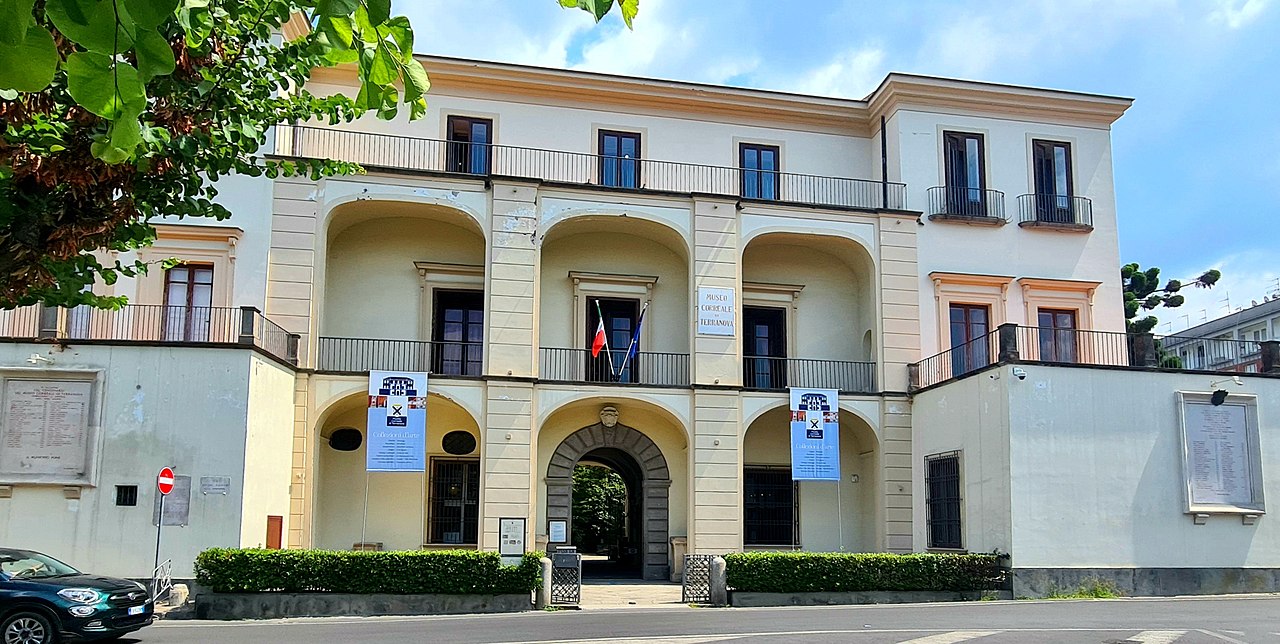
In the family villa of the Correale counts: porcelain, inlaid wood and eighteenth-century views of Naples, and a garden that runs down to a belvedere over the sea.
 Museums
Villa Lysis — Jago Museum Capri
Capri
A 1905 Art Nouveau villa by the poet Fersen, dedicated to love and sorrow; since June 2026 it houses the Jago Museum Capri, with Jago's sculptures in the historic rooms high above the sea.
 Museums
Villa San Michele (Axel Munthe)
Anacapri
The white house that Swedish doctor Axel Munthe built among ancient columns and pergolas, with its granite sphinx gazing out over the Gulf of Naples.
 Museums
Museo del Corallo
Torre del Greco (NA)
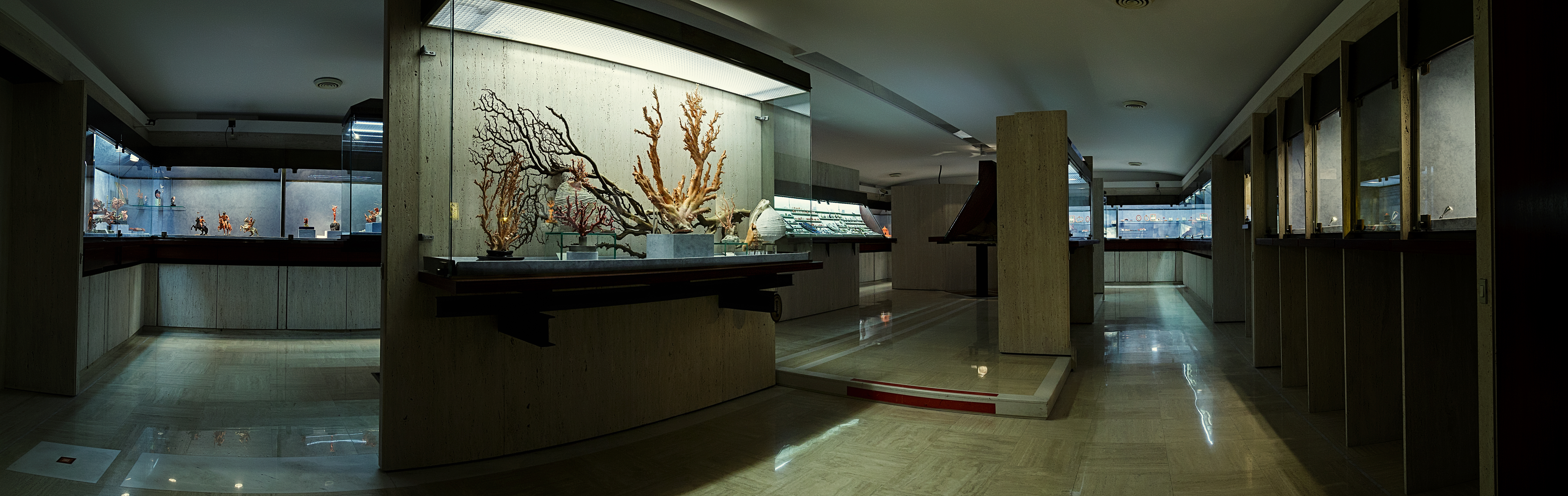
In Torre del Greco, capital of coral, the museum gathers hand-carved cameos and red branches: the memory of a town that has been carving the treasure of the sea for centuries.
 Museums
Museo Campano (Matres Matutae)
Capua (CE)
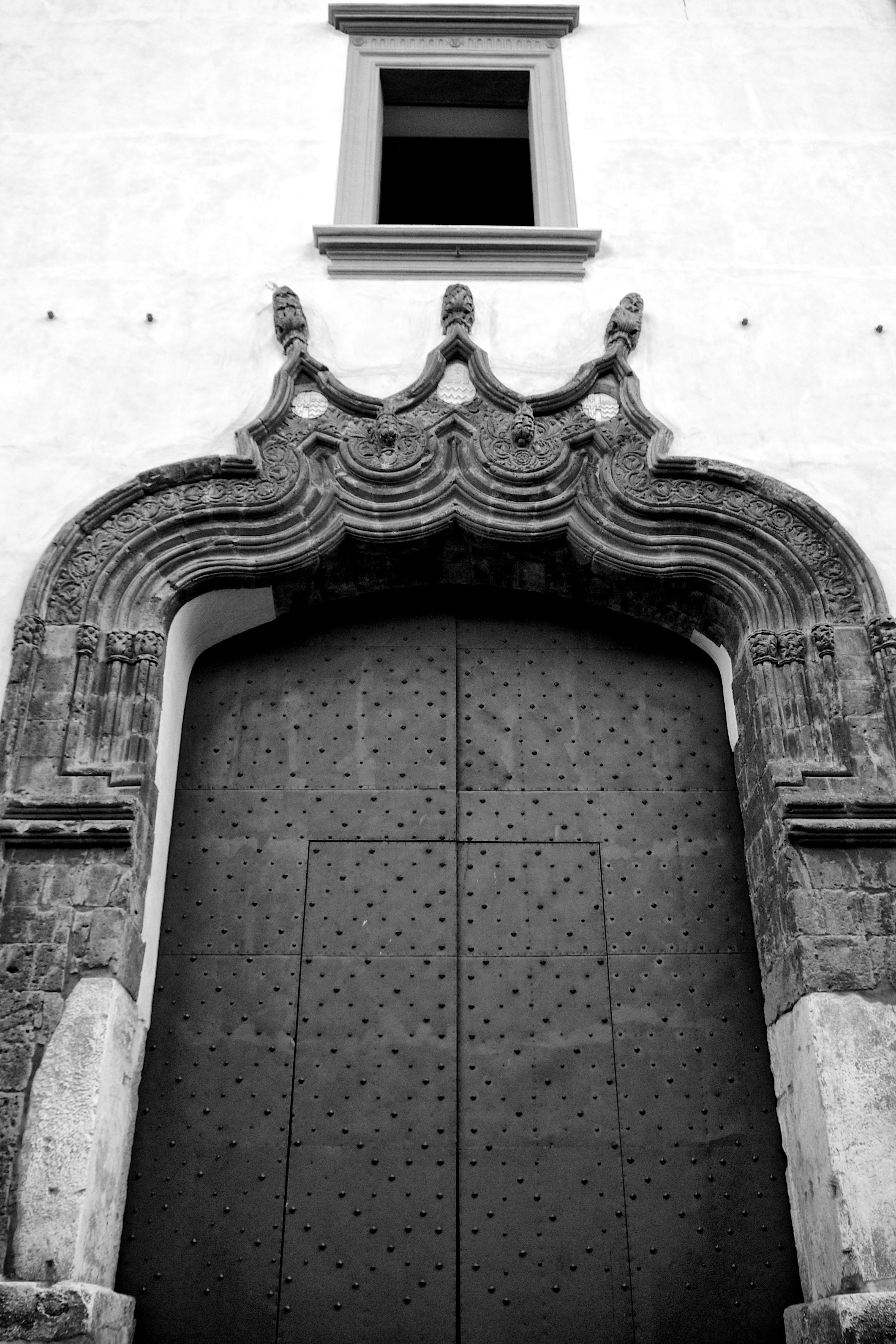
In Capua the Museo Campano lines up the Matres Matutae, dozens of tufo mothers seated with children in their laps: fertility deities worshipped here in ancient Capua.
 Museums
Museo di Capodimonte
Napoli (NA)
In the Bourbon palace set within a monumental wood, Capodimonte holds Titian, Caravaggio and the Farnese collection, with the gulf appearing beyond the tree-lined avenues.
 Museums
MADRE — Museo d'Arte Contemporanea Donnaregina
Napoli (NA)
In the Donnaregina palace the MADRE gathers contemporary art in Napoli, from the site-specific installations conceived for its rooms to the great names of the later twentieth century.
 Museums
Gallerie d'Italia — Palazzo del Banco di Napoli
Napoli (NA)
On via Toledo the Gallerie d'Italia hold Caravaggio's last canvas, the 'Martirio di sant'Orsola', painted in Napoli in the final months of his life.
 Museums
Museo Etnografico Beniamino Tartaglia (MEdA)
Aquilonia (AV)
Over a hundred settings rebuilt object by object: artisan workshops, folk medicine and the magical beliefs of the peasant Apennines, brought back to life in the ethnographic museum of Aquilonia.
 Museums
Museo Irpino
Avellino (AV)
The wooden xoana from the sanctuary of the goddess Mefite, where the ancients set a threshold to the underworld, and four hundred presepi (nativity scenes) from around the world: the memory of Irpinia gathered in Avellino.
 Museums
Museo degli Orologi da Torre
San Marco dei Cavoti (BN)
Fifty monumental time machines, of iron with stone weights, still perfectly working: the collection of tower clocks gathered by master Salvatore Ricci.
 ◆ Museums
Museo del Grano e della Paglia
Foglianise (BN)
In the village of the straw masters, where every August thousands of woven wheat stalks become bell towers and portals for San Rocco: the memory of that peasant art.
 Museums
Museo Civico e della Ceramica Cerretese
Cerreto Sannita (BN)
The artistic ceramics that flourished after the 1688 earthquake, in the eighteenth-century halls of Palazzo Sant'Antonio: plates and maiolica of a tradition still alive in Cerreto.
 Museums
Museo del Sannio
Benevento (BN)
The medieval cloister of Santa Sofia, a UNESCO site, with its forty-seven columns that weave together real and fantastic figures, holds the layered memory of the Sannio.
 Museums
Museo Archeologico dell'Antica Capua
Santa Maria Capua Vetere (CE)
A stone's throw from Spartacus's gladiator amphitheatre, the museum gathers the centuries of Etruscan and Roman Capua, from the statues of mothers to the Campanian horsemen.
 ◆ Museums
Museo Archeologico dell'Antica Allifae
Alife (CE)
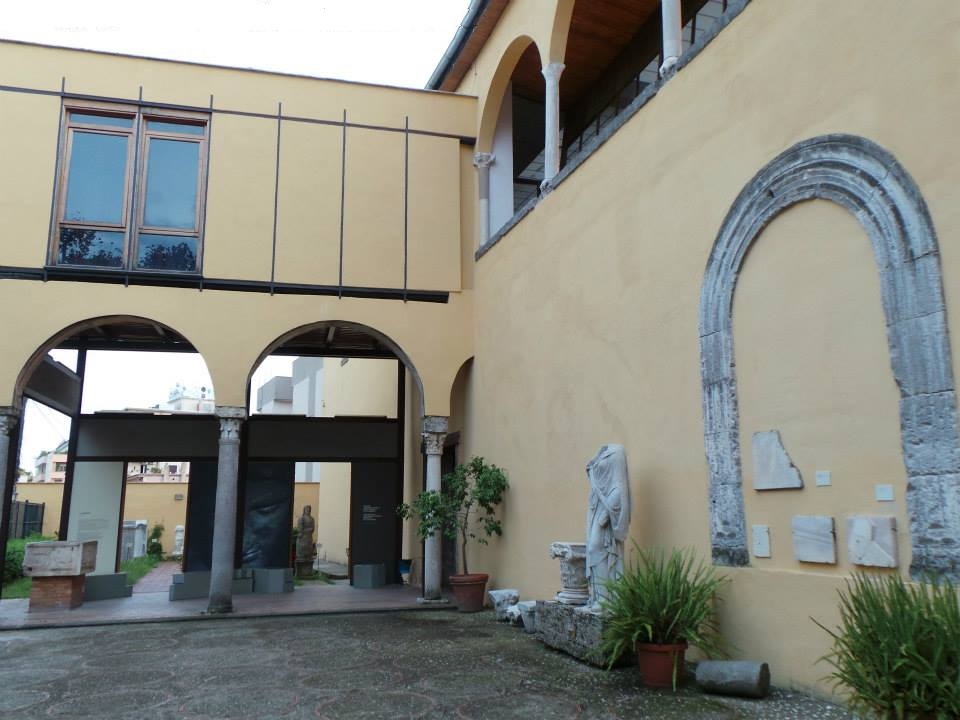
From prehistory to Rome, the objects of the Matese peoples: a fourth-style fresco and black-and-white geometric mosaics torn from the domus of ancient Allifae.
 Museums
Museo Archeologico Provinciale
Salerno (SA)
Fished up from the nets in the gulf in 1930, the bronze head of Apollo watches over the halls: the emblem of a museum that gathers the archaeology of the Salerno area.
 Museums
Museo della Carta
Amalfi (SA)
In an ancient thirteenth-century paper mill, in the Valle dei Mulini, hammers driven by the water of the Canneto still bring Amalfi's handmade paper to life, sheet after sheet.
 ◆ Museums
Museo dello Sbarco e Salerno Capitale
Salerno (SA)
In Salerno the museum reconstructs the 1943 Allied landing and the months when the city was capital of Italy, among uniforms, vehicles and period photographs.
 ◆ Museums
Museo Mineralogico Campano
Vico Equense (NA)
In a seventeenth-century former convent of Vico Equense, thousands of minerals from all over the world gathered by a single enthusiast, down to a fragment of graphene donated by a Nobel laureate.
 ◆ Museums
Museo Archeologico di Pontecagnano
Pontecagnano Faiano (SA)
It tells of the frontier Etruscans who inhabited the Sele plain: grave goods, gold and vases from necropolises that push Etruria far further south than expected.
 ◆ Museums
Museo Ferroviario di Pietrarsa
Portici (NA)
In the old Bourbon workshop where Italy's first railway was born, historic locomotives rest by the sea, with the Vesuvius closing the horizon.
 Museums
Il Torrione (Museo Civico Giovanni Maltese)
Forio (NA)
Built in 1480 to spot Saracen sails, this cylinder of tufo (volcanic tuff) became four centuries later the home-studio of the sculptor Giovanni Maltese, who lived here into the twentieth century. Today his sculptures still inhabit the tower that once had to defend Forio from pirates.
 ◆ Museums
Museo Civico Gaetano Filangieri
Napoli (NA)
Armour, porcelain, paintings and the library of a collector prince, in a Renaissance palace that in the nineteenth century was taken apart stone by stone and rebuilt thirty metres further along.
 Museums
Museo Duca di Martina — Villa Floridiana
Napoli (NA)
Six thousand pieces of decorative art — Meissen porcelain, ivories, corals — in a white villa built by a king for his morganatic wife, at the top of a park looking over the bay.
 Museums
Villa Pignatelli
Napoli (NA)
A neoclassical villa left exactly as it was: the halls, the library, the little red drawing room. And, in the annexe, the carriage museum — with the park all around, in the middle of Chiaia's traffic.
 ◆ Museums
MuSA — Museo dell'Osservatorio Astronomico di Capodimonte
Napoli (NA)
The first observatory of the Kingdom of the Two Sicilies, with its nineteenth-century brass telescopes, on a terrace overlooking the whole of Naples. On some evenings you really do watch the stars.
 ◆ Museums
Museo Civico Archeologico di Bisaccia
Bisaccia (AV)
The Princess of Bisaccia sleeps here: a princely tomb of the 7th century BC with its gold, found in a land long believed to have always been poor.
 Museums
MUCIRAMA — Museo Civico Raffaele Marrocco
Piedimonte Matese (CE)
In the former convent of San Tommaso d'Aquino sleep the Runner and the Zeus of Cila: Samnite bronzes pulled out of the mountain just above. A free museum nobody expects in a mountain town.
 ◆ Museums
Museo Archeologico Biagio Greco
Mondragone (CE)
A small provincial museum guarding the fragments of the ager Falernus: votive terracottas, grave goods, the remains brought back up from Sinuessa, the Roman city that today sleeps beneath the sand and the sea.
 Museums
Janua — Museo delle Streghe
Benevento (BN)
Herbs of power, ex voto, anthropomorphic fetishes and an artificial walnut tree that lights up in the dark: here the janara (Benevento witch) stops being a joke and goes back to being restless anthropology.
- ◆ Museums
Ospedale delle Bambole
Napoli
Behind a shop window in Palazzo Marigliano a craftsman mends glass eyes, porcelain arms and dolls' curls, in a workshop born more than a century ago.
- Museums
Museo Vivo del Mare e della Dieta Mediterranea
Pioppi (Pollica)
Inside the seventeenth-century Palazzo Vinciprova, where Ancel Keys studied the Mediterranean diet, the aquariums tell the story of the Cilento seabed, and upstairs the scientist's library rests in silence.
- ◆ Museums
Museo MEdA
(AV)
Room after room it rebuilds the peasant world of the Alta Irpinia: trades, objects and rites of a vanished civilisation, where daily life was interwoven with magic and superstition.
- Museums
Museo Jago (Sant'Aspreno ai Crociferi)
Napoli (NA)
In a church of the old town Jago shows his marble sculptures, among them the Figlio Velato: the contemporary in dialogue with Neapolitan baroque.
- ◆ Museums
Museo della Civiltà Contadina e Artigiana
Andretta (AV)
A thousand objects arranged in corners that recreate the home and the labour of times past: the peasant's plough, the wooden spinning wheel, the tools of the blacksmith and the cobbler.
- ◆ Museums
Museo dell'Alta Irpinia
Guardia Lombardi (AV)
Reconstructed nineteenth-century rooms, noble coats of arms, embroidery and blacksmith's tools tell the story of the peasant culture of Alta Irpinia, in a borgo (old village) of Lombard origin.
- ◆ Museums
Museo Etnografico della Piana del Dragone
Volturara Irpina (AV)
In the borgo's former cinema, two thousand five hundred objects line up the lost trades — barber, charcoal-burner, saddler, farrier — beneath the name of the karst plain of the Dragone.
- ◆ Museums
Museo del Flauto Traverso
Manocalzati (AV)
Forty-five historic flutes, from the old keyed system to the nineteenth-century Boehm, trace the instrument's evolution in the art hall of Manocalzati.
- ◆ Museums
MIGRA — Museo Interattivo del Grano
Monteverde (AV)
In the halls of the Grimaldi castle, virtual characters weave the story of wheat with that of the peasant woman, in one of the loveliest borghi (old villages) overlooking the far eastern edge of Irpinia.
- ◆ Museums
Biogem — Museo della vita e della Terra
Ariano Irpino (AV)
A multimedia pyramid and the animated skeletons of Allosaurus and T-Rex lead through the geological eras, where science meets the hills of Ariano.
- ◆ Museums
Museo della civiltà normanna
Ariano Irpino (AV)
Norman-Swabian coins, the great model of the Battle of Hastings and a reproduction of Roger II's mantle, in the seventeenth-century palazzo of Italy's first Norman county.
- ◆ Museums
Museo delle Farfalle
Guardia Sanframondi (BN)
More than a thousand butterflies from every continent, collected out of passion by the lawyer Pascasio Parente and arranged in silent cases in the heart of the Samnite borgo.
- Museums
Paleolab — Museo dei dinosauri
Pietraroja (BN)
Here rested Ciro, the Scipionyx samniticus: the first dinosaur found in Italy, with its soft tissues intact, and the landscape of the Sannio as it was one hundred and ten million years ago.
- ◆ Museums
ARCOS — Museo d'arte contemporanea Sannio
Benevento (BN)
Beneath vaults of tufo (volcanic tuff), in the underground spaces of a former air-raid shelter, the contemporary art of the Sannio dialogues with the Egyptian treasures of the temple of Isis.
- ◆ Museums
Museo del Cane — Foof
Mondragone (CE)
Europe's first museum devoted entirely to the dog: between collars, art and a shelter for strays, it tells the ancient bond between man and his best friend.
- Museums
Villa La Colombaia (Museo Luchino Visconti)
Forio (NA)
Here Luchino Visconti wrote, quarrelled and hid from the world, among the holm oaks of Zaro and a view that slips straight into his films. The director wanted to be buried here: the park is still his, more than the villa.
- ◆ Museums
Museo del Mare (Palazzo dell'Orologio)
Ischia (NA)
Three floors of nets, ex voto, models and photographs of men who set out to sea and never returned. It is the museum the fishermen of Ischia Ponte built for themselves, in the clock tower palace that marked the rhythm of their departures.
- ◆ Museums
MUDIS — Museo Diocesano di Ischia
Ischia (NA)
Silverware, vestments and painted panels gathered from the island's churches after earthquakes and collapses. It is the storehouse of Ischia's sacred memory, and almost no tourist ever opens its doors.
- ◆ Museums
Museo Civico di Procida "Sebastiano Tusa"
Procida (NA)
Named after the underwater archaeologist who died in the 2019 Ethiopian air disaster, it gathers what the sea around Procida has given back. It stands in the same complex from which, for two centuries, people looked out at the prison.
- ◆ Museums
Museo Casa di Graziella
Procida (NA)
A reconstruction of a Procida house for Graziella, the girl invented (or perhaps not) by Lamartine, who fell in love with her and let her die of grief in his novel. Every year Procida still elects a Graziella: a literary ghost the island cannot give up.
- ◆ Museums
Museo del Sottosuolo
Napoli (NA)
Cisterns, tunnels and wells under Piazza Cavour, where the munaciello (little monk of Neapolitan lore) is not a fairy tale but the trade of those who worked down here: small, hooded, always in the shadows.
- ◆ Museums
MUSA — Museo di Anatomia Umana
Napoli (NA)
Skeletons, foetuses in formalin, bodies petrified with Giuseppe Aloe's nineteenth-century method. One of the most striking anatomical collections in Europe, inside a former monastery, and almost nobody knows it.
- ◆ Museums
Museo delle Arti Sanitarie e Farmacia degli Incurabili
Napoli (NA)
Surgical instruments that look like torture tools, the lazaretto ward, and the most beautiful eighteenth-century pharmacy in Europe: carved wood, majolica jars, and a poison jar with an inscription that chills you.
- ◆ Museums
Museo Hermann Nitsch
Napoli (NA)
In a former power station: the blood-soaked canvases, the vestments and the instruments of Hermann Nitsch's Theatre of Orgies and Mysteries. This is not art for everyone: it is a rite.
- ◆ Museums
Il Cartastorie — Museo dell'Archivio del Banco di Napoli
Napoli (NA)
Eighty kilometres of shelving holding the records of the oldest banking archive in the world: inside are the payments to Caravaggio, the debts of noblemen, five centuries of Neapolitan lives. The pages light up and tell their stories.
- ◆ Museums
Musei universitari delle Scienze Naturali
Napoli (NA)
In the baroque halls of the Collegio dei Gesuiti: giant crystals donated by the Bourbons, whale skeletons hanging from the ceiling, skulls, mummies and foetuses in display cases. It costs about the price of one and a half coffees.
- ◆ Museums
Museo della Fondazione Nunziatella
Napoli (NA)
Inside the oldest military school in Italy, the eighteenth-century church is a jewel of marble and stucco that almost nobody sees — and from here came both the royalists and the revolutionaries of 1799.
- ◆ Museums
M.A.V.I. — Museo Antiquarium di Lacedonia
Lacedonia (AV)
Beneath the square slept a Daunian necropolis: vases, ornaments and the bones of a people who traded here a thousand years before Rome.
- Museums
Palazzo Abbaziale di Loreto
Mercogliano (AV)
A palace by Domenico Antonio Vaccaro guarding 200,000 volumes, codices and incunabula, and an eighteenth-century pharmacy with its jars still in place, as if the apothecary monk had just stepped out.
- ◆ Museums
MuGesS — Museo della Gente Senza Storia (miniera di zolfo)
Altavilla Irpina (AV)
For a century thousands of men went down into the sulphur mine discovered in 1866: yellow dust in the lungs, silicosis, and a wealth that was never theirs. The museum gives a name back to those history never wrote down.
- ◆ Museums
MuDea — Museo delle Acque
Caposele (AV)
The story of the waterworks that carried Irpinia's water to a thirsty Puglia: an epic of labourers, tunnels and engineering that nobody tells any more.
- ◆ Museums
Casa Museo di San Giuseppe Moscati
Santa Lucia di Serino (AV)
The home of the doctor of the poor, the saint who visited the alleys of Naples for free: plain furniture, and the feeling that he never really left.
- Museums
Museo Archeologico dell'Antica Calatia
Maddaloni (CE)
Inside a residence of the Carafa family sleeps the vanished city of Calatia: grave goods from the 8th century BC and an immersive room where the paving stones of the Appia light up beneath your feet as you walk towards Rome.
- Museums
Museo Archeologico Nazionale di Paestum
Capaccio-Paestum (SA)
Facing the temples, it holds the Tomb of the Diver: the painted slab with a youth's dive into the afterlife, the only surviving example of figurative Greek painting from the classical age.
- Museums
Museo Archeologico Nazionale di Eboli
Eboli (SA)
In the former convent of San Francesco, the museum tells the story of the middle Sele valley, an ancient crossroads of peoples and cultures at the mouth of the great routes.
- Museums
Museo Archeologico dell'Agro Nocerino
Nocera Inferiore (SA)
In the 14th-century convent of Sant'Antonio, the grave goods from the necropolises of the Nocera countryside and of ancient Nuceria Alfaterna.
- Museums
Museo Archeologico di Stabia Libero D'Orsi
Castellammare di Stabia (NA)
The treasures of the Roman villas of Stabiae, brought to light by Libero D'Orsi on the Varano hill.
- Museums
Museo Archeologico Nazionale di Nola
Nola (NA)
From the Bronze Age village of Croce del Papa to Neapolitan riggiole (majolica floor tiles): the long history of the Nola area.
- Museums
MAV — Museo Archeologico Virtuale di Ercolano
Ercolano (NA)
With digital and multimedia reconstructions it brings back to life Herculaneum, Pompeii and the Vesuvian cities as they were before the eruption of AD 79.
- Museums
Museo Archeologico di Calatia
Maddaloni (CE)
In Maddaloni, the grave goods from the necropolises of ancient Calatia, a city along the Via Appia.