Villages
113 places
 Villages
La Pignasecca
Montesanto
The oldest market in Naples unspools through the alleys of Montesanto: fish stalls, fry shops and old-time botteghe (traditional shops) in a hubbub that never stops.
 Villages
Borgo Marinari
S. Lucia
At the foot of Castel dell'Ovo, the little fishermen's borgo (old village) is now a marina of boats and restaurants: stone, salt air and the legend of Virgil's egg hidden in the foundations.
 Villages
Marina Corricella
Procida
The oldest fishermen's borgo (old village) on Procida, an amphitheatre of pastel houses tumbling down to the harbour, where the boats sleep beneath the hanging laundry.
 Villages
Borgo di Sant'Angelo
Serrara Fontana
A car-free fishing village, its terraced houses stepping down to a sandy isthmus tied to the islet: a little square, boats, and the fumarole of the nearby Maronti beach.
 Villages
Atrani
Atrani
The smallest borgo (old village) in the South, gathered in a ravine among white houses and stairways; in its church the doges of the Amalfi Republic were crowned.
 Villages
Cetara
costiera est
A fishermen's harbour wedged between rock and blue, where the colatura di alici (anchovy essence) keeps the ancient taste of the sea in a few amber drops.
 Villages
Vietri sul Mare
costiera est
The gateway to the coast, where glazed ceramic dresses façades and domes, and every alley smells of fired clay and turquoise sea.
 Villages
Santa Maria di Castellabate
Castellabate
A seafaring village of little squares looking onto the water and pebble beaches, made famous by the cinema, where the evening smells of salt and jasmine.
 Villages
Teggiano
Teggiano
A medieval borgo (old village) perched above the Vallo di Diano, a maze of alleys and churches, with the Castello Macchiaroli still guarding the memory of the barons' conspiracy.
 ◆ Villages
Morigerati
Cilento sud
A handful of houses looking out over the Bussento gorge, where the river surfaces again from its caves among ferns and moss, and the alleys still carry the scent of monks who came from Greece.
 ◆ Villages
Sicilì
Cilento sud
A hamlet perched on the slopes of Mamino, among olive trees and white figs, where in summer the brass bands fill the square and stone arches weave together silent alleys.
 ◆ Villages
Camerota borgo
Camerota
The old town gathered beneath Monte Bulgheria, far from the sea, with its white alleys and terracotta workshops carrying on an ancient Cilento craft.
 ◆ Villages
Licusati
Camerota
An inland borgo (old village) at two hundred and sixty metres, in a valley of pisciottana olive trees that yields a prized oil, with the mills still running among the stone houses.
 ◆ Villages
Vairano Patenora
alto casertano
A medieval borgo (old village) shut inside turreted walls with only three gates, dominated by the Castello d'Avalos, and not far off the Cistercian abbey of the Ferrara with its frescoes.
 Villages
Sant'Agata de' Goti
Sant'Agata de' Goti (BN)
The houses lean out over the void, clinging to a spur of tufo (volcanic tuff) above the stream: a stone balcony in mid-air that the Goths chose and time has never let go.
 ◆ Villages
Guardia Sanframondi
Guardia Sanframondi (BN)
A borgo (old village) of wine and silences, every seven years it wakes for the Riti di Penitenza, when the battenti (flagellant penitents) walk the alleys and the town turns medieval again for a week.
 ◆ Villages
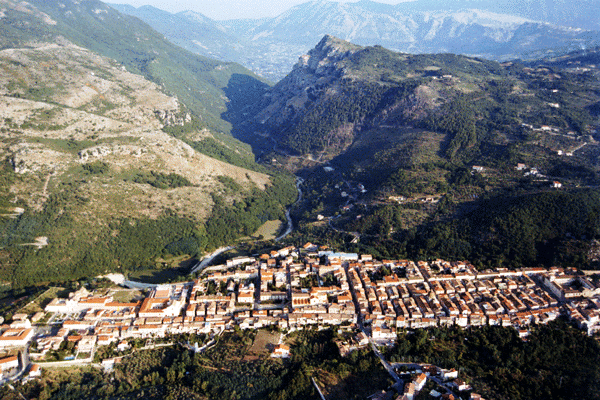
Cerreto Sannita
Cerreto Sannita (BN)
Razed by the earthquake of 1688 and rebuilt from a drawing board on a chessboard of straight streets, it lives on ceramics in whites and yellows that have been painted here for centuries.
 ◆ Villages
Cerreto Antica
Cerreto Sannita (BN)
On the hill lie the ruins of medieval Cerreto, broken in a single evening of 1688: walls and alleys brought back by excavation, a ghost town watching its heir down in the valley.
 ◆ Villages
Rocca San Felice borgo
Rocca San Felice (AV)
Beneath the ruins of the medieval castle the borgo (old village) huddles in stone and steep alleys, not far from the fumes of the Mefite: here legend borders on sulphur.
 ◆ Villages
Gesualdo
Gesualdo (AV)
The village bears the name of Carlo Gesualdo, prince and accursed musician: in his castle he withdrew to compose madrigals of rare disquiet, pursued by the murder he had committed.
 Villages
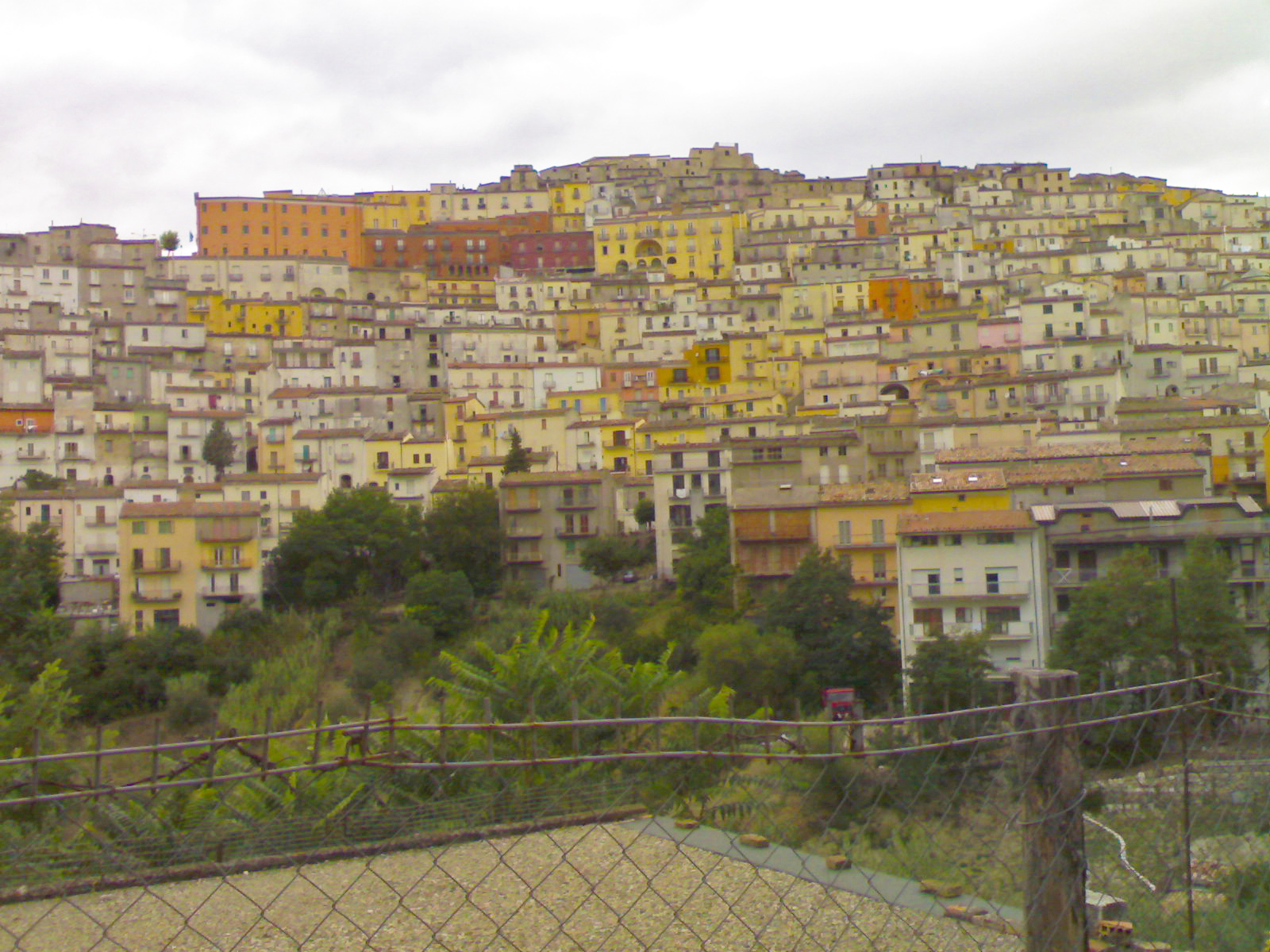
Calitri
Calitri (AV)
The houses climb the hill in terraces, coloured and tight-packed like a presepe (nativity scene): they call it the Positano of Irpinia, crowned by the Borgo Castello and an old craft of ceramics.
 ◆ Villages
Trevico
Trevico (AV)
The highest village in Campania, almost eleven hundred metres of ridge: from the roof of Irpinia the eye takes in half the peninsula, six regions on the days when the air is clear.
 ◆ Villages
Frigento (cisternoni romani)
Frigento (AV)
Beneath the panoramic village open the Roman cisternoni, Republican-era galleries that gathered rainwater: you walk in the darkness of an ancient thirst, while above, Irpinia stretches out as far as the eye can see.
 ◆ Villages
Monteverde
Monteverde (AV)
Between the valleys of the Ofanto and the Osento, one of the most beautiful villages in Italy gathers around its castle: alleys of pale stone where every year the black storks come back to nest.
 ◆ Villages
Cairano
Cairano (AV)
Perched on a crag above the Ofanto valley, the village spirals up to the rock where the wind never falls silent: here the roots run back as far as the Iron Age.
 ◆ Villages
Montefusco
Montefusco (AV)
Perched at seven hundred metres, the old capital of the Principato Ultra looks out over the hills of Irpinia, while the Bourbon prison still keeps the silence of the patriots locked within these walls.
 ◆ Villages
Romagnano al Monte (borgo fantasma)
Romagnano al Monte (SA)
Abandoned after the 1980 earthquake, the old village hangs above the Platano gorge, its houses empty and its streets crossed by no one.
 ◆ Villages
Morcone
Morcone (BN)
The white houses of Morcone climb the mountainside like a presepe (nativity scene) of stone up to the ruins of the castle: one of the most beautiful borghi of Italy, overlooking the Tammaro valley.
 ◆ Villages
Pontelandolfo
Pontelandolfo (BN)
Above the Tammaro valley, Pontelandolfo still carries the memory of 1861, when the town was set ablaze; today the medieval tower watches over rebuilt alleys and a wound not forgotten.
 Villages
Solopaca
Solopaca (BN)
At the foot of the Taburno, Solopaca spreads among vineyards and cellars: here the Falanghina del Sannio ripens in the sun and the town lives to the slow rhythm of the harvest.
 ◆ Villages
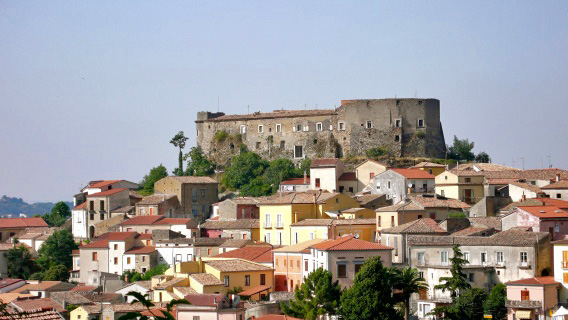
Ceppaloni
Ceppaloni (BN)
Perched on a hill above the Sabato valley, the Norman castle of Ceppaloni guards the road to Benevento: stone towers and walls a step away from the city of witches.
 Villages
Ariano Irpino
Ariano Irpino (AV)
Spread over three hills along the Apennine watershed, Ariano is a land of painted ceramics and a Norman castle keeping watch over the inner Irpinia.
 ◆ Villages
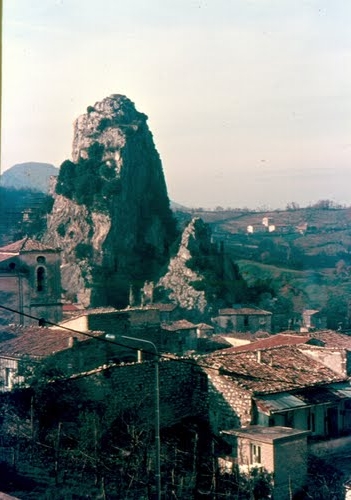
Pietrastornina
Pietrastornina (AV)
Beneath a spire of rock where the ruins of a Lombard castle remain, the old borgo (old village) of Pietrastornina slowly crumbles in silence.
 Villages
Roscigno Vecchia
Roscigno (SA)
In the heart of the Cilento, the silent square of Roscigno Vecchia, with its fountain and its church, awaits inhabitants who will never return, abandoned to a landslide a century ago.
 ◆ Villages
San Severino di Centola
Centola (SA)
Perched on a spur above the Mingardo gorge, the medieval borgo (old village) of San Severino keeps watch with its tower over empty houses and alleys crumbling slowly away.
 ◆ Villages
Tocco Vecchio
Tocco Caudio (BN)
Abandoned after the 1980 earthquake, the old borgo of Tocco Caudio preserves ancient alleys and silent ruins clinging to the hillside, while life has migrated a little further down the valley.
 Villages
Rione Terra
Pozzuoli (NA)
On the acropolis of Pozzuoli, evacuated in 1970 because of bradyseism, the Rione Terra guards beneath its houses an intact Roman town of streets, workshops and paved hinges.
 Villages
Casertavecchia
Caserta (CE)
On the ridge of the Tifatini mountains, this intact medieval borgo (old village) hugs the Norman cathedral with its Arab-Sicilian geometries, stone alleys and the cool air rising from the plain of Caserta.
 Villages
Furore
Furore (SA)
The village with no square: houses clinging to the rock above the famous fjord, a deep inlet carved by the torrent where the sea slips in between two sheer walls.
 ◆ Villages
Zungoli
Zungoli (AV)
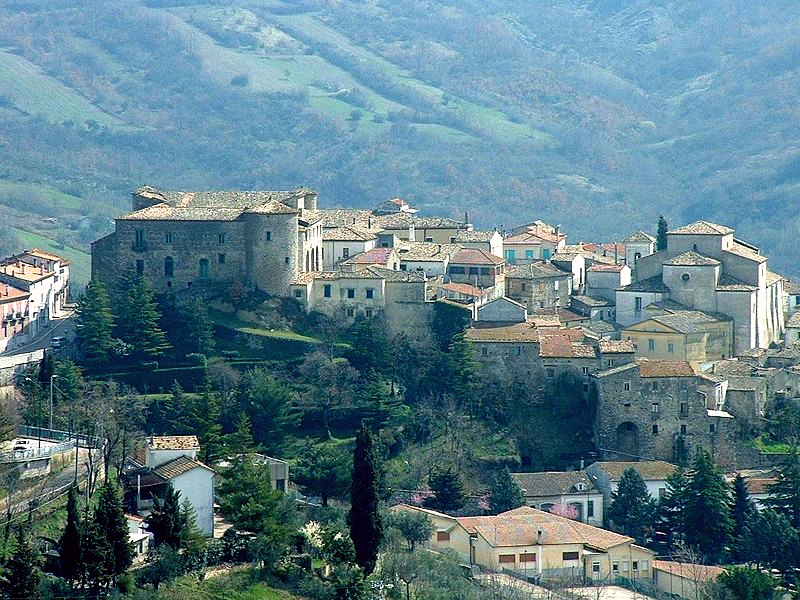
Among the most beautiful borghi (old villages) in Italy, Zungoli clings to a hill of tufo (volcanic tuff) hollowed by ancient caves, where caciocavallo podolico cheese still ripens in the cool.
 Villages
Castellabate
Castellabate (SA)
Looking down from on high over the Cilento sea, the borgo (old village) that enchanted the film 'Benvenuti al Sud' weaves alleys, the castle of the Abbot and sunsets that descend toward Santa Maria.
 ◆ Villages
Cusano Mutri
Cusano Mutri (BN)
Houses of white limestone clinging to the slopes of the Mutria, medieval alleys and porticoes that survived the 1688 earthquake, and in autumn the air that smells of porcini mushrooms.
 ◆ Villages
Summonte
Summonte (AV)
The borgo (old village) gathers around the Angevin tower, a stone cylinder sixteen metres high from which, among the clouds, the gaze runs over all of Irpinia.
- ◆ Villages
Rocca San Felice
Rocca San Felice (AV)
Rocca San Felice gathers its houses around a ruined castle, not far from the Mefite, the sulphurous pool the ancients believed to be a threshold of the underworld.
 ◆ Villages
Nusco
Nusco (AV)
Nusco, the balcony of Irpinia, looks down over valleys and mountains from its stone centre huddled around the cathedral.
 ◆ Villages
Savignano Irpino
Savignano Irpino (AV)
On the border with Puglia, Savignano Irpino spreads alleys and stone houses along the ridge, among the most beautiful villages in Italy.
 ◆ Villages
Quaglietta
Calabritto (AV)
A hamlet of Calabritto, Quaglietta is reborn as a scattered hotel around its Lombard castle, suspended on a spur between the Sele and the mountains.
 Villages
Pietrelcina
Pietrelcina (BN)
Amid alleys and tufo houses, Pietrelcina guards the birthplace of Padre Pio and the sites of his childhood, a destination for pilgrims from all over the world.
 ◆ Villages
Roccamonfina
Roccamonfina (CE)
Nestled in the crater of an extinct volcano, Roccamonfina smells of chestnut groves and guards the Ciampate del Diavolo, ancient human footprints pressed into the volcanic rock.
 ◆ Villages
Trentinara
Trentinara (SA)
Perched on the cliff gazing over the gulf as far as Capri, Trentinara is the terrace of the Cilento, from which you launch into flight above the Sele plain.
- Villages
Borgo di Cetara
Cetara (SA)
A fishing village that guards the colatura di alici, heir to Roman garum: nets, tuna and the majolica-tiled bell tower overlooking a small beach.
 ◆ Villages
Marina della Lobra
Massa Lubrense (NA)
Colourful boats hauled ashore, nets spread out and the church facing the sea: below Massa Lubrense a small fishing harbour survives, far from the clamour of the coast.
 ◆ Villages
Tocco Caudio
Tocco Caudio (BN)
On the rocky spur remains the old borgo (village), abandoned after the 1980 earthquake: you climb on foot among ruins and empty churches reclaimed by nature.
 ◆ Villages
Sturno
Sturno (AV)
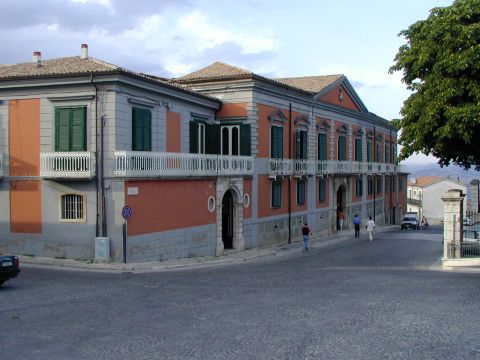
The village once called Frigento-Sturno that wanted a name of its own, clinging to a ridge swept by the wind of the Ufita.
 ◆ Villages
Capocastello di Mercogliano
Mercogliano (AV)
The medieval borgo (old village) below the castle, largely abandoned after the earthquakes: arches, stairs that lead to no door any more, and overhead the shadow of Montevergine.
 ◆ Villages
Chiusano di San Domenico
Chiusano di San Domenico (AV)
A balcony over the Calore valley, with a castle-turned-multimedia-museum and the silence of villages that time forgot to wear down.
 ◆ Villages
Paternopoli
Paternopoli (AV)
Stone alleys and cellars dug into the tufo (volcanic tuff) where the Aglianico rests: here wine is not a product, it is kinship.
 ◆ Villages
Fontanarosa, il borgo della pietra e del Carro
Fontanarosa (AV)
Every 14 August a 28-metre obelisk of woven straw is dragged by oxen towards the Madonna, held upright by dozens of hemp ropes: a fragile giant that the whole village holds up with its bare hands. And the stone of Fontanarosa ended up in the Reggia di Caserta.
 ◆ Villages
Luogosano
Luogosano (AV)
Locus sanus, the healthy place: that is what they called it, for its air and its waters, amid the vine rows of the Taurasi.
 ◆ Villages
Sant'Andrea di Conza
Sant'Andrea di Conza (AV)
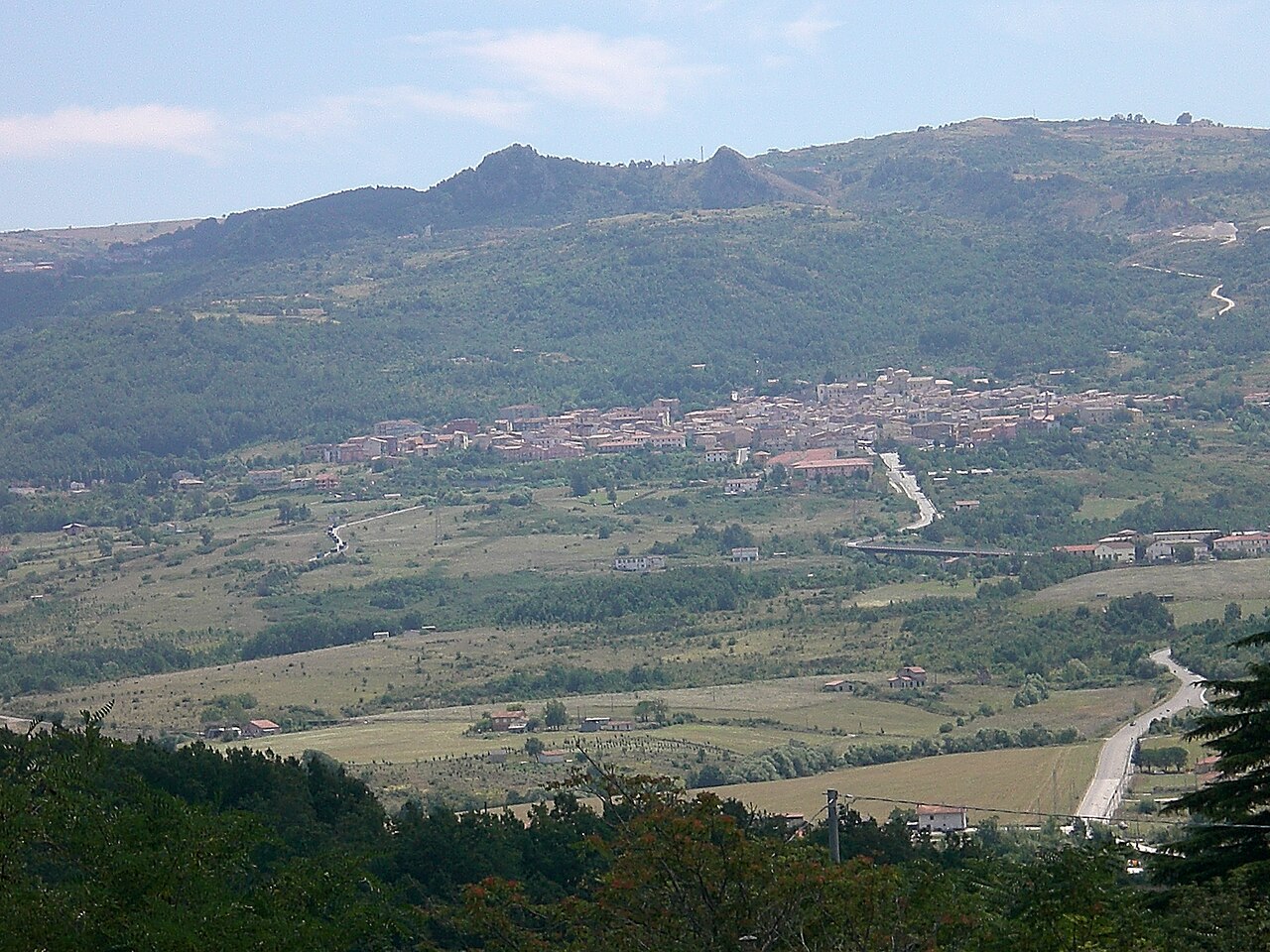
The bishop's palace and the cathedral of a tiny village that for centuries housed the bishops of Conza, after Conza had been abandoned to landslide and earthquake.
 ◆ Villages
Teora
Teora (AV)
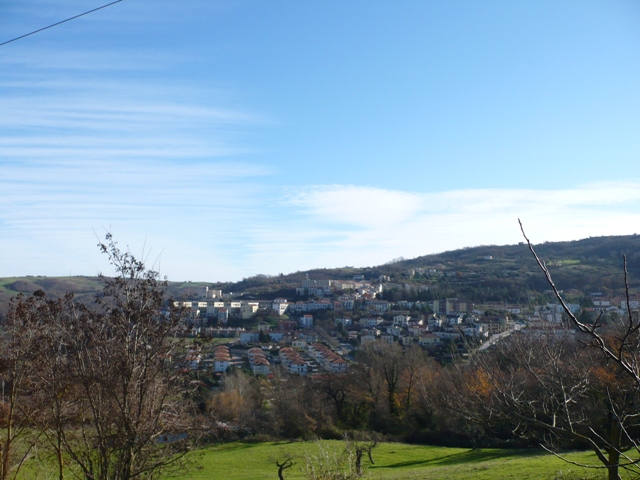
In 1980 Teora lost more than a hundred inhabitants and nearly all its houses. The rebuilt village keeps, in its old core, the walls left standing like scars.
 ◆ Villages
Castel Baronia
Castel Baronia (AV)
The heart of the Baronia, with its tower and carved portals, in a borderland where Irpinia is already turning into Puglia.
 ◆ Villages
Sant'Angelo all'Esca
Sant'Angelo all'Esca (AV)
Two hundred souls looking out over the Calore, among the vineyards of Taurasi: one of those villages where the silence of three in the afternoon is a genuine experience.
 ◆ Villages
Candida
Candida (AV)
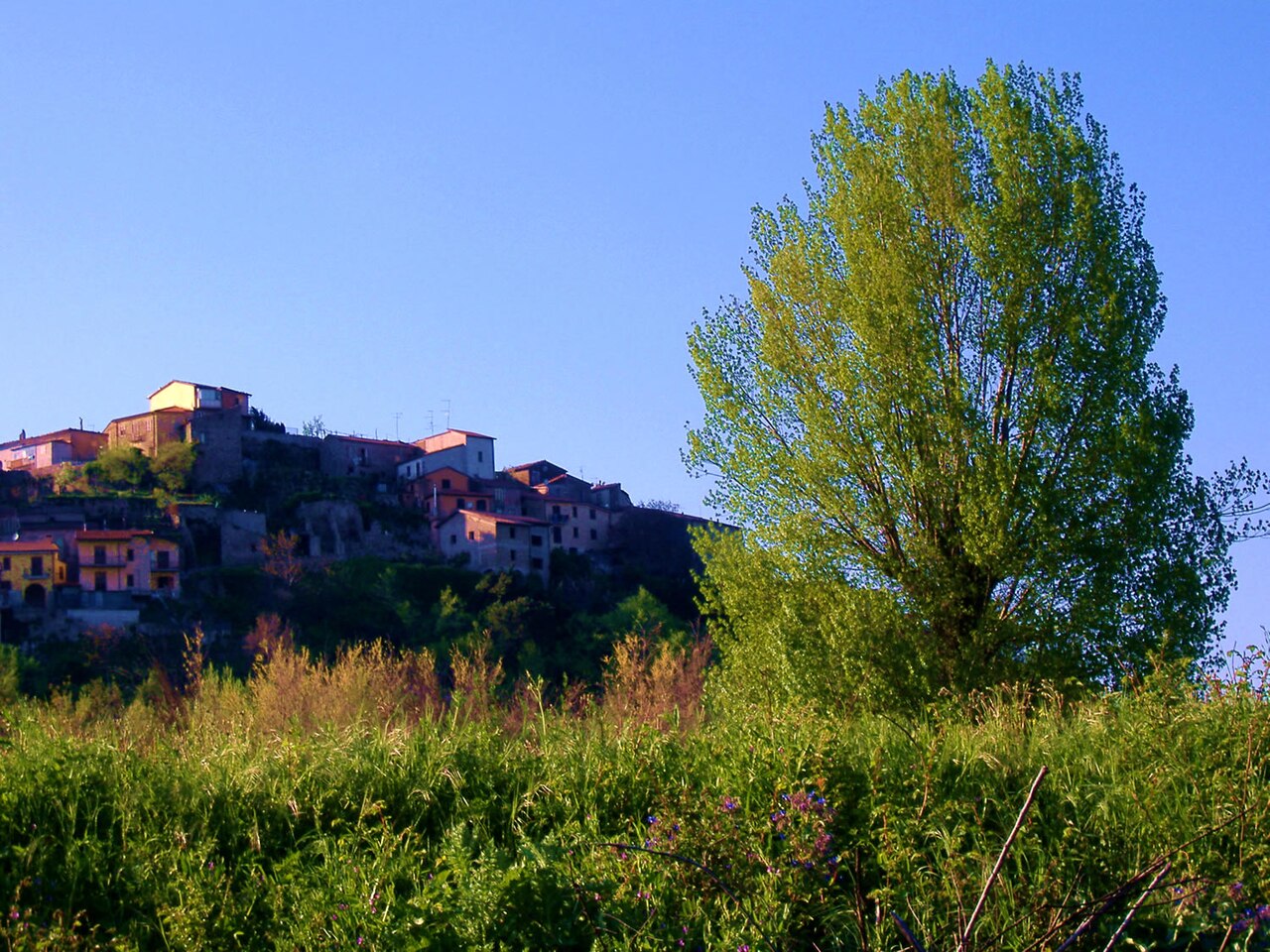
A white borgo (old village) on a hill, with the ruins of its castle and a view that on summer evenings reaches all the way to the Partenio.
 ◆ Villages
Civitella Licinio
Cusano Mutri (BN)
A hamlet that once belonged to Cerreto and has kept the slow gait of its stone houses, the Matese at its back and the vineyards in front. No tourist signs: only alleys and old men who greet you.
 ◆ Villages
Borgo di Pietraroja
Pietraroja (BN)
A handful of houses clinging to the Civita, suspended over the canyon, where ham is still cured in the mountain air. The village lives in the shadow of its dinosaur, but it is the rock underfoot that tells of a hundred million years.
 ◆ Villages
Campoli del Monte Taburno
Campoli del Monte Taburno (BN)
A medieval borgo (old village) on a rocky spur, with a pre-Roman tower and a thirteenth-century church. From its alleys start the trails that climb through beech and chestnut woods until, suddenly, Vesuvius appears.
 Villages
Torre dei Provenzali e il croccantino
San Marco dei Cavoti (BN)
Porta Grande, Porta di Rose, Porta Palazzo: you enter the borgo (old village) just as people entered it in the Middle Ages, when Provençal settlers founded it. And you leave with a croccantino, the nut brittle invented here in 1891 by Innocenzo Borrillo.
- ◆ Villages
Mercato di Porta Nolana
zona Garibaldi
Beneath the Aragonese arch of Porta Nolana the fish market erupts with voices, crates of seawater and shellfish still alive: Naples at its most unvarnished.
- ◆ Villages
Borgo di Casamale
Somma Vesuviana
The medieval heart enclosed by Aragonese walls and towers, a tangle of alleys where every four years the Festa delle Lucerne lights thousands of little lamps.
- Villages
Marina Grande di Sorrento
Sorrento
Below the town's cliffs, the old fishermen's borgo (old village) with houses faded by the salt, boats hauled ashore and trattorias fragrant with frying.
- ◆ Villages
Casale Vascello
Procida
An old fortified casale at the foot of Terra Murata: coloured houses press around a courtyard, with the arched vefi (external staircases) once shielding the inhabitants from Saracen raids.
- ◆ Villages
Atena Lucana
Vallo di Diano
One of the oldest towns of the Vallo di Diano, it keeps megalithic walls and a village of cobbled lanes on the acropolis, looking out over the valley and the Monti della Maddalena.
- ◆ Villages
Scario e il porto
San Giovanni a Piro
Pastel-coloured houses climbing up from the seafront of the Golfo di Policastro, a quiet harbour from which the boats set sail for the coves of the Infreschi.
- ◆ Villages
Pietramelara
alto casertano
The village of the twelve towers below Monte Maggiore, entered through an arch frescoed with Christ and the Madonna, into a tangle of medieval stairways and alleys.
- Villages
'A Chiena
Campagna (SA)
In summer the river Tenza is diverted through the alleys of the old town, and Campagna becomes a village crossed by water, all bucketfuls and barefoot strolling.
- ◆ Villages
Grotte del vino di Zampaglione
San Gregorio Magno (SA)
Along Via Bacco, more than six hundred grottoes carved into the rock keep wine at a constant temperature: old cells turned cellars that fill with music every late August.
- Villages
Giffoni: Film Festival + borgo Terravecchia
Giffoni Valle Piana (SA)
Every summer the young jurors of the film festival bring the town to life, while above it Terravecchia keeps watch, the medieval village with its castle and stone houses.
- ◆ Villages
Auletta — borgo antico/parco a ruderi
Auletta (SA)
The old town, frozen at the 1980 earthquake, has become a park of ruins where vegetation has taken back the collapsed houses clinging to the rocky slope.
- ◆ Villages
Cannalonga — Fiera della Frecagnola
Cannalonga (SA)
For more than five centuries, in the second week of September, the village fills with wooden stalls where boiled goat is shared out, a pastoral memory of the Cilento.
- Villages
Apice Vecchia
Apice (BN)
The 1962 earthquake emptied the houses in a single night: today Apice Vecchia remains a suspended village, its furniture still in place and its doors ajar, where time has stopped flowing.
- ◆ Villages
Conza della Campania Vecchia
Conza della Campania (AV)
Razed by the 1980 earthquake, old Conza brought to light the ancient Roman Compsa: an archaeological park where the ruins tell of a city lost twice over.
- ◆ Villages
Aquilonia Vecchia (Carbonara)
Aquilonia (AV)
Destroyed by the 1930 earthquake, old Aquilonia — the ancient Carbonara — remains a maze of unroofed walls and stairs that no longer lead to any door.
- ◆ Villages
Melito Irpino Vecchia
Melito Irpino (AV)
Abandoned after the 1962 earthquake and the landslides, old Melito Irpino remains a ghost village among the fields, its empty houses still facing out over the Ufita valley.
- ◆ Villages
Sant'Angelo a Fasanella
Sant'Angelo a Fasanella (SA)
Stone houses clinging to the Alburni mountains, where a church hewn into the rock opens onto the void and the mysterious Antece keeps watch from a thousand-year-old boulder.
- ◆ Villages
Scala, borgo più antico della Costiera
Scala (SA)
The oldest town of the Costiera, perched opposite Ravello, made of silent hamlets, lemon terraces and paths descending toward the Valle delle Ferriere.
- ◆ Villages
Borgo di Sassinoro
Sassinoro (BN)
On the border with Molise, Sassinoro is the borgo (old village) of the waters: a dozen springs that feed the Tammaro, silent alleys and the bell tower of San Michele on the square.
- ◆ Villages
Borgo di Caiazzo
Caiazzo (CE)
A medieval borgo (old village) overlooking the Volturno valley, among stone alleys and olive groves, where the gastronomic tradition, from conciato romano to pizza, has regained fame.
- Villages
Centro storico di Forio
Forio (NA)
The alleys of Forio are not crooked by chance: they were designed to confuse Ottoman corsairs, a labyrinth that stole precious minutes from the escape. To walk them today is to get lost on purpose, just as they were meant to.
- ◆ Villages
Sant'Angelo dei Lombardi
Sant'Angelo dei Lombardi (AV)
At 19:34 on 23 November 1980 the earth split open here and the town became the symbol of a national wound. Today the risen borgo (old village) lives alongside its empty spaces, and the Castello Imperiale watches over a square that has learned how to begin again.
- ◆ Villages
Andretta
Andretta (AV)
An amphitheatre of honey-coloured houses looking out over the Ofanto, homeland of emigrants and of that Ferdinando De Rosa who tried to kill a king. The old centre, stitched back together after the earthquake, is one of the most elegant in the Alta Irpinia.
- ◆ Villages
Vallata
Vallata (AV)
A land of wheat and bread, suspended between Irpinia and Daunia, where the stone doorways tell of families who crossed oceans and came back.
- ◆ Villages
Montecalvo Irpino e il Castello Pignatelli
Montecalvo Irpino (AV)
One of the most intact borghi (old villages) of eastern Irpinia, with the Pignatelli castle and the alleys of the Jewish quarter.
- ◆ Villages
Greci — Katundi, l'unico borgo arbereshe della Campania
Greci (AV)
At 821 metres, in the middle of nowhere, they still speak the Albanian of the fifteenth century: Skanderbeg left a garrison here after a battle he won, and those soldiers never went home. The road signs are bilingual, and in the gardens the kalive still stand — the shepherds' stone huts.
- ◆ Villages
Flumeri e il Giglio
Flumeri (AV)
Here too a plant obelisk, the Giglio, is hauled through the streets in honour of San Rocco: a rite Irpinia repeats in a thousand variants, as if the world had to be set upright again every year.
- ◆ Villages
Castelfranci
Castelfranci (AV)
The castle of the Franks in the Aglianico valley, among terraced vineyards and the waters of the Calore, which rises just above.
- Villages
Mirabella Eclano e il Carro
Mirabella Eclano (AV)
On the third Saturday of September a 25-metre straw obelisk is dragged by oxen in honour of the Madonna Addolorata: UNESCO heritage as a shoulder-borne procession machine, and one of the most archaic spectacles to be seen in Italy.
- ◆ Villages
Chianche
Chianche (AV)
Fewer than five hundred inhabitants and one of the purest Greco di Tufo wines in existence: a village that fits entirely inside a bend in the road.
- ◆ Villages
Torre Le Nocelle
Torre Le Nocelle (AV)
A tower, a hazel grove, a ridge: the village's name is its entire description.
- Villages
Ospedaletto d'Alpinolo
Ospedaletto d'Alpinolo (AV)
It began as a hospice for pilgrims bound for Montevergine, and it still smells of sour cherries and torrone: the last stop before the sacred mountain.
- ◆ Villages
Senerchia Vecchia
Senerchia (AV)
On 23 November 1980 the mountain unloaded the village into the valley. The old centre was never rebuilt: houses split open like boxes, caved-in roofs, and the vegetation taking back the alleys metre by metre.
- ◆ Villages
Borgo e castello di Ciorlano
Ciorlano (CE)
The smallest municipality in the province: an eleventh-century stronghold, a pentagonal tower, alleys where copper is still hammered. Not far off lies the Lievoco, a pool that boils from a breath coming out of the ground.
- ◆ Villages
Borgo abbandonato di Marzanello Vecchio
Vairano Patenora (CE)
A stone village born around the year 1000 and emptied out without anyone knowing why: what is left are walls devoured by brambles and the little church of San Nicola, still standing guard over a borgo (old village) of ghosts.
- ◆ Villages
Presenzano — borgo e ruderi del castello
Presenzano (CE)
Clinging to the hill above ancient Rufrae, the borgo (old village) looks down on the artificial lake and the plain of the Gustav Line; from the ruins of the Lombard castle the eye runs all the way to the Matese.
- ◆ Villages
Borgo medievale di Carinola
Carinola (CE)
A Gothic-Catalan borgo (old village) left almost intact and almost ignored: the bell tower with its dome of yellow and green majolica, the Renaissance loggia of Casa Novelli, and at the top the ruins of count Riccardo's castle.
- ◆ Villages
Borgo di Treglia
Pontelatone (CE)
Stone alleys clinging to the flank of the Trebulani mountains, where the modern village literally rests on the shoulders of a Samnite city.
- ◆ Villages
Borgo fantasma di Croce
Rocchetta e Croce (CE)
The houses are all still there, shutters half closed, but nobody lives inside any more: the inhabitants left one after another, with no earthquake and no war, simply tired of the mountain. What remains is the wind passing through the empty rooms.
- Villages
Le Campestre e il Conciato Romano
Castel di Sasso (CE)
In a stone house among the Trebulani mountains, inside terracotta amphorae, rests the oldest cheese in Italy: washed with the water the pasta was boiled in, rubbed with oil, wine and wild thyme, then forgotten in the dark for two years. This is not a lunch, it is a liturgy.
- ◆ Villages
Port'Arsa e le mura longobarde del Triggio
Benevento (BN)
The only surviving Lombard gate, raised with stones stolen from the Roman monuments: you pass through it and end up in the alleys of the Triggio, where the medieval street plan has never moved.
- ◆ Villages
San Lupo e la casa dei rivoluzionari del Matese
San Lupo (BN)
In April 1877 two English tourists rented a house here: they were Malatesta and Cafiero, and they were unloading rifles. From this silent village set out the anarchist revolution that lasted five days.
- ◆ Villages
Borgo fantasma di Castelpoto
Castelpoto (BN)
Abandoned after the 1980 Irpinia earthquake: stone houses, empty alleys, and the Torre dell'Orologio with its hands frozen at 13:13.
- Villages
Torrecuso, borgo dell'Aglianico del Taburno
Torrecuso (BN)
Four hundred and twenty metres up, Lombard alleyways and thirteen hundred hectares of vineyards spread out below the village: this is where Aglianico del Taburno DOCG is made, and Palazzo Cito houses the wine museum.
- ◆ Villages
Borgo medievale di Molinara
Molinara (BN)
A Lombard castrum of tufo (volcanic tuff) at 592 metres, five towers, Porta Ranna, and the flayed walls of San Bartolomeo where traces of frescoes still surface: a ghost town that has started breathing again.