Villa Damecuta
Anacapri
Hidden gemHistory & archaeology
The story
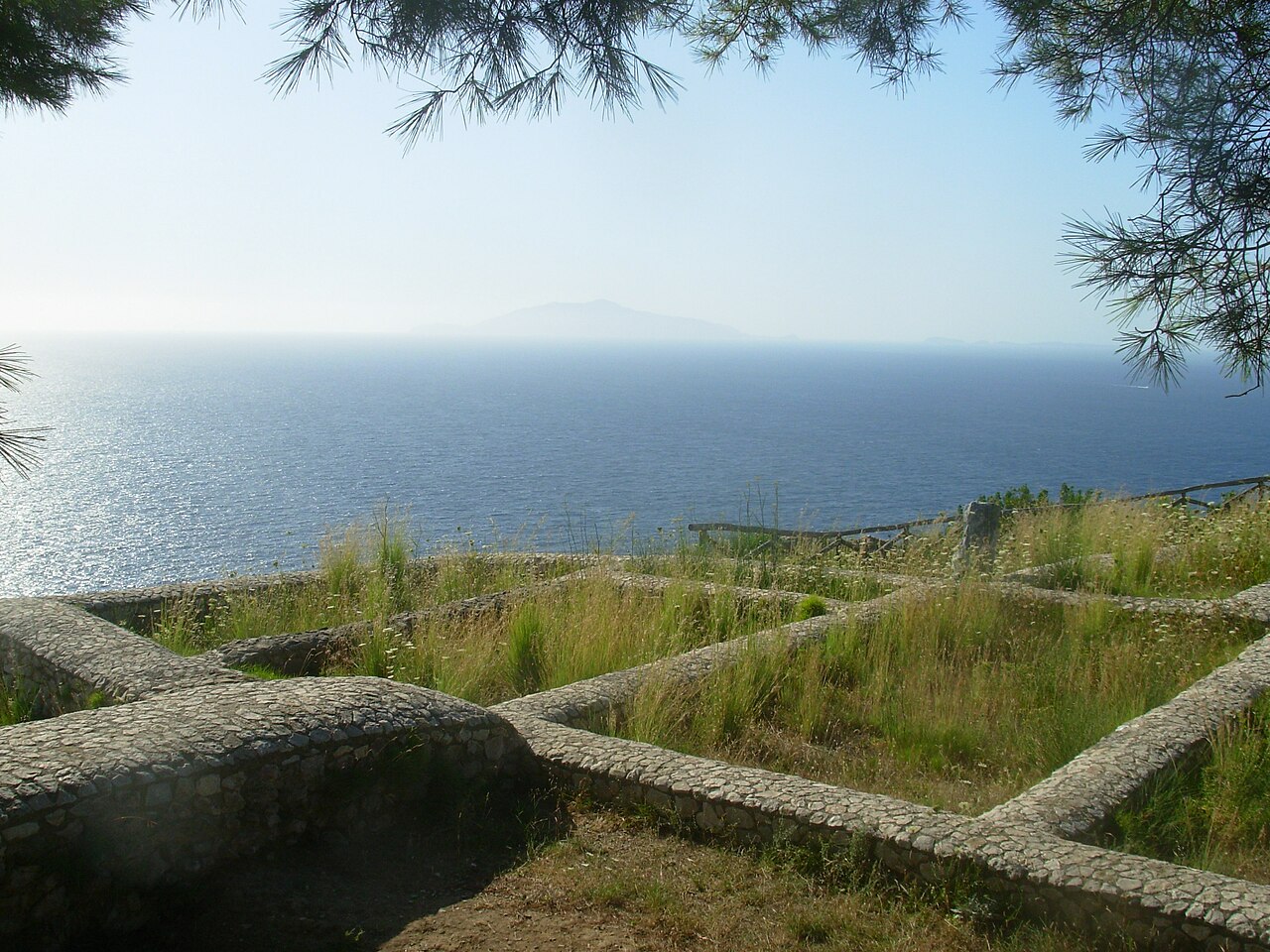
The remains of an imperial Roman villa on a sheer promontory, among olive trees and a medieval tower, with the gaze stretching toward Ischia.
Access
🎟️ combined ticket
The story
Villa Damecuta is one of the twelve villas that the emperor Tiberius had built on Capri, on the north-western promontory of Anacapri, between 27 and 36 AD. Facing the open sea, it stands right above the Blue Grotto, to which in the Roman age it was probably connected by an internal passage. It was abandoned after the eruption of AD 79.
What to see
The remains of the imperial residence arranged along a scenic walk: a long loggia with a portico, which opened towards the gulf, ended in a wide semicircular belvedere. At the far end, the Tower of Damecuta, erected in the Middle Ages against the pirates and later used as a small fort. An archaeological site immersed in the greenery, sheer above the sea.
How to get there
- Hydrofoil
- Ferry
Tips
The site is run as an archaeological park (Musei di Capri): it has its own entrance and hours (generally from 10 until an hour before sunset, closed on Mondays), to be checked on the official channels. From Anacapri it is reached in a few minutes by bus or in half an hour on foot.
Frequently asked questions
What is Villa Damecuta?
One of the villas of the emperor Tiberius on Capri, on the north-west promontory of Anacapri, above the Blue Grotto; today an archaeological site with a medieval tower.
What can you see at Villa Damecuta?
The remains of the imperial villa with the panoramic loggia and the semicircular belvedere, and the Tower of Damecuta, in a position sheer above the sea.
How do you visit it?
It is an archaeological park with its own entrance and hours (generally 10-sunset, closed on Mondays): it is best to check on the official channels. From Anacapri, a few minutes by bus or half an hour on foot.
More gems in Anacapri
 In the water & diving
Grotta Azzurra
Anacapri
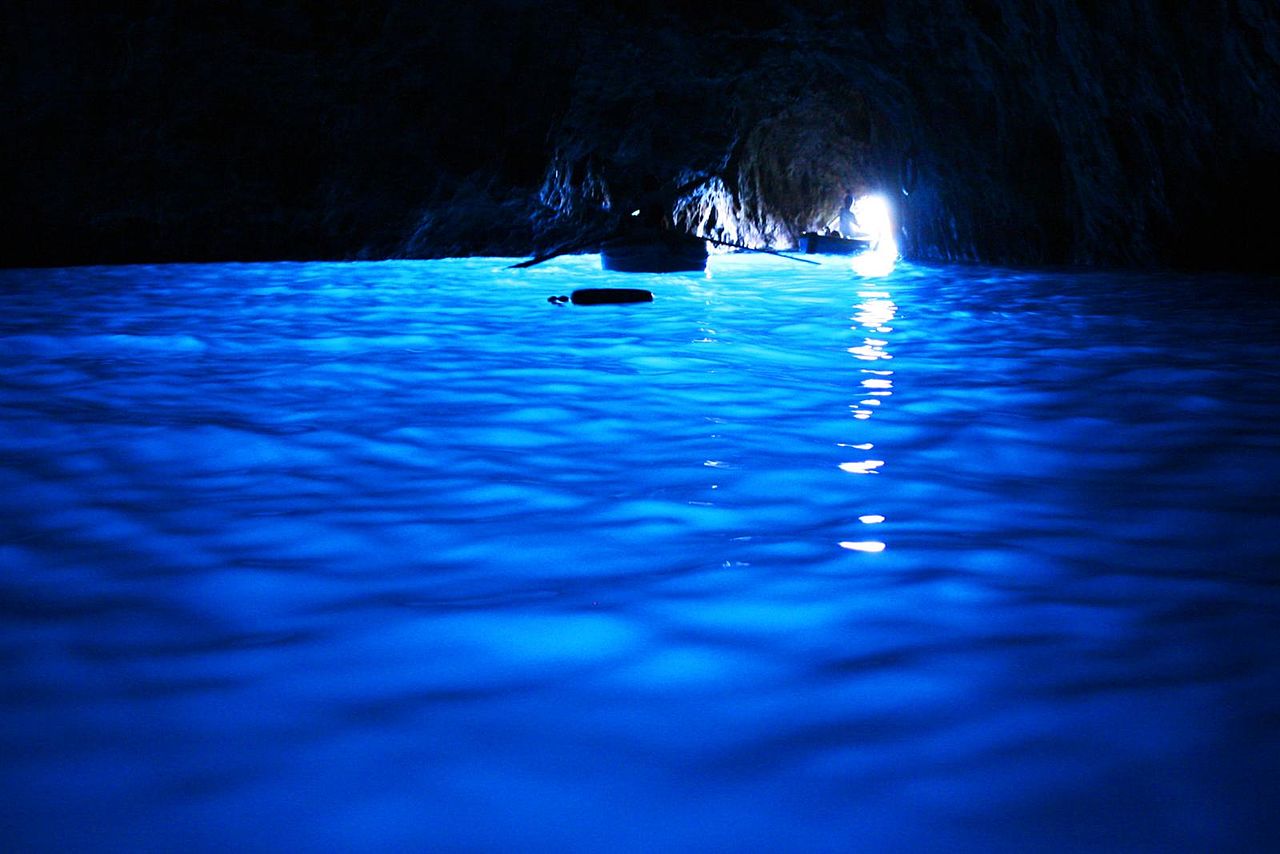
You enter lying flat in a small rowing boat through a low cleft, and inside the water lights up in a luminous blue that seems to rise from the depths.
 Nature
Monte Solaro (seggiovia)
Anacapri
The chairlift climbs in silence over vineyards and gardens to the island's highest peak, where the eye takes in the whole gulf.
 ◆ Sacred art
Eremo di Cetrella
Anacapri
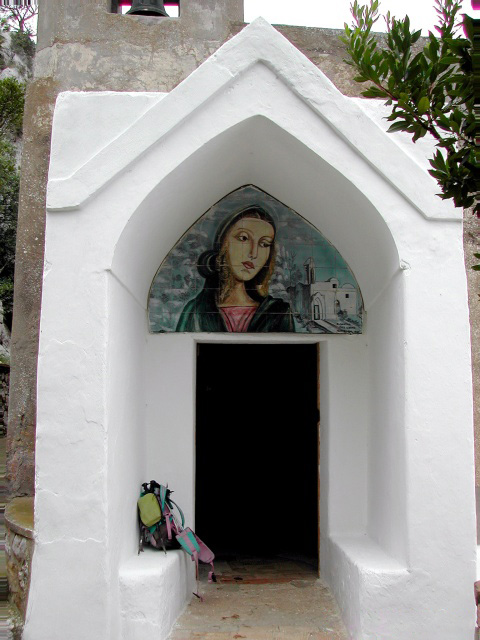
A small Marian hermitage tucked among the rocks below Monte Solaro, reached on foot through the scent of the scrub and the silence of the heights.
 Museums
Villa San Michele (Axel Munthe)
Anacapri
The white house that Swedish doctor Axel Munthe built among ancient columns and pergolas, with its granite sphinx gazing out over the Gulf of Naples.
 ◆ History & archaeology
Casa Rossa
Anacapri
The Pompeian-red residence an American colonel wanted in Moorish style, today the keeper of the Roman statues recovered from the waters of the Grotta Azzurra.
 Sacred art
Chiesa di San Michele (pavimento maiolicato)
Anacapri
A majolica floor tells of Adam and Eve driven out of the Garden of Eden, to be admired from above to take in the full sweep of its eighteenth-century colours.
More gems: History & archaeology
 History & archaeology
Statua del Nilo ("Corpo di Napoli")
Largo Corpo di Napoli
A river god reclining for centuries in a quiet square, whom Neapolitans call the Corpo di Napoli: he leans his bearded head among putti and a sphinx.
 ◆ History & archaeology
Cappella Pontano
Decumani
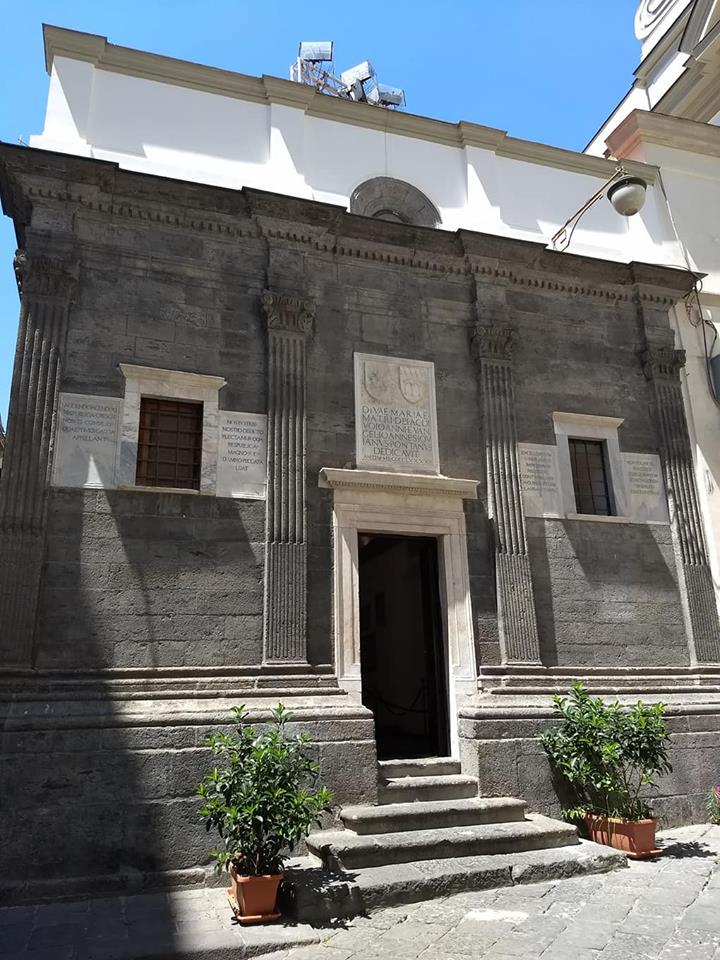
A small Renaissance temple on the decumanus, which the humanist Pontano had raised for his lost wife, still lined inside with Latin inscriptions dictated by his grief.
 ◆ History & archaeology
Sedile di Nilo
Decumani
On the corner of a small Spaccanapoli square survives the seat of the old Nilo quarter, where the nobles once gathered before the sedili of Naples vanished.
 ◆ History & archaeology
Port'Alba
Napoli
A seventeenth-century arch cut into the walls leads to the booksellers' street, where stalls of second-hand volumes pile up among yellowed pages and the shade of the old city.
 ◆ History & archaeology
Porta Capuana
zona Garibaldi
Between two cylindrical towers an arch of white marble opens like a Renaissance triumph, the old city gate facing the road to Capua.
 ◆ History & archaeology
Real Albergo dei Poveri
P.za Carlo III
An eighteenth-century colossus willed by Charles of Bourbon to shelter the poor of the Kingdom: a façade running more than three hundred metres, among the largest historic buildings in Europe.