Sedile Dominova
Sorrento
Hidden gemHistory & archaeology

The story
The only surviving noble sedile in Campania, an open sixteenth-century loggia with a frescoed dome and majolica tiles, today a club for the town's elders on the corner of two alleys.
Access
€/FREE
The story
The Sedil Dominova, in the centre of Sorrento, is the only Neapolitan 'seat' to have survived in its original form: the open loggia where, from the fourteenth century, the nobles of the city gathered to govern it. It was born in the fourteenth century, after the families of the western part abandoned the old seat of Porta, and took the name of Domus Nova.
What to see
The sixteenth-century loggia, with the frescoed and majolica-tiled dome and the arches open onto via San Cesareo, is a rare document of the civic life of ancient Sorrento. It is admired from the road, in the pedestrian heart of the old centre.
Tips
It is in via San Cesareo, the street of the workshops of the centre: you cross it while strolling. A look at the frescoed dome is worth the stop. Sorrento is explored entirely on foot.
Frequently asked questions
What is the Sedil Dominova of Sorrento?
An open loggia where from the Middle Ages the nobles of the city gathered; it is the only Neapolitan 'seat' preserved in its original form.
Since when does the Sedil Dominova exist?
Since the fourteenth century, when the noble families of the western part of Sorrento built a new one, the Domus Nova.
Where is the Sedil Dominova?
In via San Cesareo, in the old centre of Sorrento.
More gems in Sorrento
 Nature
Vallone dei Mulini
Sorrento
A canyon in the heart of the town where an old grain mill crumbles under the vegetation, wrapped in ferns and damp air, in a microclimate that time has forgotten.
 ◆ Museums
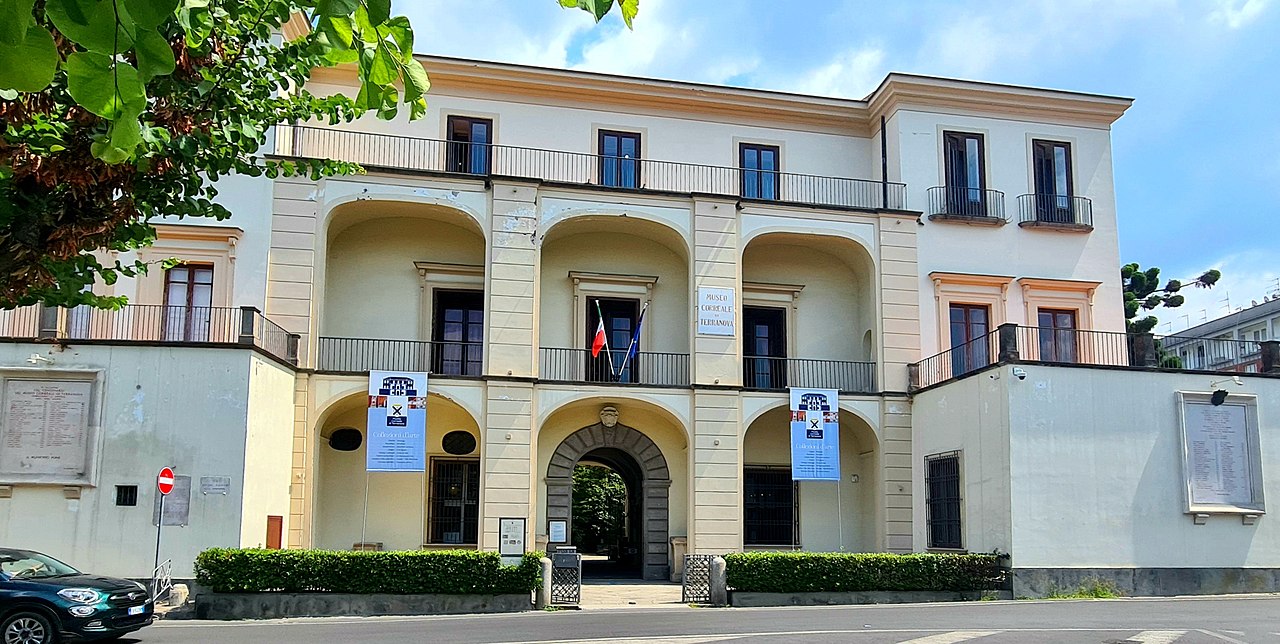
Museo Correale
Sorrento
In the family villa of the Correale counts: porcelain, inlaid wood and eighteenth-century views of Naples, and a garden that runs down to a belvedere over the sea.
- Villages
Marina Grande di Sorrento
Sorrento
Below the town's cliffs, the old fishermen's borgo (old village) with houses faded by the salt, boats hauled ashore and trattorias fragrant with frying.
- Sacred art
Villa Comunale di Sorrento e Chiesa/Chiostro di San Francesco
Sorrento
A terrace suspended over the gulf beside the fourteenth-century cloister of San Francesco, where interlacing arches and bougainvillea frame Vesuvius and the notes of the summer concerts.
- ◆ Nature
Giardini di Cataldo
Sorrento (NA)
You stroll beneath pergolas of lemon and orange trees in the heart of Sorrento, amid the scent of citrus and a taste of limoncello made at home by the family that tends the garden.
More gems: History & archaeology
 History & archaeology
Statua del Nilo ("Corpo di Napoli")
Largo Corpo di Napoli
A river god reclining for centuries in a quiet square, whom Neapolitans call the Corpo di Napoli: he leans his bearded head among putti and a sphinx.
 ◆ History & archaeology
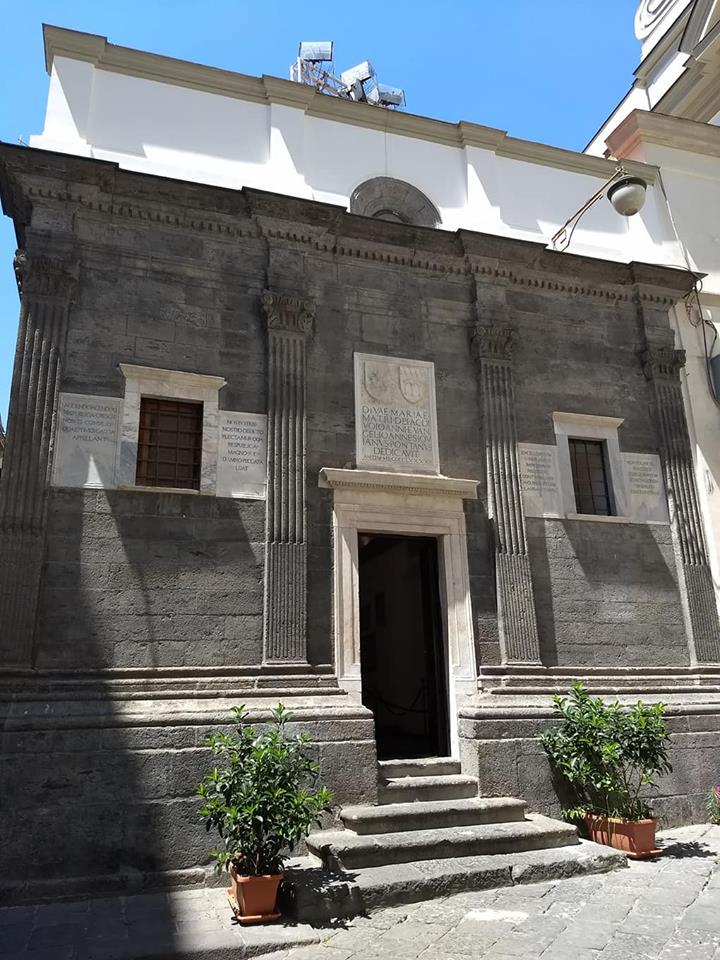
Cappella Pontano
Decumani
A small Renaissance temple on the decumanus, which the humanist Pontano had raised for his lost wife, still lined inside with Latin inscriptions dictated by his grief.
 ◆ History & archaeology
Sedile di Nilo
Decumani
On the corner of a small Spaccanapoli square survives the seat of the old Nilo quarter, where the nobles once gathered before the sedili of Naples vanished.
 ◆ History & archaeology
Port'Alba
Napoli
A seventeenth-century arch cut into the walls leads to the booksellers' street, where stalls of second-hand volumes pile up among yellowed pages and the shade of the old city.
 ◆ History & archaeology
Porta Capuana
zona Garibaldi
Between two cylindrical towers an arch of white marble opens like a Renaissance triumph, the old city gate facing the road to Capua.
 ◆ History & archaeology
Real Albergo dei Poveri
P.za Carlo III
An eighteenth-century colossus willed by Charles of Bourbon to shelter the poor of the Kingdom: a façade running more than three hundred metres, among the largest historic buildings in Europe.