Scavi di Stabia (Villa San Marco e Villa Arianna)
Castellammare di Stabia (NA)
KnownHistory & archaeology
The story
Poised on the edge of the Varano hill, the patrician villas of Stabia preserve frescoes and gardens with the breath of the sea: Roman luxury buried by Vesuvius and left almost intact.
Access
FREE, closed Tuesdays (Parco Arch. Pompei)
The story
The Excavations of Stabiae, at Castellammare di Stabia, bring back to light ancient Stabiae, destroyed by the eruption of AD 79 like Pompeii and Herculaneum. On the Varano plateau faced sumptuous villas of otium of the Roman nobility: the two most celebrated are the Villa San Marco and the Villa Arianna. The main finds are today at the Archaeological Museum of Stabiae, at the Royal Palace of Quisisana.
What to see
The Villa San Marco, the largest villa of otium of ancient Campania, with atrium, baths, peristyles and frescoes; and the Villa Arianna, famous for the fresco of the 'Flora' (or Spring of Stabiae), become the symbol of the site, and for a garden among the best preserved in the world. From the top of the plateau, panoramas over the gulf.
Tips
The site is run by the Archaeological Park of Pompeii: check hours and access arrangements on the official site before going, because the villas are a little out of the way of the centre. It is a quiet and uncrowded visit, an alternative and complement to Pompeii and Herculaneum.
Frequently asked questions
What are the Excavations of Stabiae?
The remains of ancient Stabiae, at Castellammare di Stabia, with the Roman villas of otium (Villa San Marco and Villa Arianna) buried by the eruption of AD 79.
What is there to see at the Excavations of Stabiae?
The Villa San Marco, the largest villa of otium of ancient Campania, and the Villa Arianna with the famous fresco of the 'Flora' and the rediscovered garden.
How do you visit the Excavations of Stabiae?
The site is run by the Archaeological Park of Pompeii: it is best to check hours and arrangements on the official site; the main finds are at the Archaeological Museum of Stabiae (Royal Palace of Quisisana).
More gems in Castellammare di Stabia
 Hiking
Alta Via dei Monti Lattari
Castellammare di Stabia (NA)
The ridge of the Monti Lattari, traced by a long crest path, runs among beech woods and rocky balconies suspended between the gulf of Naples and that of Salerno.
- Museums
Museo Archeologico di Stabia Libero D'Orsi
Castellammare di Stabia (NA)
The treasures of the Roman villas of Stabiae, brought to light by Libero D'Orsi on the Varano hill.
More gems: History & archaeology
 History & archaeology
Statua del Nilo ("Corpo di Napoli")
Largo Corpo di Napoli
A river god reclining for centuries in a quiet square, whom Neapolitans call the Corpo di Napoli: he leans his bearded head among putti and a sphinx.
 ◆ History & archaeology
Cappella Pontano
Decumani
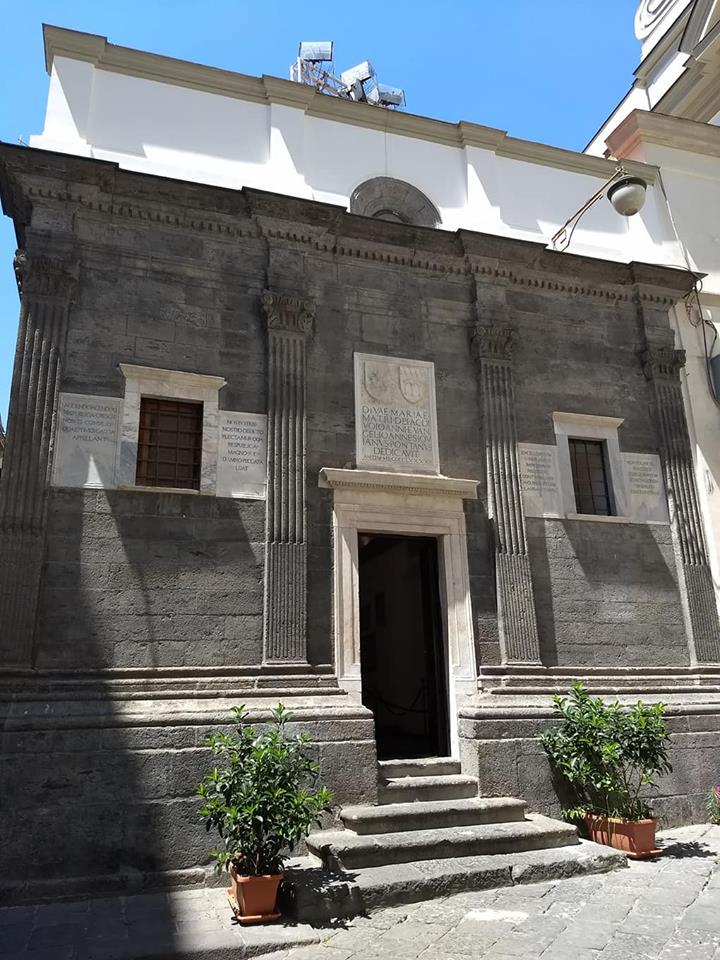
A small Renaissance temple on the decumanus, which the humanist Pontano had raised for his lost wife, still lined inside with Latin inscriptions dictated by his grief.
 ◆ History & archaeology
Sedile di Nilo
Decumani
On the corner of a small Spaccanapoli square survives the seat of the old Nilo quarter, where the nobles once gathered before the sedili of Naples vanished.
 ◆ History & archaeology
Port'Alba
Napoli
A seventeenth-century arch cut into the walls leads to the booksellers' street, where stalls of second-hand volumes pile up among yellowed pages and the shade of the old city.
 ◆ History & archaeology
Porta Capuana
zona Garibaldi
Between two cylindrical towers an arch of white marble opens like a Renaissance triumph, the old city gate facing the road to Capua.
 ◆ History & archaeology
Real Albergo dei Poveri
P.za Carlo III
An eighteenth-century colossus willed by Charles of Bourbon to shelter the poor of the Kingdom: a façade running more than three hundred metres, among the largest historic buildings in Europe.