Festa dei Gigli + Nola
Nola (NA)
FamousHistory & archaeology
The story
Every June, wooden spires tens of metres high are carried shoulder-high through the streets in honour of San Paolino, in a festival recognised by Unesco.
Access
Free event; town open
The story
The Feast of the Lilies of Nola (Festa dei Gigli) is one of the most spectacular folk festivals in the South, recognised as UNESCO intangible heritage in 2013. It is born from the story of San Paolino, bishop of Nola who in the fifth century offered himself hostage to the barbarians to free his fellow citizens: on his return he was welcomed with lilies, the flowers. It is celebrated every year in June.
What to see
Eight wooden obelisks twenty-five metres high — the 'gigli' (lilies), named after the ancient guilds (the greengrocer, the smith, the tailor…) — and a boat, decorated in papier-mâché and carried on the shoulders through the streets by teams of one hundred and twenty-eight 'cullatori' (bearers), who make them 'dance' to the rhythm of music. A collective effort that is pure Nolan identity.
Tips
The feast is lived in the streets of Nola, generally on the Sunday after 22 June: if you happen upon it, follow it with respect for the community and its tradition, amid the crowd. On other days the story of the gigli can be discovered in the town. Check the dates on the town's channels.
Frequently asked questions
What is the Feast of the Lilies of Nola?
A UNESCO-heritage folk festival in which eight wooden obelisks twenty-five metres high, the 'gigli', are carried on the shoulders through the streets; it celebrates San Paolino and is held every June.
Why are they called 'gigli' (lilies)?
From the flowers with which the people of Nola welcomed San Paolino on his return from captivity, in the fifth century; today they are great obelisks of wood and papier-mâché.
When does it take place?
Every year in June, generally on the Sunday after the 22nd, through the streets of Nola.
More gems in Nola
More gems: History & archaeology
 History & archaeology
Statua del Nilo ("Corpo di Napoli")
Largo Corpo di Napoli
A river god reclining for centuries in a quiet square, whom Neapolitans call the Corpo di Napoli: he leans his bearded head among putti and a sphinx.
 ◆ History & archaeology
Cappella Pontano
Decumani
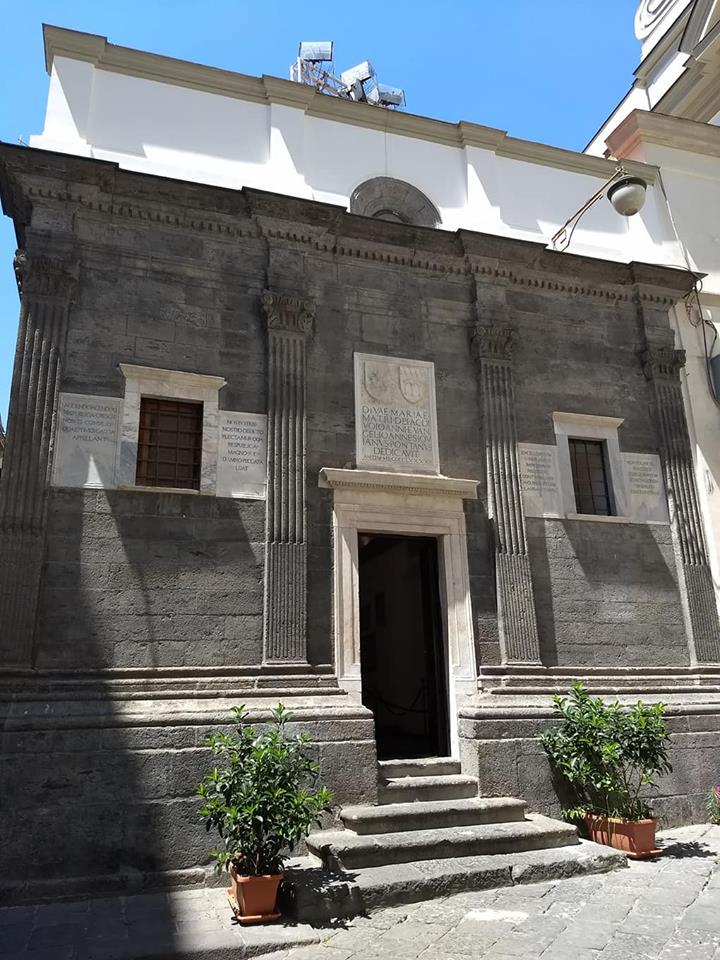
A small Renaissance temple on the decumanus, which the humanist Pontano had raised for his lost wife, still lined inside with Latin inscriptions dictated by his grief.
 ◆ History & archaeology
Sedile di Nilo
Decumani
On the corner of a small Spaccanapoli square survives the seat of the old Nilo quarter, where the nobles once gathered before the sedili of Naples vanished.
 ◆ History & archaeology
Port'Alba
Napoli
A seventeenth-century arch cut into the walls leads to the booksellers' street, where stalls of second-hand volumes pile up among yellowed pages and the shade of the old city.
 ◆ History & archaeology
Porta Capuana
zona Garibaldi
Between two cylindrical towers an arch of white marble opens like a Renaissance triumph, the old city gate facing the road to Capua.
 ◆ History & archaeology
Real Albergo dei Poveri
P.za Carlo III
An eighteenth-century colossus willed by Charles of Bourbon to shelter the poor of the Kingdom: a façade running more than three hundred metres, among the largest historic buildings in Europe.