Parco Archeologico di Paestum
Capaccio-Paestum (SA)
FamousHistory & archaeology

The story
Three Doric temples stand intact on the Sele plain, golden at sunset, Greek witnesses of a city that time has left in silence.
The story
Founded by the Greeks of Sybaris around the sixth century BC under the name Poseidonia, the city on the Cilento coast passed later to the Lucanians and finally to Rome, which called it Paestum. Abandoned in the Middle Ages because of malaria and marshes, it stayed hidden in the scrub until, in the eighteenth century, the Bourbon road brought its temples back to light: from then on they became a stop on the Grand Tour and one of the best-preserved symbols of Doric architecture in the world.
What to see
The three great Doric temples in golden limestone are the reason to come: the so-called Temple of Neptune, almost intact, with the colonnade that still holds up its entablature; the Basilica, the oldest; and the Temple of Athena. Around them remain the streets, the forum and the amphitheatre of the ancient city. In the museum, opposite the park, the Tomb of the Diver: a dive painted two thousand five hundred years ago, the only example of Greek figurative painting of that period to have come down to us.
Tips
Come early in the morning or in the late afternoon: the raking light sets the stone aglow and dodges the summer heat. Reckon on two or three hours for park and museum together. Comfortable shoes, the area is vast and unpaved. And around here you eat the artichokes of Paestum and the buffalo mozzarella of the Sele: it is worth combining a stop.
Frequently asked questions
How much time is needed to visit Paestum?
About two to three hours to see the temples, the urban area and the museum with the Tomb of the Diver at a calm pace.
Does the park ticket also cover the museum?
Park and museum usually have an integrated ticket: it is best to check the current conditions and hours on the official site before setting off.
What is the best time for the visit?
Early morning or late afternoon, for the light on the stone and to avoid the heat, especially in summer.
More gems in Capaccio-Paestum
More gems: History & archaeology
 History & archaeology
Statua del Nilo ("Corpo di Napoli")
Largo Corpo di Napoli
A river god reclining for centuries in a quiet square, whom Neapolitans call the Corpo di Napoli: he leans his bearded head among putti and a sphinx.
 ◆ History & archaeology
Cappella Pontano
Decumani
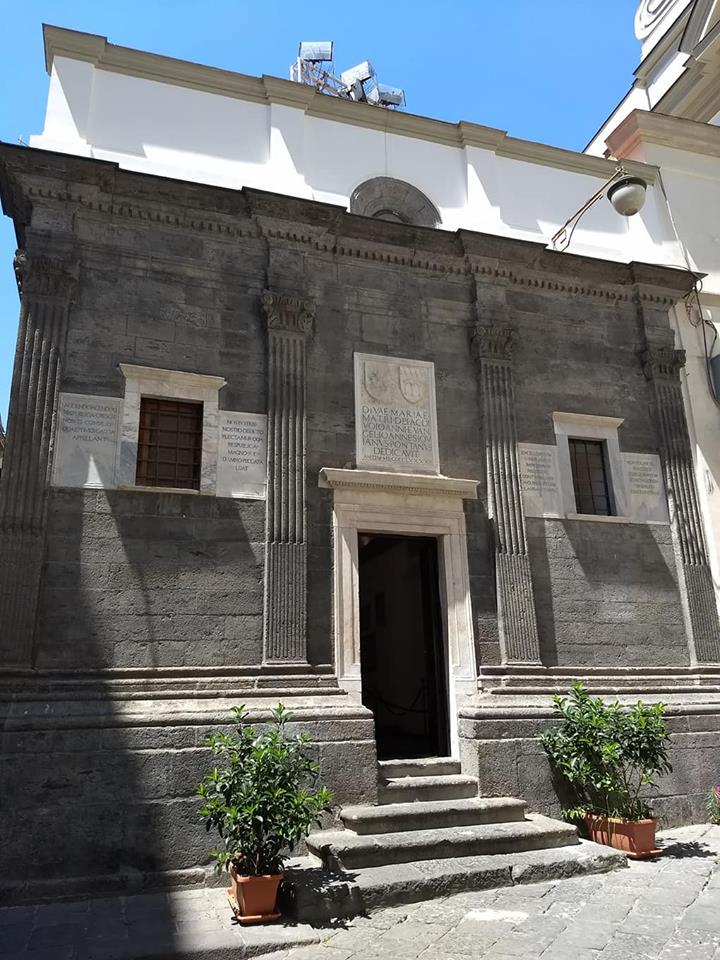
A small Renaissance temple on the decumanus, which the humanist Pontano had raised for his lost wife, still lined inside with Latin inscriptions dictated by his grief.
 ◆ History & archaeology
Sedile di Nilo
Decumani
On the corner of a small Spaccanapoli square survives the seat of the old Nilo quarter, where the nobles once gathered before the sedili of Naples vanished.
 ◆ History & archaeology
Port'Alba
Napoli
A seventeenth-century arch cut into the walls leads to the booksellers' street, where stalls of second-hand volumes pile up among yellowed pages and the shade of the old city.
 ◆ History & archaeology
Porta Capuana
zona Garibaldi
Between two cylindrical towers an arch of white marble opens like a Renaissance triumph, the old city gate facing the road to Capua.
 ◆ History & archaeology
Real Albergo dei Poveri
P.za Carlo III
An eighteenth-century colossus willed by Charles of Bourbon to shelter the poor of the Kingdom: a façade running more than three hundred metres, among the largest historic buildings in Europe.