Villa Arbusto (Coppa di Nestore)
Lacco Ameno
Hidden gemHistory & archaeology
The story
The museum villa of Lacco Ameno holds the Coppa di Nestore, an 8th-century BC vessel incised with one of the oldest Greek verses ever found.
Access
€
The story
Villa Arbusto, at Lacco Ameno, is an eighteenth-century residence (built in 1785, then bought by Angelo Rizzoli in 1952) that since 1999 has housed the Archaeological Museum of Pithecusae. It tells of the oldest Greek colony of the West, Pithekoussai, founded on Ischia as early as the eighth century BC.
What to see
The treasure of the museum is Nestor's Cup: a vase of the eighth century BC with three verses carved in the Euboean alphabet — among the oldest known Greek inscriptions, and a literary play on the cup of the hero Nestor in the Iliad. Around it, the finds of the necropolis of San Montano and the park of the villa.
How to get there
- Hydrofoil
- Ferry
Tips
The museum has its own entrance and hours: check on the official channels. You are at Lacco Ameno, a stone's throw from the Fungo and the sea. A short but precious stop to understand how ancient the Greek history of Ischia is.
Frequently asked questions
What is Nestor's Cup?
A Greek vase of the eighth century BC found on Ischia, with an inscription in the Euboean alphabet among the oldest known: it is kept in the Museum of Pithecusae, at Villa Arbusto.
What is the Museum of Pithecusae?
The archaeological museum of Lacco Ameno, in Villa Arbusto, dedicated to Pithekoussai, the oldest Greek colony of the West, founded on Ischia in the eighth century BC.
Where is Villa Arbusto?
At Lacco Ameno, on the island of Ischia, near the Fungo.
More gems in Lacco Ameno
 Views & panoramas
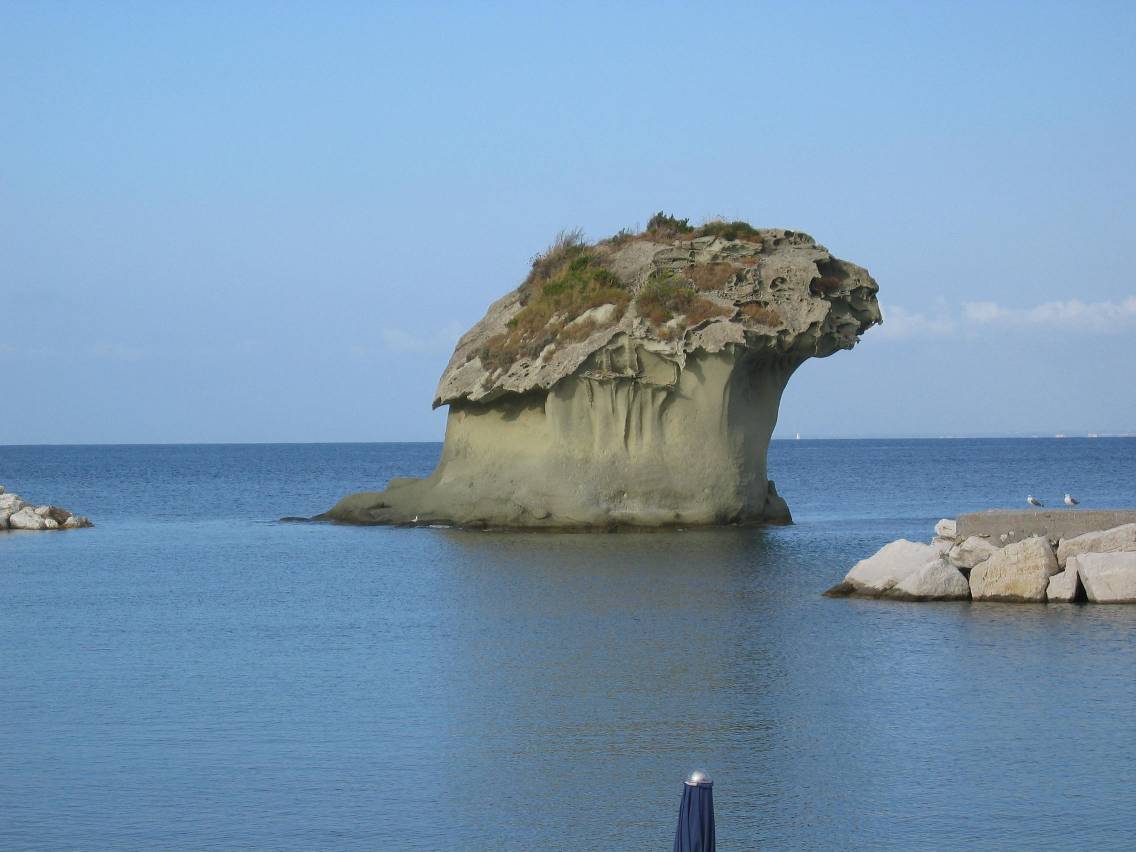
Fungo di Lacco Ameno
Lacco Ameno
A tufo rock shaped by wind and sea until it came to look like a mushroom: it rises a few steps from the shore and has become the emblem of Lacco Ameno.
 ◆ History & archaeology
Scavi e Museo di Santa Restituta
Lacco Ameno (NA)
Beneath the basilica you descend into a layered underground: Greek kilns, an early Christian necropolis, tombs and oil lamps. Above is the martyr saint who arrived from the sea on a boat without oars; below are the real dead, one stratum after another.
- In the water & diving
Parco Termale Negombo
Lacco Ameno (NA)
A botanical garden descending to the bay of San Montano, with thermal pools hidden among rare plants, artworks and the blue of the sea.
- Free beaches
Baia di San Montano
Lacco Ameno (NA)
A crescent sheltered from the winds, with shallow, clear water turning turquoise: Ischia's gentlest bay, cradled between two green headlands.
- ◆ History & archaeology
Monte Vico — acropoli di Pithekoussai
Lacco Ameno (NA)
On this promontory, in the 8th century BC, the Greeks of Euboea founded the first permanent settlement of the West. From here set out the alphabet that would become Rome's, and with it everything else.
More gems: History & archaeology
 History & archaeology
Statua del Nilo ("Corpo di Napoli")
Largo Corpo di Napoli
A river god reclining for centuries in a quiet square, whom Neapolitans call the Corpo di Napoli: he leans his bearded head among putti and a sphinx.
 ◆ History & archaeology
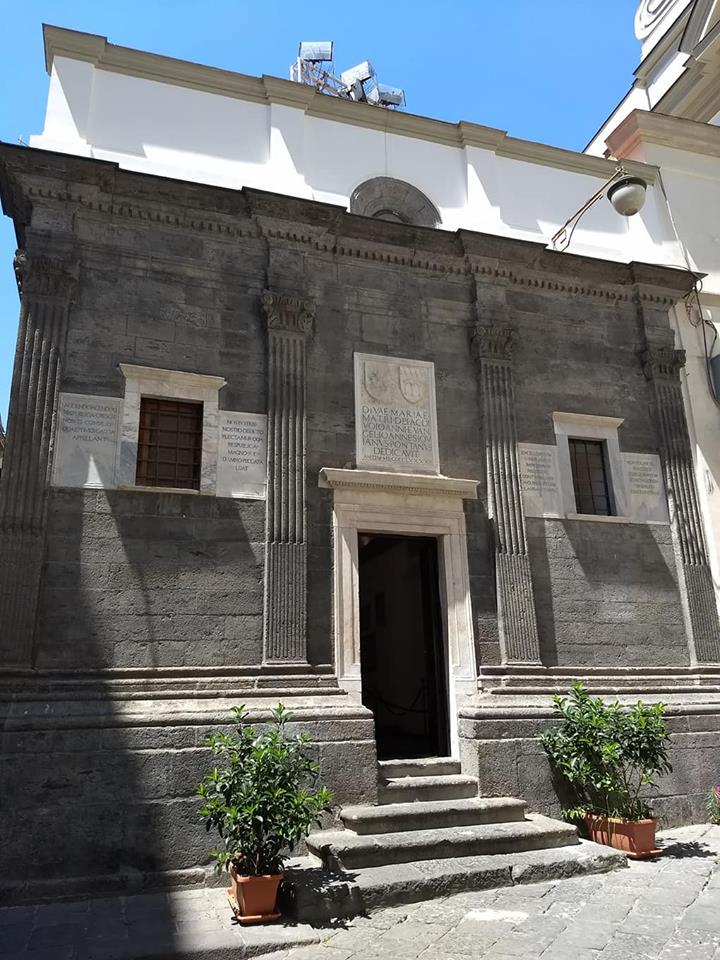
Cappella Pontano
Decumani
A small Renaissance temple on the decumanus, which the humanist Pontano had raised for his lost wife, still lined inside with Latin inscriptions dictated by his grief.
 ◆ History & archaeology
Sedile di Nilo
Decumani
On the corner of a small Spaccanapoli square survives the seat of the old Nilo quarter, where the nobles once gathered before the sedili of Naples vanished.
 ◆ History & archaeology
Port'Alba
Napoli
A seventeenth-century arch cut into the walls leads to the booksellers' street, where stalls of second-hand volumes pile up among yellowed pages and the shade of the old city.
 ◆ History & archaeology
Porta Capuana
zona Garibaldi
Between two cylindrical towers an arch of white marble opens like a Renaissance triumph, the old city gate facing the road to Capua.
 ◆ History & archaeology
Real Albergo dei Poveri
P.za Carlo III
An eighteenth-century colossus willed by Charles of Bourbon to shelter the poor of the Kingdom: a façade running more than three hundred metres, among the largest historic buildings in Europe.