Nature
109 places
 ◆ Nature
Orto Botanico
via Foria
Founded in the Napoleonic age, the botanical garden on via Foria lines up glasshouses, palms and rare species across twelve hectares: a green breath a step away from the traffic.
 ◆ Nature
Pedamentina di San Martino
Vomero→centro
A fourteenth-century stairway dropping from the hill of San Martino down to the city: hundreds of steps through vegetable plots, gardens and glimpses of the bay — one of the finest urban paths in Naples.
 Nature
Villa Comunale
Riviera di Chiaia
The garden stretched out along the sea at Chiaia: avenues of holm oaks, benches and old statues, with the gulf breathing beyond the iron railing.
 Nature
Acquario Anton Dohrn
Riviera di Chiaia
The oldest aquarium in Europe, opened in 1874 inside the Villa Comunale: historic tanks inhabited only by the fauna of the Gulf of Naples, behind the glass.
 Nature
Solfatara
Pozzuoli
The ground breathes: hissing fumaroles, mud that boils up and a smell of sulphur reminding you how alive the earth is beneath the Campi Flegrei.
 ◆ Nature
Monte Somma
Ottaviano
The ancient volcanic ring that embraces Vesuvius, with its jagged crests and woods of holm oak and chestnut where the noise of the city gets lost.
 Nature
Punta Campanella
Massa Lubrense
The furthest tip of the Sorrento peninsula, a wind-beaten marine reserve between the two gulfs, with its watchtower and Capri an arm of sea away.
 Nature
Vallone dei Mulini
Sorrento
A canyon in the heart of the town where an old grain mill crumbles under the vegetation, wrapped in ferns and damp air, in a microclimate that time has forgotten.
 Nature
Arco Naturale
Capri
An arch of rock suspended among the holm oaks, sheer above the sea, all that remains of an ancient collapsed cave, at the end of a path above Matermania.
 ◆ Nature
Grotta di Matermania
Capri
A great cave that the Romans turned into a nymphaeum, with niches and traces of stucco facing the dawn, perhaps consecrated to the Magna Mater from which it takes its name.
 Nature
Giardini di Augusto
Capri
Flowerbeds and stairways suspended over the blue, with the Faraglioni on one side and the white hairpin bends of Via Krupp plunging down on the other.
 Nature
Via Krupp
Capri
A stairway of white hairpin bends carved into the sheer rock, dropping from the Giardini di Augusto all the way to the turquoise sea of Marina Piccola.
 Nature
Monte Solaro (seggiovia)
Anacapri
The chairlift climbs in silence over vineyards and gardens to the island's highest peak, where the eye takes in the whole gulf.
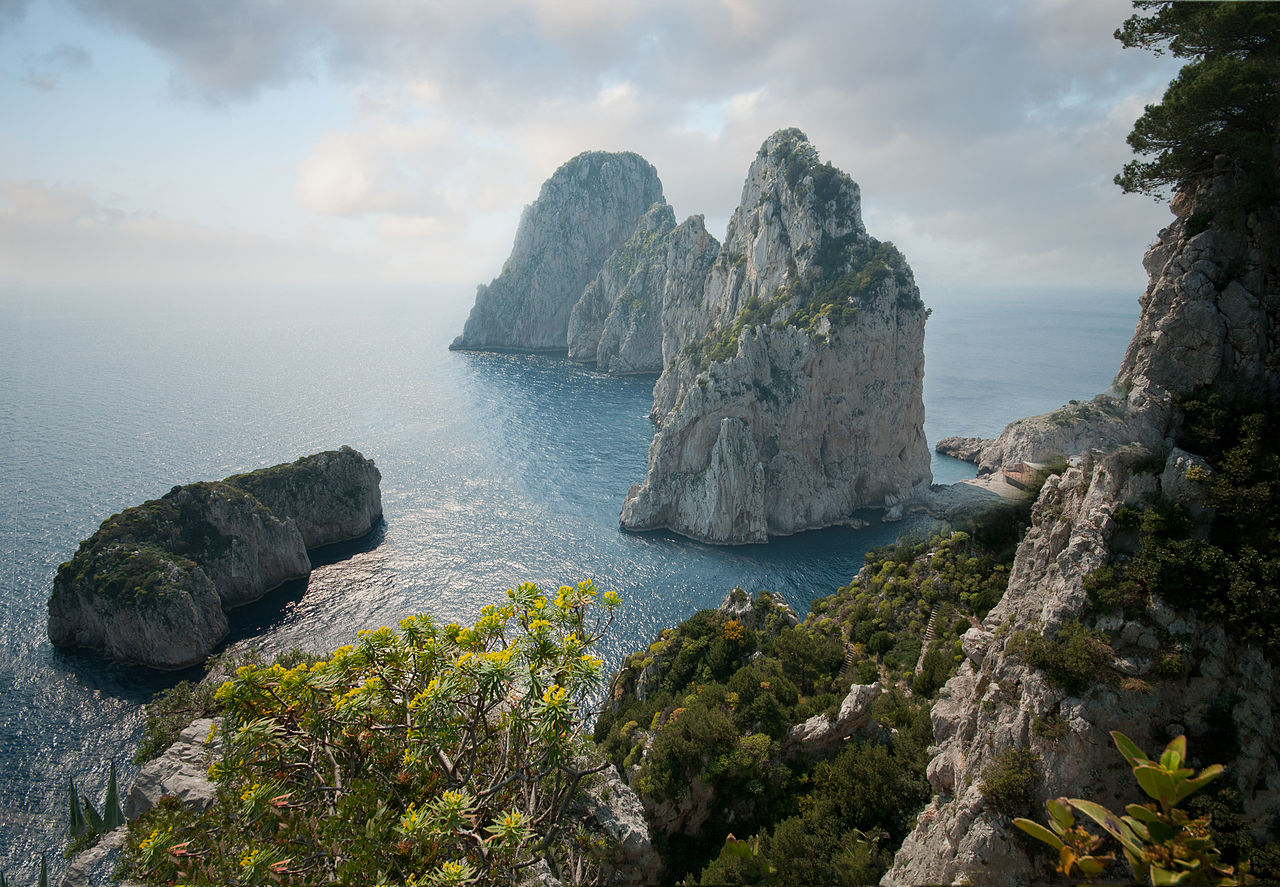 Nature
Scoglio del Monacone
Capri
A solitary rock just beyond the Faraglioni, isolated in the deep blue, sought out by those after a swim far from the crowds and the beaten routes.
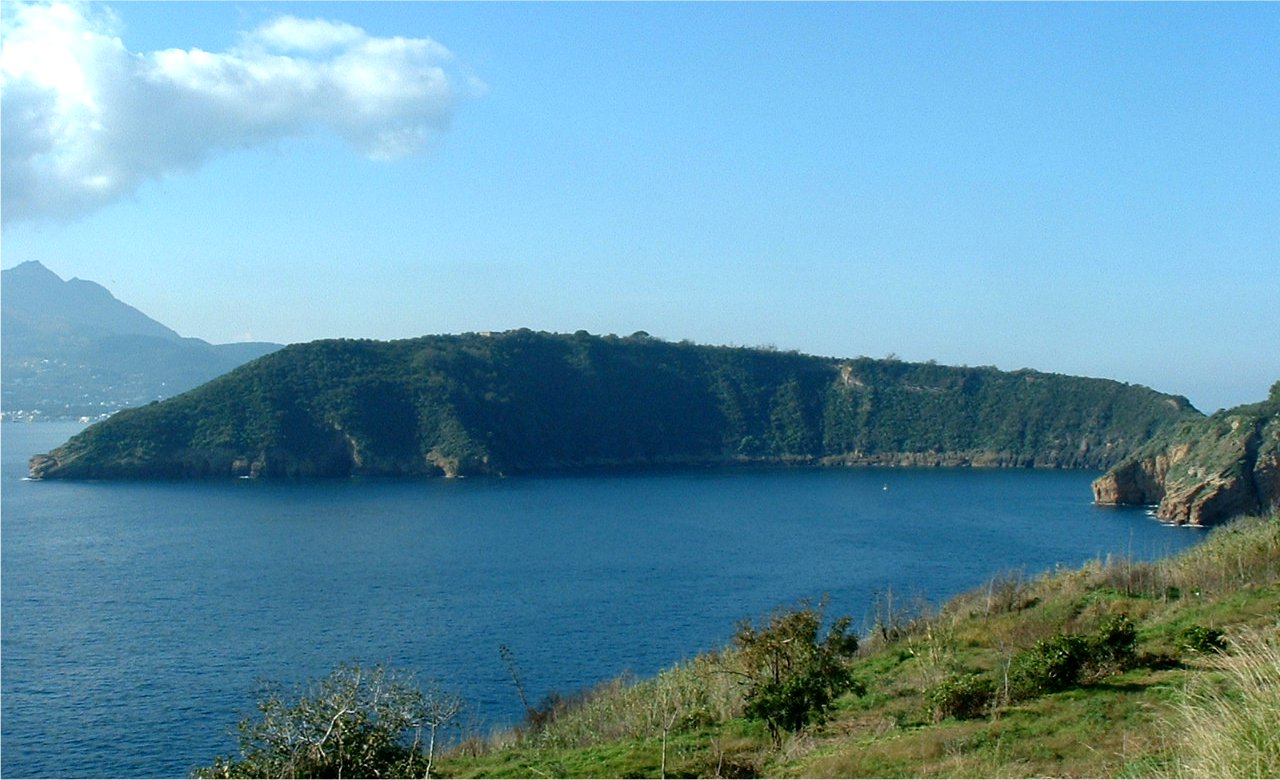 ◆ Nature
Isola di Vivara
Procida
A green crescent joined to Procida by a footbridge: a nature reserve on an ancient crater, between Mediterranean scrub, migrating birds and paths that lean out over the sea.
 ◆ Nature
Montepertuso
Positano
Above Positano, a hole carved in the rock pierces the mountain and frames the sky: legend credits it to the Madonna, who defied the devil.
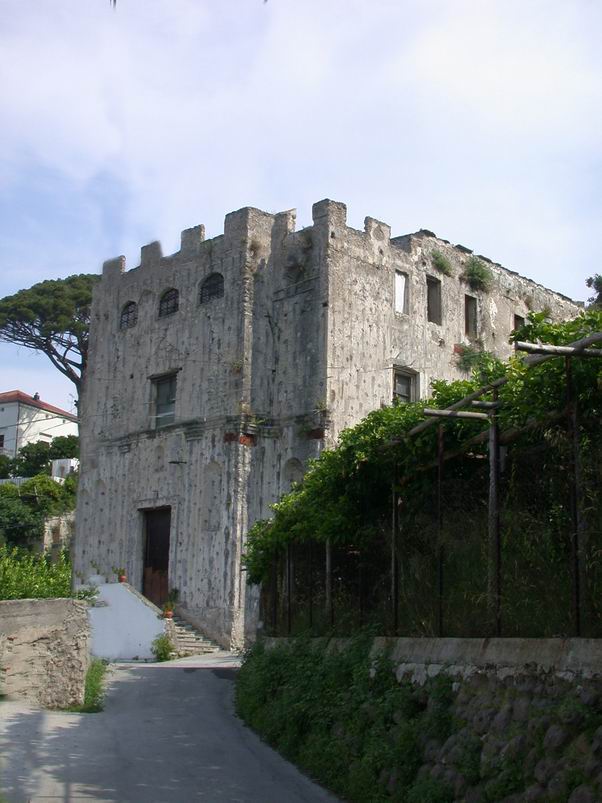 ◆ Nature
Tramonti
Tramonti
The green hinterland of the coast, where thirteen hamlets scatter among lemon groves and old Tintore vines, far from the sea and its noise.
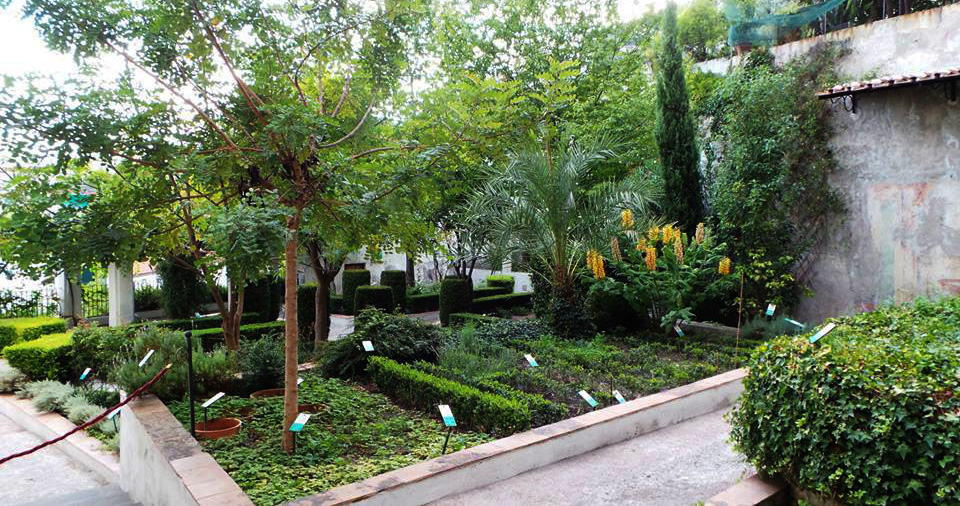 Nature
Giardino della Minerva
Salerno
Terraces of medicinal plants step down towards the gulf: a garden of simples tied to the Scuola Medica Salernitana, where medieval herbalism still breathes among pergolas and fountains.
 ◆ Nature
Oasi Grotte del Bussento
Morigerati
At Morigerati the river Bussento surfaces from the darkness of a cave after a long underground course, among ferns, mosses and a damp wood protected by the WWF.
 Nature
Monte Gelbison (Santuario del Sacro Monte)
Novi Velia
At 1,705 metres, on the summit of Monte Gelbison, the highest Marian sanctuary in Italy commands the Cilento: you climb through beech woods and mist towards a sea seen from the sky.
 ◆ Nature
Sacco
Sacco
A silent borgo (old village) of stone portals at the foot of Monte Motola, its abandoned old quarter still clinging to the cliff above the Gole del Sammaro.
 ◆ Nature
Matese casertano: Letino (grotte del Cauto, lago, borgo), Gallo Matese, Fontegreca (Cipresseta), Prata Sannita, Lago Matese
Matese
High mountain lakes among the beech trees, the secret cypress grove of Fontegreca with its emerald pools, and the Grotte del Cauto, where the river of oblivion runs underground.
 ◆ Nature
Cusano Mutri e le Gole di Caccaviola
Cusano Mutri (BN)
The Titerno has carved the limestone into a gorge of waterfalls and green pools, where the light filters down between the walls: you descend with rope and helmet, in the heart of the Matese.
 Nature
Telese Terme e il lago
Telese Terme (BN)
The sulphurous waters burst forth after a medieval earthquake; today the small lake and the spa rest at the foot of the Taburno, among plane trees and an air that smells of sulphur.
 ◆ Nature
Caposele (sorgenti del Sele)
Caposele (AV)
Here, from a rock at the foot of the mountains, the Sele springs forth: its sources feed the great aqueduct that carries water all the way to Puglia, and the town lives by the sound of water.
 ◆ Nature
Grotta di San Michele Arcangelo
Olevano sul Tusciano (SA)
Inside Monte Raione, a cavity seven hundred metres long hides chapels and Byzantine frescoes, where Lombard pilgrims once climbed to venerate the archangel between darkness and rock.
 Nature
Valle dei Mulini di Gragnano
Gragnano (NA)
Where water once turned the mills, the valley of Gragnano guards ivy-clad ruins and waterfalls; not far off, the breeze of the gorge dried the pasta of the town.
 Nature
Forche Caudine
Arpaia/Forchia (BN)
Between Arpaia and Forchia narrows the gorge where in 321 BC the Roman legions, trapped by the Samnites, had to pass beneath the yoke: a tight pass that survives in the language as humiliation.
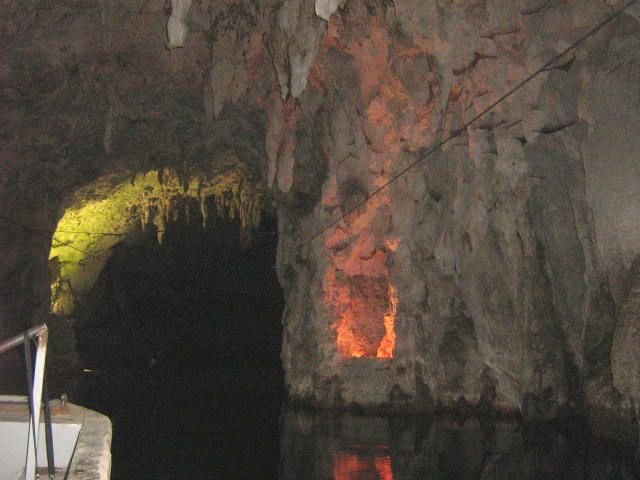 Nature
Grotte di Pertosa-Auletta (dell'Angelo)
Pertosa (SA)
You enter by boat, gliding in silence along the river Negro, before the stalactites of the Angelo open up in the dark belly of the Alburni.
 Nature
Grotte di Castelcivita
Castelcivita (SA)
Among the oldest prehistoric dwellings in the South, these caves burrow into the heart of the Alburni with galleries of stalagmites and chambers that the darkness stretches to infinity.
 Nature
Lago del Matese
San Gregorio Matese (CE)
The highest karst lake in the Apennines rests among the peaks of the Matese, amid pastures, wild-roaming horses and mists that rise at sunset.
 Nature
Lago d'Averno
Pozzuoli (NA)
In the extinct crater of a volcano, the still waters of Averno: for the ancients the threshold of the underworld, the one Aeneas crossed to descend into the kingdom of shadows.
 Nature
Giardini La Mortella
Forio (NA)
Above Forio, the gardens that Susana Walton cultivated for her composer husband: tree ferns, water lilies and streams in an amphitheatre of volcanic rock facing the Ischia sea.
 ◆ Nature
Ciampate del Diavolo
Tora e Piccilli (CE)
On the flank of the Roccamonfina volcano, human footprints pressed into the ash three hundred and fifty thousand years ago: the peasants called them the devil's tracks, science counts them among the oldest in the world.
 ◆ Nature
Oasi WWF Lago di Conza
Conza della Campania (AV)
Born from a dam on the Ofanto, the lake is the largest wetland in Campania: from the hides you can watch herons, cormorants and storks along the migration routes.
 ◆ Nature
Forre di Lavello
Cusano Mutri (BN)
The Titerno has carved the limestone into deep gorges, and a path along an ancient Samnite mule track skirts them among caves, bridges and the constant sound of water.
 ◆ Nature
Parco del Grassano
San Salvatore Telesino (BN)
Springs surfacing at the foot of Monte Pugliano fill a river of clear, cold waters, green as glass, where the canoe glides through dense vegetation.
 ◆ Nature
Oasi WWF Bosco di San Silvestro
Caserta (CE)
A former Bourbon hunting reserve behind the Reggia, today a protected wood where holm oaks and oaks climb two hills and silence has replaced the royal hunts.
 Nature
Cascata Capelli di Venere
Casaletto Spartano (SA)
In the Bussento Cilento the water falls over rocks clad in maidenhair fern and moss, forming waterfalls and green pools from which it takes its name.
 ◆ Nature
Palazzo Venezia e il suo giardino segreto
Napoli (NA)
From 1412 to 1797 this was the embassy of the Republic of Venice in Naples. You step through the door on Spaccanapoli, climb a ramp and find yourself in a hanging garden carved into the tufo (volcanic tuff), with a little Pompeian pavilion and not a tourist in sight.
- Nature
Lago di Letino
Letino (CE)
A green-turquoise mirror shut in among the mountains, born of a dam and by now indistinguishable from a real lake. On misty mornings the Matese looks at itself in it and disappears.
 ◆ Nature
Lago di Gallo Matese
Gallo Matese (CE)
Nineteen million cubic metres dug out in the Sixties to keep the turbines turning, and today an almost Nordic silence. Herons stop here, and storks, and now and then the pink flamingos.
 ◆ Nature
Riserva Naturale Statale di Castelvolturno
Castel Volturno (CE)
Behind the Domitiana, 268 hectares of pine forest fray into scrubland all the way to the last surviving dunes of the coast, where wild orchids bloom in spring. The green other side of a shoreline everyone imagines as nothing but concrete.
 Nature
Bocca della Selva
Cusano Mutri (BN)
At 1,400 metres, immense beech woods and the snow that buries the mountain huts in winter: the highest plateau of the Sannio, where the Matese stops being a postcard and becomes real mountain.
- ◆ Nature
Vigna di San Martino
collina S. Martino
One of the largest urban vineyards in Europe, worked by the Carthusians since the fourteenth century: seven hectares of vines, citrus and olive trees hanging over the bay, a step from the city's chaos.
- ◆ Nature
Valle dell'Inferno
Ottaviano
The wild hollow between Monte Somma and the Gran Cono, among ropy lava flows and broom that in spring sets the landscape ablaze with yellow.
- Nature
Tempio di Atena
Massa Lubrense
Near the tower survive the traces of the sanctuary of Athena that legend says was founded by Ulysses, where the Greeks worshipped the goddess sheer above the sea.
- Nature
Monte Faito e il Molare
Vico Equense
Beech woods a step from the sea, where the Molare marks the highest summit of the Lattari and on clear days the eye travels from Ischia to the Cilento.
- Nature
Pizzolungo
Capri
The path that runs along the hillside among the myrtle bushes, passing beneath Malaparte's house until it opens onto the Faraglioni seen from above.
- ◆ Nature
Sentiero dei Fortini
Anacapri
A path along the western coast linking the small Napoleonic-era forts, through Mediterranean scrub, wild coves and the sound of the waves.
- ◆ Nature
⚠️ Il Passetiello
Capri⇄Anacapri
The old, dizzying pass that linked Capri and Anacapri before the roads existed: a steep, rough climb for those with a sure foot.
- ◆ Nature
Giardini Ravino
Forio
Between the vineyards of the Epomeo and the sea of Forio, a garden of cacti and succulents: one of the richest collections in Europe, among century-old saguaros and rare species.
- ◆ Nature
Cascate Capelli di Venere
Casaletto Spartano
At Casaletto Spartano the water falls over rocks clothed in maidenhair fern, forming waterfalls and emerald pools in a cool, hidden gorge of the Cilento.
- ◆ Nature
Oasi WWF di Persano
Serre
A wetland on the river Sele where herons and otters people the reedbeds and mirrors of water, a WWF oasis of silences and wingbeats along the Piana del Sele.
- Nature
Madonna della Neve
Sanza
Set into the white rock of Monte Cervati, the highest peak in Campania, the sanctuary is reached on foot up there, where every summer the Madonna della Neve climbs in procession.
- ◆ Nature
Valle delle Orchidee
Sassano
Every spring the meadows of Sassano light up with dozens of species of wild orchid, a valley that blooms of its own accord among the mountains of the Cilento.
- ◆ Nature
Gole del Sammaro
Sacco
The Sammaro torrent has carved a canyon of vertical walls where cold water runs through narrow gorges, one of the wildest passages of the inland Cilento.
- ◆ Nature
Grotta di San Michele (Olevano sul Tusciano)
Sant'Angelo a Fasanella
In the belly of the Alburni a cave becomes a church: stalactites, dripping water and the archangel Michael carved into the rock, between half-light and ancient silence.
- ◆ Nature
Postiglione, Sicignano, Petina (Alburni)
Alburni (SA)
Three villages perched beneath the limestone walls of the Alburni, the Dolomites of the South, among beech woods, karst caves and high-altitude paths that stay almost deserted.
- ◆ Nature
Oasi dei Variconi
Castel Volturno
At the mouth of the Volturno, among brackish pools and wooden walkways, the hides spy on flamingos and herons in one of the most precious wetlands of the Tyrrhenian coast.
- Nature
Noce delle Streghe / Ripa delle Janare
fiume Sabato
On the banks of the Sabato, legend places the walnut tree where the janare (Benevento witches) gathered by night: a site of Lombard pagan rites that still feeds the myth of the witches.
- ◆ Nature
Geosito di Pietraroja e il dinosauro Ciro
Pietraroja
In the limestone of a vanished sea lies Ciro, the small dinosaur whose internal organs are still imprinted: the fossil that turned this Matese plateau into a place for palaeontologists.
- ◆ Nature
Taburno — la "Dormiente del Sannio"
Taburno
From afar the outline of the massif draws a woman lying asleep above the Valle Caudina: the Dormiente del Sannio, the Sleeper of Samnium, watching over the Aglianico vineyards at her feet.
- Nature
Mefite d'Ansanto
Rocca San Felice
A small lake boiling with gas and sulphur in a lifeless hollow: the ancients worshipped the goddess Mefite here, and Virgil imagined a gateway to the underworld.
- Nature
Lago Laceno
Bagnoli Irpino/Montella
On the plateau of the Monti Picentini a lake of karst origin rests among the pastures: in summer a mirror of beech trees, in winter the heart of a small ski resort of the Irpinian Apennines.
- Nature
Monte Terminio
Bagnoli Irpino/Montella
Dense beech woods climb to the summit of the Picentini, where the springs are born that quench half of Campania: in winter silence and snow, in summer a cool shade a step away from Avellino.
- ◆ Nature
Oasi Valle della Caccia
Senerchia
Along the Acquabianca stream a path climbs between mossy caves to a waterfall that plunges some thirty metres: the WWF oasis where the Picentini keep their clearest water.
- ◆ Nature
Museo Naturalistico degli Alburni
Corleto Monforte (SA)
In a village deep in the woods of the Alburni, room after room gathers thousands of birds, mammals and insects, a natural history collection grown up among the mountains of the Cilento.
- ◆ Nature
Acerno e cascate dell'Auso
Acerno (SA)
At seven hundred metres, in the heart of the Picentini, Acerno mirrors itself in the upper Tusciano valley: beech woods, streams and small waterfalls along the trails that make it the village of waters.
- ◆ Nature
Moio della Civitella — sito lucano
Moio della Civitella (SA)
Among the chestnut trees of the Civitella hill emerge the massive walls of a Greek-Lucanian fortress of the 4th century BC, once a sentinel of ancient Velia.
- ◆ Nature
Parco archeo-fluviale di Longola
Poggiomarino (NA)
On the banks of the Sarno, among channels and islets, a Bronze Age village resurfaces: stilt houses and boats of a river port buried in the mud for millennia.
- ◆ Nature
Teatro-tempio di Monte San Nicola
Pietravairano (CE)
Atop Monte San Nicola, at five hundred metres, a Samnite theatre and temple overlook the valley: a forgotten sanctuary, spotted from above by a hang-glider.
- ◆ Nature
Acquedotto romano del Serino (Aqua Augusta)
Serino (AV)
From the springs of Serino the Aqua Augusta set out to carry water all the way to Naples and the fleet at Miseno, one of the longest aqueducts of the Roman world.
- ◆ Nature
Piana del Dragone
Volturara Irpina (AV)
A plateau ringed by the Picentini mountains where the waters, instead of flowing away, vanish into a karst sinkhole the locals call the Bocca del Dragone (Dragon's Mouth).
- ◆ Nature
Cascata di Conca (Rivo di Conca)
Conca della Campania (CE)
Along the millers' trail, among centuries-old chestnut trees, the Rivo di Conca plunges from a spur of rock and still feeds the echo of the old abandoned workshops.
- ◆ Nature
Grava di Vesalo
Laurino (SA)
In the heart of the Cilento the rock splits open into a double shaft where the Silenzio stream plunges underground, realm of cavers and of an ancient darkness.
- ◆ Nature
Cipresseta di Fontegreca
Fontegreca (CE)
A rare expanse of cypresses grown wild on the Matese mountains, where dark trunks mirror themselves in the cool pools of the Sava stream.
- ◆ Nature
Oasi di Persano — accesso di Altavilla Silentina
Serre (SA)
Along the bends of the Sele, among reed beds and flooded woods, an oasis where the otter survives and herons alight in the silence of dawn.
- ◆ Nature
Mefite della Valle d'Ansanto
Rocca San Felice (AV)
In inland Irpinia a sulphurous pool bubbles with toxic fumes: the ancients worshipped the goddess Mefite here and imagined a mouth of the underworld, among yellow vapours and barren earth.
- Nature
Spiaggia delle Fumarole
Serrara Fontana (NA)
Near Sant'Angelo the sand burns from the steam rising underground: here eggs are cooked beneath the grains and the swim becomes a thermal ritual.
- Nature
Marina di Chiaiolella e Vivara
Procida (NA)
A crescent-shaped harbour from which the bridge to Vivara sets off, a sickle-shaped islet turned nature reserve, realm of migratory birds and Mediterranean scrub.
- ◆ Nature
Giardini di Cataldo
Sorrento (NA)
You stroll beneath pergolas of lemon and orange trees in the heart of Sorrento, amid the scent of citrus and a taste of limoncello made at home by the family that tends the garden.
- ◆ Nature
Parco della Valle delle Orchidee
Sassano (SA)
In spring the slopes above Sassano light up with dozens of species of wild orchids, tiny and rare, along trails that follow the blooming.
- ◆ Nature
Punta Cornacchia e Bosco di Zaro
Forio (NA)
It is the northernmost point of the island: a promontory of lava covered by a wood of holm oaks where Ischia ends and the channel to Procida begins.
- ◆ Nature
Grotta del Mago
Barano d'Ischia (NA)
The fishermen who took shelter here during storms swore they saw an old man with a silver beard sitting on the rocks, surrounded by three dancing women. Also called Grotta del Tempio del Sole, it was even sought by the Nazis, convinced it hid a doorway to the underworld.
- ◆ Nature
Pineta di Fiaiano (colata dell'Arso)
Ischia (NA)
This pinewood grows over Ischia's last eruption: in 1302 the lava of the Arso flowed all the way to the sea and wiped out everything in its path. Beneath the roots the flow is still there, black and intact.
- ◆ Nature
Pietra dell'Acqua
Serrara Fontana (NA)
A huge block of green tufo (volcanic tuff) with a basin carved into its top, which collects rainwater. No one knows for certain who cut it or why: some speak of an altar, some of a watering trough, some say nothing at all.
- ◆ Nature
Cimitero degli Inglesi (Santa Maria della Fede)
Napoli (NA)
The old non-Catholic cemetery of Naples, where the English, the Protestants and the foreigners without a church ended up. Closed in 1893, today it is a public garden where the gravestones surface among the trees.
- ◆ Nature
Stretto di Barba e le Coste Janare
Altavilla Irpina (AV)
The famous Noce di Benevento, the walnut tree where the janare (Benevento witches) gathered, was not in Benevento at all, according to many scholars: it was here, in this steep gorge above the Sabato, whose banks are still called Coste Janare. Even today, in Irpinia, salt is laid across the doorstep.
- ◆ Nature
Grotta del Caliendo
Bagnoli Irpino (AV)
The stream goes into the mountain and carves a world inside it: sumps, underground waterfalls and galleries where the water has been at work for millions of years. One of the most important caves in the Picentini.
- ◆ Nature
Grotta del Caprone
Montella (AV)
The name says what the shepherds believed: that in there lived the devil with his horns. It is one of the karst cavities of the Terminio, and among the most striking.
- ◆ Nature
Cascate del Troncone e della Scorzella
Montella (AV)
Waterfalls hidden in the green of the Terminio, where the stream comes down in steps and the light struggles through the beeches.
- ◆ Nature
Cascata dell'Acquabianca
Senerchia (AV)
The water falls milk-white down a rock wall, in a valley the earthquake left almost unreachable — and which for that reason stayed wild.
- ◆ Nature
Grotta Profunnata
Senerchia (AV)
The sunken one: a karst shaft plunging into the heart of the Picentini, with a name that is already a warning.
- ◆ Nature
Cascata del Tuorno
Calabritto (AV)
A waterfall almost nobody knows, in a valley where 1980 erased nearly everything except the water.
- ◆ Nature
Cascate dell'Acquaserta
Quadrelle (AV)
On the northern flank of the Partenio, a stream drops in leaps down a moss-covered gorge: ten minutes from the road and you are in another world.
- ◆ Nature
Le Sette Camerelle del Diavolo
Contrada (AV)
Seven cavities in the rock that local people credited to the devil, and beside them a cave dedicated to the Archangel who defeated him: the geography of fear and the geography of the remedy, twenty metres apart.
- ◆ Nature
Sorgenti dell'Ofanto
Torella dei Lombardi (AV)
From a crack in the rock is born the river Horace sang of as violent: two hundred kilometres later it will be the Adriatic. Here it is still a thread of water you could step over.
- Nature
Valle del Torano: sorgenti e cascata del Malopasso
Castello del Matese (CE)
More than two cubic metres of water a second pour out of the belly of the Matese: one of the most powerful springs in the South. As you climb the gorge the walls close in, and you walk right inside the stream up to the waterfall.
- Nature
Cascate e gole del Lete
Prata Sannita (CE)
The river of oblivion carves a gorge of green pools and small waterfalls, among old mills, washhouses and the gutted walls of a paper mill. You follow it alongside the water, with the stone borgo (old village) hanging above your head.
- Nature
Parco Sorgenti Ferrarelle
Riardo (CE)
One hundred and forty-five hectares above seven springs: here the water is born sparkling from the heart of the volcano, among oaks, the ruins of old taverns and an eighteenth-century masseria (fortified farm).
- ◆ Nature
Riserva Naturale Lago di Falciano
Falciano del Massico (CE)
A sheet of water of volcanic origin at the foot of Monte Massico, ringed by reed beds that hide eighty-eight species of birds. At dawn, when the mist lifts, you could be a thousand kilometres from the Domitian coast.
- ◆ Nature
Mulino di Zi' Fiore e Ponte del Mulino
Cusano Mutri (BN)
A mill carved into the rock face, still since the Fifties, reached by an arched bridge once crossed by the Oscan mule track. The water keeps turning a wheel that is no longer there.
- Nature
Lago di Campolattaro e Oasi WWF
Campolattaro (BN)
A lake that was never meant to exist, born by damming the Tammaro: herons, night herons and raptors have taken back what the engineers left behind. The hills are mirrored in water that seems forgotten.
- ◆ Nature
Diga di Campolattaro
Campolattaro (BN)
An earth colossus almost seventy metres high, finished and then left for decades as a work with no purpose: the great unfinished project of the Sannio, the ambition of the Eighties turned to stone.
- ◆ Nature
Confluenza Calore-Volturno e Parco fluviale
Amorosi (BN)
Where the Calore surrenders itself to the Volturno, poplars and reed beds hide a park left almost wild: it is the same ford that for three thousand years decided who controlled the Sannio.
- ◆ Nature
Cascate e mulini del Vallone Martorano
Sant'Agata de' Goti (BN)
Beneath the tufo (volcanic tuff) spur on which the borgo (old village) seems to float, the water plunges in a series of leaps among the ruins of mills and an old ironworks: the water trail that no visitor to Sant'Agata ever climbs down to find.
- Nature
Orto Botanico di Portici
Portici (NA)
In the park of the Royal Palace of Portici, the botanical garden of the Federico II University holds over a thousand species, with an extraordinary collection of cacti and succulents.
- ◆ Nature
Real Bosco di Capodimonte
Napoli (NA)
The great historic park surrounding the palace-museum of Capodimonte: 130 hectares of avenues, clearings and woods where Neapolitans walk, run and get some air above the city. Free entry.