Neapolis Sotterrata (San Lorenzo Maggiore)
Napoli (NA)
KnownHistory & archaeology

The story
Beneath the cloister you walk along a real Greco-Roman street: the macellum, the bakers' shops, the laundry. The Neapolis of the 1st century, frozen beneath your feet.
Access
Included with the ticket for the monumental complex, can also be visited on your own. Prices to be checked
The story
The basilica of San Lorenzo Maggiore, founded by Charles I of Anjou from 1270, is one of the great Gothic churches of Naples, with an apse of French Gothic taste unique in Italy. But its most surprising treasure is underground: beneath the convent extends a Greek-Roman archaeological area, with the remains of the ancient agora and forum, and the macellum, the covered market of the ancient city.
What to see
The route of the 'submerged Neapolis': a street and the workshops of the Greek-Roman market resurfaced several metres beneath today's city, among the best preserved in Europe. Above, the Gothic basilica — where Boccaccio met his Fiammetta in 1334 — the cloister and the Museo dell'Opera.
Tips
The underground excavations are visited with a ticket, together with the museum and the complex: check hours and arrangements on the official site. The underground route is fascinating but with steps and narrow passages; comfortable shoes are useful. You are on via dei Tribunali, opposite San Gregorio Armeno.
Frequently asked questions
What is the submerged Neapolis of San Lorenzo Maggiore?
The Greek-Roman archaeological area beneath the convent of San Lorenzo, with the street and the workshops of the macellum (the covered market) of ancient Neapolis, among the best preserved in Europe.
What is there to see at San Lorenzo Maggiore?
The Angevin Gothic basilica, the cloister, the Museo dell'Opera and above all the excavations of the Greek-Roman city in the subsoil.
How do you visit the excavations of San Lorenzo Maggiore?
With a ticket, together with the museum and the complex: it is best to check hours and arrangements on the official site.
More gems in Napoli
 Sacred art
Cappella Sansevero (Cristo Velato)
Napoli (NA)
Beneath a veil of marble that still seems to breathe, Sanmartino's Cristo Velato rests in the chapel's half-light, and the whiteness of the stone deceives every eye.
 Sacred art
Duomo di Napoli
Napoli
Three times a year the city holds its breath as the blood of San Gennaro waits to liquefy, among Gothic naves and the gold of the chapel devoted to him.
 Sacred art
Cappella del Tesoro di San Gennaro
Napoli
Behind a bronze gate lie silverware, gems and the jewel-studded mitre of the saint: a treasure heaped up over centuries by the devotion of Naples.
 Sacred art
Chiesa del Gesù Nuovo
Napoli
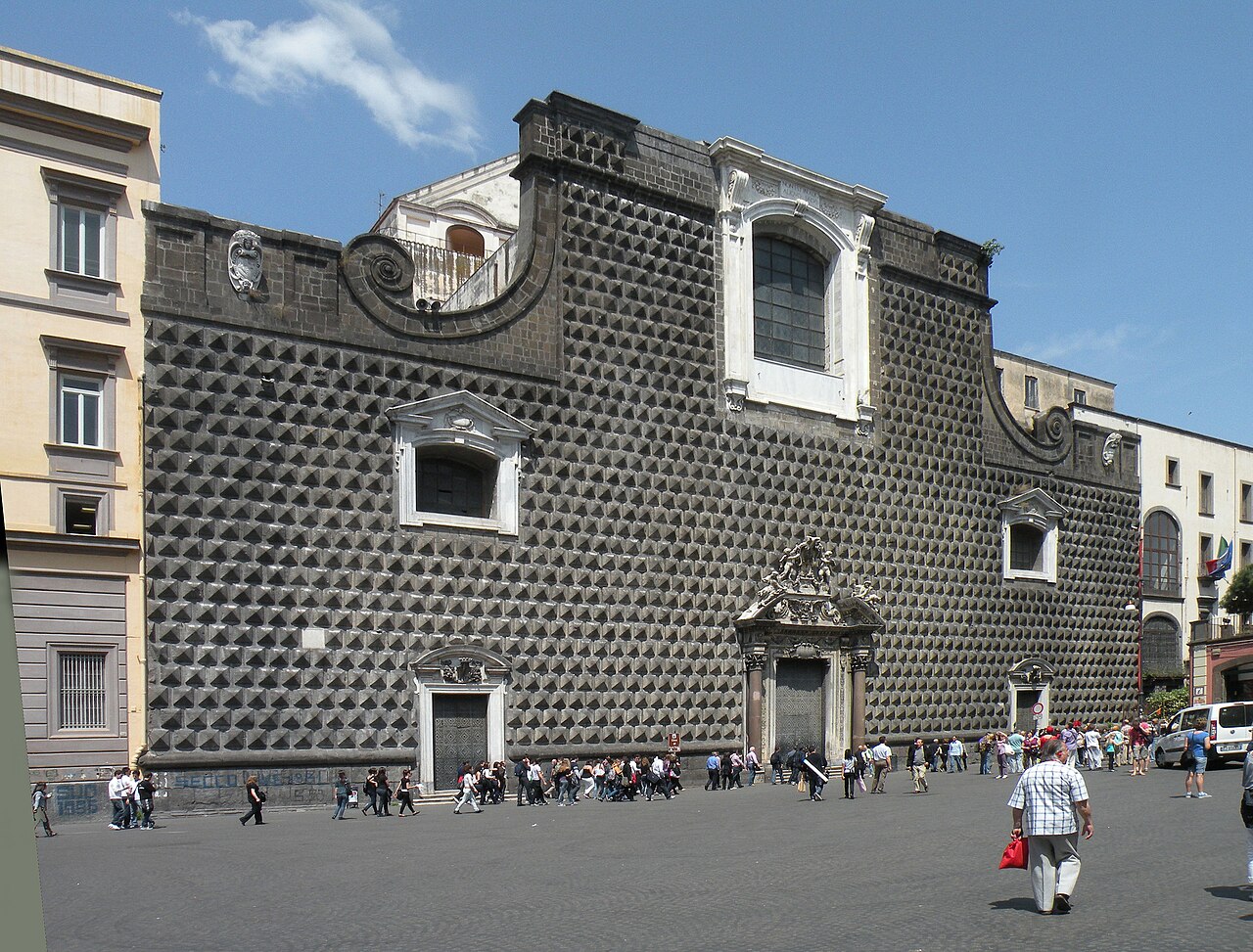
The facade of pyramid-cut piperno stone hides symbols carved into the blocks, while inside the Baroque bursts out in marble and in the memory of the physician Giuseppe Moscati.
 Sacred art
Chiostro di Santa Chiara
Napoli
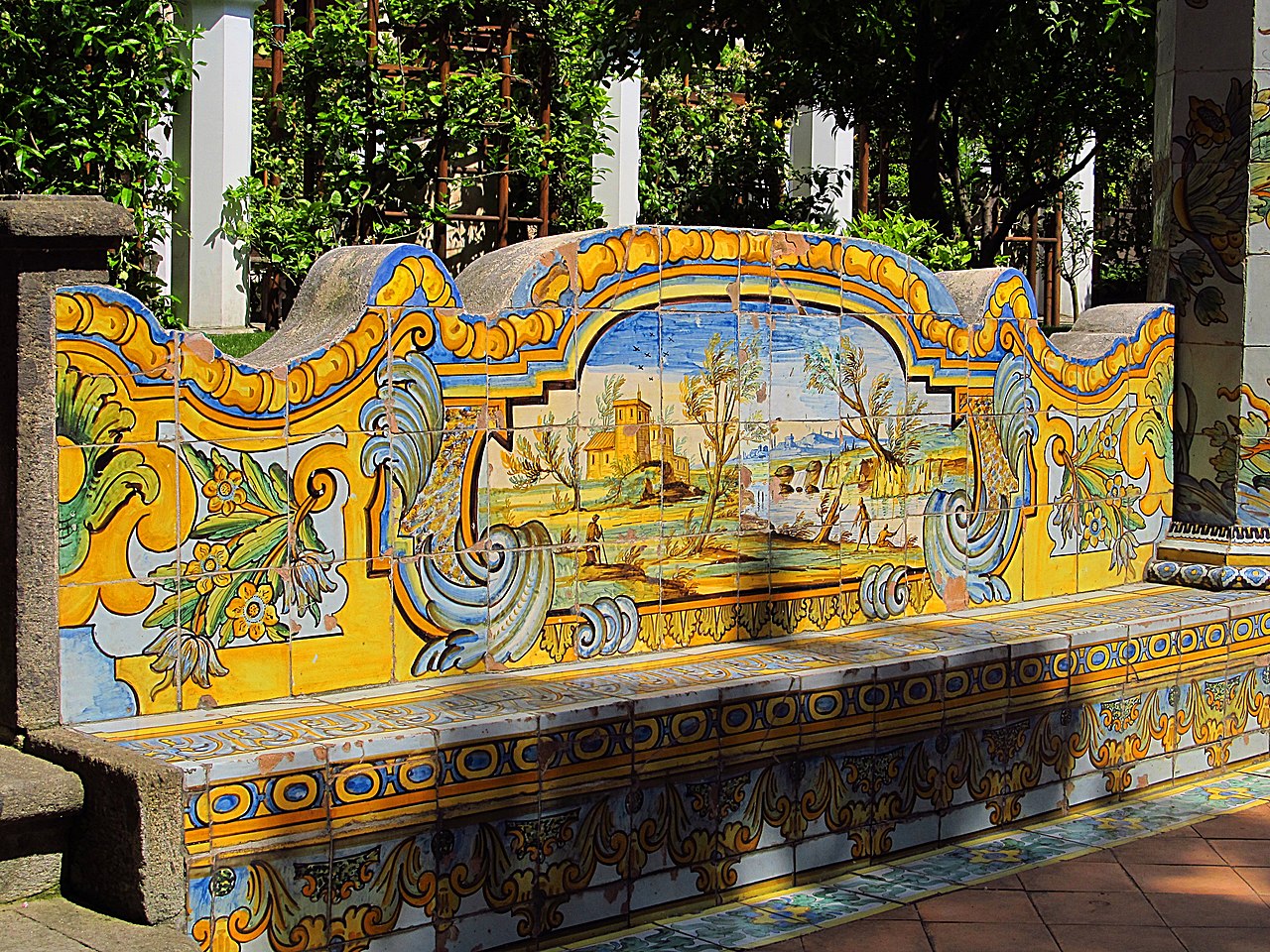
A garden of pillars clad in yellow and blue majolica, where lemon pergolas and eighteenth-century scenes painted on the tiles keep the noise of the city at bay.
 ◆ Sacred art
Chiesa di Santa Luciella ai Librai (teschio con le orecchie)
Napoli
In the crypt of a small church rediscovered in the maze of the Librai rests the skull with ears, which the faithful believed could listen to their prayers.
More gems: History & archaeology
 History & archaeology
Statua del Nilo ("Corpo di Napoli")
Largo Corpo di Napoli
A river god reclining for centuries in a quiet square, whom Neapolitans call the Corpo di Napoli: he leans his bearded head among putti and a sphinx.
 ◆ History & archaeology
Cappella Pontano
Decumani
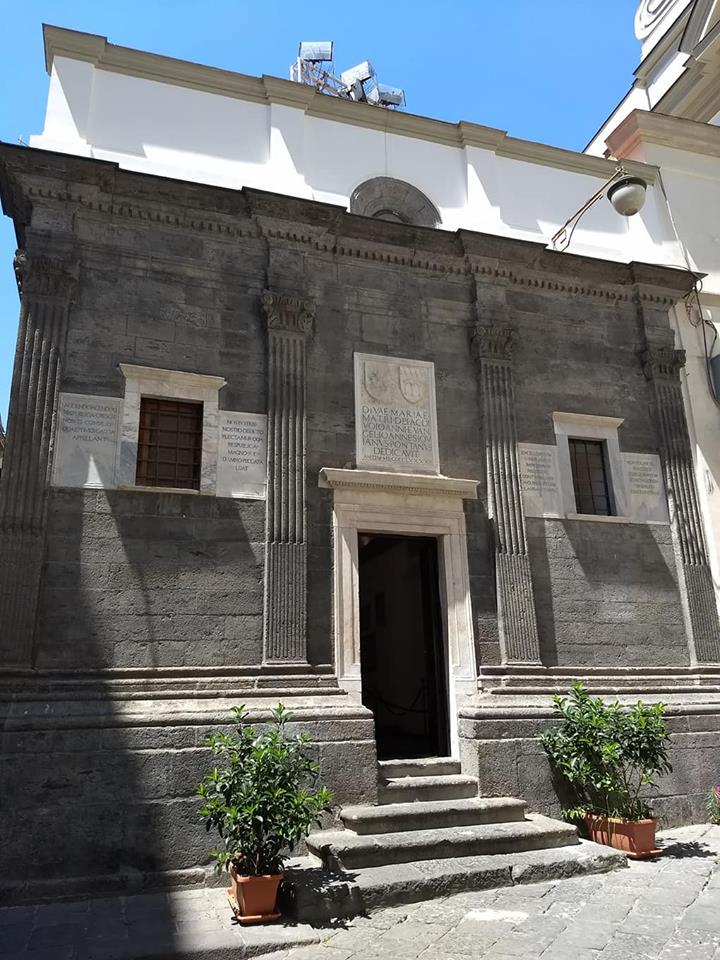
A small Renaissance temple on the decumanus, which the humanist Pontano had raised for his lost wife, still lined inside with Latin inscriptions dictated by his grief.
 ◆ History & archaeology
Sedile di Nilo
Decumani
On the corner of a small Spaccanapoli square survives the seat of the old Nilo quarter, where the nobles once gathered before the sedili of Naples vanished.
 ◆ History & archaeology
Port'Alba
Napoli
A seventeenth-century arch cut into the walls leads to the booksellers' street, where stalls of second-hand volumes pile up among yellowed pages and the shade of the old city.
 ◆ History & archaeology
Porta Capuana
zona Garibaldi
Between two cylindrical towers an arch of white marble opens like a Renaissance triumph, the old city gate facing the road to Capua.
 ◆ History & archaeology
Real Albergo dei Poveri
P.za Carlo III
An eighteenth-century colossus willed by Charles of Bourbon to shelter the poor of the Kingdom: a façade running more than three hundred metres, among the largest historic buildings in Europe.