Museo dell'Osservatorio Vesuviano
Ercolano
Hidden gemMuseums

The story
The oldest volcanological observatory in the world, willed by the Bourbons in 1841, with historic instruments and mineral collections, looking out over the slopes of Vesuvius.
Access
check ahead
The story
The Vesuvius Observatory, on the slopes of Vesuvius, is the oldest volcanological observatory in the world: Ferdinand II of Bourbon founded it in 1841, inaugurating it in 1845. Here Luigi Palmieri invented the first electromagnetic seismograph. Today the historic building houses a museum, while the monitoring is run by the INGV.
What to see
The elegant neoclassical building facing the gulf and the museum, with historic scientific instruments, minerals and finds that tell of two centuries of study of the volcano. A place where science and landscape meet, on the road that climbs to Vesuvius.
Tips
The museum of the historic building has its own openings and hours, sometimes tied to booking: check on the official channels of the INGV-Vesuvius Observatory before going. You are on the slopes of Vesuvius, along the road that leads towards the Great Cone.
Frequently asked questions
What is the Vesuvius Observatory?
The oldest volcanological observatory in the world, founded by Ferdinand II of Bourbon in 1841 on the slopes of Vesuvius; today the historic building is a museum and the monitoring belongs to the INGV.
What can you see at the museum of the Vesuvius Observatory?
Historic scientific instruments, minerals and finds on the history of the volcano, in the nineteenth-century neoclassical building facing the gulf.
Where is the Vesuvius Observatory?
On the slopes of Vesuvius, along the road that climbs towards the crater.
More gems in Ercolano
 History & archaeology
Scavi di Ercolano
Ercolano
A Roman town petrified by volcanic mud, with wooden beams, beds and doors still in place: here time stopped more intact than anywhere.
 Volcanoes
Vesuvio — Gran Cono
Ercolano
The last stretch climbs on foot over the scree to the rim of the crater, where the warm breath of the earth mixes with the view of the whole Gulf of Naples.
- ◆ History & archaeology
Miglio d'Oro e Ville Vesuviane (Villa Campolieto)
Ercolano
The eighteenth-century residences of the Neapolitan nobility along the Miglio d'Oro, with Villa Campolieto and its elliptical portico facing the sea among stuccoes and gardens.
- Hiking
Salita al Gran Cono del Vesuvio (da Quota 1000)
Ercolano (NA)
From Quota 1000 the trail climbs the ash up to the rim of the Gran Cono, where the smoking crater opens up and below stretches the whole gulf of Naples.
- Museums
MAV — Museo Archeologico Virtuale di Ercolano
Ercolano (NA)
With digital and multimedia reconstructions it brings back to life Herculaneum, Pompeii and the Vesuvian cities as they were before the eruption of AD 79.
More gems: Museums
 Museums
MANN — Museo Archeologico Nazionale
P.za Museo
One of the world's great archaeological museums: here the Toro Farnese, the mosaics of Pompeii and the Gabinetto Segreto tell the whole ancient Mediterranean in a single visit.
 ◆ Museums
Antiquarium
Boscoreale
The museum that tells of daily life at the foot of Vesuvius before the eruption, among carbonised loaves, farm tools and finds handed back by the ash.
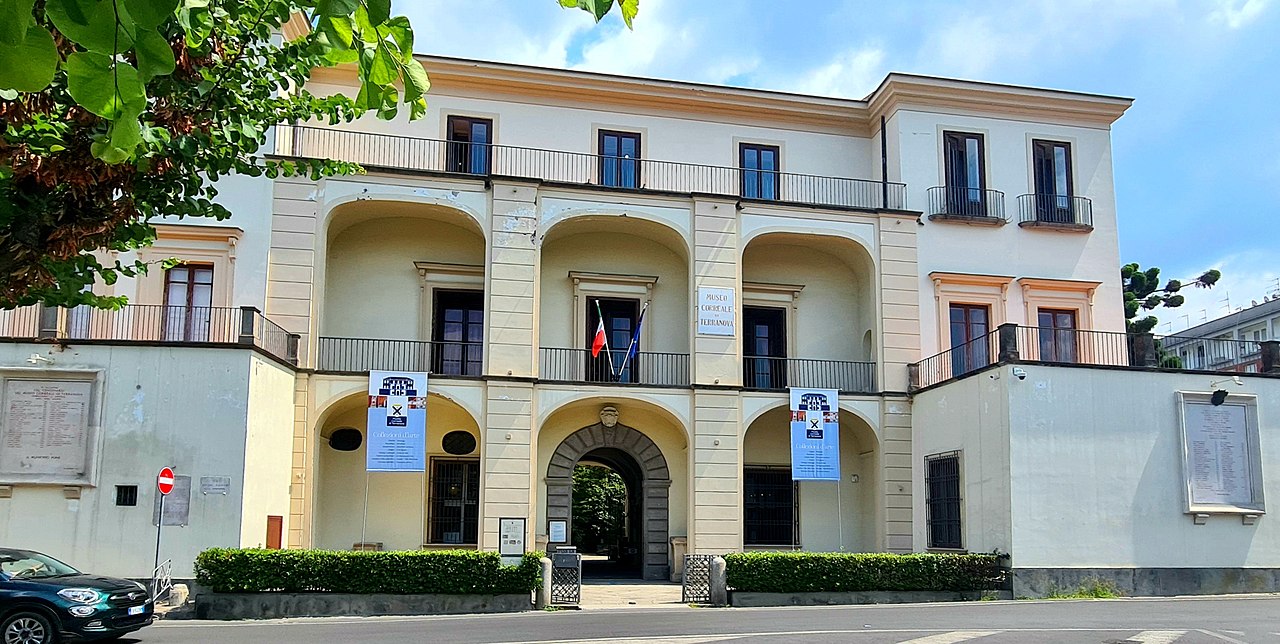 ◆ Museums
Museo Correale
Sorrento
In the family villa of the Correale counts: porcelain, inlaid wood and eighteenth-century views of Naples, and a garden that runs down to a belvedere over the sea.
 Museums
Villa Lysis — Jago Museum Capri
Capri
A 1905 Art Nouveau villa by the poet Fersen, dedicated to love and sorrow; since June 2026 it houses the Jago Museum Capri, with Jago's sculptures in the historic rooms high above the sea.
 Museums
Villa San Michele (Axel Munthe)
Anacapri
The white house that Swedish doctor Axel Munthe built among ancient columns and pergolas, with its granite sphinx gazing out over the Gulf of Naples.
- ◆ Museums
Ospedale delle Bambole
Napoli
Behind a shop window in Palazzo Marigliano a craftsman mends glass eyes, porcelain arms and dolls' curls, in a workshop born more than a century ago.