Avellino
143 places
 ◆ Sacred art
Sant'Anna dei Lombardi
via Toledo
Eight terracotta figures mourn the dead Christ with faces of piercing grief, while in the sacristy frescoed by Vasari the ceiling fills with constellations and virtues.
 Sacred art
Santuario di Montevergine
Mercogliano
Clinging to the Partenio, the sanctuary guards the dark Madonna the pilgrims call Mamma Schiavona; you climb by funicular, through beech woods and mist, to look out over the whole of Irpinia.
 ◆ Villages
Rocca San Felice borgo
Rocca San Felice (AV)
Beneath the ruins of the medieval castle the borgo (old village) huddles in stone and steep alleys, not far from the fumes of the Mefite: here legend borders on sulphur.
 ◆ Villages
Gesualdo
Gesualdo (AV)
The village bears the name of Carlo Gesualdo, prince and accursed musician: in his castle he withdrew to compose madrigals of rare disquiet, pursued by the murder he had committed.
 Villages
Calitri
Calitri (AV)
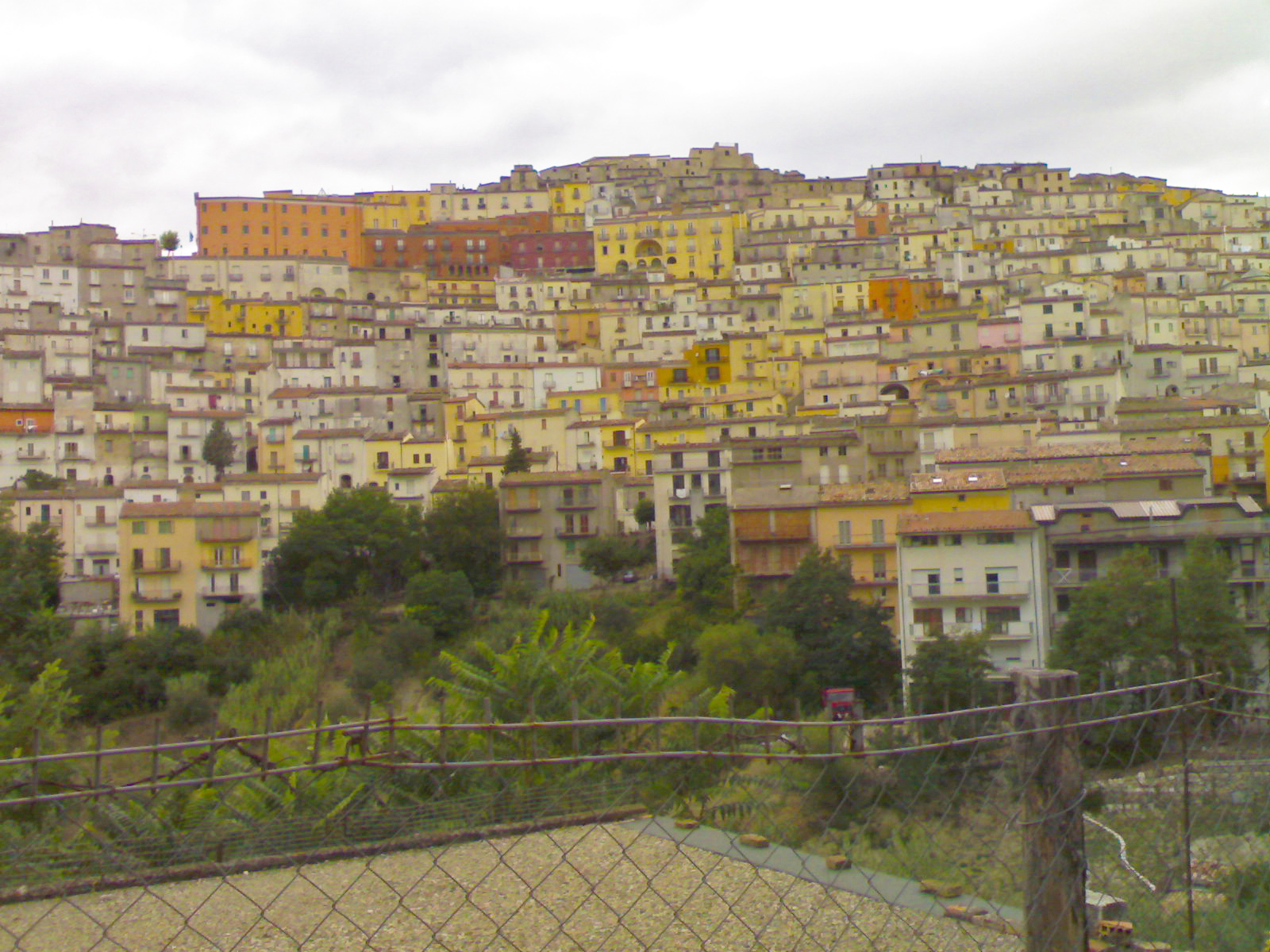
The houses climb the hill in terraces, coloured and tight-packed like a presepe (nativity scene): they call it the Positano of Irpinia, crowned by the Borgo Castello and an old craft of ceramics.
 ◆ Villages
Trevico
Trevico (AV)
The highest village in Campania, almost eleven hundred metres of ridge: from the roof of Irpinia the eye takes in half the peninsula, six regions on the days when the air is clear.
 ◆ Villages
Frigento (cisternoni romani)
Frigento (AV)
Beneath the panoramic village open the Roman cisternoni, Republican-era galleries that gathered rainwater: you walk in the darkness of an ancient thirst, while above, Irpinia stretches out as far as the eye can see.
 ◆ Villages
Monteverde
Monteverde (AV)
Between the valleys of the Ofanto and the Osento, one of the most beautiful villages in Italy gathers around its castle: alleys of pale stone where every year the black storks come back to nest.
 ◆ Villages
Cairano
Cairano (AV)
Perched on a crag above the Ofanto valley, the village spirals up to the rock where the wind never falls silent: here the roots run back as far as the Iron Age.
 ◆ History & archaeology
Conza della Campania (antica Compsa)
Conza della Campania (AV)
On the ruins of ancient Compsa, the village abandoned after the earthquake of 1980 is now an archaeological park: the Roman forum resurfaces among the empty houses, and just below the lake of Conza shines.
 ◆ Nature
Caposele (sorgenti del Sele)
Caposele (AV)
Here, from a rock at the foot of the mountains, the Sele springs forth: its sources feed the great aqueduct that carries water all the way to Puglia, and the town lives by the sound of water.
 ◆ Villages
Montefusco
Montefusco (AV)
Perched at seven hundred metres, the old capital of the Principato Ultra looks out over the hills of Irpinia, while the Bourbon prison still keeps the silence of the patriots locked within these walls.
 History & archaeology
Aeclanum
Mirabella Eclano (AV)
Along the old Via Appia, between the Calore and Ufita valleys, the walls, baths and circular market of a Samnite and Roman town hold out against the tall grass.
 ◆ History & archaeology
Anfiteatro e castello di Avella
Avella (AV)
The Roman amphitheatre stretched out on the plain and, higher up, the ruins of the castle guarding the Clanio valley: two ages of Avella a short distance apart.
 Sacred art
Santuario di San Gerardo Maiella
Materdomini, Caposele (AV)
At Materdomini pilgrims climb to San Gerardo Maiella, the saint to whom mothers entrust pregnancy and childbirth, among ex voto offerings and August crowds.
 Villages
Ariano Irpino
Ariano Irpino (AV)
Spread over three hills along the Apennine watershed, Ariano is a land of painted ceramics and a Norman castle keeping watch over the inner Irpinia.
 ◆ Castles
Castello Lancellotti
Lauro (AV)
Set ablaze by the French in 1799 and revived in eclectic forms by the Lancellotti family, the castle of Lauro hides a small Italian garden within its walls.
 ◆ Sacred art
Santuario di Santa Filomena
Mugnano del Cardinale (AV)
At Mugnano rests Santa Filomena, the young martyr brought here from the Roman catacombe in 1805, drawing pilgrims who fill the town on 13 August.
 ◆ Sacred art
Convento di San Francesco a Folloni
Montella (AV)
In the woods of Montella they tell of a sack of bread that appeared on the snow without footprints: the relic, dated to the thirteenth century, is still kept in the convent.
 ◆ Villages
Pietrastornina
Pietrastornina (AV)
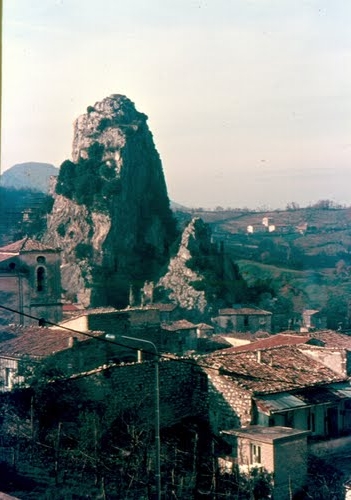
Beneath a spire of rock where the ruins of a Lombard castle remain, the old borgo (old village) of Pietrastornina slowly crumbles in silence.
 ◆ Sacred art
Abellinum romana + specus martirum
Atripalda (AV)
At Atripalda the Roman Abellinum surfaces and, beneath the church, the Specus Martyrum: the crypt where the first Christian martyrs of Irpinia were laid.
 ◆ Sacred art
Abbazia del Goleto
Sant'Angelo dei Lombardi (AV)
Among the fields of upper Irpinia, the ruins of the abbey founded by Saint Guglielmo da Vercelli open to the sky: the Febronia tower, the silence and the golden stone at sunset.
 ◆ Villages
Zungoli
Zungoli (AV)
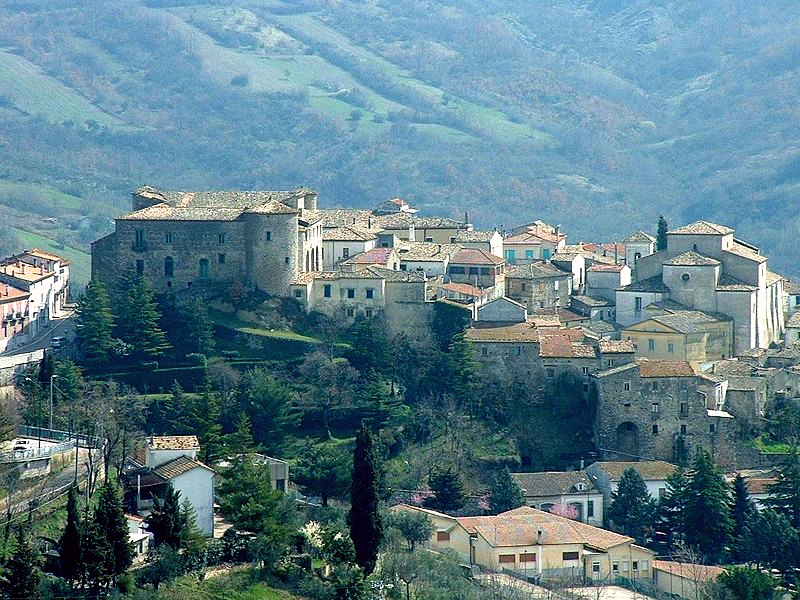
Among the most beautiful borghi (old villages) in Italy, Zungoli clings to a hill of tufo (volcanic tuff) hollowed by ancient caves, where caciocavallo podolico cheese still ripens in the cool.
 ◆ Villages
Summonte
Summonte (AV)
The borgo (old village) gathers around the Angevin tower, a stone cylinder sixteen metres high from which, among the clouds, the gaze runs over all of Irpinia.
 Museums
Museo Etnografico Beniamino Tartaglia (MEdA)
Aquilonia (AV)
Over a hundred settings rebuilt object by object: artisan workshops, folk medicine and the magical beliefs of the peasant Apennines, brought back to life in the ethnographic museum of Aquilonia.
 Museums
Museo Irpino
Avellino (AV)
The wooden xoana from the sanctuary of the goddess Mefite, where the ancients set a threshold to the underworld, and four hundred presepi (nativity scenes) from around the world: the memory of Irpinia gathered in Avellino.
 ◆ Castles
Castello della Leonessa
Montemiletto (AV)
At Montemiletto the Leonessa fortress commands the Calore valley with its cylindrical towers, among the best preserved in Irpinia.
- ◆ Castles
Castello di Zungoli
Zungoli (AV)
Zungoli climbs the tufo (volcanic tuff) with alleys and stairways, and beneath the houses opens a web of Byzantine caves where caciocavallo podolico cheese is aged.
- ◆ Villages
Rocca San Felice
Rocca San Felice (AV)
Rocca San Felice gathers its houses around a ruined castle, not far from the Mefite, the sulphurous pool the ancients believed to be a threshold of the underworld.
 ◆ Villages
Nusco
Nusco (AV)
Nusco, the balcony of Irpinia, looks down over valleys and mountains from its stone centre huddled around the cathedral.
 ◆ Villages
Savignano Irpino
Savignano Irpino (AV)
On the border with Puglia, Savignano Irpino spreads alleys and stone houses along the ridge, among the most beautiful villages in Italy.
 ◆ Villages
Quaglietta
Calabritto (AV)
A hamlet of Calabritto, Quaglietta is reborn as a scattered hotel around its Lombard castle, suspended on a spur between the Sele and the mountains.
- ◆ History & archaeology
Anfiteatro romano e Necropoli di Avella
Avella (AV)
At Avella, the ancient Abella that gave its name to the hazelnut, the Roman amphitheatre and a necropolis of monumental tombs emerge at the foot of the Partenio mountains.
- ◆ History & archaeology
Area archeologica di Abellinum
Atripalda (AV)
A few steps from Avellino, the Civita district of Atripalda holds the ruins of Abellinum, with domus, walls and paved streets resurfacing beneath the modern town.
 ◆ History & archaeology
Parco archeologico di Compsa
Conza della Campania (AV)
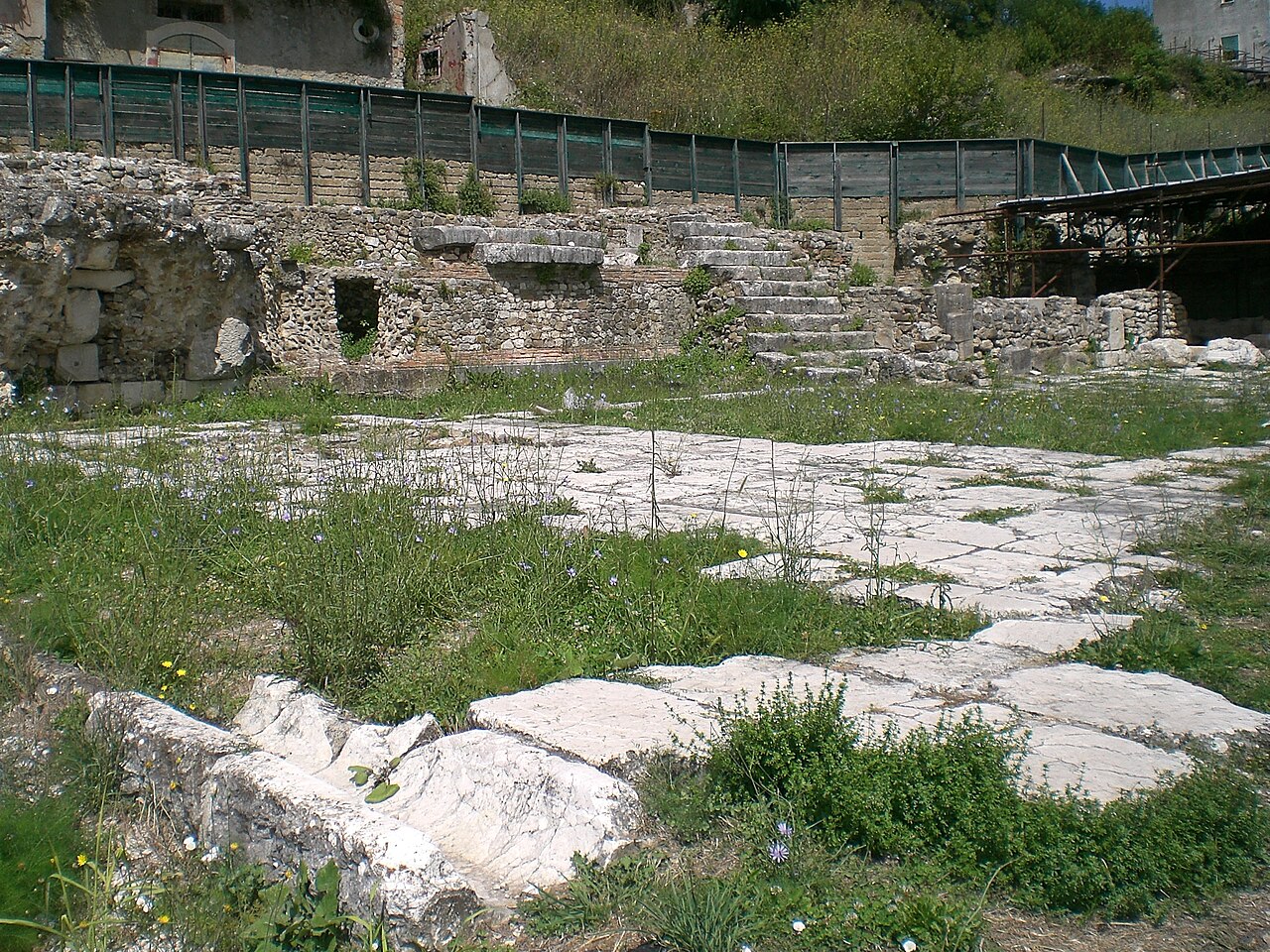
Beneath the ruins of the village destroyed by the 1980 earthquake, ancient Compsa has resurfaced, a Roman town on a hill suspended between the Ofanto river and the silence of Irpinia.
 ◆ Castles
Castello di Bisaccia
Bisaccia (AV)
On a spur of Monte Calvario, the ducal castle dominates the borgo with its forty-two halls; here, so the story goes, Torquato Tasso was a guest at the end of the sixteenth century.
 ◆ Castles
Castello di Monteforte Irpino
Monteforte Irpino (AV)
On the hill of San Martino remain the walls and a circular tower of a Lombard castle where Charles of Anjou held his court for a few summers, now wrapped in the pinewood.
 ◆ History & archaeology
Ponte di Santo Spirito
Casalbore (AV)
A pier and a few remains in the Miscano valley: this is all that survives of a Roman bridge on the via Traiana, the stretch of the Appia now recognised as a UNESCO heritage site.
 ◆ History & archaeology
Aequum Tuticum
Ariano Irpino (AV)
On the plateau of Sant'Eleuterio surface the baths, the tabernae and the paving of an ancient Roman posting station, where the via Traiana crossed the other great roads of the empire.
 ◆ Nature
Oasi WWF Lago di Conza
Conza della Campania (AV)
Born from a dam on the Ofanto, the lake is the largest wetland in Campania: from the hides you can watch herons, cormorants and storks along the migration routes.
 ◆ Views & panoramas
Guardia Lombardi
Guardia Lombardi (AV)
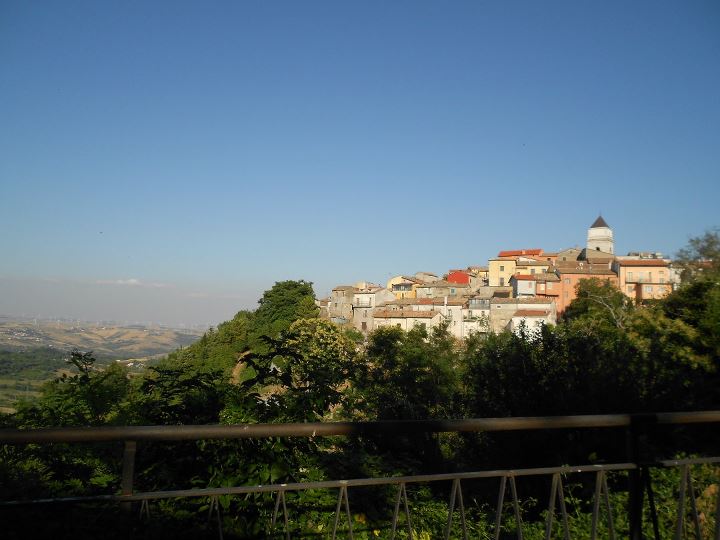
The name says it all: a Lombard lookout at almost a thousand metres, where on clear days you can see the Vulture and the Picentini together. The wind here never stops, and the old folk say it carries the voices of the villages below.
 ◆ Castles
Lacedonia e la Fortezza Pappacoda
Lacedonia (AV)
The last balcony of Irpinia before Puglia: from up here, at 730 metres, the gaze slides out over the Tavoliere plain. The Aragonese fortress dominates a borgo (old village) the earthquake emptied but did not extinguish.
 ◆ Villages
Sturno
Sturno (AV)
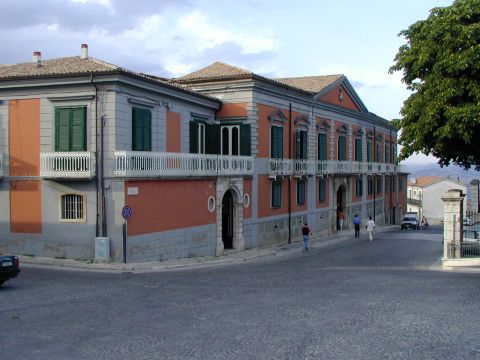
The village once called Frigento-Sturno that wanted a name of its own, clinging to a ridge swept by the wind of the Ufita.
 ◆ Sacred art
Collegiata di San Michele Arcangelo (Solofra)
Solofra (AV)
From outside, an ordinary church; inside, an Irpinian Sistine Chapel: a coffered ceiling painted end to end by the Guarini, and looking up takes your breath away.
 ◆ Villages
Capocastello di Mercogliano
Mercogliano (AV)
The medieval borgo (old village) below the castle, largely abandoned after the earthquakes: arches, stairs that lead to no door any more, and overhead the shadow of Montevergine.
 ◆ Sacred art
Collegiata di Santa Maria Assunta (Bagnoli)
Bagnoli Irpino (AV)
The wooden choir carved by Giovan Battista Ferrari is a forest of sculpted timber, a Baroque masterpiece hidden in a mountain village almost no tourist ever reaches.
 ◆ Villages
Chiusano di San Domenico
Chiusano di San Domenico (AV)
A balcony over the Calore valley, with a castle-turned-multimedia-museum and the silence of villages that time forgot to wear down.
 ◆ Villages
Paternopoli
Paternopoli (AV)
Stone alleys and cellars dug into the tufo (volcanic tuff) where the Aglianico rests: here wine is not a product, it is kinship.
 ◆ Villages
Fontanarosa, il borgo della pietra e del Carro
Fontanarosa (AV)
Every 14 August a 28-metre obelisk of woven straw is dragged by oxen towards the Madonna, held upright by dozens of hemp ropes: a fragile giant that the whole village holds up with its bare hands. And the stone of Fontanarosa ended up in the Reggia di Caserta.
 ◆ Villages
Luogosano
Luogosano (AV)
Locus sanus, the healthy place: that is what they called it, for its air and its waters, amid the vine rows of the Taurasi.
 ◆ Villages
Sant'Andrea di Conza
Sant'Andrea di Conza (AV)
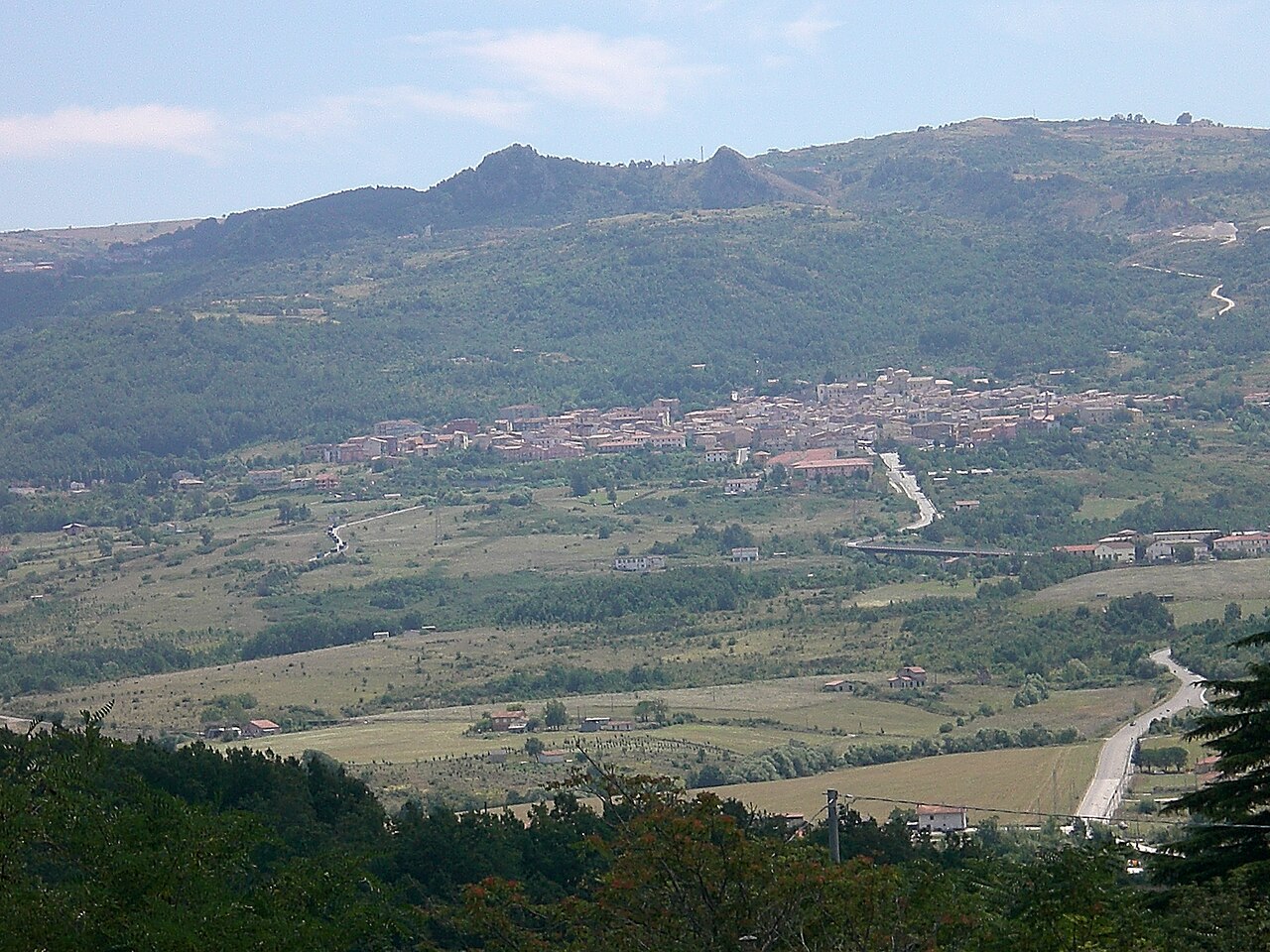
The bishop's palace and the cathedral of a tiny village that for centuries housed the bishops of Conza, after Conza had been abandoned to landslide and earthquake.
 ◆ Villages
Teora
Teora (AV)
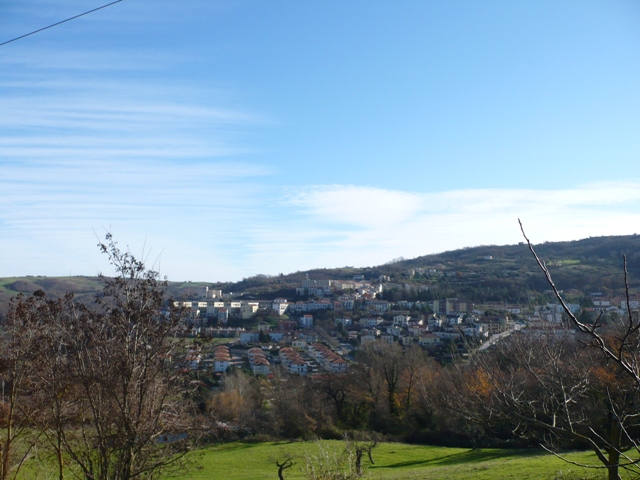
In 1980 Teora lost more than a hundred inhabitants and nearly all its houses. The rebuilt village keeps, in its old core, the walls left standing like scars.
 ◆ Castles
Castello d'Aquino di Grottaminarda
Grottaminarda (AV)
The Lombard-Norman stronghold of the d'Aquino family — the same family as Thomas Aquinas: restored, it commands the Ufita valley from a spur that has watched every army of the South go by.
 ◆ History & archaeology
Tempio italico e Castello Normanno di Casalbore
Casalbore (AV)
A Samnite sanctuary and a Norman tower a few steps apart: three thousand years of history stacked on a single hill.
 ◆ Villages
Castel Baronia
Castel Baronia (AV)
The heart of the Baronia, with its tower and carved portals, in a borderland where Irpinia is already turning into Puglia.
 ◆ Villages
Sant'Angelo all'Esca
Sant'Angelo all'Esca (AV)
Two hundred souls looking out over the Calore, among the vineyards of Taurasi: one of those villages where the silence of three in the afternoon is a genuine experience.
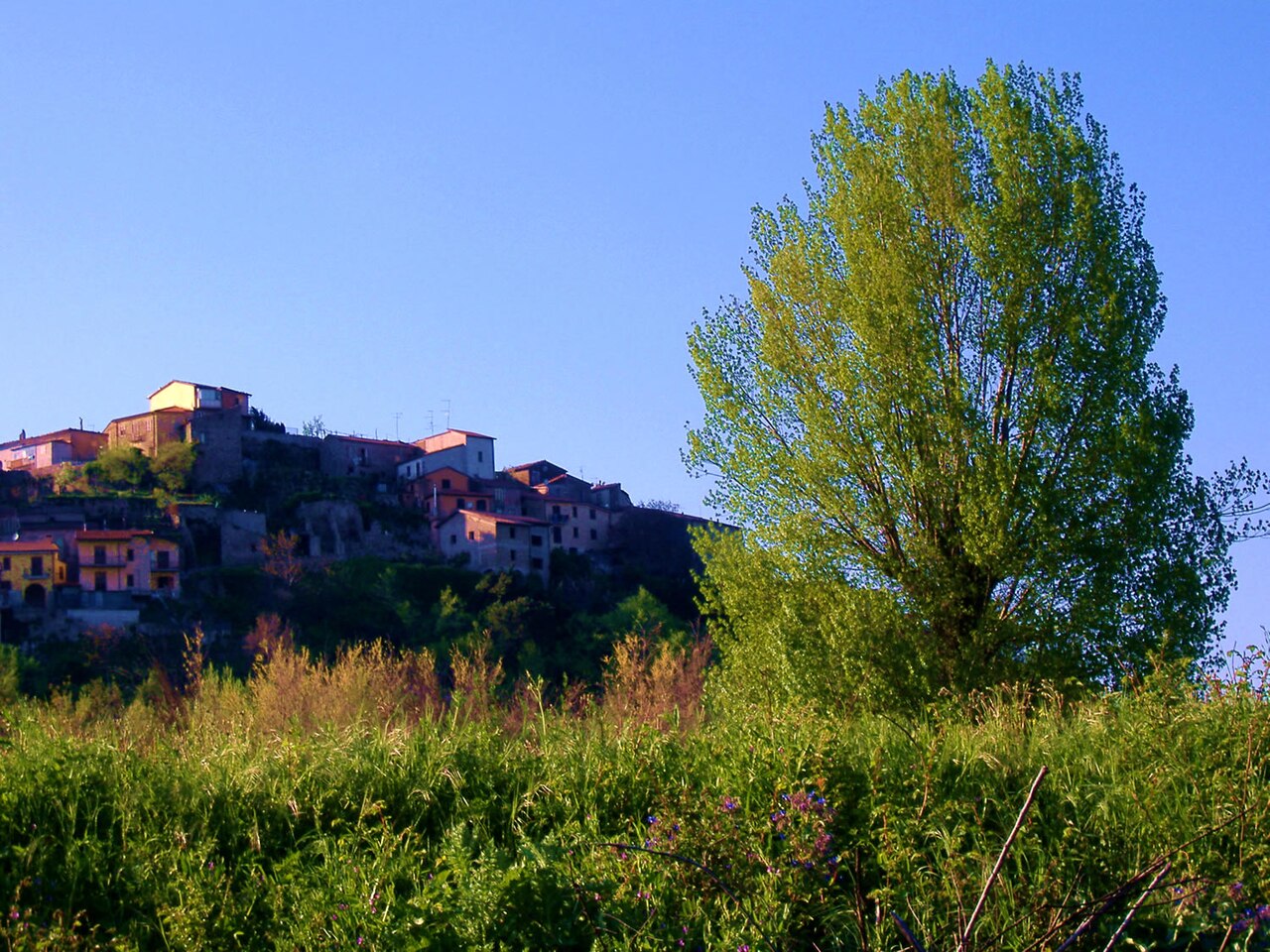 ◆ Villages
Candida
Candida (AV)
A white borgo (old village) on a hill, with the ruins of its castle and a view that on summer evenings reaches all the way to the Partenio.
 ◆ Sacred art
Santuario del Santissimo Salvatore (Montella)
Montella (AV)
A sanctuary on a knoll that watches over the whole Calore valley: you climb up on foot, and the effort is part of the prayer.
 ◆ Castles
Castello di Avella (ruderi)
Avella (AV)
Above the Roman amphitheatre, the ruins of the Lombard-Norman castle crumble on a spur. One of the finest views in the Partenio, and almost nobody knows it.
- ◆ Museums
Museo Civico Archeologico di Bisaccia
Bisaccia (AV)
The Princess of Bisaccia sleeps here: a princely tomb of the 7th century BC with its gold, found in a land long believed to have always been poor.
- Nature
Mefite d'Ansanto
Rocca San Felice
A small lake boiling with gas and sulphur in a lifeless hollow: the ancients worshipped the goddess Mefite here, and Virgil imagined a gateway to the underworld.
- ◆ Museums
Museo MEdA
(AV)
Room after room it rebuilds the peasant world of the Alta Irpinia: trades, objects and rites of a vanished civilisation, where daily life was interwoven with magic and superstition.
- Nature
Lago Laceno
Bagnoli Irpino/Montella
On the plateau of the Monti Picentini a lake of karst origin rests among the pastures: in summer a mirror of beech trees, in winter the heart of a small ski resort of the Irpinian Apennines.
- Nature
Monte Terminio
Bagnoli Irpino/Montella
Dense beech woods climb to the summit of the Picentini, where the springs are born that quench half of Campania: in winter silence and snow, in summer a cool shade a step away from Avellino.
- ◆ Nature
Oasi Valle della Caccia
Senerchia
Along the Acquabianca stream a path climbs between mossy caves to a waterfall that plunges some thirty metres: the WWF oasis where the Picentini keep their clearest water.
- ◆ Nature
Acquedotto romano del Serino (Aqua Augusta)
Serino (AV)
From the springs of Serino the Aqua Augusta set out to carry water all the way to Naples and the fleet at Miseno, one of the longest aqueducts of the Roman world.
- ◆ Nature
Piana del Dragone
Volturara Irpina (AV)
A plateau ringed by the Picentini mountains where the waters, instead of flowing away, vanish into a karst sinkhole the locals call the Bocca del Dragone (Dragon's Mouth).
- Sacred art
Avellino città
Avellino (AV)
At the foot of the Partenio the city looks up at the Montevergine sanctuary above it, while downtown the Torre dell'Orologio marks the pace of Irpinia.
- ◆ Castles
Taurasi: castello ed enoteca
Taurasi (AV)
In the village that gives its name to the great Aglianico, the marquis's castle houses the regional wine cellar: a long-lived red told among stone and barrels.
- ◆ History & archaeology
Carnevale di Montemarano
Montemarano (AV)
In Montemarano carnival is a tarantella that never stops: lines of dancers follow the Pulcinella through the alleys to the hypnotic beat of the fife.
- ◆ Sacred art
Carro di Fontanarosa
Fontanarosa (AV)
Every 14 August at Fontanarosa a wooden obelisk clad in woven straw, tens of metres tall, is hauled by oxen toward the Madonna della Misericordia.
- ◆ Sacred art
Basilica paleocristiana dell'Annunziata
Prata di Principato Ultra (AV)
Outside the village, the basilica of Prata holds catacombe dug between the second and third centuries, among the oldest Christian traces in Irpinia.
- ◆ Sacred art
Solofra: Collegiata di San Michele
Solofra (AV)
In the town of tanning, the Collegiata di San Michele hides a painted wooden ceiling from the seventeenth century, the work of the Solofra painter Francesco Guarini.
- ◆ Street art
Bonito, borgo dei murales
Bonito (AV)
A borgo (old village) of the Irpinia where the Collettivo Boca summoned artists from all over the world: among the alleys stands out Bosoletti's 'Genesis', a female figure painted across three abandoned houses.
- ◆ Villages
Conza della Campania Vecchia
Conza della Campania (AV)
Razed by the 1980 earthquake, old Conza brought to light the ancient Roman Compsa: an archaeological park where the ruins tell of a city lost twice over.
- ◆ Villages
Aquilonia Vecchia (Carbonara)
Aquilonia (AV)
Destroyed by the 1930 earthquake, old Aquilonia — the ancient Carbonara — remains a maze of unroofed walls and stairs that no longer lead to any door.
- ◆ Villages
Melito Irpino Vecchia
Melito Irpino (AV)
Abandoned after the 1962 earthquake and the landslides, old Melito Irpino remains a ghost village among the fields, its empty houses still facing out over the Ufita valley.
- ◆ Castles
Castello di Gesualdo
Gesualdo (AV)
Among the hills of Irpinia rises the fortress of Prince Carlo Gesualdo, genius of the madrigal and of jealousy: stones that still guard his music and his crime.
- ◆ Nature
Mefite della Valle d'Ansanto
Rocca San Felice (AV)
In inland Irpinia a sulphurous pool bubbles with toxic fumes: the ancients worshipped the goddess Mefite here and imagined a mouth of the underworld, among yellow vapours and barren earth.
- ◆ Museums
Museo della Civiltà Contadina e Artigiana
Andretta (AV)
A thousand objects arranged in corners that recreate the home and the labour of times past: the peasant's plough, the wooden spinning wheel, the tools of the blacksmith and the cobbler.
- ◆ Museums
Museo dell'Alta Irpinia
Guardia Lombardi (AV)
Reconstructed nineteenth-century rooms, noble coats of arms, embroidery and blacksmith's tools tell the story of the peasant culture of Alta Irpinia, in a borgo (old village) of Lombard origin.
- ◆ Museums
Museo Etnografico della Piana del Dragone
Volturara Irpina (AV)
In the borgo's former cinema, two thousand five hundred objects line up the lost trades — barber, charcoal-burner, saddler, farrier — beneath the name of the karst plain of the Dragone.
- ◆ Museums
Museo del Flauto Traverso
Manocalzati (AV)
Forty-five historic flutes, from the old keyed system to the nineteenth-century Boehm, trace the instrument's evolution in the art hall of Manocalzati.
- ◆ Museums
MIGRA — Museo Interattivo del Grano
Monteverde (AV)
In the halls of the Grimaldi castle, virtual characters weave the story of wheat with that of the peasant woman, in one of the loveliest borghi (old villages) overlooking the far eastern edge of Irpinia.
- ◆ Museums
Biogem — Museo della vita e della Terra
Ariano Irpino (AV)
A multimedia pyramid and the animated skeletons of Allosaurus and T-Rex lead through the geological eras, where science meets the hills of Ariano.
- ◆ Museums
Museo della civiltà normanna
Ariano Irpino (AV)
Norman-Swabian coins, the great model of the Battle of Hastings and a reproduction of Roger II's mantle, in the seventeenth-century palazzo of Italy's first Norman county.
- ◆ Castles
Castello Ruspoli (di Torella)
Torella dei Lombardi (AV)
Among the towers of Torella dei Lombardi, the Ruspoli castle holds a museum dedicated to Sergio Leone, whose roots run deep in this corner of Irpinia.
- ◆ Castles
Carcere Borbonico di Montefusco
Montefusco (AV)
They called it the Spielberg of Irpinia: the old castle turned into a Bourbon prison for anti-Bourbon patriots, its cells and chains still telling of the harshness of that captivity.
- ◆ Sacred art
Cattedrale di Sant'Amato
Nusco (AV)
In the borgo (old village) of Nusco the cathedral guards in its crypt the remains of Sant'Amato and, recently resurfaced, thirteenth-century frescoes of a Nativity beneath the stone bell tower.
- ◆ History & archaeology
Santuario sannitico di Macchia Porcara
Casalbore (AV)
Beside a spring surface the remains of an Italic temple from the Samnite age, dedicated to Mefite, goddess of waters and fertility, and destroyed in the time of Hannibal.
- ◆ History & archaeology
Necropoli sannitiche di Carife
Carife (AV)
In the Irpinian Baronia, among the fields of Carife, the tombs of the Samnites re-emerge: hundreds of burials and grave goods from the 4th-3rd century BC, now gathered in the village museum.
- ◆ In the water & diving
Terme di Villamaina (San Teodoro)
Villamaina (AV)
In the Ansanto valley, where the earth still exhales sulphur, the sulphurous water of San Teodoro springs forth: thermal sources known for centuries, among muds, caves and warm vapours.
- ◆ Street art
Murale Genesi di Bosoletti
Bonito (AV)
On three abandoned houses of Bonito, Francisco Bosoletti painted an ethereal female figure offering liquid gold: the 'Genesi', among the most beautiful murals in the world of 2018.
- ◆ Villages
Sant'Angelo dei Lombardi
Sant'Angelo dei Lombardi (AV)
At 19:34 on 23 November 1980 the earth split open here and the town became the symbol of a national wound. Today the risen borgo (old village) lives alongside its empty spaces, and the Castello Imperiale watches over a square that has learned how to begin again.
- ◆ Castles
Castello Longobardo di Castelvetere sul Calore
Castelvetere sul Calore (AV)
A Lombard stronghold clinging to a rocky spur above the Calore, with alleys that seem carved out of the living stone. From the belvedere the eye runs over the Aglianico vineyards all the way to the ridges of the Terminio.
- ◆ Villages
Andretta
Andretta (AV)
An amphitheatre of honey-coloured houses looking out over the Ofanto, homeland of emigrants and of that Ferdinando De Rosa who tried to kill a king. The old centre, stitched back together after the earthquake, is one of the most elegant in the Alta Irpinia.
- ◆ Villages
Vallata
Vallata (AV)
A land of wheat and bread, suspended between Irpinia and Daunia, where the stone doorways tell of families who crossed oceans and came back.
- ◆ Museums
M.A.V.I. — Museo Antiquarium di Lacedonia
Lacedonia (AV)
Beneath the square slept a Daunian necropolis: vases, ornaments and the bones of a people who traded here a thousand years before Rome.
- ◆ History & archaeology
Civita di Ogliara (ruderi)
Serino (AV)
A medieval settlement swallowed by the woods: dry-stone walls, a gutted tower, and the silence of a village no one has called by name for a long time.
- ◆ Castles
Palazzo Ducale Orsini di Solofra
Solofra (AV)
The palace of the dukes who made Solofra the capital of tanning: from here they ruled an empire of leather that sold as far as Venice and the Levant.
- Museums
Palazzo Abbaziale di Loreto
Mercogliano (AV)
A palace by Domenico Antonio Vaccaro guarding 200,000 volumes, codices and incunabula, and an eighteenth-century pharmacy with its jars still in place, as if the apothecary monk had just stepped out.
- ◆ Castles
Castello Cavaniglia e Palazzo Tenta
Bagnoli Irpino (AV)
The stronghold of the Cavaniglia, lords of black truffle and beech forests, and beside it the palazzo that today is the memory house of Bagnoli.
- ◆ In the water & diving
Sorgenti di Cassano Irpino (Bagno della Regina)
Cassano Irpino (AV)
This is kilometre zero of the Acquedotto Pugliese: from here 1,800 litres a second set off through tunnels to quench the thirst of four regions. The Bagno della Regina takes its name from a Lombard princess who, enchanted by this water, bathed in it.
- Castles
Castello di Tufo e le miniere di zolfo
Tufo (AV)
Beneath the vine rows that give the Greco di Tufo open the tunnels of the sulphur mine: it was that gypsum and that sulphur, they say, that taught the wine its minerality. The castle has watched over the Sabato valley for a thousand years.
- ◆ Castles
Palazzo Filangieri di Lapio
Lapio (AV)
The Filangieri stronghold suspended above the kingdom of Fiano: from up here the vineyards step down to the Calore like a green amphitheatre.
- ◆ Castles
Castello di Montefredane
Montefredane (AV)
A broken Norman tower on a cone of rock: below, the whole basin of Avellino. Climbing up at sunset is the closest thing to a privilege that Irpinia knows how to offer.
- ◆ Sacred art
Specus Martyrum (Chiesa di Sant'Ippolisto)
Atripalda (AV)
Below the church opens the cave of the martyrs: here, after the persecutions of Diocletian, the bodies of the Christians of Abellinum were laid to rest. Squat pillars, low vaults, and the distinct sensation of being a guest in someone else's home.
- ◆ Museums
MuGesS — Museo della Gente Senza Storia (miniera di zolfo)
Altavilla Irpina (AV)
For a century thousands of men went down into the sulphur mine discovered in 1866: yellow dust in the lungs, silicosis, and a wealth that was never theirs. The museum gives a name back to those history never wrote down.
- ◆ Nature
Stretto di Barba e le Coste Janare
Altavilla Irpina (AV)
The famous Noce di Benevento, the walnut tree where the janare (Benevento witches) gathered, was not in Benevento at all, according to many scholars: it was here, in this steep gorge above the Sabato, whose banks are still called Coste Janare. Even today, in Irpinia, salt is laid across the doorstep.
- ◆ Sacred art
Grotta di San Michele Arcangelo (Casalbore)
Casalbore (AV)
A cavity hollowed out of the living rock, a stage on the Via Sacra Langobardorum towards the Gargano: here Lombard pilgrims stopped to pray to the warrior Archangel, one thousand three hundred years ago.
- ◆ Sacred art
Santuario di Santa Maria dei Bossi
Casalbore (AV)
A country church in the middle of the woods, along the Pescasseroli-Candela drove road, built on top of a 2nd-century Roman funerary monument: faith resting on pagan bones.
- ◆ Villages
Montecalvo Irpino e il Castello Pignatelli
Montecalvo Irpino (AV)
One of the most intact borghi (old villages) of eastern Irpinia, with the Pignatelli castle and the alleys of the Jewish quarter.
- ◆ Villages
Greci — Katundi, l'unico borgo arbereshe della Campania
Greci (AV)
At 821 metres, in the middle of nowhere, they still speak the Albanian of the fifteenth century: Skanderbeg left a garrison here after a battle he won, and those soldiers never went home. The road signs are bilingual, and in the gardens the kalive still stand — the shepherds' stone huts.
- ◆ Villages
Flumeri e il Giglio
Flumeri (AV)
Here too a plant obelisk, the Giglio, is hauled through the streets in honour of San Rocco: a rite Irpinia repeats in a thousand variants, as if the world had to be set upright again every year.
- ◆ Villages
Castelfranci
Castelfranci (AV)
The castle of the Franks in the Aglianico valley, among terraced vineyards and the waters of the Calore, which rises just above.
- Villages
Mirabella Eclano e il Carro
Mirabella Eclano (AV)
On the third Saturday of September a 25-metre straw obelisk is dragged by oxen in honour of the Madonna Addolorata: UNESCO heritage as a shoulder-borne procession machine, and one of the most archaic spectacles to be seen in Italy.
- ◆ Castles
Castello Biondi-Morra e casa natale di Francesco De Sanctis
Morra De Sanctis (AV)
In the castle, they say, a young Torquato Tasso once slept; a few steps away Francesco De Sanctis was born, the man who invented the Italian way of reading literature. A village of 1,200 people with two claims to fame.
- ◆ Villages
Chianche
Chianche (AV)
Fewer than five hundred inhabitants and one of the purest Greco di Tufo wines in existence: a village that fits entirely inside a bend in the road.
- ◆ Villages
Torre Le Nocelle
Torre Le Nocelle (AV)
A tower, a hazel grove, a ridge: the village's name is its entire description.
- ◆ Castles
Montefalcione Vecchio (ruderi del castello)
Montefalcione (AV)
The old village, destroyed and never lived in again, leaves only walls and an immense view: below, the whole of Irpinia; above, the falcons that gave the place its name.
- Villages
Ospedaletto d'Alpinolo
Ospedaletto d'Alpinolo (AV)
It began as a hospice for pilgrims bound for Montevergine, and it still smells of sour cherries and torrone: the last stop before the sacred mountain.
- ◆ Villages
Senerchia Vecchia
Senerchia (AV)
On 23 November 1980 the mountain unloaded the village into the valley. The old centre was never rebuilt: houses split open like boxes, caved-in roofs, and the vegetation taking back the alleys metre by metre.
- ◆ Sacred art
Ruderi del Convento dell'Incoronata
Sant'Angelo a Scala (AV)
A convent swallowed by the Partenio woods: what remains is the apse, the walls and the sound of the beech trees. No signs, no custodian.
- ◆ Nature
Grotta del Caliendo
Bagnoli Irpino (AV)
The stream goes into the mountain and carves a world inside it: sumps, underground waterfalls and galleries where the water has been at work for millions of years. One of the most important caves in the Picentini.
- ◆ Nature
Grotta del Caprone
Montella (AV)
The name says what the shepherds believed: that in there lived the devil with his horns. It is one of the karst cavities of the Terminio, and among the most striking.
- ◆ Nature
Cascate del Troncone e della Scorzella
Montella (AV)
Waterfalls hidden in the green of the Terminio, where the stream comes down in steps and the light struggles through the beeches.
- Hiking
Piano di Verteglia
Montella (AV)
A plateau at 1,230 metres ringed by beech forest, where you snowshoe in winter and the herds graze in summer: a piece of the Apennines that looks like Norway, an hour from Naples.
- ◆ Sacred art
Grotta di San Guglielmo
Bagnoli Irpino (AV)
Here, they say, Guglielmo da Vercelli withdrew to pray before founding Montevergine and the Goleto: a cleft in the rock, and a man who spoke with God.
- Hiking
Monte Cervialto
Bagnoli Irpino (AV)
The highest peak of the Picentini, 1,809 metres: on a clear day you see the Tyrrhenian and the Lucanian Apennines together. Inside the mountain, the water that quenches Puglia.
- Hiking
Monte Partenio
Summonte (AV)
The sacred mountain that gives the Park its name: beech woods, ruined hermitages and, along the ridge, a silence no Montevergine tourist ever suspects.
- ◆ Nature
Cascata dell'Acquabianca
Senerchia (AV)
The water falls milk-white down a rock wall, in a valley the earthquake left almost unreachable — and which for that reason stayed wild.
- ◆ Nature
Grotta Profunnata
Senerchia (AV)
The sunken one: a karst shaft plunging into the heart of the Picentini, with a name that is already a warning.
- ◆ Nature
Cascata del Tuorno
Calabritto (AV)
A waterfall almost nobody knows, in a valley where 1980 erased nearly everything except the water.
- ◆ Nature
Cascate dell'Acquaserta
Quadrelle (AV)
On the northern flank of the Partenio, a stream drops in leaps down a moss-covered gorge: ten minutes from the road and you are in another world.
- ◆ History & archaeology
Neviere di Piano Salto
Forino (AV)
Stone pits dug into the mountain where winter snow was packed down to be sold in summer to the nobles of Naples: a trade in cold, before refrigerators. Today they are empty mouths in the wood.
- ◆ Nature
Le Sette Camerelle del Diavolo
Contrada (AV)
Seven cavities in the rock that local people credited to the devil, and beside them a cave dedicated to the Archangel who defeated him: the geography of fear and the geography of the remedy, twenty metres apart.
- ◆ Sacred art
Grotta di San Michele di Avella
Avella (AV)
Another Michaelic cave in the mountains of Avella: the cult of the Archangel, brought by the Lombards, clung to every cavern in Irpinia like ivy.
- ◆ Nature
Sorgenti dell'Ofanto
Torella dei Lombardi (AV)
From a crack in the rock is born the river Horace sang of as violent: two hundred kilometres later it will be the Adriatic. Here it is still a thread of water you could step over.
- ◆ History & archaeology
Ponte di Annibale
San Mango sul Calore (AV)
Legend says Hannibal crossed here with his elephants; archaeologists say it is Roman-medieval. The Calore has run beneath it for two thousand years, and the question does not interest it.
- ◆ Castles
Castello di Cervinara
Cervinara (AV)
The keep that watches over the Valle Caudina, the same valley where the Romans passed under the Forks: from up here, betrayal could be seen coming.
- ◆ Castles
Torre di Nanno
Calitri (AV)
A lone tower in the hills of the Ofanto, with no road and no name on the maps: one of those places you find only if someone tells you.
- ◆ Museums
MuDea — Museo delle Acque
Caposele (AV)
The story of the waterworks that carried Irpinia's water to a thirsty Puglia: an epic of labourers, tunnels and engineering that nobody tells any more.
- ◆ Museums
Casa Museo di San Giuseppe Moscati
Santa Lucia di Serino (AV)
The home of the doctor of the poor, the saint who visited the alleys of Naples for free: plain furniture, and the feeling that he never really left.