Benevento
105 places
 History & archaeology
Teatro Romano e il Triggio
Benevento
The great Hadrianic theatre opens up all at once among the alleys of the Triggio, the oldest quarter, where Roman stone and medieval houses blur into one another.
 ◆ Sacred art
Hortus Conclusus
Benevento
In the garden of the San Domenico convent, the bronzes of Mimmo Paladino: a horse in a golden mask among ancient capitals and fountains, in a garden suspended between myth and meditation.
 History & archaeology
Ponte Leproso
Benevento
On the ancient Via Appia the stone arches stride across the river Sabato: the same threshold that travellers bound for Rome once crossed to enter Benevento.
 Villages
Sant'Agata de' Goti
Sant'Agata de' Goti (BN)
The houses lean out over the void, clinging to a spur of tufo (volcanic tuff) above the stream: a stone balcony in mid-air that the Goths chose and time has never let go.
 ◆ Nature
Cusano Mutri e le Gole di Caccaviola
Cusano Mutri (BN)
The Titerno has carved the limestone into a gorge of waterfalls and green pools, where the light filters down between the walls: you descend with rope and helmet, in the heart of the Matese.
 ◆ Villages
Guardia Sanframondi
Guardia Sanframondi (BN)
A borgo (old village) of wine and silences, every seven years it wakes for the Riti di Penitenza, when the battenti (flagellant penitents) walk the alleys and the town turns medieval again for a week.
 Nature
Telese Terme e il lago
Telese Terme (BN)
The sulphurous waters burst forth after a medieval earthquake; today the small lake and the spa rest at the foot of the Taburno, among plane trees and an air that smells of sulphur.
 ◆ Villages
Cerreto Sannita
Cerreto Sannita (BN)
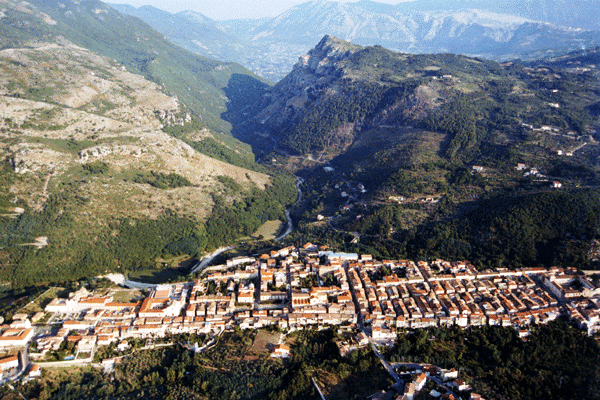
Razed by the earthquake of 1688 and rebuilt from a drawing board on a chessboard of straight streets, it lives on ceramics in whites and yellows that have been painted here for centuries.
 ◆ Villages
Cerreto Antica
Cerreto Sannita (BN)
On the hill lie the ruins of medieval Cerreto, broken in a single evening of 1688: walls and alleys brought back by excavation, a ghost town watching its heir down in the valley.
 Castles
Castello di Limatola
Limatola (BN, confine casertano)
Above the borgo (old village), the Norman castle of Limatola dominates the Volturno valley; in winter its courtyards light up with lights and markets, among ancient walls and Renaissance loggias.
 Nature
Forche Caudine
Arpaia/Forchia (BN)
Between Arpaia and Forchia narrows the gorge where in 321 BC the Roman legions, trapped by the Samnites, had to pass beneath the yoke: a tight pass that survives in the language as humiliation.
 ◆ History & archaeology
Ponte delle Chianche
Buonalbergo (BN)
In the countryside of Buonalbergo stands the Ponte delle Chianche, the best-preserved bridge of the Via Traiana: arches of Roman brick still leap the stream along the route Trajan willed towards Brindisi.
 ◆ Villages
Morcone
Morcone (BN)
The white houses of Morcone climb the mountainside like a presepe (nativity scene) of stone up to the ruins of the castle: one of the most beautiful borghi of Italy, overlooking the Tammaro valley.
 ◆ Villages
Pontelandolfo
Pontelandolfo (BN)
Above the Tammaro valley, Pontelandolfo still carries the memory of 1861, when the town was set ablaze; today the medieval tower watches over rebuilt alleys and a wound not forgotten.
 Villages
Solopaca
Solopaca (BN)
At the foot of the Taburno, Solopaca spreads among vineyards and cellars: here the Falanghina del Sannio ripens in the sun and the town lives to the slow rhythm of the harvest.
 ◆ Villages
Ceppaloni
Ceppaloni (BN)
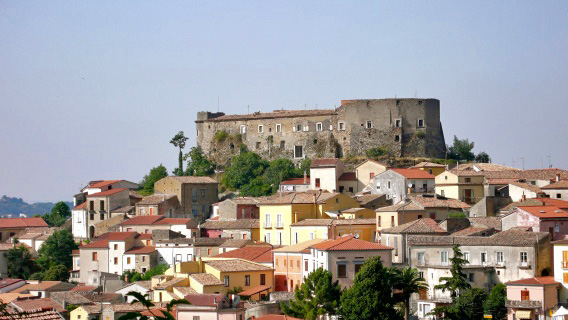
Perched on a hill above the Sabato valley, the Norman castle of Ceppaloni guards the road to Benevento: stone towers and walls a step away from the city of witches.
 ◆ Villages
Tocco Vecchio
Tocco Caudio (BN)
Abandoned after the 1980 earthquake, the old borgo of Tocco Caudio preserves ancient alleys and silent ruins clinging to the hillside, while life has migrated a little further down the valley.
 ◆ Hiking
Gole di Caccaviola
Cusano Mutri (BN)
Carved by the Titerno in the Matese, the gorges of Caccaviola are traversed with harness and helmet, among roaring waterfalls and pools where the light barely filters through.
 History & archaeology
Arco di Traiano
Benevento (BN)
Golden marble carved dense with reliefs, the arch that celebrated Trajan still marks the entrance to the road that led toward Brindisi and the East.
 Sacred art
Chiesa di Santa Sofia
Benevento (BN)
A Lombard church with a star-shaped plan, a World Heritage site, where columns and arches trace an unusual geometry left almost intact for over a thousand years.
 Castles
Castello Ducale di Sant'Agata de' Goti
Sant'Agata de' Goti (BN)
In the borgo (old village) perched on the tufo (volcanic tuff) ridge, the ducal castle overlooks houses that seem to plunge into the ravine: silent courtyards, frescoes and time that seems to have stopped.
 Castles
Castello di Montesarchio
Montesarchio (BN)
From the knoll dominating the Caudina valley, the cylindrical tower and the Bourbon prison recount centuries of history; inside, the Greek vases of the Sannio archaeological museum.
- ◆ Villages
Cusano Mutri
Cusano Mutri (BN)
Houses of white limestone clinging to the slopes of the Mutria, medieval alleys and porticoes that survived the 1688 earthquake, and in autumn the air that smells of porcini mushrooms.
 Museums
Museo degli Orologi da Torre
San Marco dei Cavoti (BN)
Fifty monumental time machines, of iron with stone weights, still perfectly working: the collection of tower clocks gathered by master Salvatore Ricci.
 ◆ Museums
Museo del Grano e della Paglia
Foglianise (BN)
In the village of the straw masters, where every August thousands of woven wheat stalks become bell towers and portals for San Rocco: the memory of that peasant art.
 Museums
Museo Civico e della Ceramica Cerretese
Cerreto Sannita (BN)
The artistic ceramics that flourished after the 1688 earthquake, in the eighteenth-century halls of Palazzo Sant'Antonio: plates and maiolica of a tradition still alive in Cerreto.
 Museums
Museo del Sannio
Benevento (BN)
The medieval cloister of Santa Sofia, a UNESCO site, with its forty-seven columns that weave together real and fantastic figures, holds the layered memory of the Sannio.
 Castles
Rocca dei Rettori
Benevento (BN)
At the gateway to Benevento, the Rocca dei Rettori, once seat of the papal governors, watches over the city from its gardens, amid Lombard and Samnite memories.
 ◆ Castles
Castello di Faicchio
Faicchio (BN)
On a rocky spur above the Titerno valley, the ducal castle of Faicchio watches over the village with its Norman towers reworked through the centuries.
 Villages
Pietrelcina
Pietrelcina (BN)
Amid alleys and tufo houses, Pietrelcina guards the birthplace of Padre Pio and the sites of his childhood, a destination for pilgrims from all over the world.
 ◆ Sacred art
Grotta di San Michele (Faicchio)
Faicchio (BN)
On Monte Monaco di Gioia a natural cavity preserves the Lombard cult of the archangel, with frescoes of Byzantine flavour faded by damp and a silence that tastes of rock.
 History & archaeology
Teatro Romano di Benevento
Benevento (BN)
Built under Hadrian and able to hold thousands of spectators, the Roman theatre of Benevento still opens its stone tiers to performances, among the houses of the old town.
 ◆ Nature
Forre di Lavello
Cusano Mutri (BN)
The Titerno has carved the limestone into deep gorges, and a path along an ancient Samnite mule track skirts them among caves, bridges and the constant sound of water.
 ◆ Nature
Parco del Grassano
San Salvatore Telesino (BN)
Springs surfacing at the foot of Monte Pugliano fill a river of clear, cold waters, green as glass, where the canoe glides through dense vegetation.
 ◆ Villages
Tocco Caudio
Tocco Caudio (BN)
On the rocky spur remains the old borgo (village), abandoned after the 1980 earthquake: you climb on foot among ruins and empty churches reclaimed by nature.
 History & archaeology
Arco del Sacramento
Benevento (BN)
Older than the Arco di Traiano and infinitely lonelier: a brick arch surfacing among the buildings of the Triggio quarter, with no crowd and no ticket office, the area of the Roman forum lying at its feet.
 History & archaeology
Obelisco egizio del Tempio di Iside
Benevento (BN)
Red Aswan granite planted in a Samnite square: the surviving twin of the obelisk that Domitian dedicated to Isis. The foreign goddess lit the magical fame of Benevento long before the janare (Benevento witches).
 ◆ History & archaeology
Bue Apis
Benevento (BN)
An Egyptian granite bull crouching at the corner of an avenue, ignored by the traffic. For centuries the people of Benevento called it 'o vove, the ox, and wound their superstitions around it: it is the most physical remnant of the cult of Isis.
 ◆ History & archaeology
Criptoportico dei Santi Quaranta
Benevento (BN)
Half-buried Roman corridors, gutted by the bombs of 1943 and never raised again: an imperial warehouse reduced to a skeleton among the houses, where the silence is older than the city.
 ◆ History & archaeology
Ruderi dei Morticelli
Benevento (BN)
Behind the Roman theatre, a monastery of the year 837 reduced to dust by the bombing, and before that turned into the burial ground of newborn children who had died. The people of Benevento still call it i Morticelli, the little dead, and the name weighs more than the stones.
 ◆ Sacred art
Cripta di San Marco dei Sabariani
Benevento (BN)
In 2007 they thought they had found a cistern under via De Vita: it was the frescoed crypt of a church swallowed by the earthquake of 1688. A piece of the city resurfacing from underground.
 Museums
Janua — Museo delle Streghe
Benevento (BN)
Herbs of power, ex voto, anthropomorphic fetishes and an artificial walnut tree that lights up in the dark: here the janara (Benevento witch) stops being a joke and goes back to being restless anthropology.
 ◆ Sacred art
Chiesa di Santa Maria della Verita'
Benevento (BN)
An 18th-century church built right up against the Roman theatre: the pagan cavea serves as foundation for the nave. Stratigraphy of faith, in the open air.
 Sacred art
Chiesa di Sant'Ilario a Port'Aurea
Benevento (BN)
A Lombard hall a stone's throw from the Arco di Traiano: inside, full-size casts of the frieze let you read close up what on the arch stays ten metres above your head.
 Sacred art
Basilica di San Bartolomeo Apostolo
Benevento (BN)
Since 839 Benevento has guarded — and disputed with Rome — the relics of the apostle flayed alive: the urn beneath the baroque altar is the most macabre and most devout heart of the city.
 ◆ History & archaeology
Ponte delle Serretelle
Benevento (BN)
A humpback bridge that no longer leads anywhere: the torrent changed course and left it there, one arch collapsed and the roots eating it away. In 1113 men fought here against the Normans.
 ◆ History & archaeology
Ponte Valentino (via Traiana)
Benevento (BN)
A Roman bridge no one comes to see: ancient stone, the Calore below, and the feeling of being the only one ever to have found it.
 ◆ Castles
Casino del Principe (palazzo di Federico II)
Calvi (BN)
The last hunting lodge Frederick II had built in the South, out of spite towards the Pope: today a Gothic ruin on a hill above the Calore, split among five owners and forgotten by everyone.
 ◆ History & archaeology
Monte Acero e la cinta megalitica sannitica
Faicchio (BN)
Three kilometres of polygonal blocks, dry-laid and interlocked, have ringed the summit for twenty-six centuries, and no one up there will ask you for a ticket: from the Samnite arx the gaze plunges over the whole Valle Telesina.
 History & archaeology
Ponte Fabio Massimo (Ponte del Diavolo)
Faicchio (BN)
The bridge that legend has Fabius Maximus the Delayer cross as he chased Hannibal, and that the locals call the Devil's Bridge: below, the Titerno carves a dark gorge; the polygonal-work foundations are older than Rome.
 ◆ History & archaeology
Ponte di Annibale sul Titerno
Cerreto Sannita (BN)
Thirteen metres of round-arched stone over which, they say, Carthaginian elephants passed. An iron elephant on the provincial road is the only hint that history walked through here.
 ◆ Villages
Civitella Licinio
Cusano Mutri (BN)
A hamlet that once belonged to Cerreto and has kept the slow gait of its stone houses, the Matese at its back and the vineyards in front. No tourist signs: only alleys and old men who greet you.
 Nature
Bocca della Selva
Cusano Mutri (BN)
At 1,400 metres, immense beech woods and the snow that buries the mountain huts in winter: the highest plateau of the Sannio, where the Matese stops being a postcard and becomes real mountain.
 Hiking
Monte Mutria
Cusano Mutri (BN)
One thousand eight hundred and twenty-three metres of limestone ridge: on clear days, the Tyrrhenian and the Adriatic in a single glance. Below, the valleys where the Titerno is born.
 ◆ Villages
Borgo di Pietraroja
Pietraroja (BN)
A handful of houses clinging to the Civita, suspended over the canyon, where ham is still cured in the mountain air. The village lives in the shadow of its dinosaur, but it is the rock underfoot that tells of a hundred million years.
 ◆ History & archaeology
Ponte Maria Cristina
Solopaca (BN)
In 1835 it was Italy's second suspension bridge, its iron chains calculated down to thermal expansion. In 1943 the retreating Germans blew it up with people on it: what remains are the neo-Egyptian pylons and the marble lions guarding a bridge that no longer exists.
 Sacred art
Santuario della Madonna del Taburno
Bucciano (BN)
In 1401 a deaf-mute shepherdess, Agnese Pepe, is said to have heard the Madonna's voice coming from a cave on the Taburno. On the spot of the miracle a convent grew at 544 metres, today a silent balcony over the Valle Caudina.
 Sacred art
Chiesa di San Menna
Sant'Agata de' Goti (BN)
Consecrated by Pope Paschal II in 1100, it holds one of the oldest Cosmatesque floors in the South. Yet the saint himself was a hermit of the Taburno who died in a cave: the luxury came only after him.
 ◆ Sacred art
Abbazia di Santa Maria in Gruptis
Vitulano (BN)
Founded by Lombard princes around 940, abandoned after the 1688 earthquake and deconsecrated once it had become a bandits' lair: what remains is the three-storey tower and the apse thrown wide open onto the woods.
 ◆ Villages
Campoli del Monte Taburno
Campoli del Monte Taburno (BN)
A medieval borgo (old village) on a rocky spur, with a pre-Roman tower and a thirteenth-century church. From its alleys start the trails that climb through beech and chestnut woods until, suddenly, Vesuvius appears.
 ◆ Sacred art
Chiesa della Santissima Annunziata di Airola
Airola (BN)
Behind a façade designed by Vanvitelli, a Baroque coffered ceiling with three canvases by Finoglia and works by De Mura: a hidden picture gallery in a town nobody visits.
 Villages
Torre dei Provenzali e il croccantino
San Marco dei Cavoti (BN)
Porta Grande, Porta di Rose, Porta Palazzo: you enter the borgo (old village) just as people entered it in the Middle Ages, when Provençal settlers founded it. And you leave with a croccantino, the nut brittle invented here in 1891 by Innocenzo Borrillo.
 ◆ History & archaeology
Ponte Ladrone (via Traiana)
Sant'Arcangelo Trimonte (BN)
A Roman bridge on the via Traiana with a name that sounds like a sentence handed down. All around, the fief of Montemalo, founded — so the story goes — by a colony of Dalmatian Slavs.
- ◆ Nature
Geosito di Pietraroja e il dinosauro Ciro
Pietraroja
In the limestone of a vanished sea lies Ciro, the small dinosaur whose internal organs are still imprinted: the fossil that turned this Matese plateau into a place for palaeontologists.
- ◆ Nature
Taburno — la "Dormiente del Sannio"
Taburno
From afar the outline of the massif draws a woman lying asleep above the Valle Caudina: the Dormiente del Sannio, the Sleeper of Samnium, watching over the Aglianico vineyards at her feet.
- Castles
Castello e Museo del Sannio Caudino (Cratere di Assteas)
Montesarchio (BN)
In the tower of the castle of Montesarchio is kept the Assteas krater: Europa fleeing on the bull, painted over two thousand years ago and recovered after a long journey through the black market.
- ◆ Sacred art
Abbazia del Santo Salvatore + Telesia
San Salvatore Telesino (BN)
Set in the plain of the Sannio, the Benedictine abbey of Santo Salvatore gathers the finds of ancient Telesia, the Roman and Samnite city abandoned after earthquakes and raids, and never risen again.
- History & archaeology
Festa del Grano
Foglianise (BN)
Every August Foglianise weaves straw into monuments of golden wheat and carries them in procession for San Rocco: cathedrals and obelisks of ears of grain, peasant art handed down for generations.
- Villages
Apice Vecchia
Apice (BN)
The 1962 earthquake emptied the houses in a single night: today Apice Vecchia remains a suspended village, its furniture still in place and its doors ajar, where time has stopped flowing.
- ◆ Museums
Museo delle Farfalle
Guardia Sanframondi (BN)
More than a thousand butterflies from every continent, collected out of passion by the lawyer Pascasio Parente and arranged in silent cases in the heart of the Samnite borgo.
- Museums
Paleolab — Museo dei dinosauri
Pietraroja (BN)
Here rested Ciro, the Scipionyx samniticus: the first dinosaur found in Italy, with its soft tissues intact, and the landscape of the Sannio as it was one hundred and ten million years ago.
- ◆ Museums
ARCOS — Museo d'arte contemporanea Sannio
Benevento (BN)
Beneath vaults of tufo (volcanic tuff), in the underground spaces of a former air-raid shelter, the contemporary art of the Sannio dialogues with the Egyptian treasures of the temple of Isis.
- ◆ History & archaeology
Scavi di Telesia
San Salvatore Telesino (BN)
On the plain where the Calore meets the Volturno, almost three kilometres of Roman walls and an amphitheatre dug into a hollow tell of Samnite Telesia, still largely buried.
- ◆ Villages
Borgo di Sassinoro
Sassinoro (BN)
On the border with Molise, Sassinoro is the borgo (old village) of the waters: a dozen springs that feed the Tammaro, silent alleys and the bell tower of San Michele on the square.
- ◆ History & archaeology
Ponte Appiano (Ponte Rotto)
Apice (BN)
On the river Calore remain an arch and two piers of one of the largest Roman bridges in the region: here the via Appia joined Benevento to Aeclanum, in balance for two thousand years.
- ◆ Villages
Port'Arsa e le mura longobarde del Triggio
Benevento (BN)
The only surviving Lombard gate, raised with stones stolen from the Roman monuments: you pass through it and end up in the alleys of the Triggio, where the medieval street plan has never moved.
- ◆ History & archaeology
Area archeologica di Cellarulo
Benevento (BN)
Where the Sabato surrenders itself to the Calore stood the city's pre-Roman river port: reed beds, willows and the stumps of a bridge, in a strip of countryside outside of time.
- ◆ Nature
Mulino di Zi' Fiore e Ponte del Mulino
Cusano Mutri (BN)
A mill carved into the rock face, still since the Fifties, reached by an arched bridge once crossed by the Oscan mule track. The water keeps turning a wheel that is no longer there.
- ◆ Hiking
Gole di Conca Torta
Cusano Mutri (BN)
A stone's throw from the houses, the Reviola torrent has cut a limestone gullet between little waterfalls and green pools: you go through in a harness, hanging from steel cables, with the water under your feet.
- ◆ Sacred art
Chiesa di Santa Maria del Castagneto
Cusano Mutri (BN)
Founded at the end of the 7th century amid the chestnut groves, survivor of earthquakes and centuries of neglect: a rural church that seems to grow out of the wood, where silence is part of the furnishing.
- Nature
Lago di Campolattaro e Oasi WWF
Campolattaro (BN)
A lake that was never meant to exist, born by damming the Tammaro: herons, night herons and raptors have taken back what the engineers left behind. The hills are mirrored in water that seems forgotten.
- ◆ Nature
Diga di Campolattaro
Campolattaro (BN)
An earth colossus almost seventy metres high, finished and then left for decades as a work with no purpose: the great unfinished project of the Sannio, the ambition of the Eighties turned to stone.
- ◆ Castles
Castello ducale di Casalduni
Casalduni (BN)
It survived the 1688 earthquake that razed the village, but not memory: in August 1861 Casalduni burned along with Pontelandolfo, and the cylindrical tower still stands there like an inconvenient witness.
- ◆ Castles
Palazzo Ducale Montalto
Fragneto Monforte (BN)
A Lombard fortress with four corner towers, tamed in the sixteenth century into a Renaissance residence. In October, from the meadow below the village, hot-air balloons rise above its battlements.
- ◆ Villages
San Lupo e la casa dei rivoluzionari del Matese
San Lupo (BN)
In April 1877 two English tourists rented a house here: they were Malatesta and Cafiero, and they were unloading rifles. From this silent village set out the anarchist revolution that lasted five days.
- ◆ Castles
Castello dei Baroni di Puglianello
Puglianello (BN)
Yellow tufo (volcanic tuff), four cylindrical towers with battered bases: in 1462 it withstood the siege of Ferrante of Aragon, today it mostly withstands indifference. Every May the village re-enacts that siege.
- ◆ Nature
Confluenza Calore-Volturno e Parco fluviale
Amorosi (BN)
Where the Calore surrenders itself to the Volturno, poplars and reed beds hide a park left almost wild: it is the same ford that for three thousand years decided who controlled the Sannio.
- ◆ Sacred art
Grotta di San Simeone
Bucciano (BN)
A thirteen-metre cleft in the rock of the Taburno, lined with rock frescoes and a Byzantine-flavoured Christ enthroned. San Simeone, here, was invoked as the protector of fair weather.
- History & archaeology
Sorgenti del Fizzo (Acquedotto Carolino)
Bucciano (BN)
From here the water sets off on thirty-eight kilometres to make the fountains of the Reggia di Caserta play: point zero of Vanvitelli's hydraulic masterpiece, a UNESCO site that almost nobody comes to see.
- ◆ History & archaeology
Ponte Carlo III dell'Acquedotto Carolino
Moiano (BN)
Four arches of tufo (volcanic tuff) over the Isclero, bearing the inscription CAROLUS ET AMALIA MDCCLIII: the first public proof that Vanvitelli's hydraulic dream would actually work.
- ◆ History & archaeology
Lavatoio Reullo
Sant'Agata de' Goti (BN)
Three stone basins under a fourteenth-century pointed arch, where the Isclero meets the Riello: here women washed their laundry until only yesterday, and the underground water has never stopped arriving.
- ◆ Nature
Cascate e mulini del Vallone Martorano
Sant'Agata de' Goti (BN)
Beneath the tufo (volcanic tuff) spur on which the borgo (old village) seems to float, the water plunges in a series of leaps among the ruins of mills and an old ironworks: the water trail that no visitor to Sant'Agata ever climbs down to find.
- Views & panoramas
Ponte Vecchio di Sant'Agata de' Goti
Sant'Agata de' Goti (BN)
The exact point where Sant'Agata stops being a town and becomes an apparition: the houses clinging to the tufo ridge, suspended over the void.
- Sacred art
Chiesa dell'Annunziata e il Giudizio Universale
Sant'Agata de' Goti (BN)
Across the whole inner façade, an early fifteenth-century Last Judgement: Christ the judge welcomes with one hand and turns away with the other. It is painted on the west wall, so that the setting sun itself lights up the end of the world.
- ◆ Sacred art
Eremo rupestre di San Michele in Camposcuro
Frasso Telesino (BN)
A church wedged into the rock face, with frescoes from 1601 and two basins that still collect the rain as they did a thousand years ago. Every 8 May the statue of San Michele is carried up here in procession and stays all summer.
- ◆ Villages
Borgo fantasma di Castelpoto
Castelpoto (BN)
Abandoned after the 1980 Irpinia earthquake: stone houses, empty alleys, and the Torre dell'Orologio with its hands frozen at 13:13.
- Villages
Torrecuso, borgo dell'Aglianico del Taburno
Torrecuso (BN)
Four hundred and twenty metres up, Lombard alleyways and thirteen hundred hectares of vineyards spread out below the village: this is where Aglianico del Taburno DOCG is made, and Palazzo Cito houses the wine museum.
- ◆ History & archaeology
Ligures Baebiani
Circello (BN)
In 180 BC Rome deported 47,000 defeated Ligurians here and founded a municipium. In 1832 the bronze Tabula alimentaria of Trajan surfaced from this soil: today it is in Rome, and the remains of the forum sleep among the fields.
- ◆ Castles
Castello di Circello
Circello (BN)
The Lombard-Norman keep dominates the village and the old drove road: from up here the gaze slides across the Alto Tammaro all the way to the mountains of Molise.
- ◆ Villages
Borgo medievale di Molinara
Molinara (BN)
A Lombard castrum of tufo (volcanic tuff) at 592 metres, five towers, Porta Ranna, and the flayed walls of San Bartolomeo where traces of frescoes still surface: a ghost town that has started breathing again.
- ◆ Sacred art
Santuario di Santa Maria del Gualdo Mazzocca
Foiano di Val Fortore (BN)
In 1156 the pope authorised the hermit Giovanni da Tufara to build his monastery here, on top of a pagan temple, so they say. Earthquake in 1456, fire in 1630: what remains are ruins isolated in the woods and a chapel born out of the rubble.
- ◆ Castles
Ruderi del Castello di Montefalcone di Val Fortore
Montefalcone di Val Fortore (BN)
At 800 metres, the highest village in the Benevento Fortore clings to a castle reduced to a skeleton: on clear days, from up there, you can see the Gargano.
- ◆ Castles
Palazzo Lembo e le grotte ipogee
Baselice (BN)
Built on the ruins of an anti-Saracen castle: frescoes, a hanging garden with its ice house, a cylindrical tower, and caves dug into the tufo (volcanic tuff) that open onto immense views.
- ◆ History & archaeology
Antica Neviera di San Bartolomeo
San Bartolomeo in Galdo (BN)
A stone pit where snow was packed in winter to be sold back as ice in summer: the industrial archaeology of the poor, forgotten in a field.
- Sacred art
Santuario dell'Assunta e i Riti Settennali dei Battenti
Guardia Sanframondi (BN)
Every seven years the hooded men come out of the Rione Croce and beat their chests with sponges bristling with pins, until they bleed, before the Assunta. The last time was August 2024: the next is in 2031.