Chiesa di Santa Sofia
Benevento (BN)
FamousSacred art

The story
A Lombard church with a star-shaped plan, a World Heritage site, where columns and arches trace an unusual geometry left almost intact for over a thousand years.
Access
FREE
The story
The church of Santa Sofia is one of the very few in the world with a star-shaped plan, and one of the most important testimonies of Lombard architecture. It was founded by Duke Arechis II around 760, at the height of his project to make Benevento a prestigious capital. Since 2011 it has been part of the UNESCO site 'Longobards in Italy: Places of Power'.
What to see
The interior, with its unusual central star-shaped plan, keeps the Lombard layout and fragments of frescoes from the eighth century. Beside it, the cloister houses the Museo del Sannio. It is a rare glimpse into the art and power of the Lombards of the South.
How to get there
- Car needed
Public transport. Il trasporto pubblico in quest'area interna è limitato: i collegamenti in autobus sono radi e non sempre giornalieri. In pratica il luogo è difficilmente raggiungibile senza un mezzo proprio; per eventuali autolinee e per la stazione ferroviaria utile più vicina, verifica su Unico Campania e sui canali ufficiali degli operatori regionali (AIR Campania). · fonte: Fallback onesto — area interna, routing transit non disponibile
Tips
The church is in the centre of Benevento, a stone's throw from the Arch of Trajan. The visit is short but dense: look for the surviving Lombard frescoes. For the cloister and the Museo del Sannio check hours and admission on the official channels.
Frequently asked questions
Why is the church of Santa Sofia special?
For its rare star-shaped plan and for being one of the greatest testimonies of Lombard architecture; since 2011 it has been a UNESCO site.
Who founded the church of Santa Sofia?
The Lombard duke Arechis II, around 760, as part of his project of prestige for Benevento.
What is next to the church of Santa Sofia?
The cloister, which houses the Museo del Sannio.
More gems in Benevento
 History & archaeology
Teatro Romano e il Triggio
Benevento
The great Hadrianic theatre opens up all at once among the alleys of the Triggio, the oldest quarter, where Roman stone and medieval houses blur into one another.
 ◆ Sacred art
Hortus Conclusus
Benevento
In the garden of the San Domenico convent, the bronzes of Mimmo Paladino: a horse in a golden mask among ancient capitals and fountains, in a garden suspended between myth and meditation.
 History & archaeology
Ponte Leproso
Benevento
On the ancient Via Appia the stone arches stride across the river Sabato: the same threshold that travellers bound for Rome once crossed to enter Benevento.
 History & archaeology
Arco di Traiano
Benevento (BN)
Golden marble carved dense with reliefs, the arch that celebrated Trajan still marks the entrance to the road that led toward Brindisi and the East.
 Museums
Museo del Sannio
Benevento (BN)
The medieval cloister of Santa Sofia, a UNESCO site, with its forty-seven columns that weave together real and fantastic figures, holds the layered memory of the Sannio.
- ◆ Museums
ARCOS — Museo d'arte contemporanea Sannio
Benevento (BN)
Beneath vaults of tufo (volcanic tuff), in the underground spaces of a former air-raid shelter, the contemporary art of the Sannio dialogues with the Egyptian treasures of the temple of Isis.
More gems: Sacred art
 Sacred art
Cappella Sansevero (Cristo Velato)
Napoli (NA)
Beneath a veil of marble that still seems to breathe, Sanmartino's Cristo Velato rests in the chapel's half-light, and the whiteness of the stone deceives every eye.
 Sacred art
Duomo di Napoli
Napoli
Three times a year the city holds its breath as the blood of San Gennaro waits to liquefy, among Gothic naves and the gold of the chapel devoted to him.
 Sacred art
Cappella del Tesoro di San Gennaro
Napoli
Behind a bronze gate lie silverware, gems and the jewel-studded mitre of the saint: a treasure heaped up over centuries by the devotion of Naples.
 Sacred art
Chiesa del Gesù Nuovo
Napoli
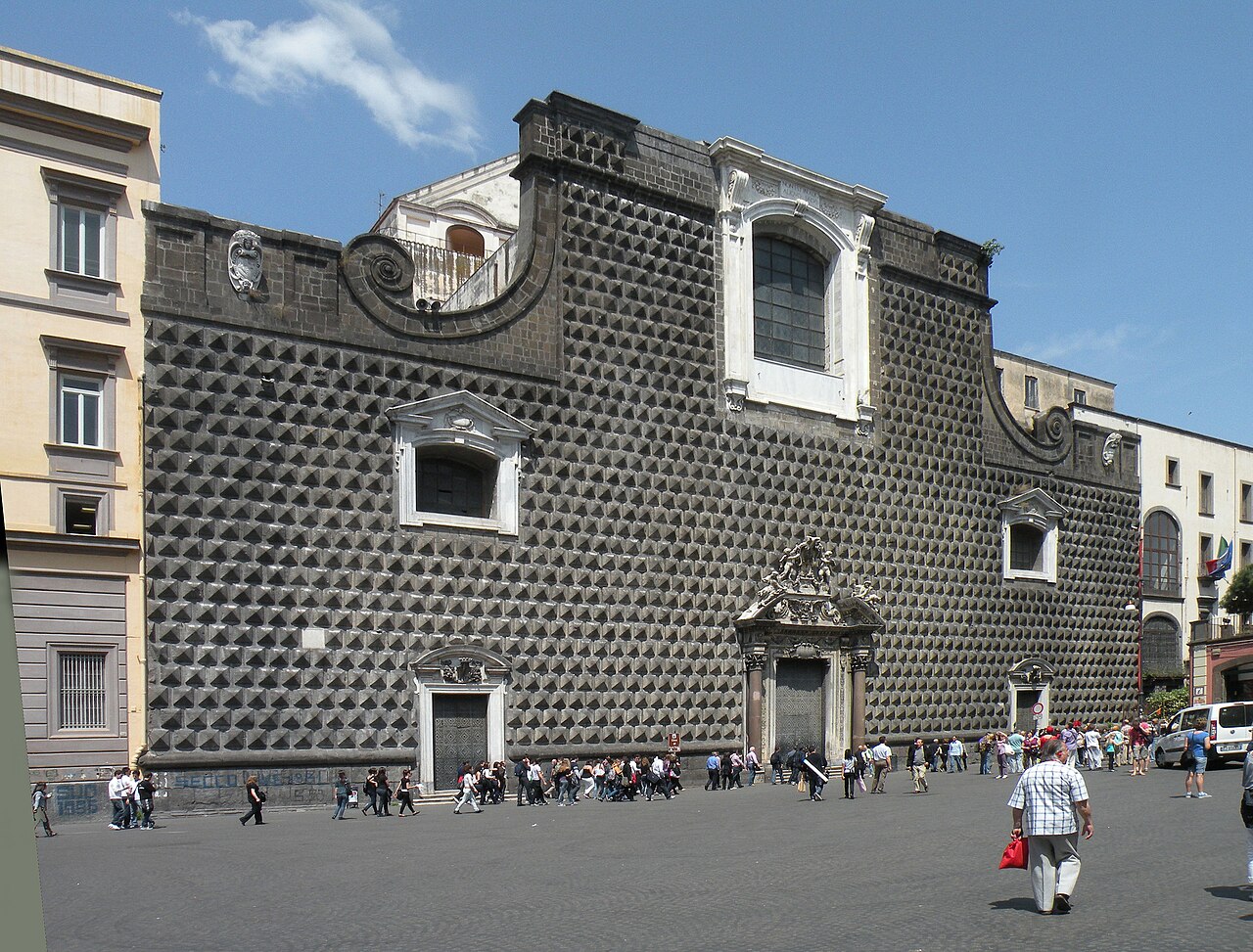
The facade of pyramid-cut piperno stone hides symbols carved into the blocks, while inside the Baroque bursts out in marble and in the memory of the physician Giuseppe Moscati.
 Sacred art
Chiostro di Santa Chiara
Napoli
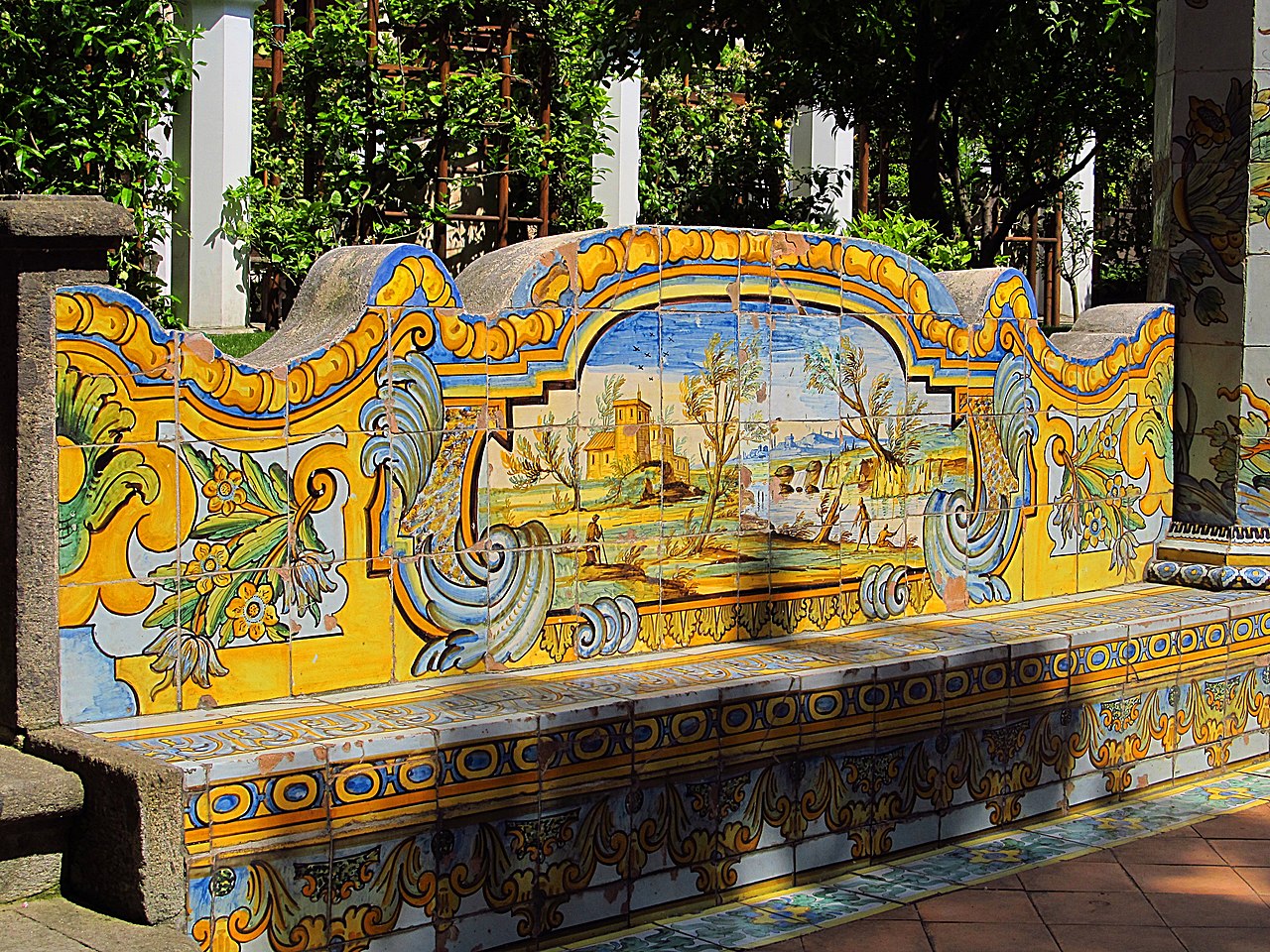
A garden of pillars clad in yellow and blue majolica, where lemon pergolas and eighteenth-century scenes painted on the tiles keep the noise of the city at bay.
 Sacred art
Santa Maria delle Anime del Purgatorio ad Arco
Via Tribunali 39
Bronze skulls stand guard at the entrance, and down in the hypogeum the cult of the anime pezzentelle (adopted souls of the dead) still leaves flowers and prayers beside abandoned crania.