Chiesa di San Menna
Sant'Agata de' Goti (BN)
KnownSacred art

The story
Consecrated by Pope Paschal II in 1100, it holds one of the oldest Cosmatesque floors in the South. Yet the saint himself was a hermit of the Taburno who died in a cave: the luxury came only after him.
Access
FREE, irregular opening
The story
The church of San Menna, at Sant'Agata de' Goti, was consecrated in 1100 by Pope Paschal II, built a few years earlier at the will of Count Robert of Alife to receive the relics of San Menna, a hermit who lived on the Taburno. It is one of the most precious documents of Romanesque art in southern Italy.
What to see
The interior holds two jewels made on the model of the Desiderian basilica of Montecassino: the oldest still-legible presbytery layout, with most of the original elements in their place, and the oldest floor in opus sectile of the South. It is a stop for those who love the Romanesque and the history of medieval art.
Tips
It is in the old centre of Sant'Agata de' Goti: it is combined naturally with a visit to the village. Check the opening hours on the official channels, as it is a place of worship. A detail to look for: the floor in opus sectile.
Frequently asked questions
Why is the church of San Menna important?
It holds rare Romanesque testimonies, including the oldest legible presbytery layout and the oldest floor in opus sectile of southern Italy, on the model of Montecassino.
When was the church of San Menna built?
It was consecrated in 1100 by Pope Paschal II, at the will of Count Robert of Alife.
Where is the church of San Menna?
In the old centre of Sant'Agata de' Goti, in the province of Benevento.
More gems in Sant'Agata de' Goti
 Villages
Sant'Agata de' Goti
Sant'Agata de' Goti (BN)
The houses lean out over the void, clinging to a spur of tufo (volcanic tuff) above the stream: a stone balcony in mid-air that the Goths chose and time has never let go.
 Castles
Castello Ducale di Sant'Agata de' Goti
Sant'Agata de' Goti (BN)
In the borgo (old village) perched on the tufo (volcanic tuff) ridge, the ducal castle overlooks houses that seem to plunge into the ravine: silent courtyards, frescoes and time that seems to have stopped.
- ◆ History & archaeology
Lavatoio Reullo
Sant'Agata de' Goti (BN)
Three stone basins under a fourteenth-century pointed arch, where the Isclero meets the Riello: here women washed their laundry until only yesterday, and the underground water has never stopped arriving.
- ◆ Nature
Cascate e mulini del Vallone Martorano
Sant'Agata de' Goti (BN)
Beneath the tufo (volcanic tuff) spur on which the borgo (old village) seems to float, the water plunges in a series of leaps among the ruins of mills and an old ironworks: the water trail that no visitor to Sant'Agata ever climbs down to find.
- Views & panoramas
Ponte Vecchio di Sant'Agata de' Goti
Sant'Agata de' Goti (BN)
The exact point where Sant'Agata stops being a town and becomes an apparition: the houses clinging to the tufo ridge, suspended over the void.
- Sacred art
Chiesa dell'Annunziata e il Giudizio Universale
Sant'Agata de' Goti (BN)
Across the whole inner façade, an early fifteenth-century Last Judgement: Christ the judge welcomes with one hand and turns away with the other. It is painted on the west wall, so that the setting sun itself lights up the end of the world.
More gems: Sacred art
 Sacred art
Cappella Sansevero (Cristo Velato)
Napoli (NA)
Beneath a veil of marble that still seems to breathe, Sanmartino's Cristo Velato rests in the chapel's half-light, and the whiteness of the stone deceives every eye.
 Sacred art
Duomo di Napoli
Napoli
Three times a year the city holds its breath as the blood of San Gennaro waits to liquefy, among Gothic naves and the gold of the chapel devoted to him.
 Sacred art
Cappella del Tesoro di San Gennaro
Napoli
Behind a bronze gate lie silverware, gems and the jewel-studded mitre of the saint: a treasure heaped up over centuries by the devotion of Naples.
 Sacred art
Chiesa del Gesù Nuovo
Napoli
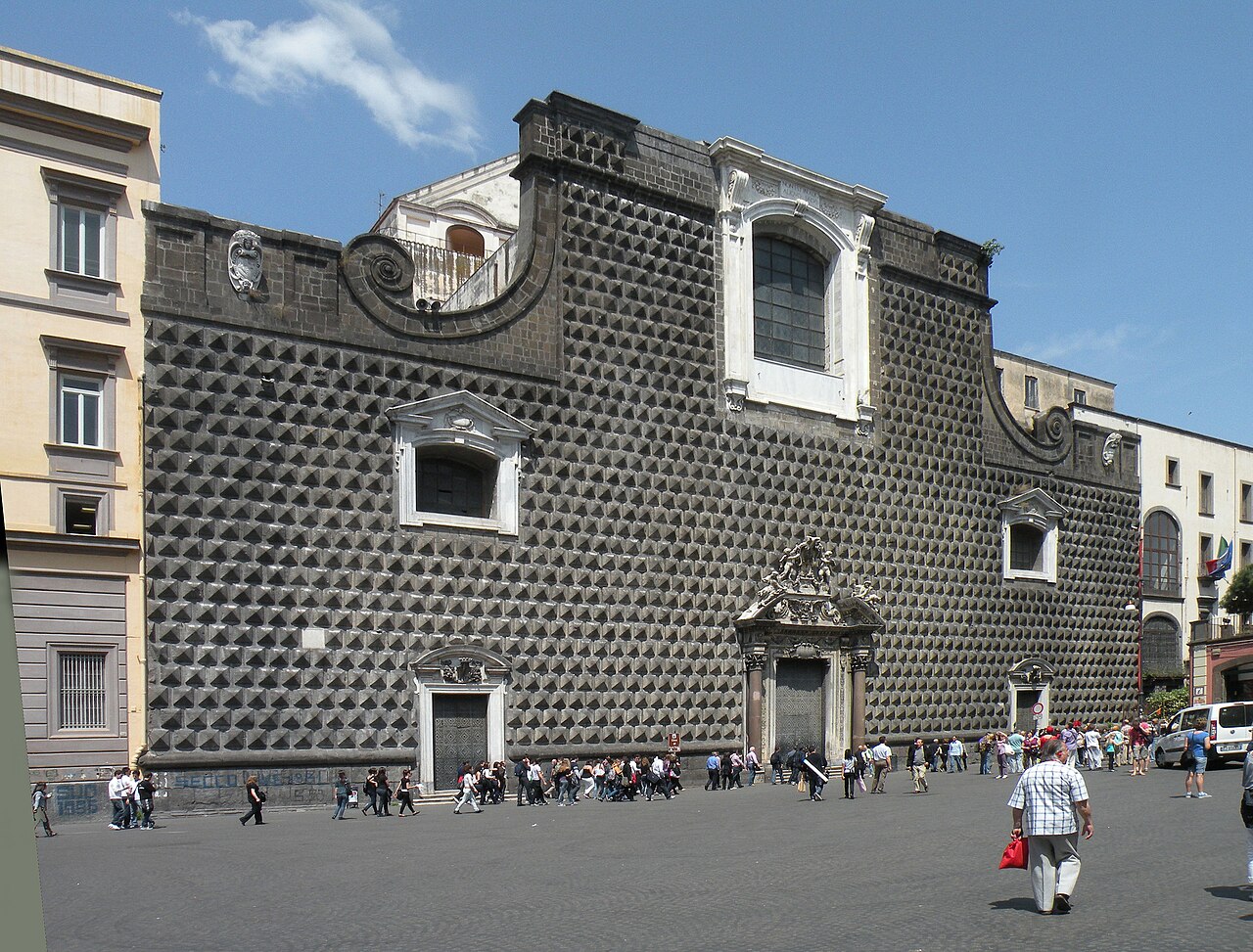
The facade of pyramid-cut piperno stone hides symbols carved into the blocks, while inside the Baroque bursts out in marble and in the memory of the physician Giuseppe Moscati.
 Sacred art
Chiostro di Santa Chiara
Napoli
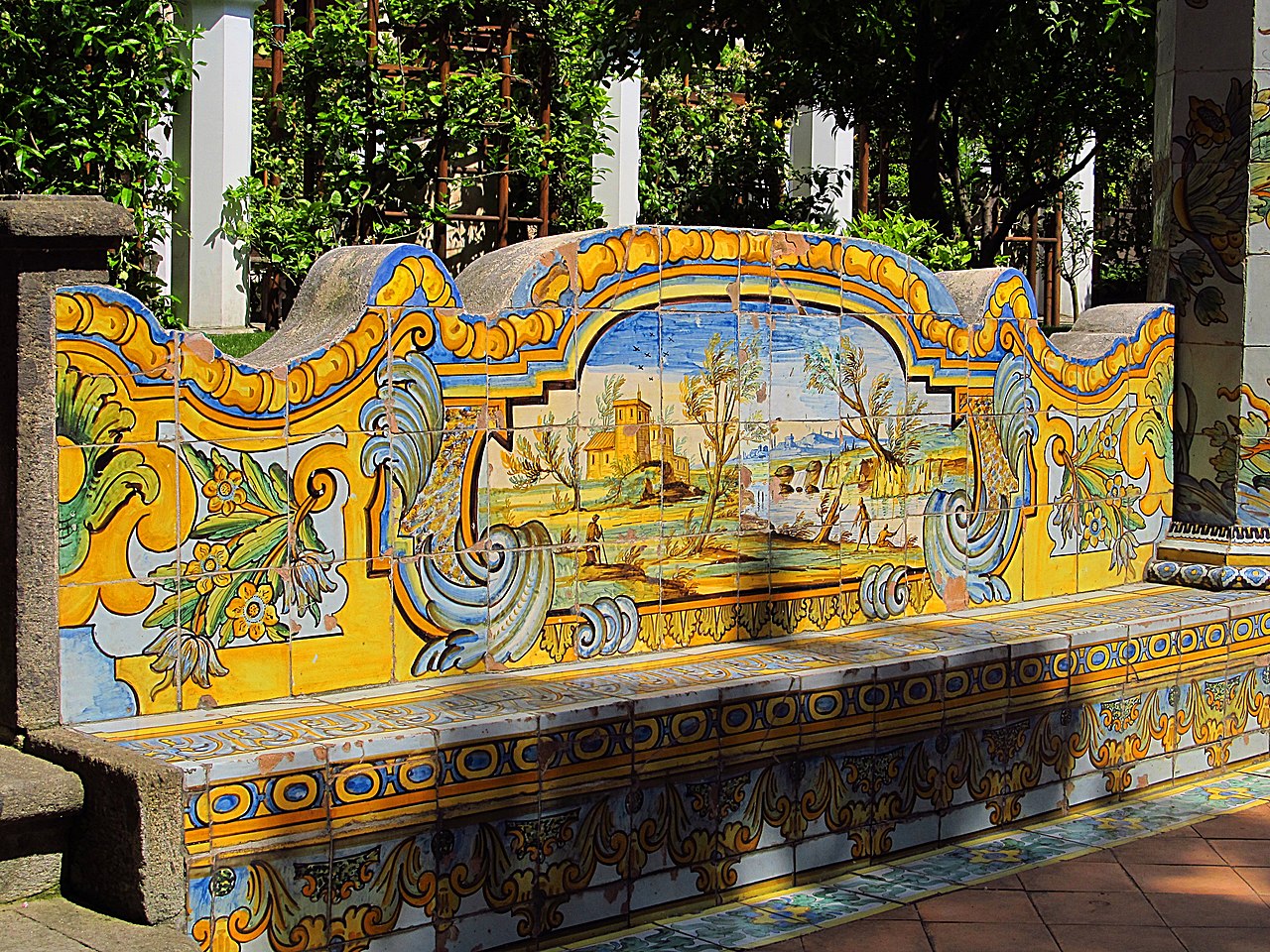
A garden of pillars clad in yellow and blue majolica, where lemon pergolas and eighteenth-century scenes painted on the tiles keep the noise of the city at bay.
 Sacred art
Santa Maria delle Anime del Purgatorio ad Arco
Via Tribunali 39
Bronze skulls stand guard at the entrance, and down in the hypogeum the cult of the anime pezzentelle (adopted souls of the dead) still leaves flowers and prayers beside abandoned crania.