Abbazia di Santa Maria in Gruptis
Vitulano (BN)
Hidden gemSacred art

The story
Founded by Lombard princes around 940, abandoned after the 1688 earthquake and deconsecrated once it had become a bandits' lair: what remains is the three-storey tower and the apse thrown wide open onto the woods.
Access
FREE, on foot only along old mule tracks
The story
On the mountains of the Camposauro, above the Vitulano valley, stand the remains of the abbey of Santa Maria della Grotta — also known as Santa Maria in Gruptis. Founded in the tenth century, it took its name from a Byzantine icon found, according to tradition, in a grotto, and from the numerous karst cavities of the area. It was for centuries an important monastic fief, until it was deconsecrated in 1705.
What to see
Of the ancient abbey part of the structure remains, in an isolated and evocative mountain setting, at over six hundred metres, up against Monte Drago. There also remain its fund of parchments and the Byzantine icon that gave it its name. It is a place for those who love monuments off the beaten track, immersed in nature.
Tips
It is in the mountains, on the Camposauro: reckon on it as a small excursion more than a visit by car up to the door. Check the route and access conditions on site. To be combined with the trails of the Taburno-Camposauro.
Frequently asked questions
What is the abbey of Santa Maria della Grotta?
An abbey founded in the tenth century on the mountains of the Camposauro, an important monastic fief until the deconsecration in 1705; today partly in ruins.
Why is it called 'della Grotta' (of the Grotto)?
For a Byzantine icon found according to tradition in a grotto, and for the karst cavities of the area.
Where is the abbey of Santa Maria della Grotta?
On the mountains of the Camposauro, above the Vitulano valley, in the province of Benevento, at over 600 metres of altitude.
More gems: Sacred art
 Sacred art
Cappella Sansevero (Cristo Velato)
Napoli (NA)
Beneath a veil of marble that still seems to breathe, Sanmartino's Cristo Velato rests in the chapel's half-light, and the whiteness of the stone deceives every eye.
 Sacred art
Duomo di Napoli
Napoli
Three times a year the city holds its breath as the blood of San Gennaro waits to liquefy, among Gothic naves and the gold of the chapel devoted to him.
 Sacred art
Cappella del Tesoro di San Gennaro
Napoli
Behind a bronze gate lie silverware, gems and the jewel-studded mitre of the saint: a treasure heaped up over centuries by the devotion of Naples.
 Sacred art
Chiesa del Gesù Nuovo
Napoli
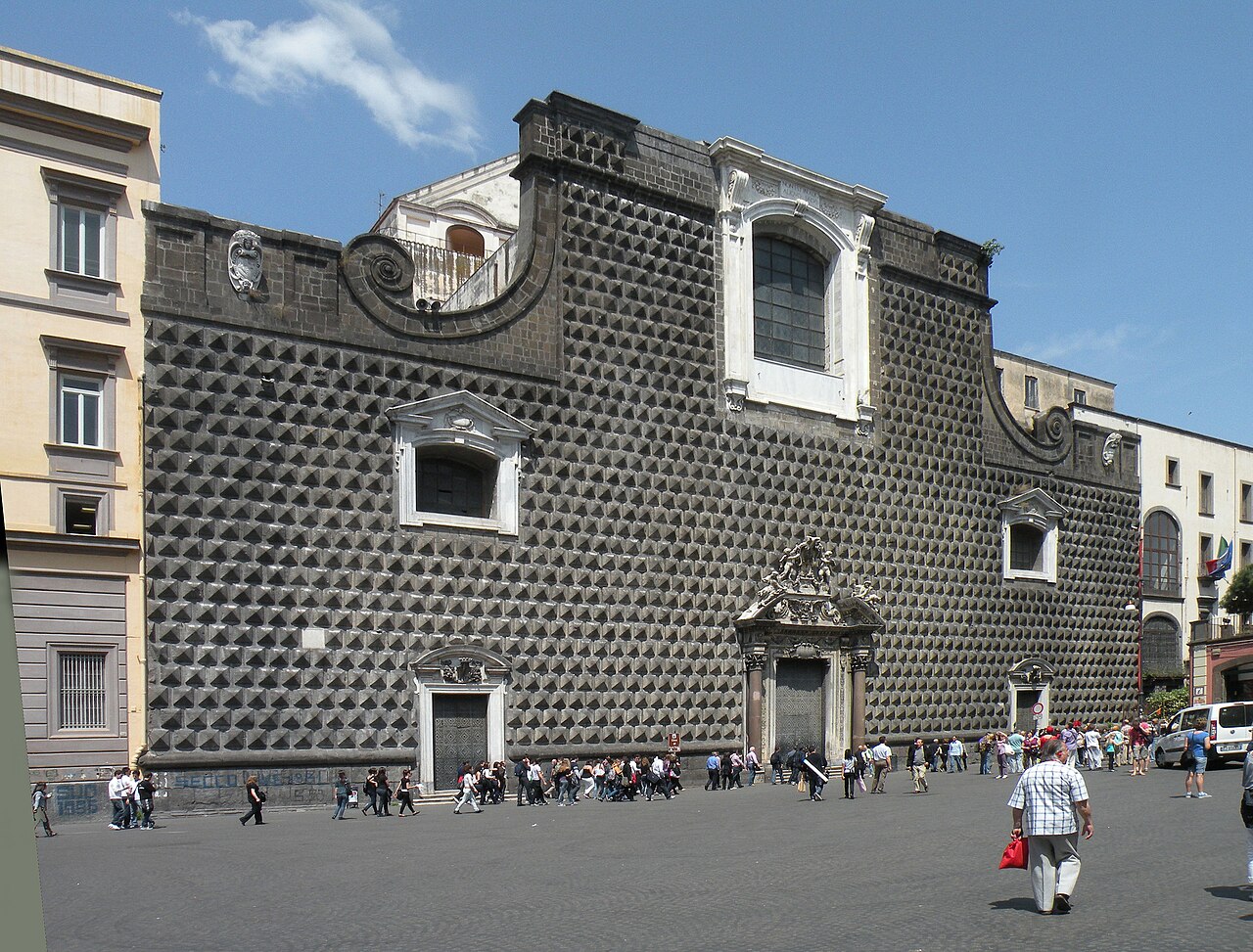
The facade of pyramid-cut piperno stone hides symbols carved into the blocks, while inside the Baroque bursts out in marble and in the memory of the physician Giuseppe Moscati.
 Sacred art
Chiostro di Santa Chiara
Napoli
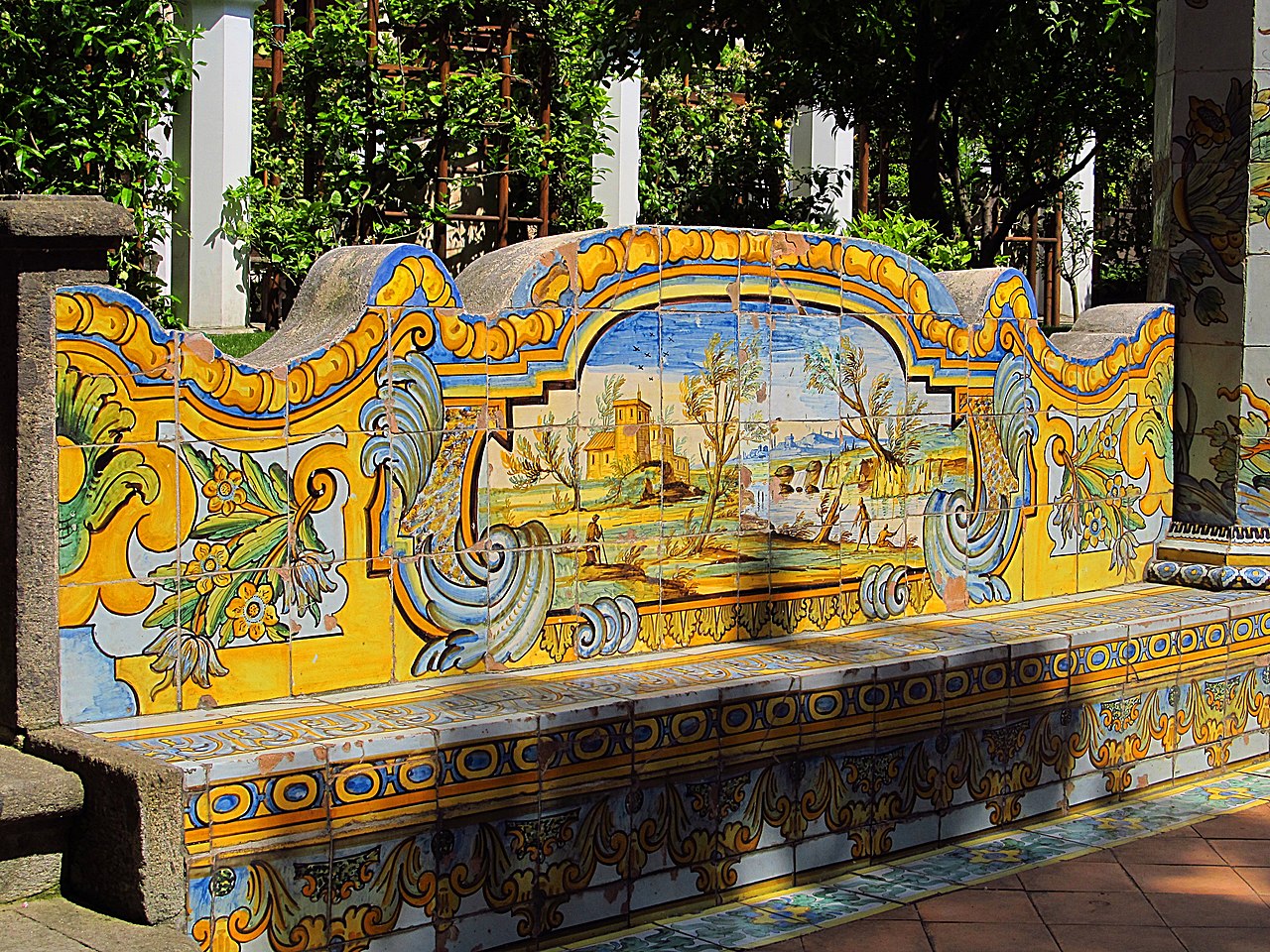
A garden of pillars clad in yellow and blue majolica, where lemon pergolas and eighteenth-century scenes painted on the tiles keep the noise of the city at bay.
 Sacred art
Santa Maria delle Anime del Purgatorio ad Arco
Via Tribunali 39
Bronze skulls stand guard at the entrance, and down in the hypogeum the cult of the anime pezzentelle (adopted souls of the dead) still leaves flowers and prayers beside abandoned crania.