Isola di Vivara
Procida
Hidden gemNature
The story
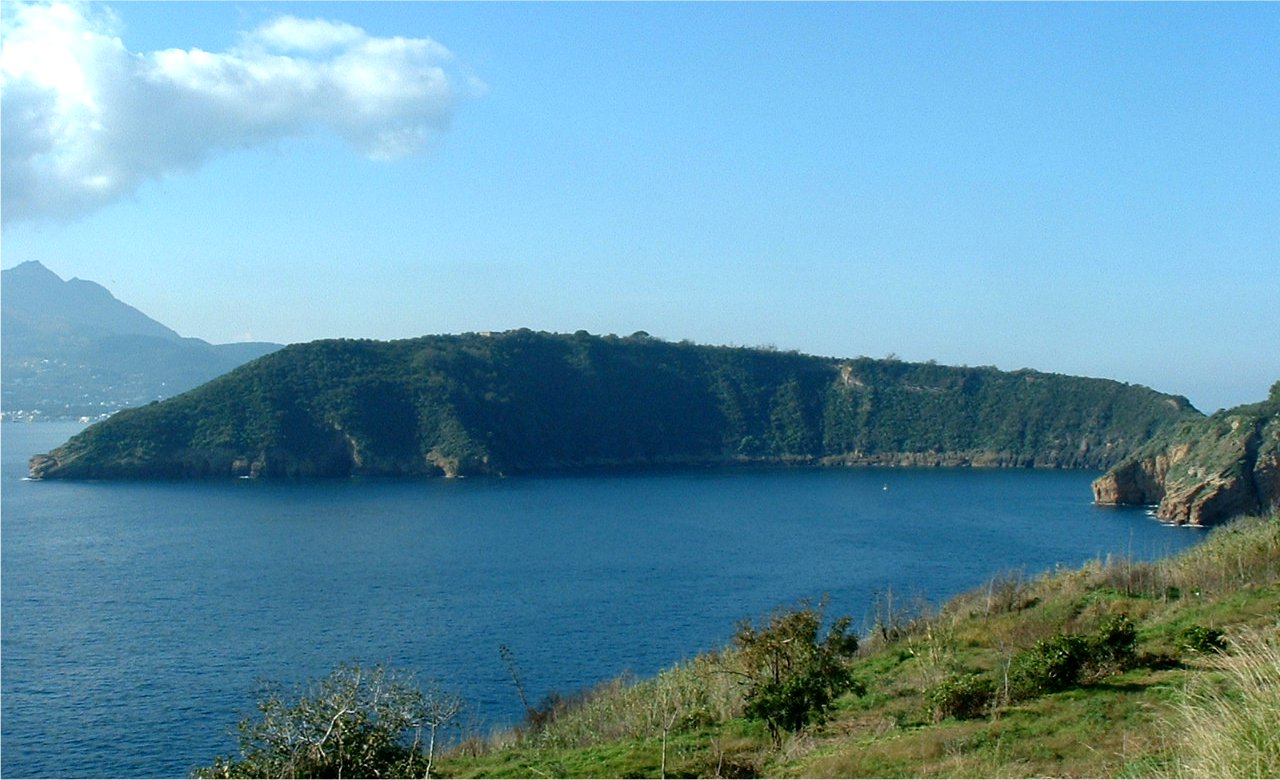
A green crescent joined to Procida by a footbridge: a nature reserve on an ancient crater, between Mediterranean scrub, migrating birds and paths that lean out over the sea.
Access
guided visits only
The story
Vivara is a small crescent-shaped volcanic islet, between Procida and Ischia: what remains of the rim of an ancient crater. It is connected to Procida by a pedestrian bridge and since 2002 it has been a state nature reserve. Its Bronze Age remains tell of exchanges with the Mycenaean world, almost four thousand years ago.
What to see
An uninhabited oasis of Mediterranean scrub and birds, with paths and glimpses of the sea, where nature and archaeology coexist. A silent and protected corner, surprising a stone's throw from Procida.
How to get there
- Hydrofoil
- Ferry
Hours and prices
Free entry.
Tips
Vivara is a nature reserve with regulated access: you enter only on foot from the bridge, often by booking and with arrangements that change. Check days, hours and rules on the official channels of the reserve before going. Walking shoes and respect for a fragile environment are useful.
Frequently asked questions
What is the island of Vivara?
A crescent-shaped volcanic islet between Procida and Ischia, a state nature reserve since 2002, with Bronze Age remains; it is connected to Procida by a pedestrian bridge.
How do you visit Vivara?
Only on foot from the bridge, with regulated access and often by booking: it is best to check days, hours and rules on the official channels of the reserve.
Why is Vivara important?
For the protected nature and for the archaeology: the Bronze Age remains bear witness to the exchanges with the Mycenaean world almost four thousand years ago.
More gems in Procida
 Villages
Marina Corricella
Procida
The oldest fishermen's borgo (old village) on Procida, an amphitheatre of pastel houses tumbling down to the harbour, where the boats sleep beneath the hanging laundry.
 Sacred art
Terra Murata
Procida
The ancient core of Procida climbs the yellow tufo (volcanic tuff) headland, between defensive walls and narrow alleys, suspended between the little harbour of Corricella and the horizon of the bay.
 Sacred art
Abbazia di San Michele
Procida
Behind the walls of Terra Murata, the abbey dedicated to its patron Michael guards paintings, an antique presepe (nativity scene) and catacombe carved into the tufo, its vault turned towards the sea.
- ◆ Views & panoramas
Belvedere Elsa Morante e dei Cannoni
Procida
From the terrace named after Elsa Morante, among old cannons trained on the bay, the view opens onto the Corricella and its pastel houses heaped upon the water.
- Free beaches
Spiaggia del Pozzo Vecchio ("del Postino")
Procida
The dark-sand beach where Massimo Troisi filmed Il Postino, tucked below the cemetery and the tufo walls, with shallow water and the stillness of a film set never struck.
- Free beaches
Spiagge di Chiaia
Procida
A long stairway leads down to it: a broad stretch of sand and shingle sheltered by high tufo walls, with the fishing boats of the Corricella colouring the background.
More gems: Nature
 ◆ Nature
Orto Botanico
via Foria
Founded in the Napoleonic age, the botanical garden on via Foria lines up glasshouses, palms and rare species across twelve hectares: a green breath a step away from the traffic.
 ◆ Nature
Pedamentina di San Martino
Vomero→centro
A fourteenth-century stairway dropping from the hill of San Martino down to the city: hundreds of steps through vegetable plots, gardens and glimpses of the bay — one of the finest urban paths in Naples.
 Nature
Villa Comunale
Riviera di Chiaia
The garden stretched out along the sea at Chiaia: avenues of holm oaks, benches and old statues, with the gulf breathing beyond the iron railing.
 Nature
Acquario Anton Dohrn
Riviera di Chiaia
The oldest aquarium in Europe, opened in 1874 inside the Villa Comunale: historic tanks inhabited only by the fauna of the Gulf of Naples, behind the glass.
 Nature
Solfatara
Pozzuoli
The ground breathes: hissing fumaroles, mud that boils up and a smell of sulphur reminding you how alive the earth is beneath the Campi Flegrei.
- ◆ Nature
Vigna di San Martino
collina S. Martino
One of the largest urban vineyards in Europe, worked by the Carthusians since the fourteenth century: seven hectares of vines, citrus and olive trees hanging over the bay, a step from the city's chaos.