Sentiero dei Fortini
Anacapri
Hidden gemNature
The story
A path along the western coast linking the small Napoleonic-era forts, through Mediterranean scrub, wild coves and the sound of the waves.
Access
FREE
The story
The Sentiero dei Fortini (Path of the Little Forts) runs along the western coast of Anacapri, from the Grotta Azzurra (Blue Grotto) to the lighthouse of Punta Carena. It is marked out by three small coastal forts — Orrico, Mesola and Pino — built by the British in 1806 and later enlarged by the French, who contended for the island after the battle of 1808. In 2004 the forts were restored and turned into an open-air ecomuseum.
What to see
A route sheer above the sea among wind-carved cliffs, coves and headlands, with the three forts linked by the path and ceramic panels that tell of the flora and fauna of the Mediterranean scrub. In the background, always, the blue of the open sea and, at the end, the lighthouse of Punta Carena, one of the most important in Italy.
How to get there
- Hydrofoil
- Ferry
Hours and prices
Free entry.
Tips
It is a walk of a few hours, without great changes in height but exposed to the sun and with some sheer stretches: go with suitable shoes, water and a hat, and avoid the hottest hours. It can be walked in either direction; many set off from the Grotta Azzurra and finish at the lighthouse of Punta Carena, where you can stop for the sunset.
Frequently asked questions
What is the Sentiero dei Fortini?
A scenic path on the western coast of Anacapri, from the Grotta Azzurra to the lighthouse of Punta Carena, linking three coastal forts: Orrico, Mesola and Pino.
When were the forts built?
They were built by the British in 1806 and enlarged by the French after the battle of 1808, when the two powers contended for Capri; since 2004 they have been a restored ecomuseum.
Is it a difficult route?
It is a walk of a few hours without steep gradients, but exposed to the sun and with sheer stretches: suitable shoes, water and caution are needed.
More gems in Anacapri
 In the water & diving
Grotta Azzurra
Anacapri
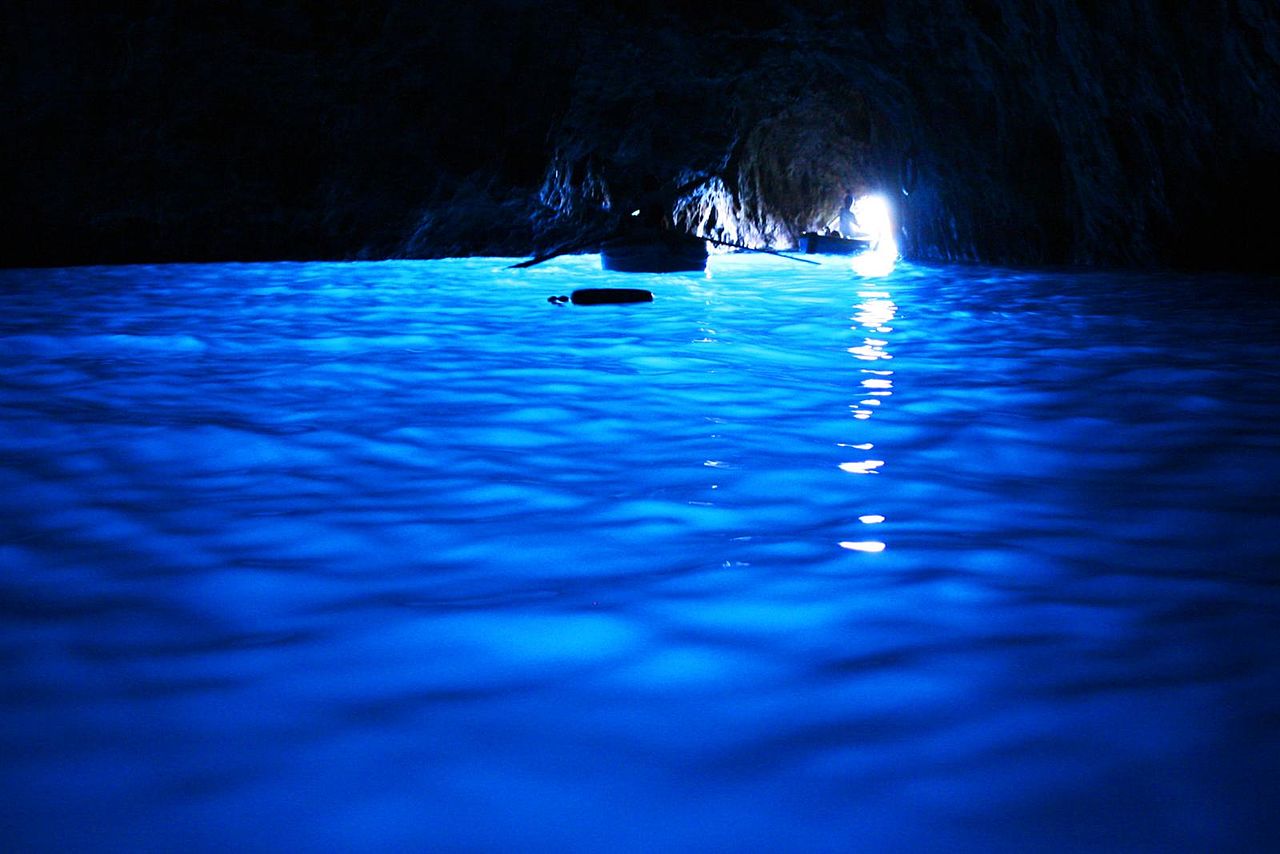
You enter lying flat in a small rowing boat through a low cleft, and inside the water lights up in a luminous blue that seems to rise from the depths.
 Nature
Monte Solaro (seggiovia)
Anacapri
The chairlift climbs in silence over vineyards and gardens to the island's highest peak, where the eye takes in the whole gulf.
 ◆ Sacred art
Eremo di Cetrella
Anacapri
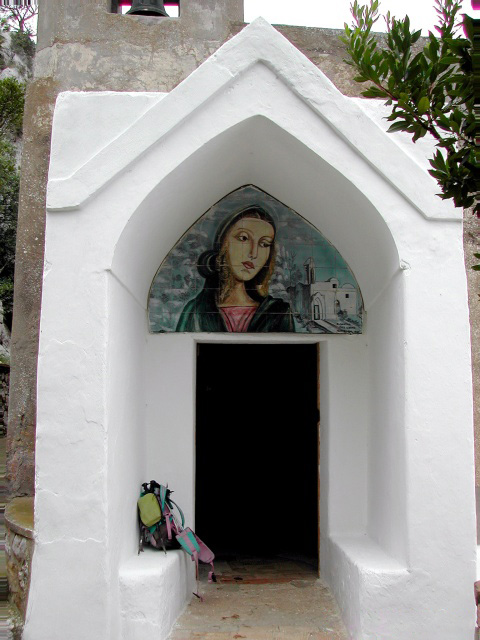
A small Marian hermitage tucked among the rocks below Monte Solaro, reached on foot through the scent of the scrub and the silence of the heights.
 Museums
Villa San Michele (Axel Munthe)
Anacapri
The white house that Swedish doctor Axel Munthe built among ancient columns and pergolas, with its granite sphinx gazing out over the Gulf of Naples.
 ◆ History & archaeology
Casa Rossa
Anacapri
The Pompeian-red residence an American colonel wanted in Moorish style, today the keeper of the Roman statues recovered from the waters of the Grotta Azzurra.
 Sacred art
Chiesa di San Michele (pavimento maiolicato)
Anacapri
A majolica floor tells of Adam and Eve driven out of the Garden of Eden, to be admired from above to take in the full sweep of its eighteenth-century colours.
More gems: Nature
 ◆ Nature
Orto Botanico
via Foria
Founded in the Napoleonic age, the botanical garden on via Foria lines up glasshouses, palms and rare species across twelve hectares: a green breath a step away from the traffic.
 ◆ Nature
Pedamentina di San Martino
Vomero→centro
A fourteenth-century stairway dropping from the hill of San Martino down to the city: hundreds of steps through vegetable plots, gardens and glimpses of the bay — one of the finest urban paths in Naples.
 Nature
Villa Comunale
Riviera di Chiaia
The garden stretched out along the sea at Chiaia: avenues of holm oaks, benches and old statues, with the gulf breathing beyond the iron railing.
 Nature
Acquario Anton Dohrn
Riviera di Chiaia
The oldest aquarium in Europe, opened in 1874 inside the Villa Comunale: historic tanks inhabited only by the fauna of the Gulf of Naples, behind the glass.
 Nature
Solfatara
Pozzuoli
The ground breathes: hissing fumaroles, mud that boils up and a smell of sulphur reminding you how alive the earth is beneath the Campi Flegrei.
- ◆ Nature
Vigna di San Martino
collina S. Martino
One of the largest urban vineyards in Europe, worked by the Carthusians since the fourteenth century: seven hectares of vines, citrus and olive trees hanging over the bay, a step from the city's chaos.