Museo Duca di Martina — Villa Floridiana
Napoli (NA)
KnownMuseums

The story
Six thousand pieces of decorative art — Meissen porcelain, ivories, corals — in a white villa built by a king for his morganatic wife, at the top of a park looking over the bay.
Access
Museum € 4 (reduced € 2), 9:30-17:00, closed on Tuesday. THE PARK IS FREE (8:30-19:30 in summer)
The story
The Villa Floridiana is a neoclassical villa immersed in a great romantic park on the Vomero. In 1815 Ferdinand IV of Bourbon bought the estate and gave it to his second wife, Lucia Migliaccio, Duchess of Floridia; the architect Antonio Niccolini redesigned the villa between 1817 and 1819. Since 1927 it has housed the Duca di Martina National Museum of Ceramics.
What to see
A park of twenty-four hectares with paths, a small Doric temple, statues and panoramic glimpses of the gulf, and the white villa that holds the Duca di Martina Museum, with a rich collection of porcelain, majolica and decorative arts. A green and stately corner of the Vomero.
How to get there
- Funicular
Tips
The park is open to the public and is a pleasant panoramic walk; the Duca di Martina Museum, in the villa, has its own entrance and hours: check days, hours and ticket on the official channels. You are right in the Vomero, handy by the funiculars.
Frequently asked questions
What is the Villa Floridiana?
A neoclassical villa in a great romantic park on the Vomero, given in 1815 by Ferdinand of Bourbon to his wife the Duchess of Floridia; since 1927 it has housed the Duca di Martina Museum.
What can you see at the Duca di Martina Museum?
A rich collection of porcelain, majolica and decorative arts, arranged in the villa inside the park of the Floridiana.
Can you visit the park of the Floridiana?
Yes, the park is open to the public as a panoramic garden; the museum in the villa has its own entrance and hours, to be checked on the official channels.
More gems in Napoli
 Sacred art
Cappella Sansevero (Cristo Velato)
Napoli (NA)
Beneath a veil of marble that still seems to breathe, Sanmartino's Cristo Velato rests in the chapel's half-light, and the whiteness of the stone deceives every eye.
 Sacred art
Duomo di Napoli
Napoli
Three times a year the city holds its breath as the blood of San Gennaro waits to liquefy, among Gothic naves and the gold of the chapel devoted to him.
 Sacred art
Cappella del Tesoro di San Gennaro
Napoli
Behind a bronze gate lie silverware, gems and the jewel-studded mitre of the saint: a treasure heaped up over centuries by the devotion of Naples.
 Sacred art
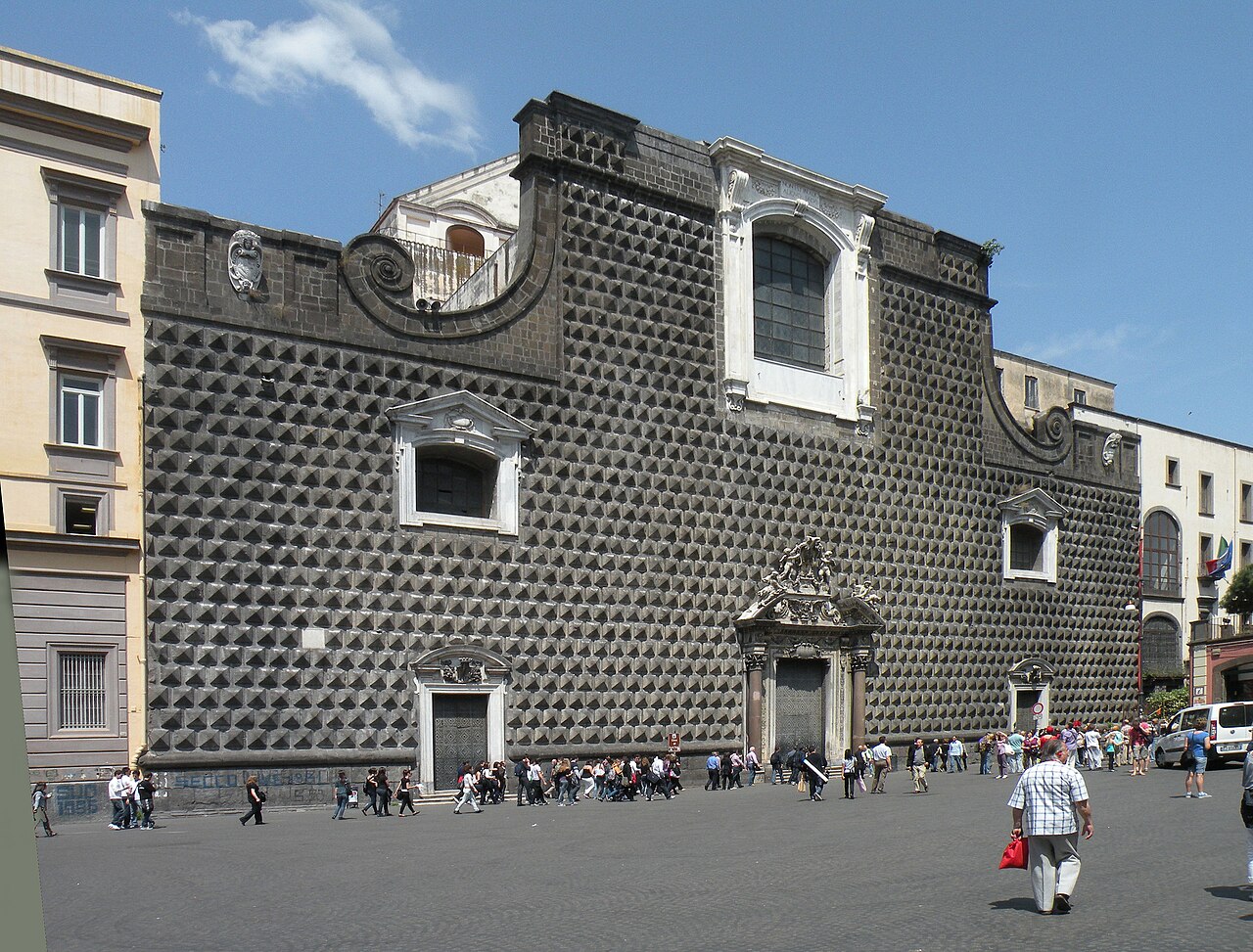
Chiesa del Gesù Nuovo
Napoli
The facade of pyramid-cut piperno stone hides symbols carved into the blocks, while inside the Baroque bursts out in marble and in the memory of the physician Giuseppe Moscati.
 Sacred art
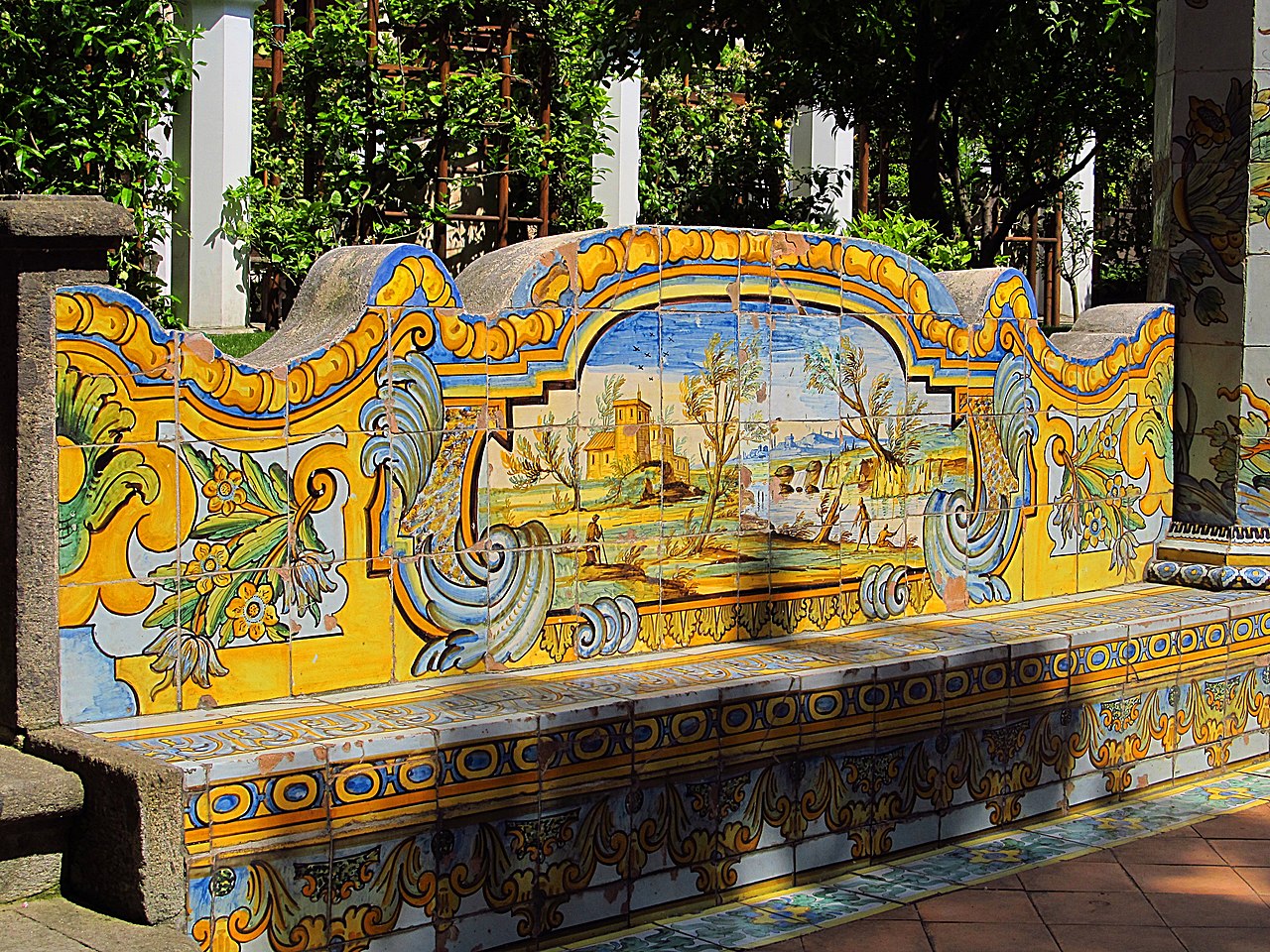
Chiostro di Santa Chiara
Napoli
A garden of pillars clad in yellow and blue majolica, where lemon pergolas and eighteenth-century scenes painted on the tiles keep the noise of the city at bay.
 ◆ Sacred art
Chiesa di Santa Luciella ai Librai (teschio con le orecchie)
Napoli
In the crypt of a small church rediscovered in the maze of the Librai rests the skull with ears, which the faithful believed could listen to their prayers.
More gems: Museums
 Museums
MANN — Museo Archeologico Nazionale
P.za Museo
One of the world's great archaeological museums: here the Toro Farnese, the mosaics of Pompeii and the Gabinetto Segreto tell the whole ancient Mediterranean in a single visit.
 ◆ Museums
Antiquarium
Boscoreale
The museum that tells of daily life at the foot of Vesuvius before the eruption, among carbonised loaves, farm tools and finds handed back by the ash.
 ◆ Museums
Museo dell'Osservatorio Vesuviano
Ercolano
The oldest volcanological observatory in the world, willed by the Bourbons in 1841, with historic instruments and mineral collections, looking out over the slopes of Vesuvius.
 ◆ Museums
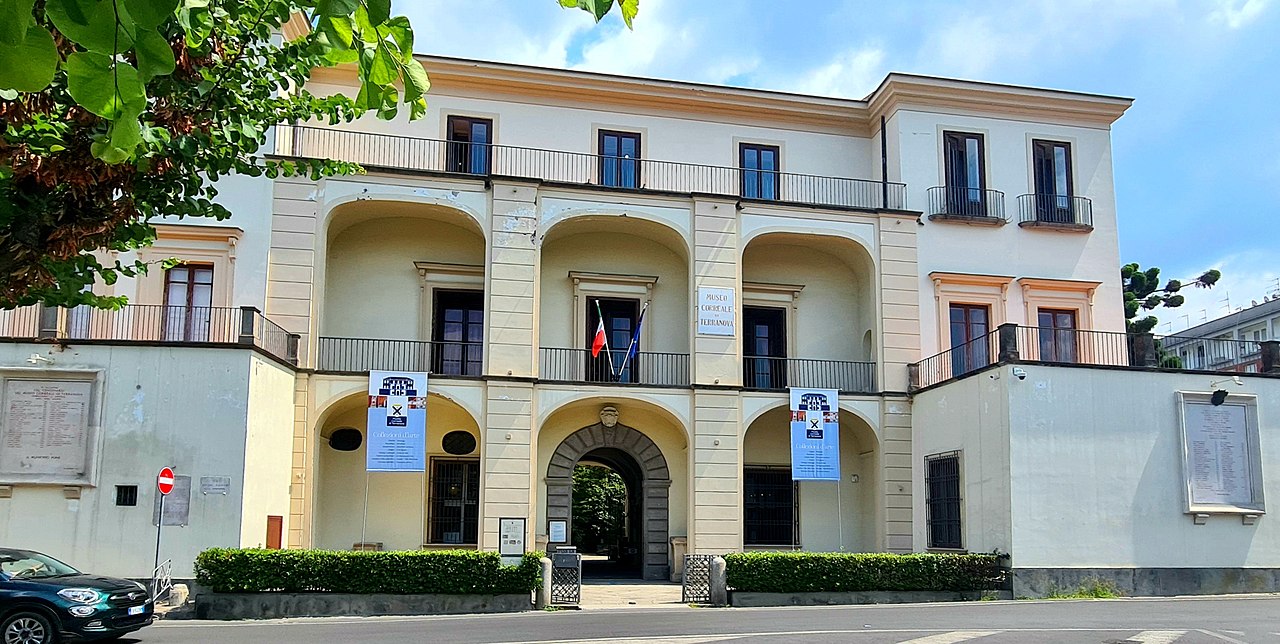
Museo Correale
Sorrento
In the family villa of the Correale counts: porcelain, inlaid wood and eighteenth-century views of Naples, and a garden that runs down to a belvedere over the sea.
 Museums
Villa Lysis — Jago Museum Capri
Capri
A 1905 Art Nouveau villa by the poet Fersen, dedicated to love and sorrow; since June 2026 it houses the Jago Museum Capri, with Jago's sculptures in the historic rooms high above the sea.
- ◆ Museums
Ospedale delle Bambole
Napoli
Behind a shop window in Palazzo Marigliano a craftsman mends glass eyes, porcelain arms and dolls' curls, in a workshop born more than a century ago.