Il Cartastorie — Museo dell'Archivio del Banco di Napoli
Napoli (NA)
Hidden gemMuseums
The story
Eighty kilometres of shelving holding the records of the oldest banking archive in the world: inside are the payments to Caravaggio, the debts of noblemen, five centuries of Neapolitan lives. The pages light up and tell their stories.
Access
€ 8 (reduced € 3), with guide € 10. Open 10:00-18:00, closed on Wednesday. New display from January 2026
The story
The Historical Archive of the Banco di Napoli, housed in Palazzo Ricca on via dei Tribunali, is the largest banking archive in the world: it holds the records of the ancient Neapolitan public banks, capable of telling five hundred years of history — not only of great business, but of common people, line by line. Since 2016 the museum 'Il Cartastorie' opens this treasure to the public.
What to see
The rooms of the archive, with the shelves that rise as far as the eye can see laden with volumes, and the route of the Cartastorie, which from the notes of ancient 'fedi di credito' (credit notes) brings out true stories of Neapolitans of every class: a surprising and human way to read the history of the city.
Tips
The museum Il Cartastorie has its own entrance, hours and visits, often guided: check on the official site and consider booking. You are in Palazzo Ricca, on via dei Tribunali, in the heart of the old centre.
Frequently asked questions
What is Il Cartastorie?
The museum of the Historical Archive of the Banco di Napoli, in Palazzo Ricca, which since 2016 tells the public of the largest banking archive in the world and the stories of common people kept there.
What does the Archive of the Banco di Napoli hold?
The records of the ancient Neapolitan public banks, five hundred years of economic and social history of the city and the South, with notes on the lives of people of every class.
How do you visit Il Cartastorie?
With its own entrance and hours, often with guided tours: it is best to check and book on the official site.
More gems in Napoli
 Sacred art
Cappella Sansevero (Cristo Velato)
Napoli (NA)
Beneath a veil of marble that still seems to breathe, Sanmartino's Cristo Velato rests in the chapel's half-light, and the whiteness of the stone deceives every eye.
 Sacred art
Duomo di Napoli
Napoli
Three times a year the city holds its breath as the blood of San Gennaro waits to liquefy, among Gothic naves and the gold of the chapel devoted to him.
 Sacred art
Cappella del Tesoro di San Gennaro
Napoli
Behind a bronze gate lie silverware, gems and the jewel-studded mitre of the saint: a treasure heaped up over centuries by the devotion of Naples.
 Sacred art
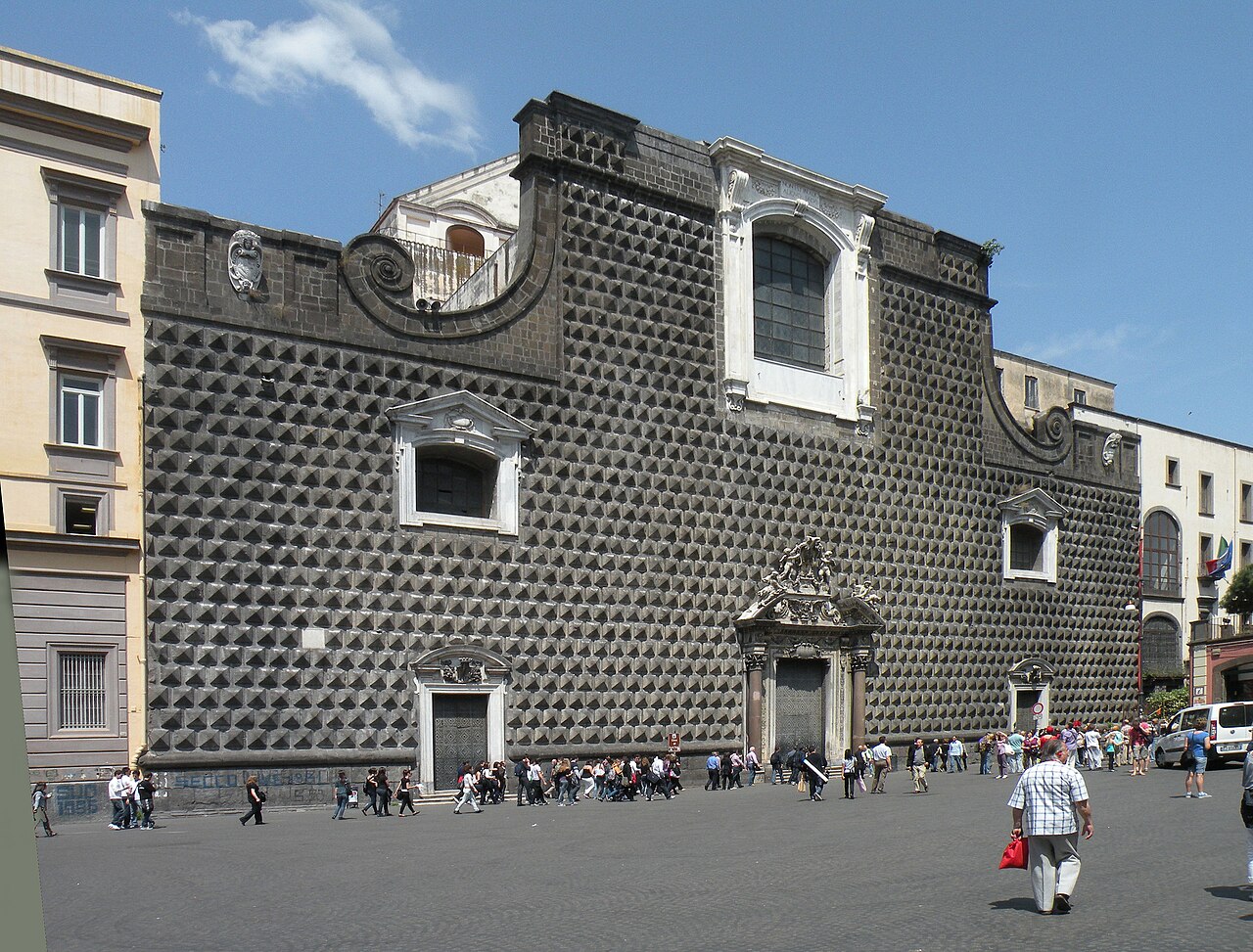
Chiesa del Gesù Nuovo
Napoli
The facade of pyramid-cut piperno stone hides symbols carved into the blocks, while inside the Baroque bursts out in marble and in the memory of the physician Giuseppe Moscati.
 Sacred art
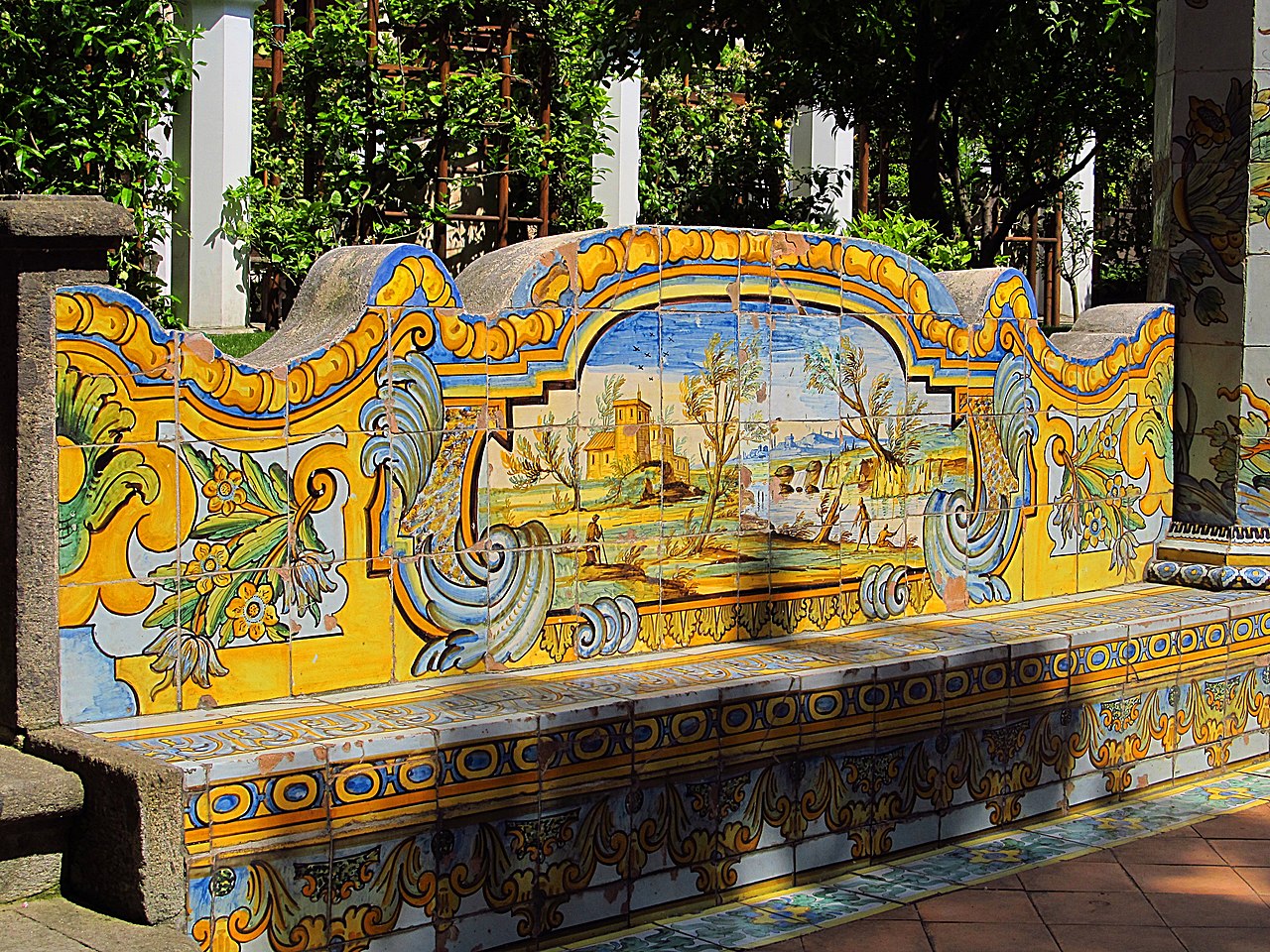
Chiostro di Santa Chiara
Napoli
A garden of pillars clad in yellow and blue majolica, where lemon pergolas and eighteenth-century scenes painted on the tiles keep the noise of the city at bay.
 ◆ Sacred art
Chiesa di Santa Luciella ai Librai (teschio con le orecchie)
Napoli
In the crypt of a small church rediscovered in the maze of the Librai rests the skull with ears, which the faithful believed could listen to their prayers.
More gems: Museums
 Museums
MANN — Museo Archeologico Nazionale
P.za Museo
One of the world's great archaeological museums: here the Toro Farnese, the mosaics of Pompeii and the Gabinetto Segreto tell the whole ancient Mediterranean in a single visit.
 ◆ Museums
Antiquarium
Boscoreale
The museum that tells of daily life at the foot of Vesuvius before the eruption, among carbonised loaves, farm tools and finds handed back by the ash.
 ◆ Museums
Museo dell'Osservatorio Vesuviano
Ercolano
The oldest volcanological observatory in the world, willed by the Bourbons in 1841, with historic instruments and mineral collections, looking out over the slopes of Vesuvius.
 ◆ Museums
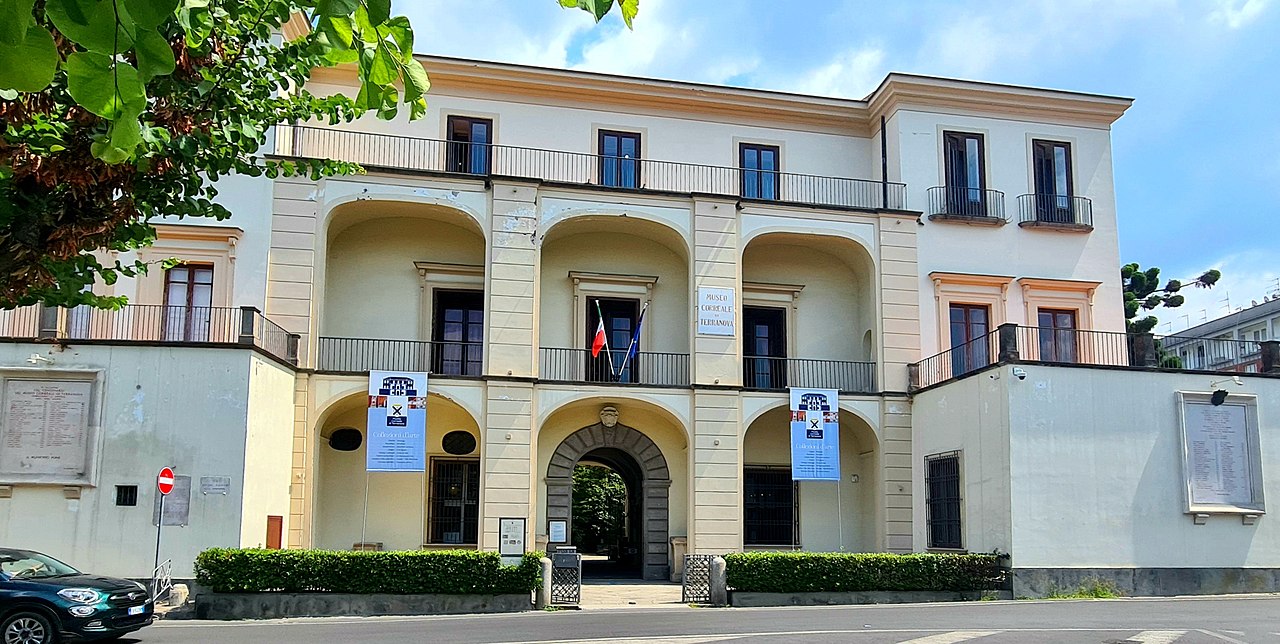
Museo Correale
Sorrento
In the family villa of the Correale counts: porcelain, inlaid wood and eighteenth-century views of Naples, and a garden that runs down to a belvedere over the sea.
 Museums
Villa Lysis — Jago Museum Capri
Capri
A 1905 Art Nouveau villa by the poet Fersen, dedicated to love and sorrow; since June 2026 it houses the Jago Museum Capri, with Jago's sculptures in the historic rooms high above the sea.
- ◆ Museums
Ospedale delle Bambole
Napoli
Behind a shop window in Palazzo Marigliano a craftsman mends glass eyes, porcelain arms and dolls' curls, in a workshop born more than a century ago.