Museo Archeologico di Stabia Libero D'Orsi
Castellammare di Stabia (NA)
KnownMuseums
The story
The treasures of the Roman villas of Stabiae, brought to light by Libero D'Orsi on the Varano hill.
Access
ticket; check opening hours on the official website
The story
The Libero D'Orsi Archaeological Museum of Stabiae holds the finds of ancient Stabiae, the Roman city buried by the eruption of AD 79 together with Pompeii and Herculaneum. It takes its name from Libero D'Orsi, the headmaster who from 1950 led the excavations on the Varano hill, bringing back to light the great Stabian villas; the first Antiquarium he created in 1957 was replaced, in 2020, by the present museum.
What to see
The collection, of thousands of finds, comes from the Roman villas of Stabiae, famous for the frescoes and luxury furnishings: stuccoes, paintings and objects of daily life of one of the most refined holiday resorts of Roman antiquity.
Tips
Check the seat, hours and tickets on the official site before going (the museum changed location in 2020). To be combined with a visit to the Villas of Stabiae on the Varano hill, at Castellammare.
Frequently asked questions
What is the Libero D'Orsi Archaeological Museum of Stabiae?
The museum that gathers the finds of ancient Stabiae; in 2020 it replaced the Stabian Antiquarium created by Libero D'Orsi in 1957.
Who was Libero D'Orsi?
The headmaster who from 1950 led the excavations on the Varano hill, bringing back to light the Roman villas of Stabiae.
What can you see in the museum?
Finds, frescoes and furnishings from the Roman villas of Stabiae, buried by the eruption of AD 79.
More gems in Castellammare di Stabia
 Hiking
Alta Via dei Monti Lattari
Castellammare di Stabia (NA)
The ridge of the Monti Lattari, traced by a long crest path, runs among beech woods and rocky balconies suspended between the gulf of Naples and that of Salerno.
- History & archaeology
Scavi di Stabia (Villa San Marco e Villa Arianna)
Castellammare di Stabia (NA)
Poised on the edge of the Varano hill, the patrician villas of Stabia preserve frescoes and gardens with the breath of the sea: Roman luxury buried by Vesuvius and left almost intact.
More gems: Museums
 Museums
MANN — Museo Archeologico Nazionale
P.za Museo
One of the world's great archaeological museums: here the Toro Farnese, the mosaics of Pompeii and the Gabinetto Segreto tell the whole ancient Mediterranean in a single visit.
 ◆ Museums
Antiquarium
Boscoreale
The museum that tells of daily life at the foot of Vesuvius before the eruption, among carbonised loaves, farm tools and finds handed back by the ash.
 ◆ Museums
Museo dell'Osservatorio Vesuviano
Ercolano
The oldest volcanological observatory in the world, willed by the Bourbons in 1841, with historic instruments and mineral collections, looking out over the slopes of Vesuvius.
 ◆ Museums
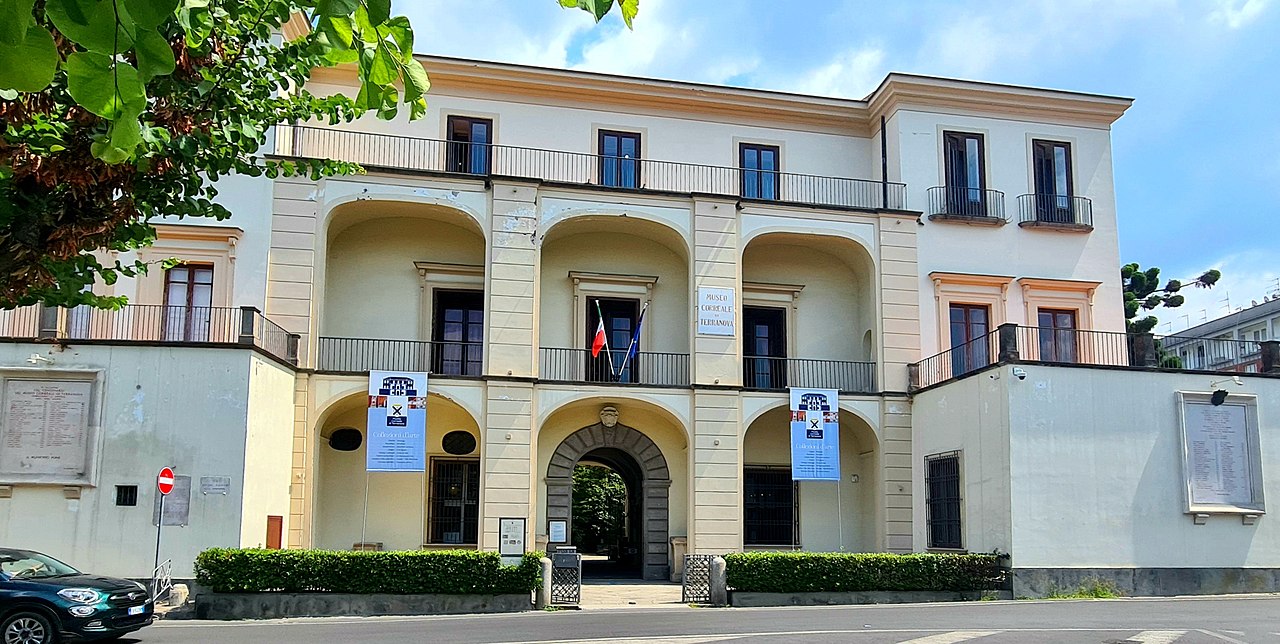
Museo Correale
Sorrento
In the family villa of the Correale counts: porcelain, inlaid wood and eighteenth-century views of Naples, and a garden that runs down to a belvedere over the sea.
 Museums
Villa Lysis — Jago Museum Capri
Capri
A 1905 Art Nouveau villa by the poet Fersen, dedicated to love and sorrow; since June 2026 it houses the Jago Museum Capri, with Jago's sculptures in the historic rooms high above the sea.
- ◆ Museums
Ospedale delle Bambole
Napoli
Behind a shop window in Palazzo Marigliano a craftsman mends glass eyes, porcelain arms and dolls' curls, in a workshop born more than a century ago.