Scavi di Pompei
Pompei (NA)
FamousHistory & archaeology
The story
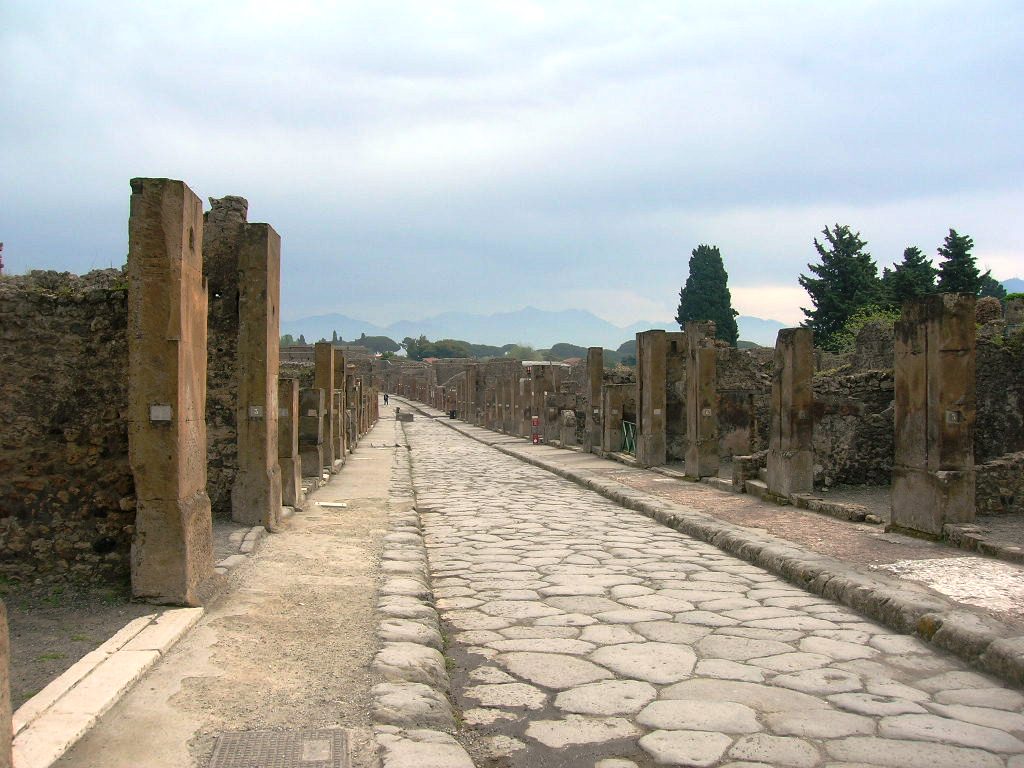
The Roman city stopped in AD 79 by the eruption of Vesuvius: paved streets, frescoed houses and the casts of the bodies, beneath the volcano that buried it. It is the most visited archaeological site in Italy after the Colosseum.
Access
paid ticket; free on the 1st Sunday of the month
The story
Pompeii is the Roman city that the whole world knows. Founded from the ninth century BC and flourishing as a lively centre of ancient Campania, it was buried in AD 79 by the eruption of Vesuvius under a blanket of ash and lapilli about six metres thick. Rediscovered and excavated from 1748, since 1997 it has been a UNESCO World Heritage Site and is today the most visited archaeological site in Italy after the Colosseum, with over four million visitors a year.
What to see
A whole city stopped in time: the Forum with Vesuvius in the background, the frescoed houses such as the House of the Faun and the Villa of the Mysteries with its famous painted cycle, the baths, the temples, and the great amphitheatre, among the oldest in masonry in the Roman world. You walk along paved streets marked by the ruts of the carts, among workshops and fountains, up to the plaster casts that return the forms of the eruption's victims.
How to get there
- Circumvesuviana
Public transport. Circumvesuviana Napoli–Sorrento, fermata Pompei Scavi–Villa dei Misteri. · fonte: EAV/Circumvesuviana
Tips
It is vast: reckon on at least half a day, comfortable shoes, water and a hat, because there is little shade. Book the ticket online to avoid the queues. It is easily reached by the Circumvesuviana (Pompei Scavi stop). To really understand what you see, combine the visit with the National Archaeological Museum of Naples, where many frescoes and finds from the excavations are kept.
Frequently asked questions
When was Pompeii destroyed?
In AD 79, when the eruption of Vesuvius buried it under ash and lapilli. The systematic excavations began in 1748.
How much time is needed to visit Pompeii?
At least half a day: the site is enormous. It is best to choose a route in advance (Forum, Villa of the Mysteries, amphitheatre) and book the ticket online.
Is Pompeii a UNESCO site?
Yes, since 1997, together with Herculaneum and Oplontis. It is the most visited archaeological site in Italy after the Colosseum.
More gems: History & archaeology
 History & archaeology
Statua del Nilo ("Corpo di Napoli")
Largo Corpo di Napoli
A river god reclining for centuries in a quiet square, whom Neapolitans call the Corpo di Napoli: he leans his bearded head among putti and a sphinx.
 ◆ History & archaeology
Cappella Pontano
Decumani
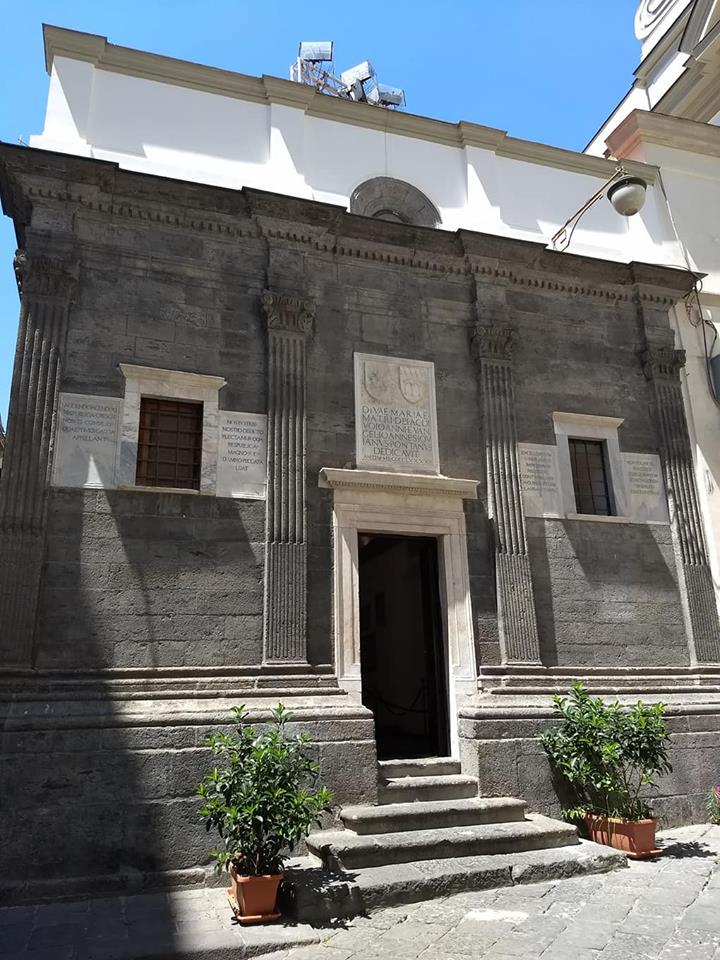
A small Renaissance temple on the decumanus, which the humanist Pontano had raised for his lost wife, still lined inside with Latin inscriptions dictated by his grief.
 ◆ History & archaeology
Sedile di Nilo
Decumani
On the corner of a small Spaccanapoli square survives the seat of the old Nilo quarter, where the nobles once gathered before the sedili of Naples vanished.
 ◆ History & archaeology
Port'Alba
Napoli
A seventeenth-century arch cut into the walls leads to the booksellers' street, where stalls of second-hand volumes pile up among yellowed pages and the shade of the old city.
 ◆ History & archaeology
Porta Capuana
zona Garibaldi
Between two cylindrical towers an arch of white marble opens like a Renaissance triumph, the old city gate facing the road to Capua.
 ◆ History & archaeology
Real Albergo dei Poveri
P.za Carlo III
An eighteenth-century colossus willed by Charles of Bourbon to shelter the poor of the Kingdom: a façade running more than three hundred metres, among the largest historic buildings in Europe.