Vesuvio — Gran Cono
Ercolano
FamousVolcanoes

The story
The last stretch climbs on foot over the scree to the rim of the crater, where the warm breath of the earth mixes with the view of the whole Gulf of Naples.
Access
€ 10, online booking COMPULSORY (vesuviopark.vivaticket.it)
The story
Vesuvius is the volcano that dominates the Gulf of Naples and that in AD 79 buried Pompeii and Herculaneum. It is in fact a double volcano: the present Great Cone (Gran Cono) grew inside the caldera of the older Monte Somma. Today it is quiescent — the last eruption dates to 1944 — but it remains one of the most closely watched volcanoes in the world, for the density of population around it.
What to see
The goal is the Great Cone: a path leads up to the rim of the crater, from which the smoking chasm opens out and an immense panorama over the gulf spreads, from Capri to the Sorrento peninsula. Around it, the Vesuvius National Park protects a unique environment, among broom and vineyards on the slopes.
Tips
Access to the crater is regulated: check hours, ticket and conditions on the Park's official site (in bad weather or strong wind the path can close). Trekking shoes and something warmer at altitude are needed, even in summer. You go up by car or shuttle to the car park, then on foot.
Frequently asked questions
Can you climb up to the crater of Vesuvius?
Yes, a regulated path leads to the rim of the Great Cone; access is by ticket and can be suspended in bad weather. Check hours and conditions on the site of the Vesuvius National Park.
When was the last eruption of Vesuvius?
In 1944. The volcano is today considered quiescent, but remains constantly monitored.
What is Monte Somma?
The older volcano inside whose caldera the present Great Cone grew: together they form the Somma-Vesuvius complex.
This page may contain affiliate links: if you book through them, the site earns a small commission at no extra cost to you. Trasparenza
More gems in Ercolano
 History & archaeology
Scavi di Ercolano
Ercolano
A Roman town petrified by volcanic mud, with wooden beams, beds and doors still in place: here time stopped more intact than anywhere.
 ◆ Museums
Museo dell'Osservatorio Vesuviano
Ercolano
The oldest volcanological observatory in the world, willed by the Bourbons in 1841, with historic instruments and mineral collections, looking out over the slopes of Vesuvius.
- ◆ History & archaeology
Miglio d'Oro e Ville Vesuviane (Villa Campolieto)
Ercolano
The eighteenth-century residences of the Neapolitan nobility along the Miglio d'Oro, with Villa Campolieto and its elliptical portico facing the sea among stuccoes and gardens.
- Hiking
Salita al Gran Cono del Vesuvio (da Quota 1000)
Ercolano (NA)
From Quota 1000 the trail climbs the ash up to the rim of the Gran Cono, where the smoking crater opens up and below stretches the whole gulf of Naples.
- Museums
MAV — Museo Archeologico Virtuale di Ercolano
Ercolano (NA)
With digital and multimedia reconstructions it brings back to life Herculaneum, Pompeii and the Vesuvian cities as they were before the eruption of AD 79.
More gems: Volcanoes
 Volcanoes
Monte Epomeo
Ischia
The roof of the island at almost eight hundred metres: from the green tufo summit, with its hermitage carved into the rock, the eye takes in all of Ischia and the bay as far as Capri.
 Volcanoes
Cratere degli Astroni
Napoli (NA)
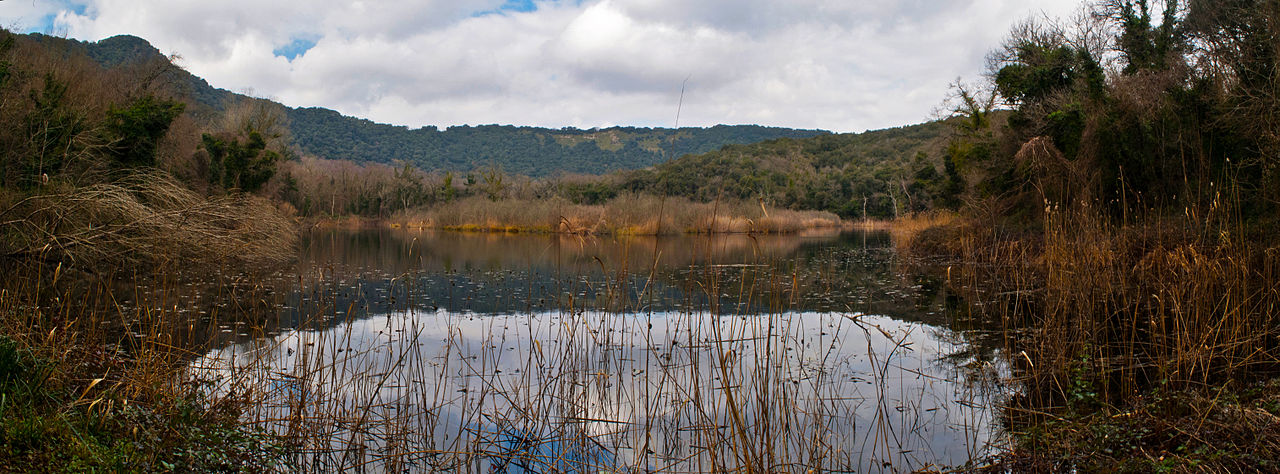
An extinct crater enclosed by wooded walls, with small lakes and silent trails: once a Bourbon hunting reserve, today an oasis where the woodpecker marks the time.
 ◆ Volcanoes
Monte Nuovo
Pozzuoli (NA)
Born in a single night from a sixteenth-century eruption, the youngest mountain of the Campi Flegrei holds within its crater a green silence looking out over the gulf of Pozzuoli.
- ◆ Volcanoes
Vulcano di Roccamonfina
Roccamonfina (CE)
An extinct volcano clothed in chestnut groves, where the crater has become a plateau and every trail smells of dark earth and ancient woods.
- ◆ Volcanoes
Monte Rotaro (cratere e fumarole)
Ischia (NA)
A crater 350 metres across and 127 deep, today covered in holm oaks and myrtle. Puffs of vapour still rise from the ground, and among the fumarole grows a plant that hardly grows anywhere else in Europe.
- ◆ Volcanoes
Cratere del Fondo d'Oglio
Ischia (NA)
A perfectly circular hollow hidden in the wood: inside they still grow vines, at the bottom of a volcano. Whoever descends cannot tell where they are until they look up.