Parco Sommerso di Baia
Bacoli
KnownIn the water & diving

The story
A Roman city swallowed by the sea through bradyseism: mosaics, columns and statues visited from a glass-bottomed boat or with a mask.
Access
€ tour
The story
The Underwater Park of Baia protects a Roman city that ended up under water: ancient Baiae, the most luxurious holiday resort of the empire, sunk over the centuries beneath the sea because of the bradyseism of the Campi Flegrei. Established in 2002, it is a case unique in the Mediterranean of an archaeological and natural area protected under water.
What to see
On the seabed, a few metres deep, you cross — swimming or diving — streets, villas, statues and mosaics of 'submerged Pompeii': among the treasures, the nymphaeum of Punta Epitaffio with its statues (the originals are at the Castle of Baia). It is visited with snorkelling, diving or glass-bottomed boats.
Tips
It is explored by diving, with guided snorkelling or with glass-bottomed boats: choose the option according to how much you want to get wet. Book with the authorised centres and keep an eye on the sea conditions. It is a marine protected area: respect the rules of access.
Frequently asked questions
What is the Underwater Park of Baia?
A marine protected area that guards the underwater remains of ancient Baiae, 'submerged Pompeii', sunk because of the bradyseism of the Campi Flegrei.
How do you visit the Underwater Park of Baia?
With guided snorkelling, scuba diving or glass-bottomed boats, through the authorised centres.
What can you see on the seabed?
Roman streets, villas, statues and mosaics, including the nymphaeum of Punta Epitaffio.
More gems in Bacoli
 History & archaeology
Antro della Sibilla
Bacoli
A long trapezoidal corridor carved into the tufo (volcanic tuff), cut by blades of light, where Virgil imagined the Sibyl prophesying among the shadows of the rock.
 History & archaeology
Parco di Cuma
Bacoli
The oldest Greek colony in Italy, with the temples of Apollo and Jupiter stretched across the acropolis between pines and sea, where history begins in silence.
 ◆ History & archaeology
Cento Camerelle
Bacoli
A labyrinth of cisterns on two levels dug into the tufo (volcanic tuff), also called Carceri di Nerone, where Roman water ran beneath a villa facing the gulf.
 History & archaeology
Terme di Baia e Castello Aragonese (Museo Campi Flegrei)
Bacoli
Terraces of imperial baths descending towards the sea, and above them the Castello Aragonese guards the statues brought back up from the sunken Baia.
- Castles
Castello di Baia
Bacoli (NA)
On the high promontory sheer above the gulf, the Aragonese castle guards the statues resurfaced from the submerged Roman city of the Campi Flegrei.
- ◆ History & archaeology
Tomba di Agrippina
Bacoli
Not a tomb at all but the remains of a small Roman theatre by the sea, tied by legend to Agrippina, mother of Nero, killed at Bauli.
More gems: In the water & diving
 In the water & diving
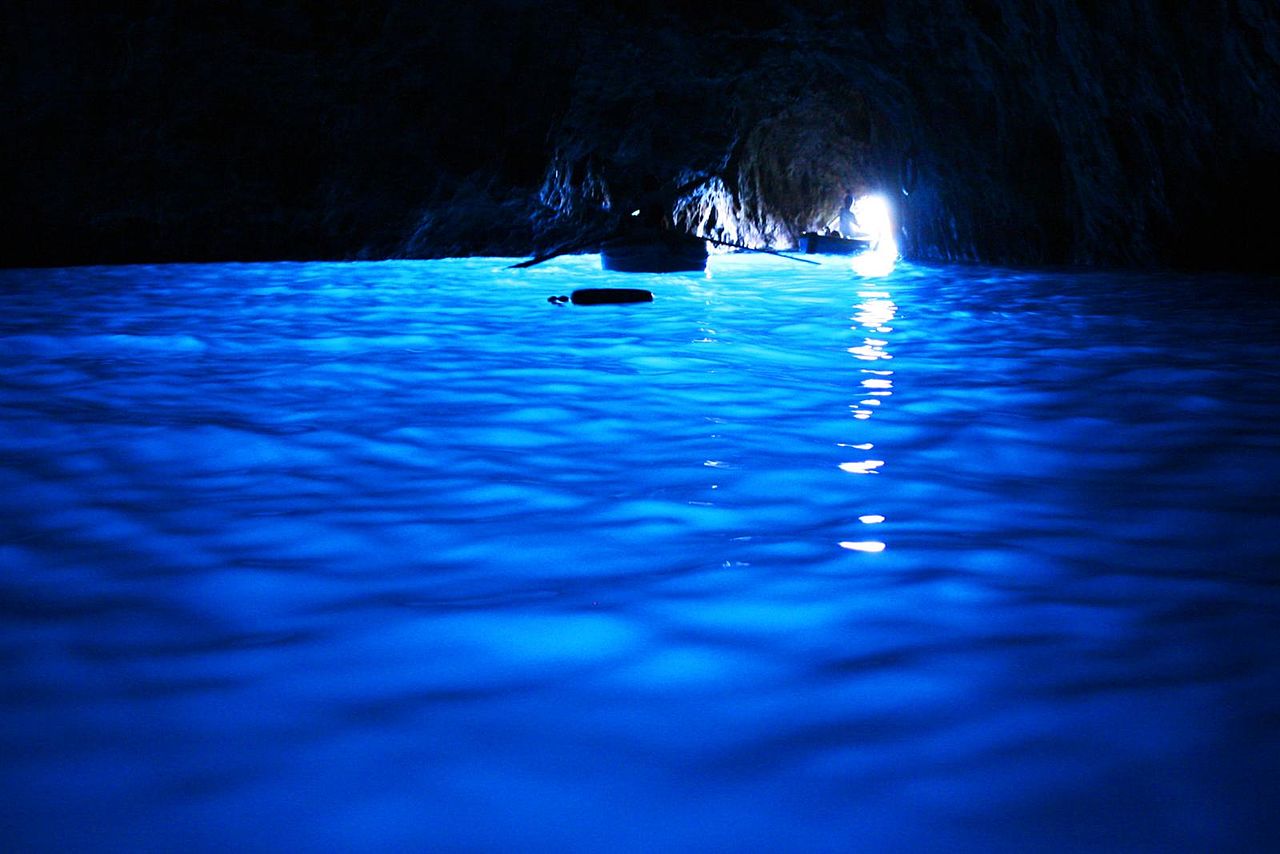
Grotta Azzurra
Anacapri
You enter lying flat in a small rowing boat through a low cleft, and inside the water lights up in a luminous blue that seems to rise from the depths.
 In the water & diving
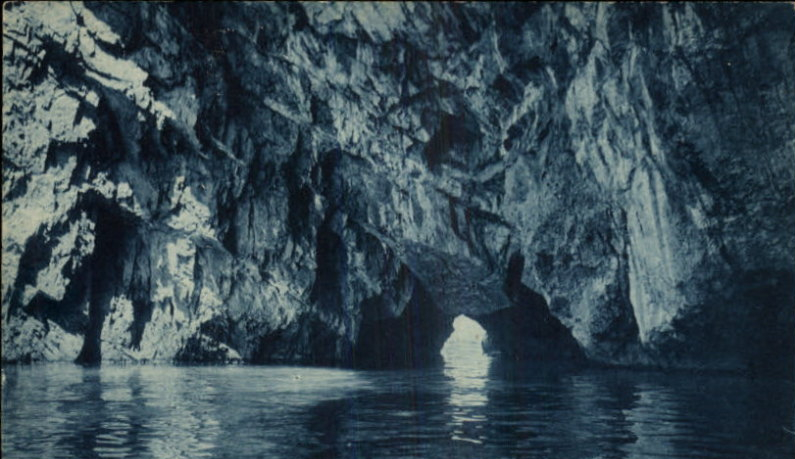
Verde
Capri
The water turns emerald green where light filters in through a submerged opening, and at the far end a small pebble beach lies hidden.
- In the water & diving
Grotta Bianca
Capri
Pale limestone walls in a two-chambered cavity hollowed out by the sea, once a shelter for boats and a hiding place from pirate raids.
- In the water & diving
Meravigliosa
Capri
A stairway carved into the rock leads to a vault thick with stalactites and stalagmites, suspended above the Grotta Bianca and the island's thousand-year-old strata.
- ◆ In the water & diving
Punta Pizzaco e Solchiaro (snorkeling)
Procida
On the southern side, between the cliffs of Solchiaro and the walls of Pizzaco, clear water and rocky seabeds invite you to swim with a mask, far from the crowds.
- ◆ In the water & diving
Parco Sommerso di Aenaria
baia di Cartaromana
Beneath the bay of Cartaromana lie the remains of the ancient Roman port of Aenaria: you explore them from a glass-bottomed boat or with a mask, among amphorae and submerged structures.