Santa Maria delle Anime del Purgatorio ad Arco
Via Tribunali 39
KnownSacred art

The story
Bronze skulls stand guard at the entrance, and down in the hypogeum the cult of the anime pezzentelle (adopted souls of the dead) still leaves flowers and prayers beside abandoned crania.
Access
€ ~7, no photos in the hypogeum
The story
The church of Santa Maria delle Anime del Purgatorio ad Arco, on via dei Tribunali, is one of the places most tied to the Neapolitan cult of the dead. Built in the seventeenth century, it has on its façade bronze skulls and bones that recall its purpose: to pray for the souls of Purgatory. Beneath the upper church opens a lower church, bare, where the 'anime pezzentelle' (the poor souls) were buried, the poor without a family.
What to see
The Baroque upper church and, above all, the austere hypogeum with the black cross painted on the altar. Here popular devotion venerated the remains of the forgotten dead; among them, a skull adorned with a veil and ex-votos, which tradition identifies as 'Lucia', a young bride who died shortly after her wedding and became protector of brides — a figure of devotion, not documented by the archives.
Tips
The church and the hypogeum are visited with their own entrance and hours: check on the official site. It is a place of worship and of memory of the dead, not a macabre curiosity: visit it with respect, as the Neapolitans who still stop there to pray experience it. You are on via dei Tribunali, in the heart of the old centre.
Frequently asked questions
What is the church of the Anime del Purgatorio ad Arco?
A seventeenth-century church on via dei Tribunali, tied to the cult of the souls of Purgatory, with a lower church where the 'anime pezzentelle' were buried, the poor dead without a family.
Who is 'Lucia' in the hypogeum?
A skull venerated by popular devotion, which tradition identifies with a young bride who died shortly after her wedding, become protector of brides; it is a devotional figure, not confirmed by archival documents.
How do you visit it?
With its own entrance and hours, to be checked on the official site; it is a place of worship and memory, to be visited with respect.
More gems: Sacred art
 Sacred art
Cappella Sansevero (Cristo Velato)
Napoli (NA)
Beneath a veil of marble that still seems to breathe, Sanmartino's Cristo Velato rests in the chapel's half-light, and the whiteness of the stone deceives every eye.
 Sacred art
Duomo di Napoli
Napoli
Three times a year the city holds its breath as the blood of San Gennaro waits to liquefy, among Gothic naves and the gold of the chapel devoted to him.
 Sacred art
Cappella del Tesoro di San Gennaro
Napoli
Behind a bronze gate lie silverware, gems and the jewel-studded mitre of the saint: a treasure heaped up over centuries by the devotion of Naples.
 Sacred art
Chiesa del Gesù Nuovo
Napoli
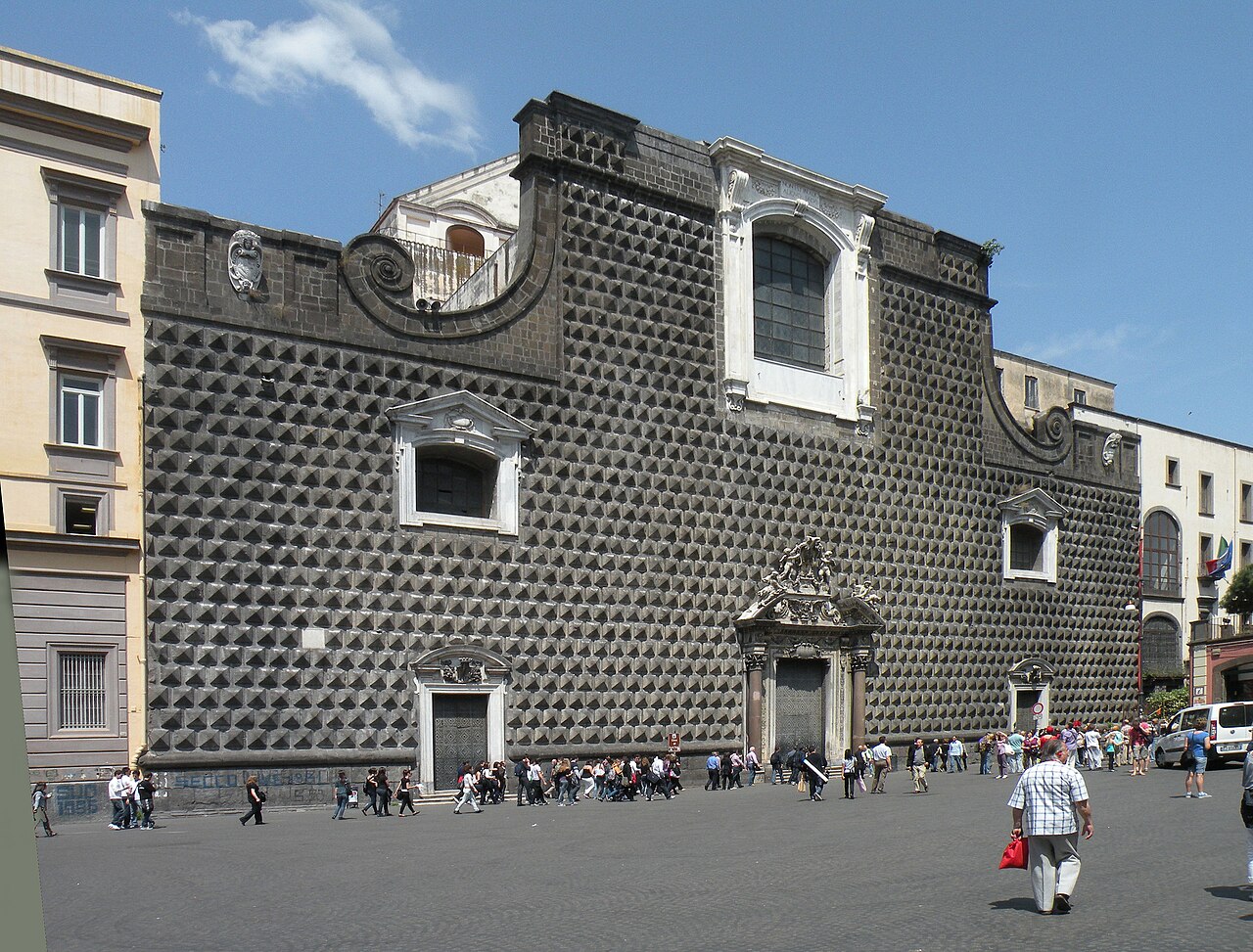
The facade of pyramid-cut piperno stone hides symbols carved into the blocks, while inside the Baroque bursts out in marble and in the memory of the physician Giuseppe Moscati.
 Sacred art
Chiostro di Santa Chiara
Napoli
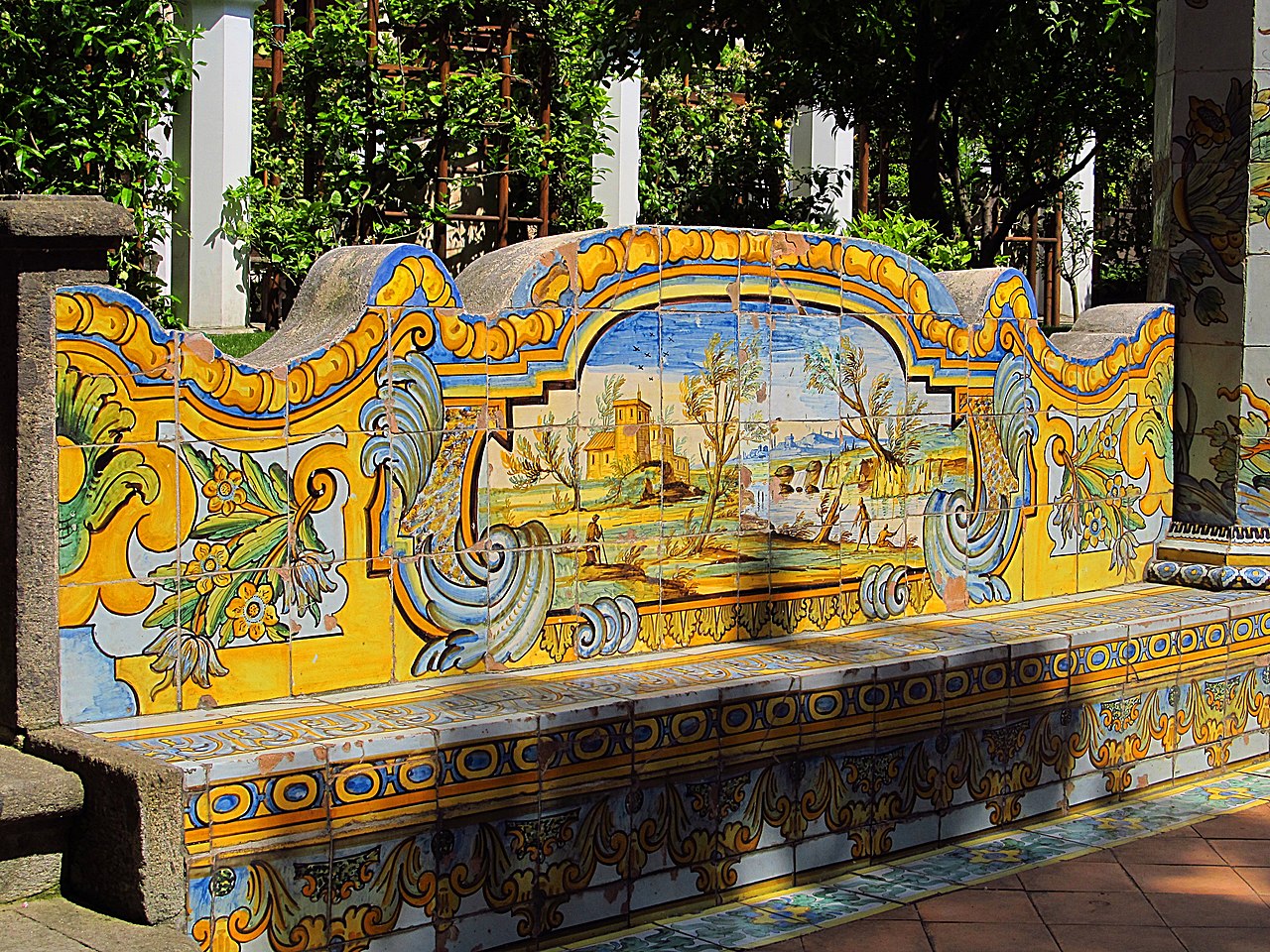
A garden of pillars clad in yellow and blue majolica, where lemon pergolas and eighteenth-century scenes painted on the tiles keep the noise of the city at bay.
 ◆ Sacred art
Chiesa di Santa Luciella ai Librai (teschio con le orecchie)
Napoli
In the crypt of a small church rediscovered in the maze of the Librai rests the skull with ears, which the faithful believed could listen to their prayers.