Terra Murata
Procida
KnownSacred art

The story
The ancient core of Procida climbs the yellow tufo (volcanic tuff) headland, between defensive walls and narrow alleys, suspended between the little harbour of Corricella and the horizon of the bay.
Access
borgo (old village) FREE, abbey € Millennium tours
The story
Terra Murata is the fortified medieval village that crowns the highest point of Procida, at ninety-one metres above the sea: the historic, religious and defensive core of the island. You climb up to it by the steep Salita Castello, which starts from Marina Corricella. Within its walls stand the island's symbolic monuments: the Palazzo d'Avalos, the Abbey of San Michele Arcangelo and the former Conservatorio delle Orfane.
What to see
The fortified village, with the alleys and the walls facing the sea, offers a view that takes in Corricella, the gulf and Ischia. The Abbey of San Michele Arcangelo holds works of art and nativity scenes; the Palazzo d'Avalos, later become a prison, dominates the settlement with its mass.
How to get there
- Hydrofoil
- Ferry
Tips
You climb up on foot from Corricella along the steep Salita Castello. The Palazzo d'Avalos — the former prison — is visited only under certain conditions and with organised tours: check on the official channels whether and when it is accessible before counting on it. Come for the village and the panorama, splendid at sunset.
Frequently asked questions
What is Terra Murata in Procida?
The fortified medieval village on the highest point of the island, with the Palazzo d'Avalos, the Abbey of San Michele Arcangelo and the former Conservatorio delle Orfane.
Can you visit the former prison of Procida (Palazzo d'Avalos)?
Only under certain conditions and with organised tours: it is best to check on the official channels whether and when it is accessible before going.
How do you reach Terra Murata?
On foot from Marina Corricella, climbing the steep Salita Castello.
More gems in Procida
 Villages
Marina Corricella
Procida
The oldest fishermen's borgo (old village) on Procida, an amphitheatre of pastel houses tumbling down to the harbour, where the boats sleep beneath the hanging laundry.
 Sacred art
Abbazia di San Michele
Procida
Behind the walls of Terra Murata, the abbey dedicated to its patron Michael guards paintings, an antique presepe (nativity scene) and catacombe carved into the tufo, its vault turned towards the sea.
- ◆ Views & panoramas
Belvedere Elsa Morante e dei Cannoni
Procida
From the terrace named after Elsa Morante, among old cannons trained on the bay, the view opens onto the Corricella and its pastel houses heaped upon the water.
- Free beaches
Spiaggia del Pozzo Vecchio ("del Postino")
Procida
The dark-sand beach where Massimo Troisi filmed Il Postino, tucked below the cemetery and the tufo walls, with shallow water and the stillness of a film set never struck.
- Free beaches
Spiagge di Chiaia
Procida
A long stairway leads down to it: a broad stretch of sand and shingle sheltered by high tufo walls, with the fishing boats of the Corricella colouring the background.
- Free beaches
Chiaiolella
Procida
The crescent-shaped little harbour on Procida's gentler side, with moored boats, tables at the water's edge and the bridge that leads from here towards the island of Vivara.
More gems: Sacred art
 Sacred art
Cappella Sansevero (Cristo Velato)
Napoli (NA)
Beneath a veil of marble that still seems to breathe, Sanmartino's Cristo Velato rests in the chapel's half-light, and the whiteness of the stone deceives every eye.
 Sacred art
Duomo di Napoli
Napoli
Three times a year the city holds its breath as the blood of San Gennaro waits to liquefy, among Gothic naves and the gold of the chapel devoted to him.
 Sacred art
Cappella del Tesoro di San Gennaro
Napoli
Behind a bronze gate lie silverware, gems and the jewel-studded mitre of the saint: a treasure heaped up over centuries by the devotion of Naples.
 Sacred art
Chiesa del Gesù Nuovo
Napoli
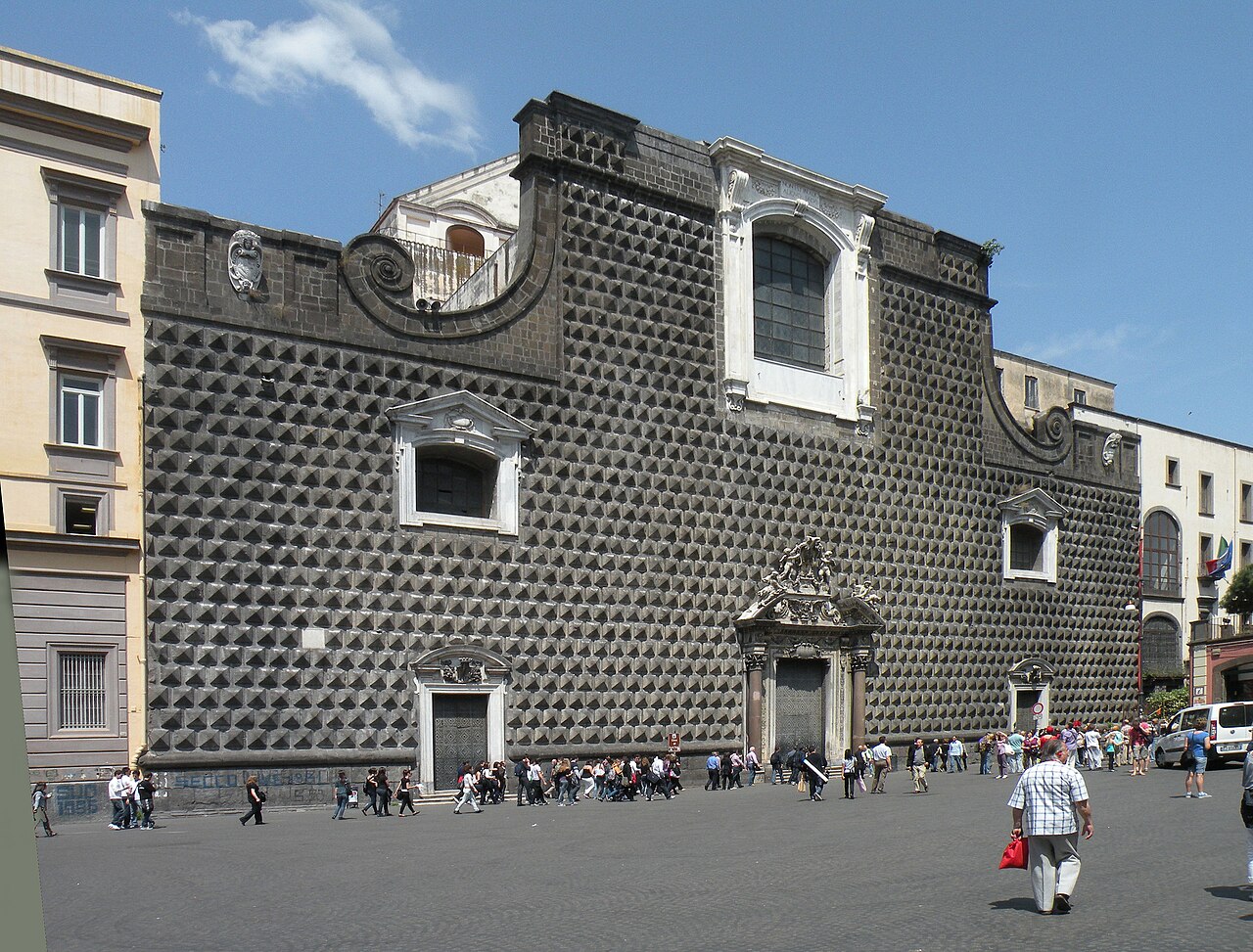
The facade of pyramid-cut piperno stone hides symbols carved into the blocks, while inside the Baroque bursts out in marble and in the memory of the physician Giuseppe Moscati.
 Sacred art
Chiostro di Santa Chiara
Napoli
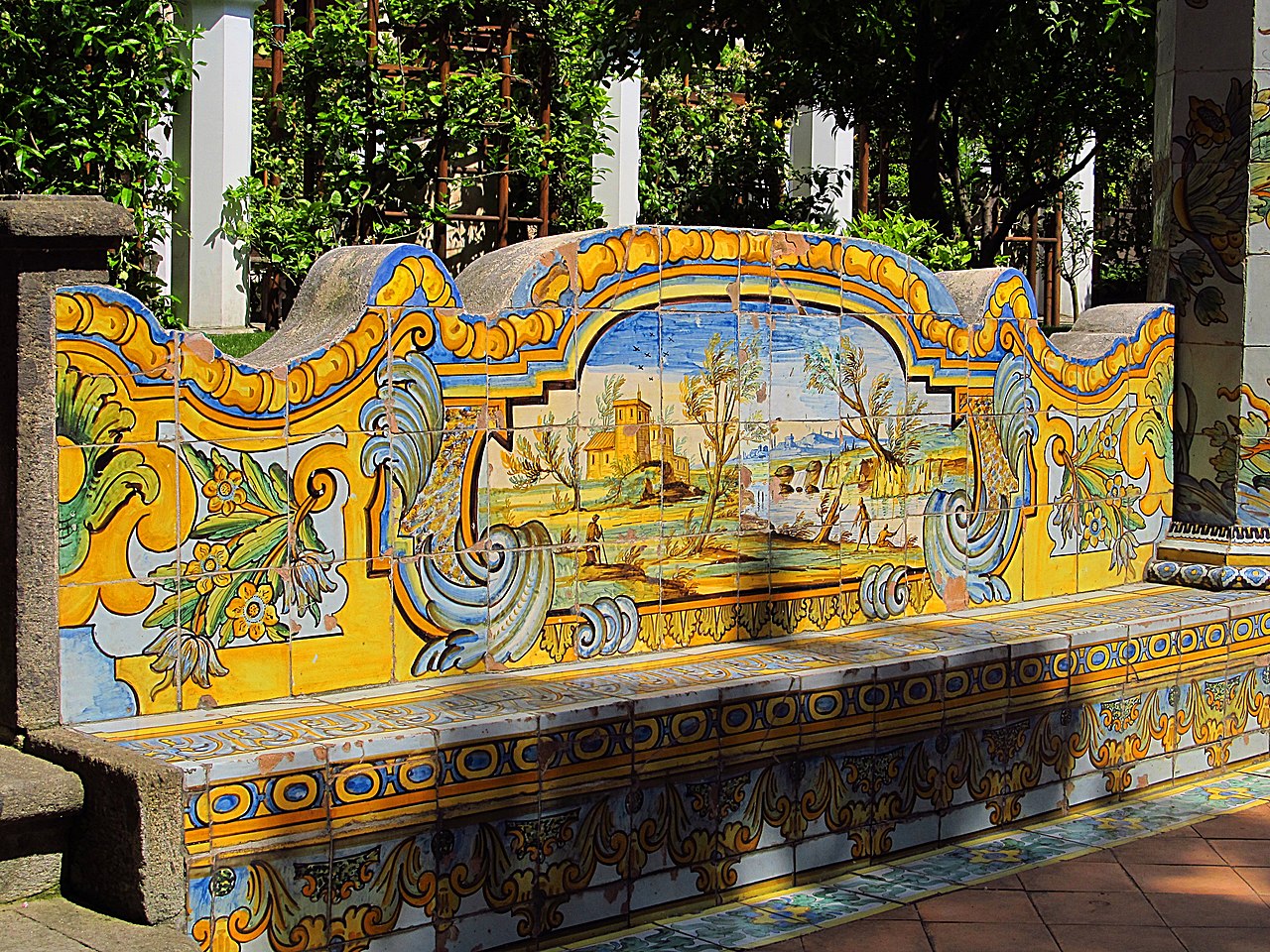
A garden of pillars clad in yellow and blue majolica, where lemon pergolas and eighteenth-century scenes painted on the tiles keep the noise of the city at bay.
 Sacred art
Santa Maria delle Anime del Purgatorio ad Arco
Via Tribunali 39
Bronze skulls stand guard at the entrance, and down in the hypogeum the cult of the anime pezzentelle (adopted souls of the dead) still leaves flowers and prayers beside abandoned crania.