Certosa e Museo Nazionale di San Martino
Napoli (NA)
FamousSacred art

The story
Beside Sant'Elmo, the Carthusian monastery weaves together marble cloisters and a sumptuous church, keeper of the most famous collection of Neapolitan presepi (nativity scenes).
The story
The Charterhouse of San Martino rises on the Vomero hill, next to Castel Sant'Elmo, facing all of Naples. Founded in the fourteenth century and remodelled over the centuries, it is one of the greatest masterpieces of Neapolitan Baroque; since 1866 it has housed the National Museum of San Martino, devoted to the history and art of the city.
What to see
The complex is vast: the sumptuous church, the cloisters and the hanging gardens with the most beautiful view over Naples and the gulf. The National Museum of San Martino tells of the city in all its forms — from the famous Cuciniello nativity scene (presepe) to the naval section with the royal boats, from the views and paintings to the decorative arts collections: it is at once the museum of the history and identity of Naples.
How to get there
- Funicular
Tips
Go up to the Vomero (by funicular is very handy) and combine the Charterhouse and Castel Sant'Elmo, which are adjacent: it is the monumental balcony of Naples. Reckon on a couple of hours. Check hours and tickets on the official site; do not miss the gardens for the panorama.
Frequently asked questions
What can you see at the Charterhouse of San Martino?
The Baroque church, the cloisters and the panoramic gardens, and the Museum of San Martino with its famous section dedicated to the Neapolitan nativity scene.
Where is the Charterhouse of San Martino?
On the Vomero hill, next to Castel Sant'Elmo, with a view over all of Naples.
Why is the Charterhouse of San Martino important?
It is one of the greatest monumental complexes and one of the masterpieces of Neapolitan Baroque, and has also housed the museum of the city's history since 1866.
More gems in Napoli
 Sacred art
Cappella Sansevero (Cristo Velato)
Napoli (NA)
Beneath a veil of marble that still seems to breathe, Sanmartino's Cristo Velato rests in the chapel's half-light, and the whiteness of the stone deceives every eye.
 Sacred art
Duomo di Napoli
Napoli
Three times a year the city holds its breath as the blood of San Gennaro waits to liquefy, among Gothic naves and the gold of the chapel devoted to him.
 Sacred art
Cappella del Tesoro di San Gennaro
Napoli
Behind a bronze gate lie silverware, gems and the jewel-studded mitre of the saint: a treasure heaped up over centuries by the devotion of Naples.
 Sacred art
Chiesa del Gesù Nuovo
Napoli
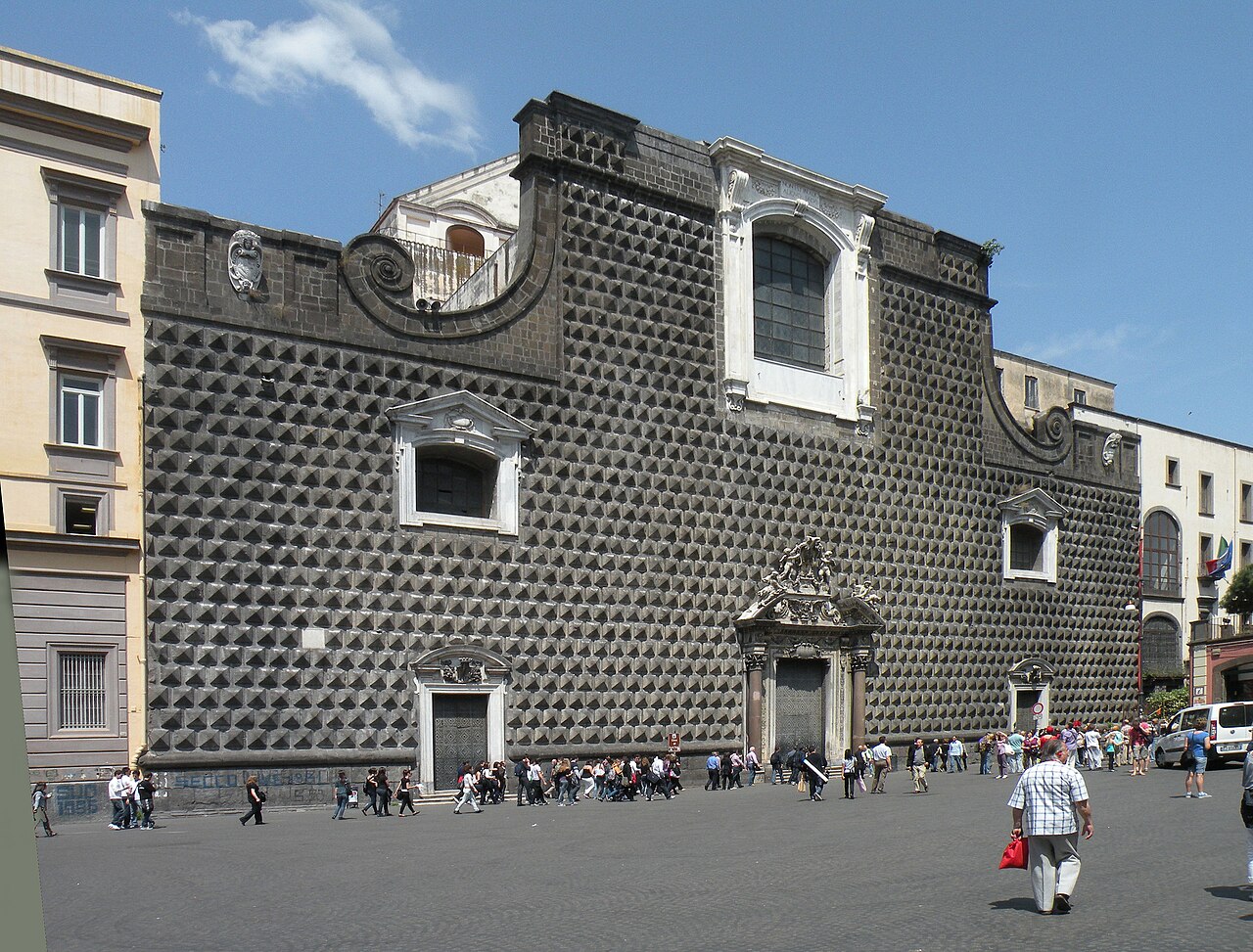
The facade of pyramid-cut piperno stone hides symbols carved into the blocks, while inside the Baroque bursts out in marble and in the memory of the physician Giuseppe Moscati.
 Sacred art
Chiostro di Santa Chiara
Napoli
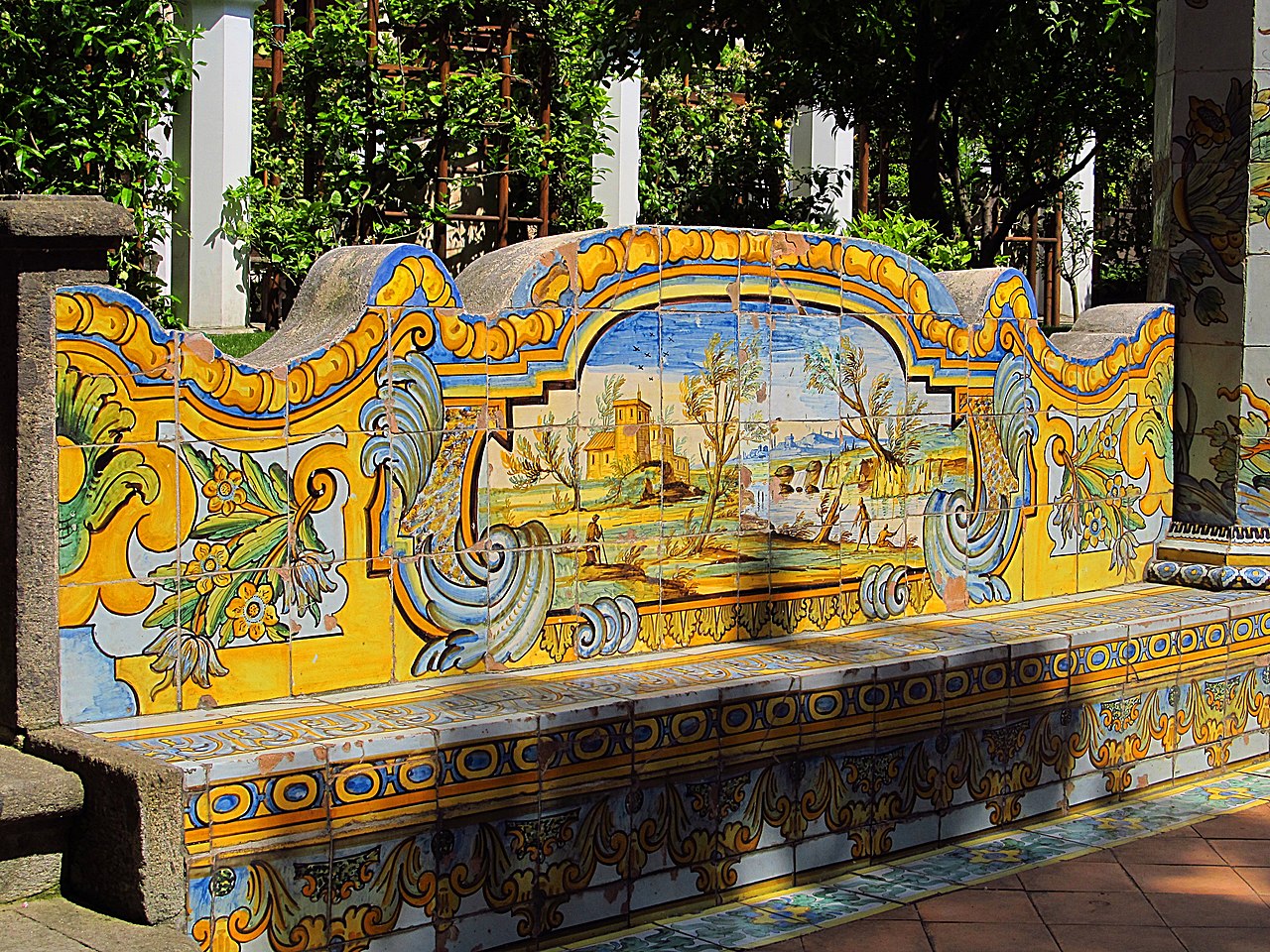
A garden of pillars clad in yellow and blue majolica, where lemon pergolas and eighteenth-century scenes painted on the tiles keep the noise of the city at bay.
 ◆ Sacred art
Chiesa di Santa Luciella ai Librai (teschio con le orecchie)
Napoli
In the crypt of a small church rediscovered in the maze of the Librai rests the skull with ears, which the faithful believed could listen to their prayers.
More gems: Sacred art
 Sacred art
Santa Maria delle Anime del Purgatorio ad Arco
Via Tribunali 39
Bronze skulls stand guard at the entrance, and down in the hypogeum the cult of the anime pezzentelle (adopted souls of the dead) still leaves flowers and prayers beside abandoned crania.
 Sacred art
Pio Monte della Misericordia
Via Tribunali
Above the altar of an octagonal church still hangs, exactly where Caravaggio painted it, his Sette opere di Misericordia: a single canvas holding all the charity in the world.
 Sacred art
San Gregorio Armeno
Napoli
The street of the presepe (nativity scene) masters, where terracotta shepherds are shaped all year round and the alley smells of glue and wood beneath Baroque bell towers.
 ◆ Sacred art
Sant'Anna dei Lombardi
via Toledo
Eight terracotta figures mourn the dead Christ with faces of piercing grief, while in the sacristy frescoed by Vasari the ceiling fills with constellations and virtues.
 ◆ Sacred art
San Giovanni a Carbonara
Napoli
A double forceps-shaped flight of stairs leads up to the church, inside which the monumental tomb of King Ladislao rises like a tower of marble.
- ◆ Sacred art
Complesso dei Girolamini
Napoli
Beyond the white facade open one of the oldest libraries in Naples and a silent picture gallery, among wooden shelves and canvases hung by the Oratorian fathers.