Stazione Dante
Napoli (NA)
KnownStreet art

The story
At Dante station contemporary art inhabits the daily passage, from Joseph Kosuth's neon to the works that accompany commuters between the piazza and the bowels of the city.
The story
The Dante station, on Line 1 of the Naples metro in Piazza Dante, was designed by Gae Aulenti and inaugurated in 2002. It is one of the richest Art Stations, a true contemporary art gallery underground, with works by some of the greatest artists of the twentieth century.
What to see
The neon writings of Joseph Kosuth with the verses of Dante's Convivio, the work of Jannis Kounellis with shoes, coats and little trains, the mosaic of Nicola De Maria and the 'Intermediterraneo' mirror of Michelangelo Pistoletto: signature art spread among the halls and platforms. On the surface, Aulenti's glass-and-steel pavilions frame the statue of Dante.
How to get there
- Metro
Hours and prices
Free entry.
Tips
It is visited by taking the metro (Line 1, Dante stop) with an ANM ticket. You are in Piazza Dante, at the start of via Toledo and a stone's throw from Port'Alba and the old centre. Take the time to look at the works in the halls, not just in passing.
Frequently asked questions
What can you see in the Dante station?
Works by Joseph Kosuth (neon with Dante's verses), Jannis Kounellis, Nicola De Maria and Michelangelo Pistoletto: a contemporary art gallery underground.
Who designed the Dante station?
The architect Gae Aulenti, who also redesigned the square; it was inaugurated in 2002.
Where is the Dante station?
In Piazza Dante, on Line 1 of the Naples metro, at the start of via Toledo.
More gems in Napoli
 Sacred art
Cappella Sansevero (Cristo Velato)
Napoli (NA)
Beneath a veil of marble that still seems to breathe, Sanmartino's Cristo Velato rests in the chapel's half-light, and the whiteness of the stone deceives every eye.
 Sacred art
Duomo di Napoli
Napoli
Three times a year the city holds its breath as the blood of San Gennaro waits to liquefy, among Gothic naves and the gold of the chapel devoted to him.
 Sacred art
Cappella del Tesoro di San Gennaro
Napoli
Behind a bronze gate lie silverware, gems and the jewel-studded mitre of the saint: a treasure heaped up over centuries by the devotion of Naples.
 Sacred art
Chiesa del Gesù Nuovo
Napoli
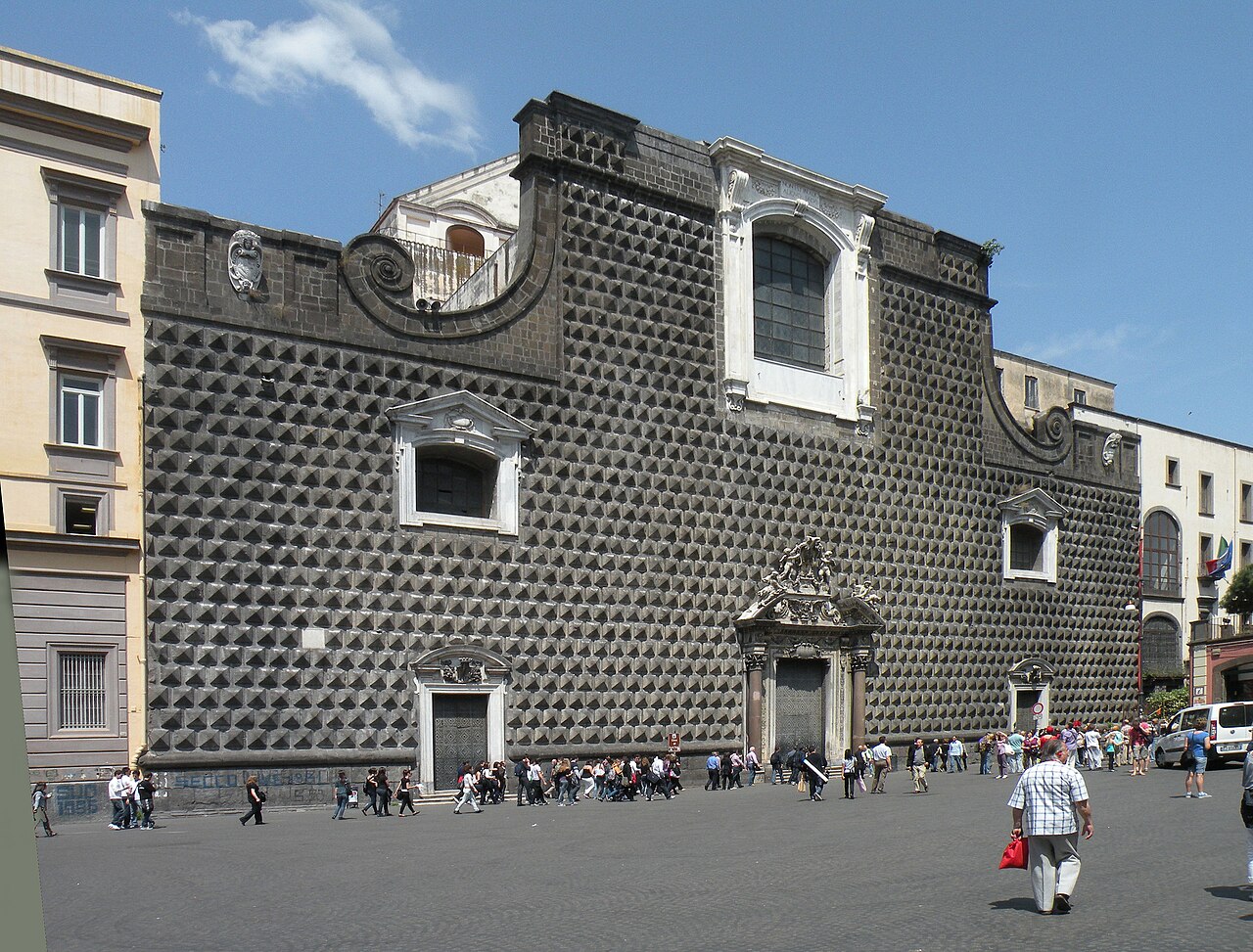
The facade of pyramid-cut piperno stone hides symbols carved into the blocks, while inside the Baroque bursts out in marble and in the memory of the physician Giuseppe Moscati.
 Sacred art
Chiostro di Santa Chiara
Napoli
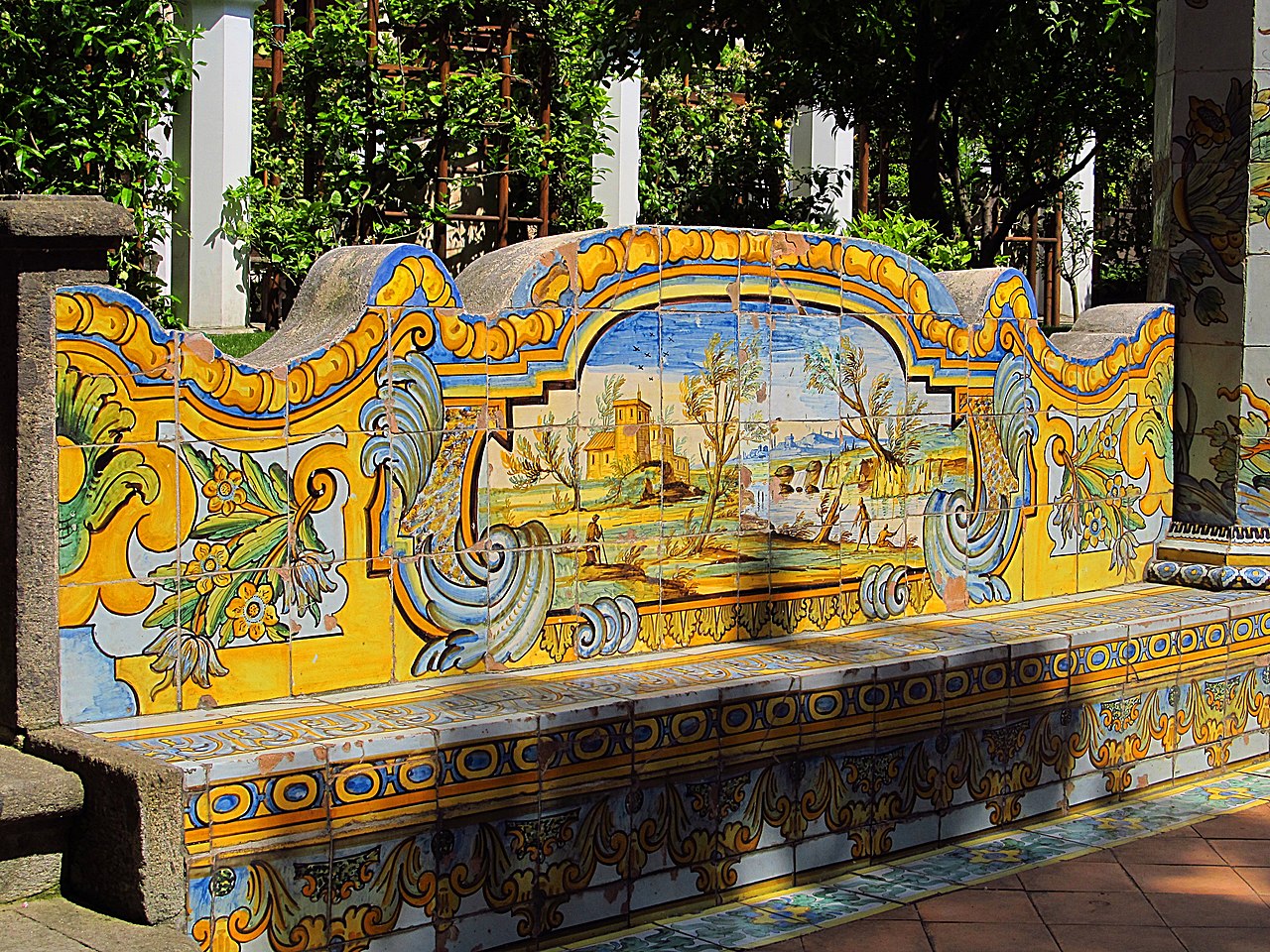
A garden of pillars clad in yellow and blue majolica, where lemon pergolas and eighteenth-century scenes painted on the tiles keep the noise of the city at bay.
 ◆ Sacred art
Chiesa di Santa Luciella ai Librai (teschio con le orecchie)
Napoli
In the crypt of a small church rediscovered in the maze of the Librai rests the skull with ears, which the faithful believed could listen to their prayers.
More gems: Street art
 Street art
Murales di Maradona
Napoli (NA)
In the Quartieri Spagnoli a giant mural of Maradona has turned a courtyard into a secular shrine, among scarves, votive candles and fans on pilgrimage.
- Street art
Murale di San Gennaro (Jorit)
Forcella
Fifteen metres high on a facade in Forcella, Jorit's San Gennaro has the face of a young worker marked by the two red stripes of the human tribe.
- Street art
Madonna con la pistola (Banksy)
Napoli (NA)
In piazza dei Girolamini, Banksy's Madonna wears a pistol in place of a halo, the street artist's only Neapolitan work, now protected behind glass.
- Street art
Murale Maradona-Pino Daniele-Troisi (Torre Enel)
Napoli (NA)
On the former Torre Enel of the Centro Direzionale, Jorit has raised vertically the faces of Maradona, Pino Daniele and Troisi: the Neapolitan trinity watching over the city from on high.
- Street art
Maradona 'Dios Umano' di Jorit
Napoli (NA)
In San Giovanni a Teduccio a colossal Maradona fills an entire suburban building, suspended between the divine and the human in the gaze Jorit painted for the neighbourhood.
- Street art
Parco dei Murales (Parco Merola)
Napoli (NA)
Among the tower blocks of Ponticelli, the courtyards of Parco Merola have become an open-air gallery, with tender figures and giant faces painted on the facades of the public housing.