San Domenico
Decumani
KnownSacred art
The story
The square where the heart of Spaccanapoli beats, with the Baroque spire at its centre and the apse of the Angevin basilica that once held the rooms of San Tommaso.
Access
FREE
The story
San Domenico Maggiore is one of the great basilicas of the old centre of Naples, the mother house of the Dominicans in the Kingdom. The first stone was laid on 6 January 1283 and the works continued under Charles II of Anjou until 1324: it is born Gothic, then enriched over the centuries. Here Saint Thomas Aquinas taught, and within the convent's walls Giovanni Pontano, Giordano Bruno and Tommaso Campanella studied.
What to see
The interior with three naves and the wide transept, the noble chapels and the sacristy, where the funerary arks of the Aragonese house are kept. The square in front, with the spire of San Domenico, is one of the salons of the old centre. You can also visit the cell of Saint Thomas.
Tips
It is a church and at the same time a museum: check hours and visiting arrangements for the monumental parts (sacristy, cell of Saint Thomas) on the official channels, remembering that it is an active place of worship. You are in Piazza San Domenico Maggiore, between Spaccanapoli and the Tribunali.
Frequently asked questions
What is there to see at San Domenico Maggiore?
The Gothic interior with three naves, the chapels and the sacristy with the Aragonese arks, the cell of Saint Thomas Aquinas and, outside, the square with the spire.
Why is San Domenico Maggiore important?
It was the mother house of the Dominicans in the Kingdom of Naples; Saint Thomas Aquinas taught there and Giordano Bruno and Tommaso Campanella studied there.
When was it built?
The first stone was laid in 1283, under the Angevins, and the works continued until 1324.
More gems in Decumani
 ◆ History & archaeology
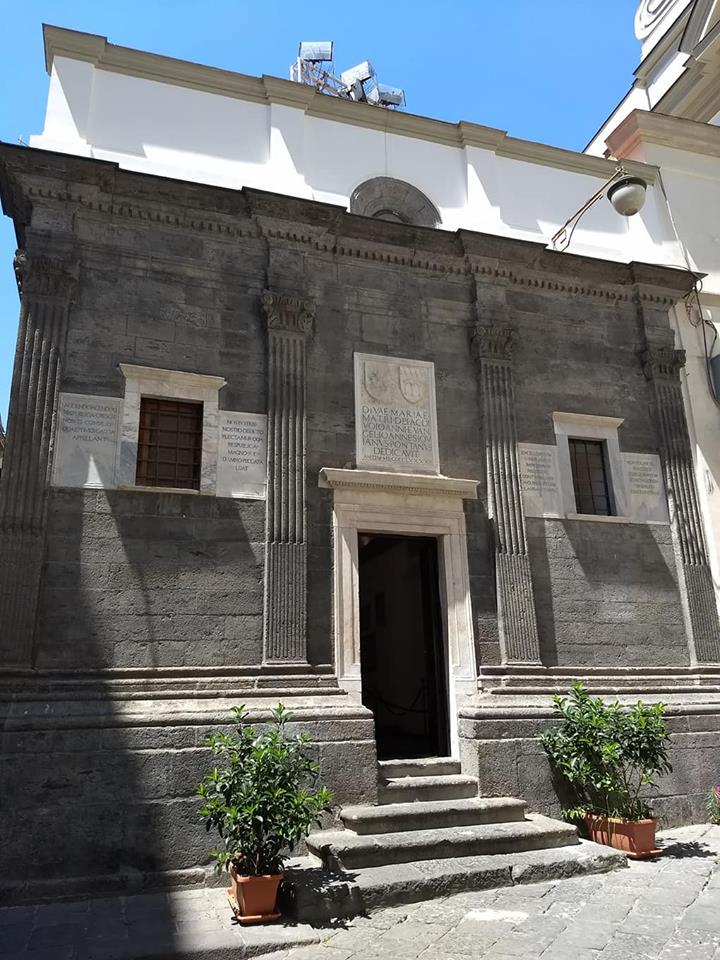
Cappella Pontano
Decumani
A small Renaissance temple on the decumanus, which the humanist Pontano had raised for his lost wife, still lined inside with Latin inscriptions dictated by his grief.
 ◆ History & archaeology
Sedile di Nilo
Decumani
On the corner of a small Spaccanapoli square survives the seat of the old Nilo quarter, where the nobles once gathered before the sedili of Naples vanished.
 Sacred art
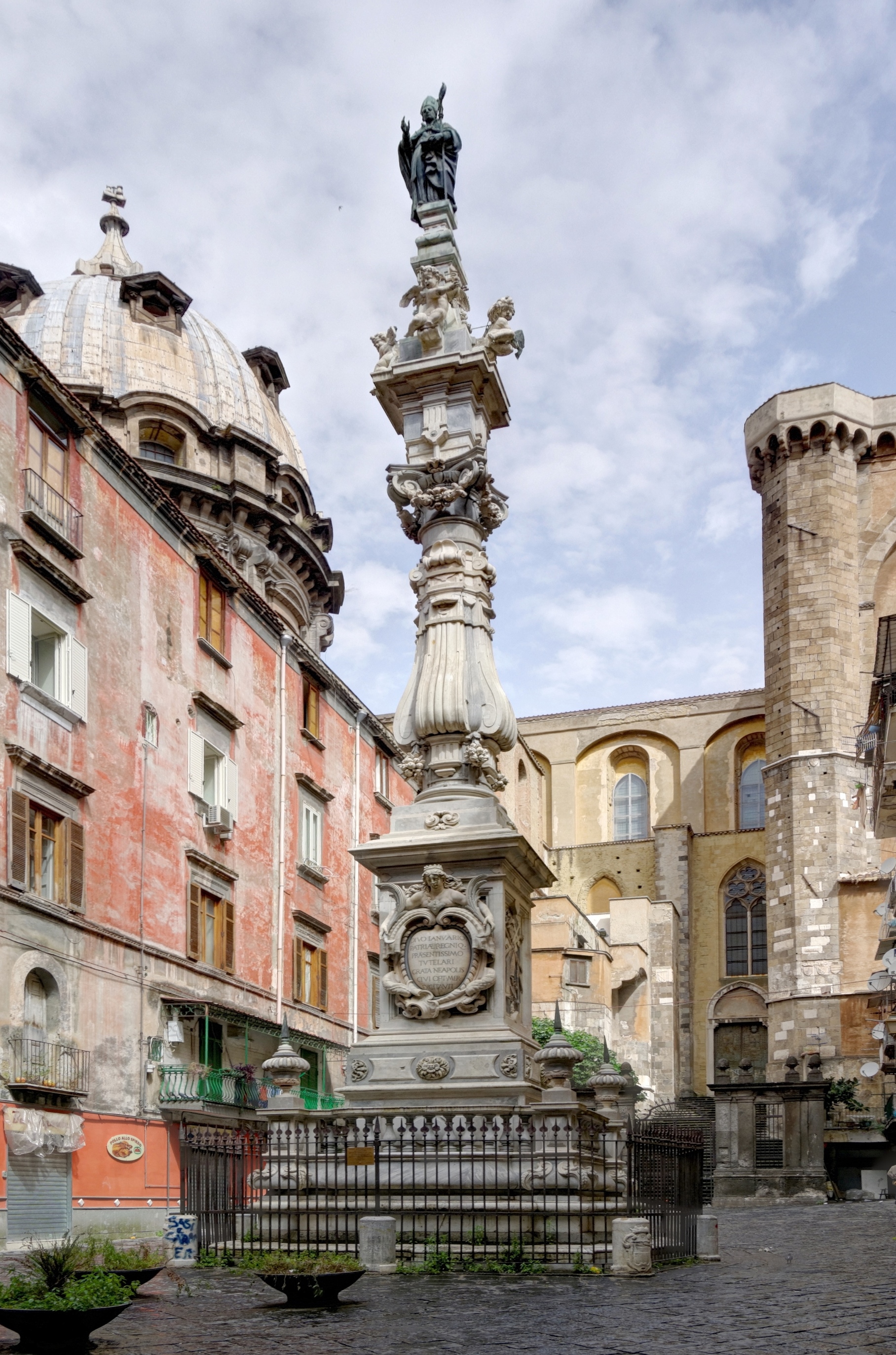
Guglie di San Gennaro
Decumani
The oldest of the Neapolitan spires, raised in thanksgiving to the patron saint who is said to have halted the lava of Vesuvius, his bronze statue keeping watch beside the Duomo.
- Sacred art
Immacolata
Decumani
In the heart of piazza del Gesù the Baroque spire soars straight up, an explosion of marble and statues crowned by the Immacolata turned toward the sky.
More gems: Sacred art
 Sacred art
Cappella Sansevero (Cristo Velato)
Napoli (NA)
Beneath a veil of marble that still seems to breathe, Sanmartino's Cristo Velato rests in the chapel's half-light, and the whiteness of the stone deceives every eye.
 Sacred art
Duomo di Napoli
Napoli
Three times a year the city holds its breath as the blood of San Gennaro waits to liquefy, among Gothic naves and the gold of the chapel devoted to him.
 Sacred art
Cappella del Tesoro di San Gennaro
Napoli
Behind a bronze gate lie silverware, gems and the jewel-studded mitre of the saint: a treasure heaped up over centuries by the devotion of Naples.
 Sacred art
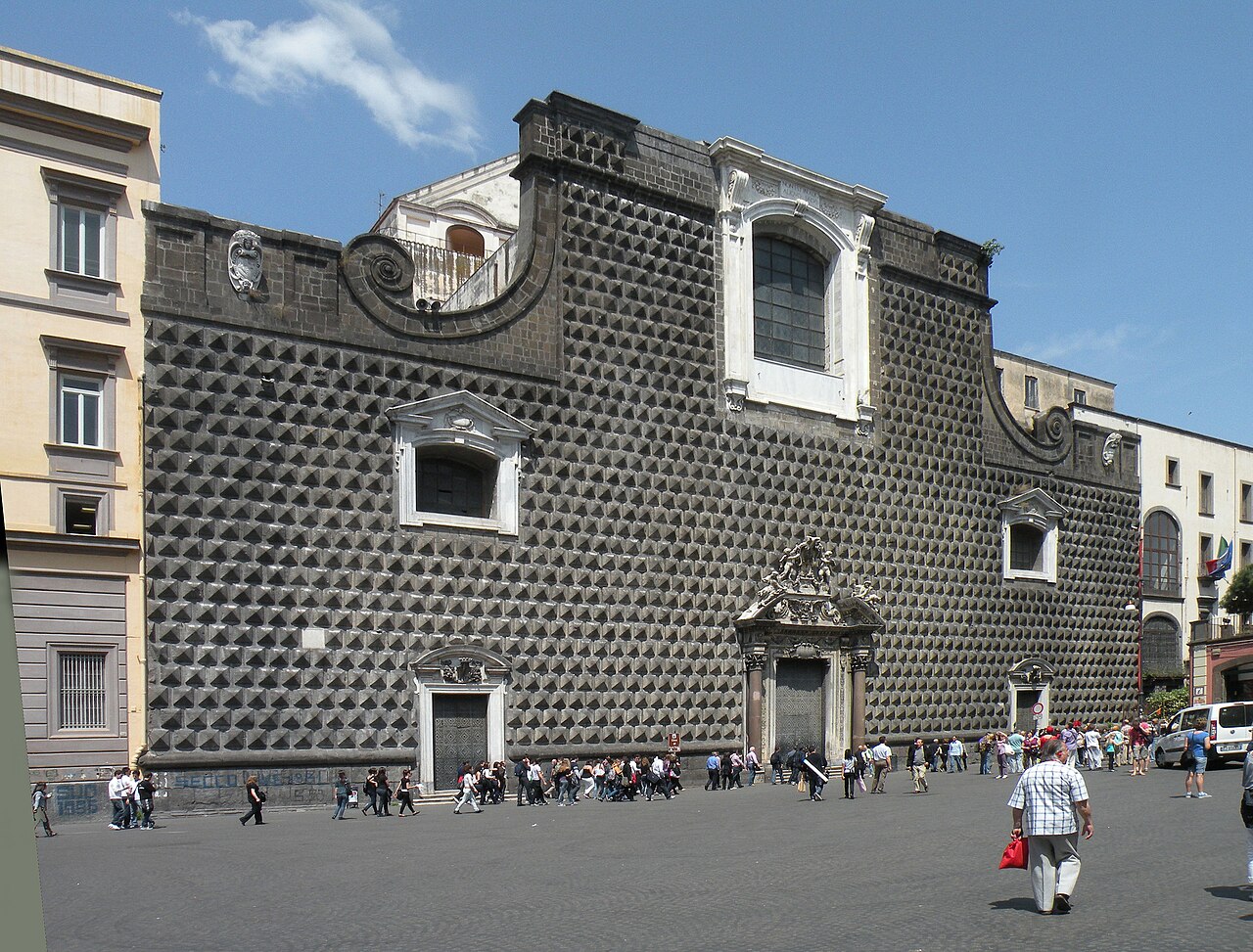
Chiesa del Gesù Nuovo
Napoli
The facade of pyramid-cut piperno stone hides symbols carved into the blocks, while inside the Baroque bursts out in marble and in the memory of the physician Giuseppe Moscati.
 Sacred art
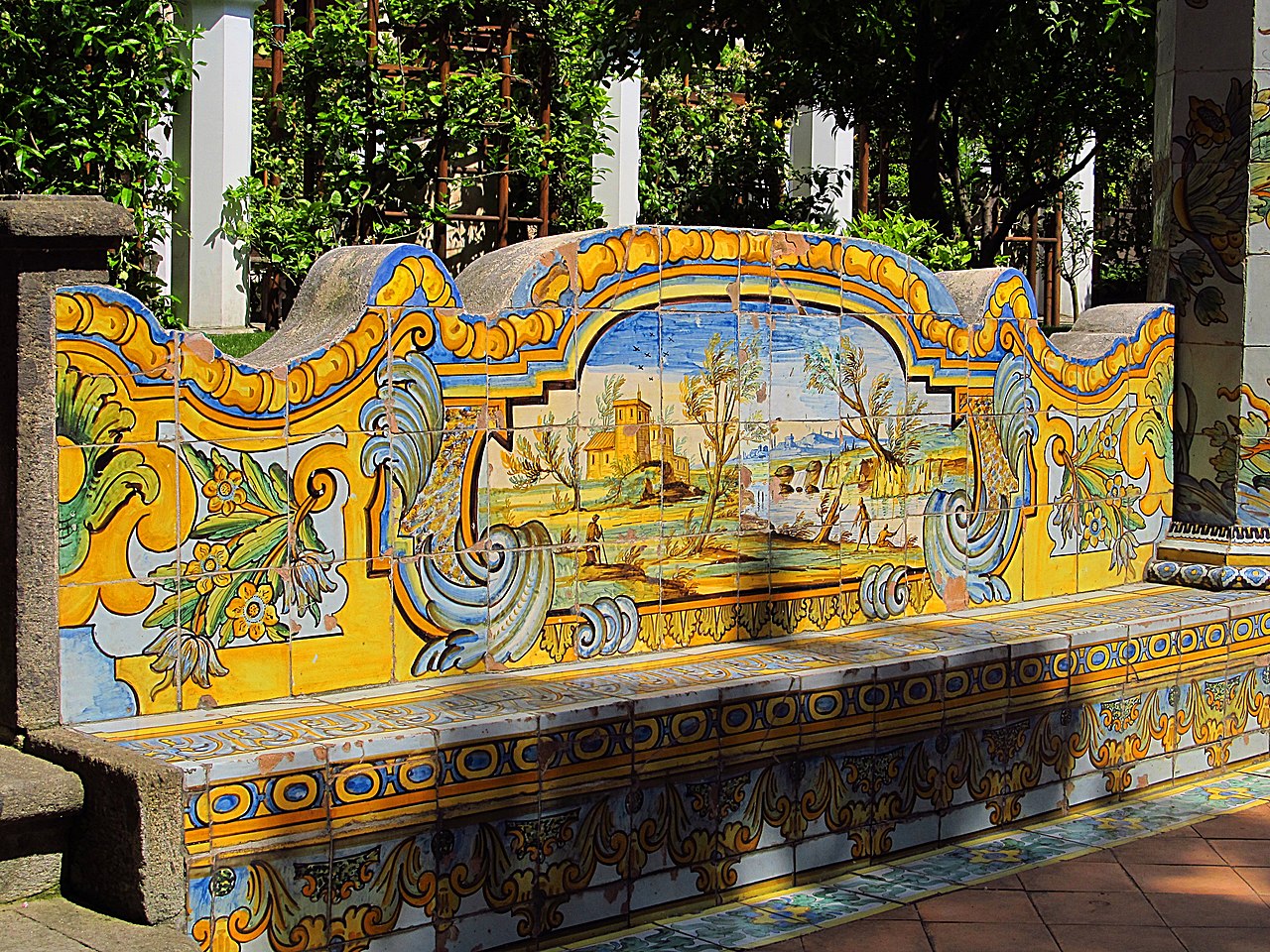
Chiostro di Santa Chiara
Napoli
A garden of pillars clad in yellow and blue majolica, where lemon pergolas and eighteenth-century scenes painted on the tiles keep the noise of the city at bay.
 Sacred art
Santa Maria delle Anime del Purgatorio ad Arco
Via Tribunali 39
Bronze skulls stand guard at the entrance, and down in the hypogeum the cult of the anime pezzentelle (adopted souls of the dead) still leaves flowers and prayers beside abandoned crania.