Basilica dell'Annunziata e Ruota degli Esposti
zona Forcella
Hidden gemSacred art
The story
The revolving wooden drum where for centuries newborns were laid in secret, and from which so many Neapolitans inherited the surname Esposito.
Access
FREE/check hours
The story
In the heart of Forcella, the Real Casa Santa dell'Annunziata was for centuries the main Neapolitan institution of reception for abandoned children. Founded in 1304 and supported by the Angevin sovereigns, it included a church, a hospital, a foundling home and a conservatory for young girls. Here, from the seventeenth century and until 1875, the «wheel of the exposed» (foundling wheel) operated: a rotating wooden cylinder set into the wall, which allowed a newborn to be entrusted anonymously, without meeting anyone's gaze.
What to see
The wooden wheel, today restored, and the spaces of the Annunziata complex, with the basilica remodelled in the eighteenth century by Luigi Vanvitelli. It is a place of memory that tells of a painful and deeply human chapter of the city's history: the children received were given a name and often the surname «Esposito», from «esposto» (exposed), become one of the most widespread in Naples.
Tips
The complex is still partly a hospital seat: the historic spaces and the wheel are visited on dedicated occasions and hours, to be checked with the Real Casa Santa dell'Annunziata. You are at Forcella, a few steps from the Duomo and the decumanus: a place to approach with respect, for the history it holds.
Frequently asked questions
What was the foundling wheel?
A rotating wooden cylinder set into the wall of the Real Casa dell'Annunziata: it allowed a newborn to be left anonymously so that it would be received and raised by the institution. In Naples it operated from the seventeenth century until 1875.
What is the Real Casa dell'Annunziata?
An ancient charitable institution of Forcella, founded in 1304, which received abandoned children and young girls without a family, with a church, a hospital and a foundling home; the basilica was later remodelled by Luigi Vanvitelli.
Why are so many Neapolitans called Esposito?
Because the children received at the wheel, «exposed», were often given the surname Esposito: hence its enormous spread in Naples.
More gems: Sacred art
 Sacred art
Cappella Sansevero (Cristo Velato)
Napoli (NA)
Beneath a veil of marble that still seems to breathe, Sanmartino's Cristo Velato rests in the chapel's half-light, and the whiteness of the stone deceives every eye.
 Sacred art
Duomo di Napoli
Napoli
Three times a year the city holds its breath as the blood of San Gennaro waits to liquefy, among Gothic naves and the gold of the chapel devoted to him.
 Sacred art
Cappella del Tesoro di San Gennaro
Napoli
Behind a bronze gate lie silverware, gems and the jewel-studded mitre of the saint: a treasure heaped up over centuries by the devotion of Naples.
 Sacred art
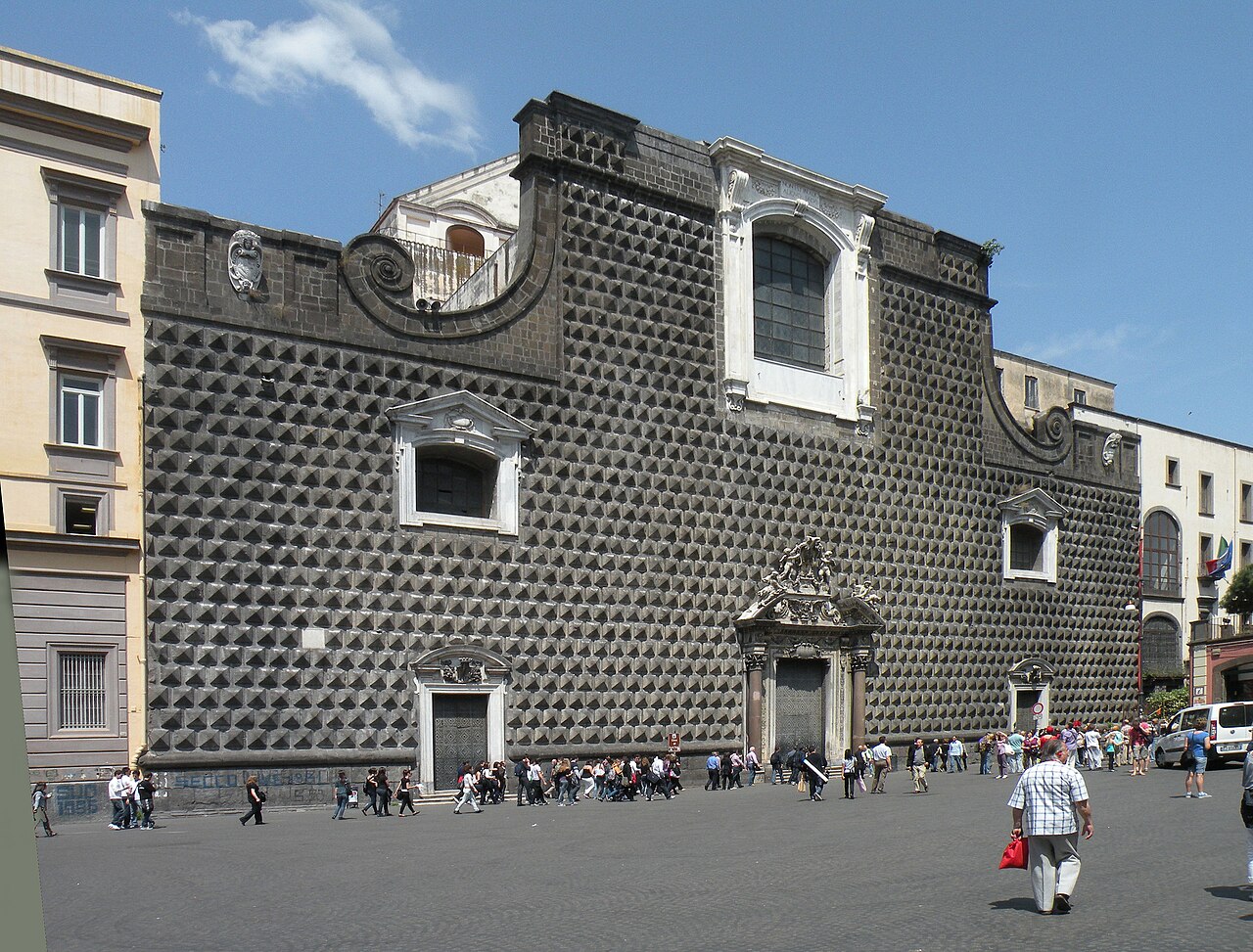
Chiesa del Gesù Nuovo
Napoli
The facade of pyramid-cut piperno stone hides symbols carved into the blocks, while inside the Baroque bursts out in marble and in the memory of the physician Giuseppe Moscati.
 Sacred art
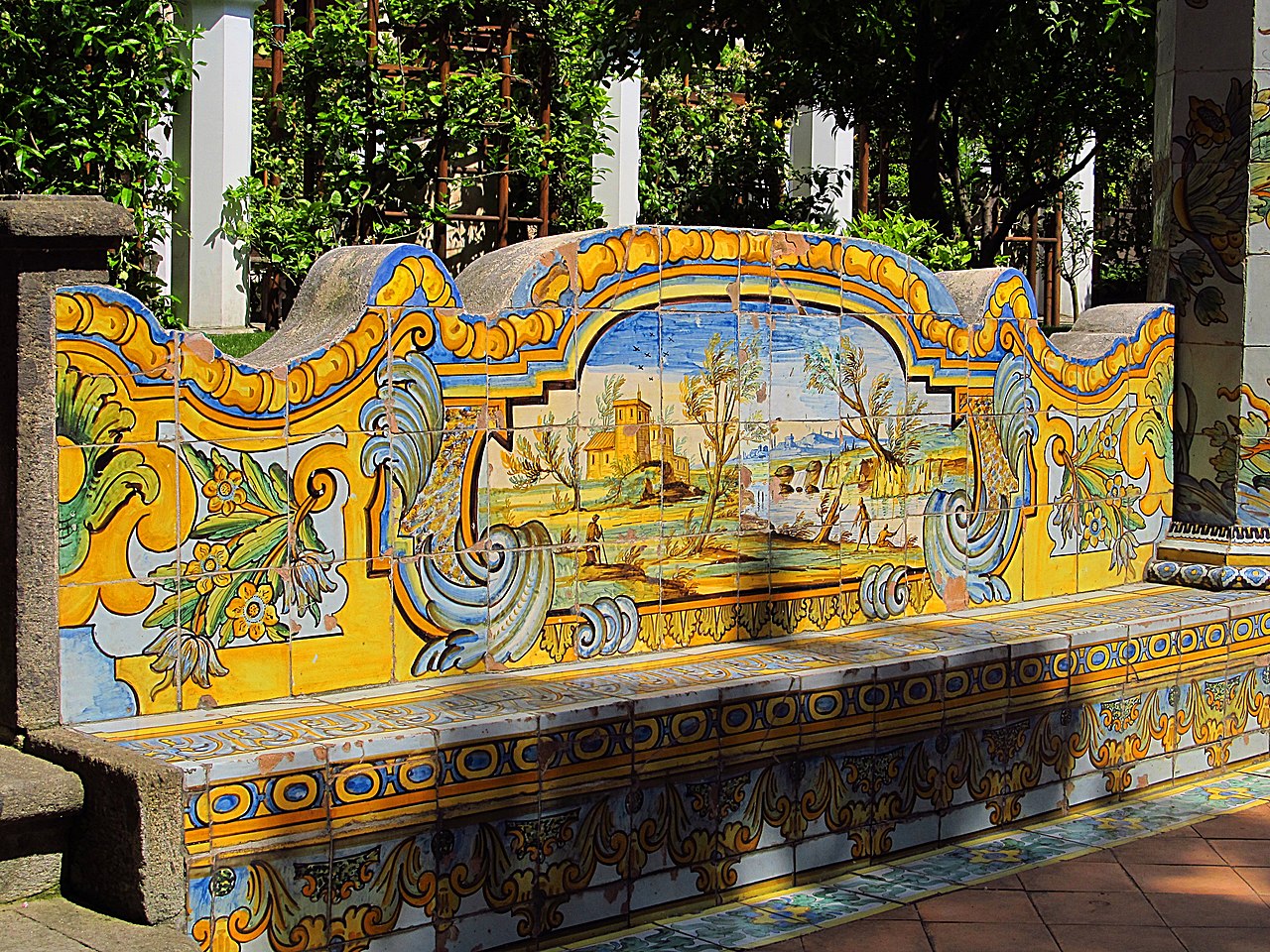
Chiostro di Santa Chiara
Napoli
A garden of pillars clad in yellow and blue majolica, where lemon pergolas and eighteenth-century scenes painted on the tiles keep the noise of the city at bay.
 Sacred art
Santa Maria delle Anime del Purgatorio ad Arco
Via Tribunali 39
Bronze skulls stand guard at the entrance, and down in the hypogeum the cult of the anime pezzentelle (adopted souls of the dead) still leaves flowers and prayers beside abandoned crania.