Duomo di Amalfi
Amalfi
FamousSacred art

The story
At the top of a steep stairway, the striped Arab-Norman façade; beneath the altar rest the relics of Saint Andrew, brought here from Constantinople.
Access
€ cloister
The story
The Duomo of Amalfi, the cathedral of Sant'Andrea (Saint Andrew), dominates the centre of the town from the top of a long stairway. Its origins date to the tenth century, when Duke Mansone I began its construction beside an older church; over the centuries the complex grew in Romanesque and Arab-Norman forms, a national monument and symbol of the power of the ancient maritime Republic.
What to see
The façade with bands and interlaced arches at the top of the stairway is the symbol-image of Amalfi. Inside, beneath the altar, rest the relics of Saint Andrew the apostle, patron of the town. Beside it, the Cloister of Paradise (Chiostro del Paradiso) — a visit in itself — completes the monumental complex.
Tips
The stairway is steep: take your time to climb and for the view over the square. The cathedral is a place of worship: suitable dress. The monumental complex (cloister, crypt, museum) generally has its own ticket, separate from access to the church: enquire on site. Amalfi is explored on foot.
Frequently asked questions
Who is the Duomo of Amalfi dedicated to?
To Saint Andrew the apostle, patron of the town, whose relics are kept beneath the altar.
Since when does the Duomo of Amalfi exist?
Its origins date to the tenth century, with construction begun by Duke Mansone I from 987, then enlarged over the centuries.
Is the Cloister of Paradise included in the visit of the Duomo?
The Cloister of Paradise is part of the monumental complex, with its own access and ticket separate from the cathedral.
More gems in Amalfi
 Sacred art
Chiostro del Paradiso
Amalfi
Interlaced Moorish arches and palms that filter the light: a thirteenth-century cemetery made for the nobles of Amalfi, as silent as a garden of the East.
 Hiking
Valle delle Ferriere
Amalfi (SA)
Above Amalfi the trail climbs a damp valley of waterfalls and prehistoric ferns, among the ruins of the old ironworks swallowed by the vegetation.
 Museums
Museo della Carta
Amalfi (SA)
In an ancient thirteenth-century paper mill, in the Valle dei Mulini, hammers driven by the water of the Canneto still bring Amalfi's handmade paper to life, sheet after sheet.
- ◆ History & archaeology
Antichi Arsenali di Amalfi
Amalfi
Stone vaults opening onto the water, where the Republic built its galleys: the only medieval arsenal left on the coast, memory of Amalfi's sea power.
- Free beaches
Spiagge del Duoglio
Amalfi
Four hundred steps drop from the main road to a beach of pebbles and clear water, the hard-won prize for anyone wanting away from the crowds of Amalfi.
- Free beaches
Santa Croce
Amalfi
Reachable by sea or down a long stairway, a cove beside a rock arch the sea has hollowed out; the water here is the green of glass.
More gems: Sacred art
 Sacred art
Cappella Sansevero (Cristo Velato)
Napoli (NA)
Beneath a veil of marble that still seems to breathe, Sanmartino's Cristo Velato rests in the chapel's half-light, and the whiteness of the stone deceives every eye.
 Sacred art
Duomo di Napoli
Napoli
Three times a year the city holds its breath as the blood of San Gennaro waits to liquefy, among Gothic naves and the gold of the chapel devoted to him.
 Sacred art
Cappella del Tesoro di San Gennaro
Napoli
Behind a bronze gate lie silverware, gems and the jewel-studded mitre of the saint: a treasure heaped up over centuries by the devotion of Naples.
 Sacred art
Chiesa del Gesù Nuovo
Napoli
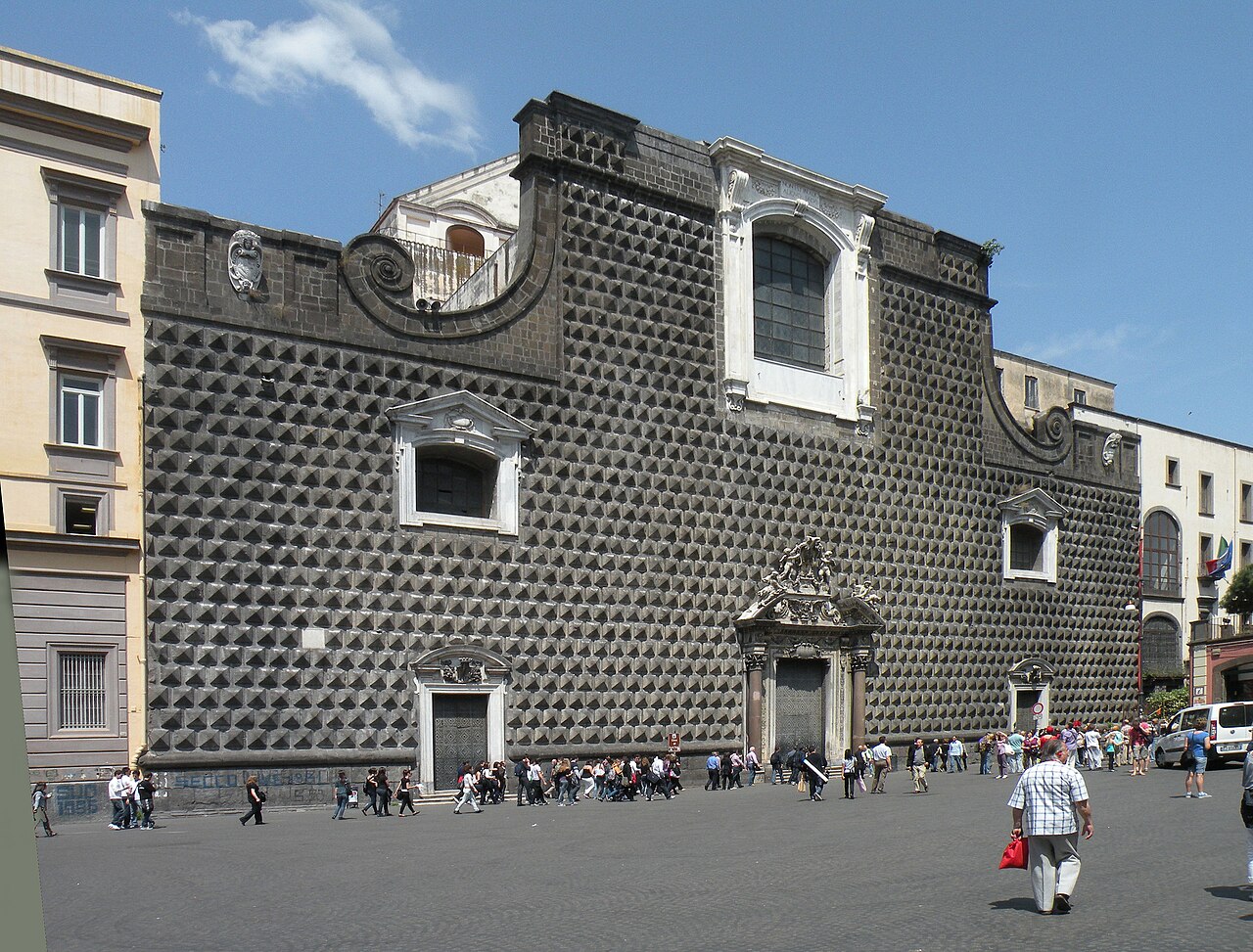
The facade of pyramid-cut piperno stone hides symbols carved into the blocks, while inside the Baroque bursts out in marble and in the memory of the physician Giuseppe Moscati.
 Sacred art
Chiostro di Santa Chiara
Napoli
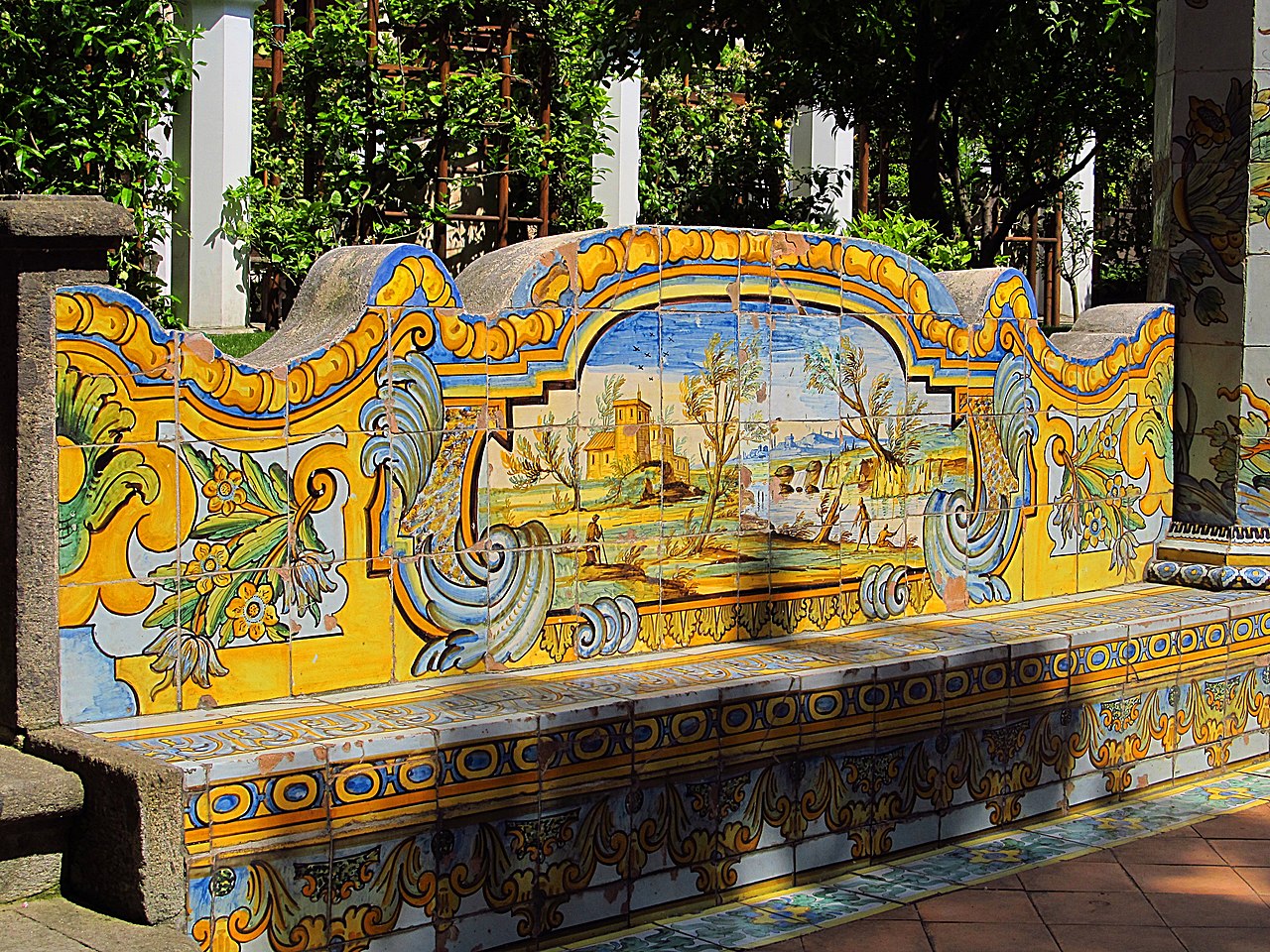
A garden of pillars clad in yellow and blue majolica, where lemon pergolas and eighteenth-century scenes painted on the tiles keep the noise of the city at bay.
 Sacred art
Santa Maria delle Anime del Purgatorio ad Arco
Via Tribunali 39
Bronze skulls stand guard at the entrance, and down in the hypogeum the cult of the anime pezzentelle (adopted souls of the dead) still leaves flowers and prayers beside abandoned crania.