Cimitero delle 366 Fosse
Poggioreale
Hidden gemSacred art
The story
Ferdinando Fuga drew here one pit for every day of the year: 366 anonymous graves for the city's poor, an Enlightenment geometry of dying beneath the hill of Poggioreale.
Access
guided tours
The story
The Cemetery of the 366 Pits, at Poggioreale, is an eighteenth-century cemetery designed by Ferdinando Fuga and willed in 1762 by Ferdinand IV of Bourbon: the first space in Naples dedicated to the burial of the poor, outside the walls. Its plan is a rigorous square with 366 common pits, one for each day of the year.
What to see
The great paved open space with the numbered stone coverings of the 366 pits, arranged in a regular grid: a work that joined Enlightenment rationality and pity for the least. One was opened each day, then closed again in the evening. It remained in use until 1890.
Tips
It is a place of memory of the city and its poor, not a picturesque destination: it should be visited with respect and sobriety. The site is open to visits but needs restoration: check days, hours and access arrangements on official sources before going. You are in the area of Poggioreale.
Frequently asked questions
What is the Cemetery of the 366 Pits?
An eighteenth-century cemetery of Poggioreale, designed by Ferdinando Fuga in 1762, the first Neapolitan space dedicated to the burial of the poor: 366 common pits, one for each day of the year.
Why 366 pits?
One for each day of the year, including 29 February: one was opened each day for burials and closed again in the evening, in an ordered and rigorous system.
Can you visit the Cemetery of the 366 Pits?
It is open to visits but needs restoration: it is best to check days, hours and arrangements on official sources. It should be visited with respect, as a place of memory of the city's poor.
More gems: Sacred art
 Sacred art
Cappella Sansevero (Cristo Velato)
Napoli (NA)
Beneath a veil of marble that still seems to breathe, Sanmartino's Cristo Velato rests in the chapel's half-light, and the whiteness of the stone deceives every eye.
 Sacred art
Duomo di Napoli
Napoli
Three times a year the city holds its breath as the blood of San Gennaro waits to liquefy, among Gothic naves and the gold of the chapel devoted to him.
 Sacred art
Cappella del Tesoro di San Gennaro
Napoli
Behind a bronze gate lie silverware, gems and the jewel-studded mitre of the saint: a treasure heaped up over centuries by the devotion of Naples.
 Sacred art
Chiesa del Gesù Nuovo
Napoli
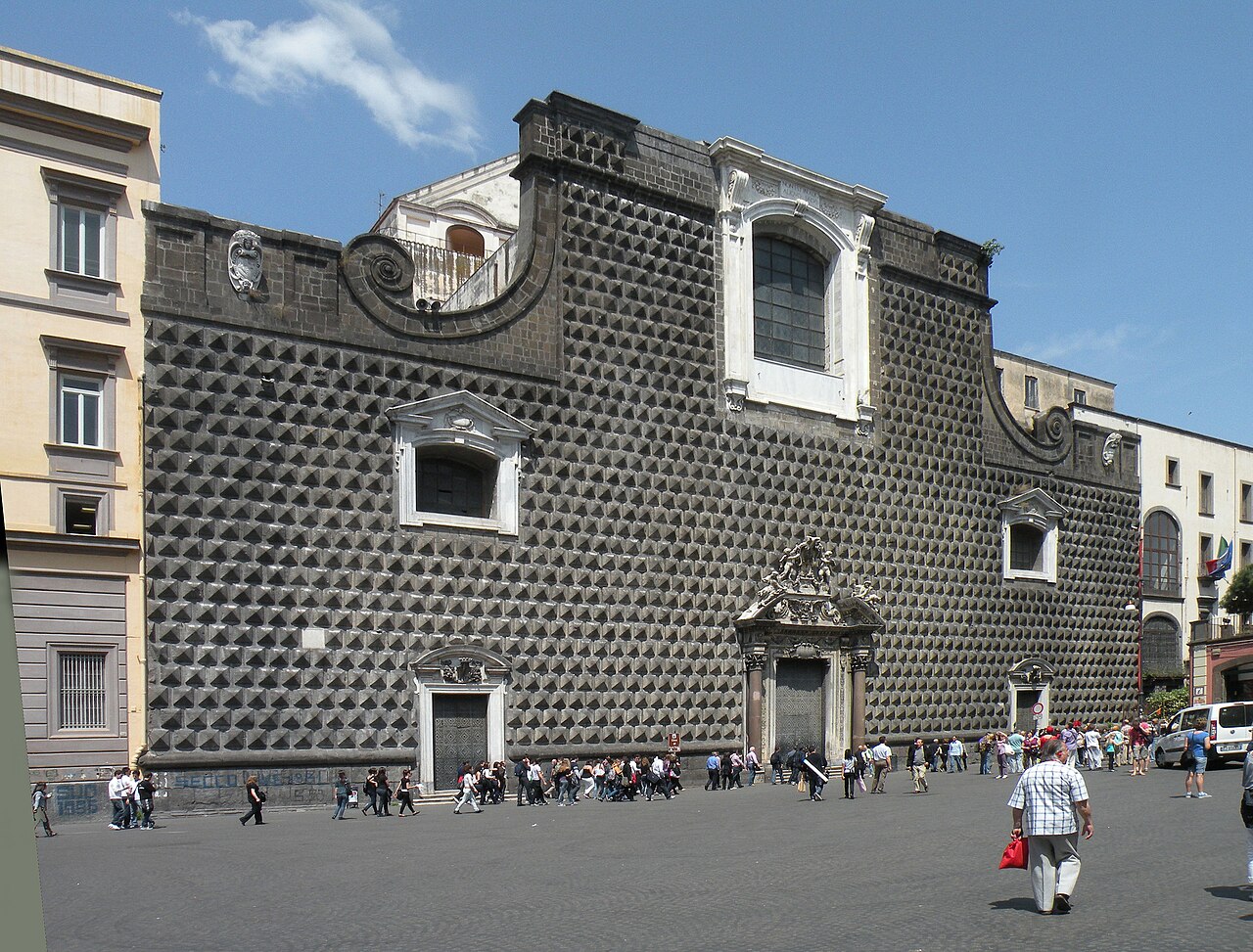
The facade of pyramid-cut piperno stone hides symbols carved into the blocks, while inside the Baroque bursts out in marble and in the memory of the physician Giuseppe Moscati.
 Sacred art
Chiostro di Santa Chiara
Napoli
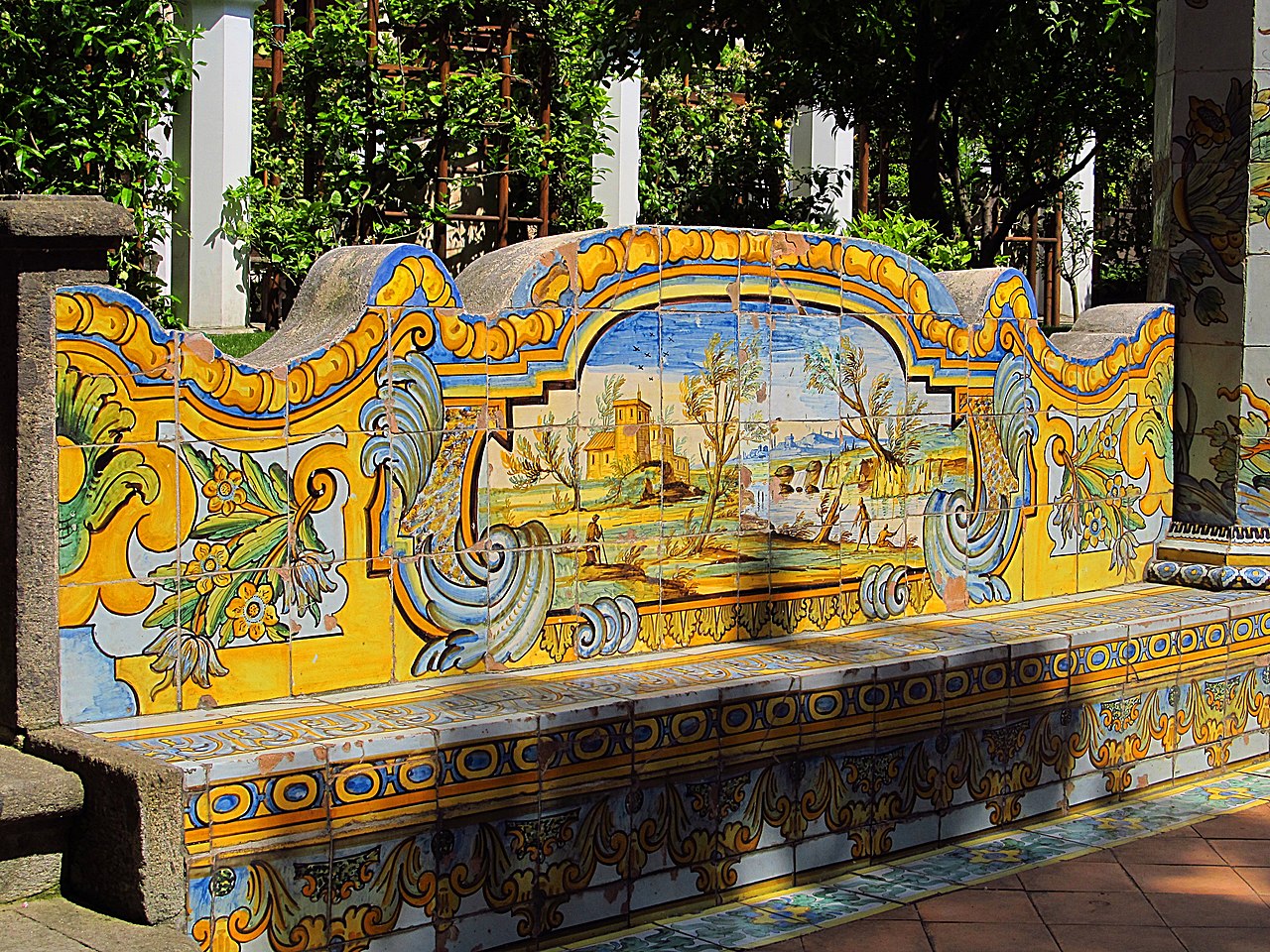
A garden of pillars clad in yellow and blue majolica, where lemon pergolas and eighteenth-century scenes painted on the tiles keep the noise of the city at bay.
 Sacred art
Santa Maria delle Anime del Purgatorio ad Arco
Via Tribunali 39
Bronze skulls stand guard at the entrance, and down in the hypogeum the cult of the anime pezzentelle (adopted souls of the dead) still leaves flowers and prayers beside abandoned crania.