Cattedrale dell'Annunziata di Vico
Vico Equense (NA)
Hidden gemSacred art

The story
Clinging to a spur of tufo (volcanic tuff) sheer above the sea, the Annunziata is the peninsula's only Gothic cathedral: inside, the half-light; outside, the Bay of Naples flung wide open.
The story
The former cathedral of the Santissima Annunziata, at Vico Equense, is one of the rare Gothic churches of the Sorrento coast, built in the early fourteenth century (between 1320 and 1330) on a rock spur sheer above the sea, ninety metres above the waves. It was willed after the ancient cathedral on the beach had proved exposed to the pirate raids.
What to see
The church facing sheer above the sea, with the interior of three naves on tuff pillars and the polygonal apse; the façade was remade in Baroque style in the eighteenth century. Inside, canvases and frescoes, including an Annunciation by Giuseppe Bonito of 1733. The position, suspended over the gulf, is spectacular.
Tips
The church is a place of worship facing the sea: check the opening hours on site or on the parish channels. You are in the old centre of Vico Equense; the belvedere beside it offers a view sheer above the gulf. To be combined with the Museo Mineralogico Campano, a short distance away.
Frequently asked questions
What is the cathedral of Vico Equense?
The former cathedral of the Santissima Annunziata, a rare Gothic church of the early fourteenth century built on a spur sheer above the sea, at Vico Equense.
Why was it built sheer above the sea?
Because the ancient cathedral on the beach was exposed to the pirate raids: the new one was built higher up, on a rock ninety metres above the sea.
What can you see inside?
A Gothic interior of three naves on tuff pillars, the polygonal apse, canvases and frescoes including an Annunciation by Giuseppe Bonito of 1733; the façade is of the eighteenth century.
More gems in Vico Equense
 ◆ Free beaches
Marina di Seiano
Vico Equense
The little harbour of Vico Equense beneath the tufo (volcanic tuff) walls, with the fishermen's boats, the bathing clubs on the rocks and a reef that shelters the water from the wind.
 Hiking
Monte Faito
Vico Equense (NA)
Above the gulf of Naples the Faito covers itself in cool beech woods, a destination of panoramic ridges where in summer you breathe mountain air a stone's throw from the sea.
 ◆ Museums
Museo Mineralogico Campano
Vico Equense (NA)
In a seventeenth-century former convent of Vico Equense, thousands of minerals from all over the world gathered by a single enthusiast, down to a fragment of graphene donated by a Nobel laureate.
- Nature
Monte Faito e il Molare
Vico Equense
Beech woods a step from the sea, where the Molare marks the highest summit of the Lattari and on clear days the eye travels from Ischia to the Cilento.
- ◆ Views & panoramas
Punta Scutolo e belvedere di Arola/Monte Comune
Vico Equense
The headland that divides two gulfs and, higher up, the plateau of Monte Comune above Arola, from where the eye takes in Naples and Salerno in a single sweep of the horizon.
More gems: Sacred art
 Sacred art
Cappella Sansevero (Cristo Velato)
Napoli (NA)
Beneath a veil of marble that still seems to breathe, Sanmartino's Cristo Velato rests in the chapel's half-light, and the whiteness of the stone deceives every eye.
 Sacred art
Duomo di Napoli
Napoli
Three times a year the city holds its breath as the blood of San Gennaro waits to liquefy, among Gothic naves and the gold of the chapel devoted to him.
 Sacred art
Cappella del Tesoro di San Gennaro
Napoli
Behind a bronze gate lie silverware, gems and the jewel-studded mitre of the saint: a treasure heaped up over centuries by the devotion of Naples.
 Sacred art
Chiesa del Gesù Nuovo
Napoli
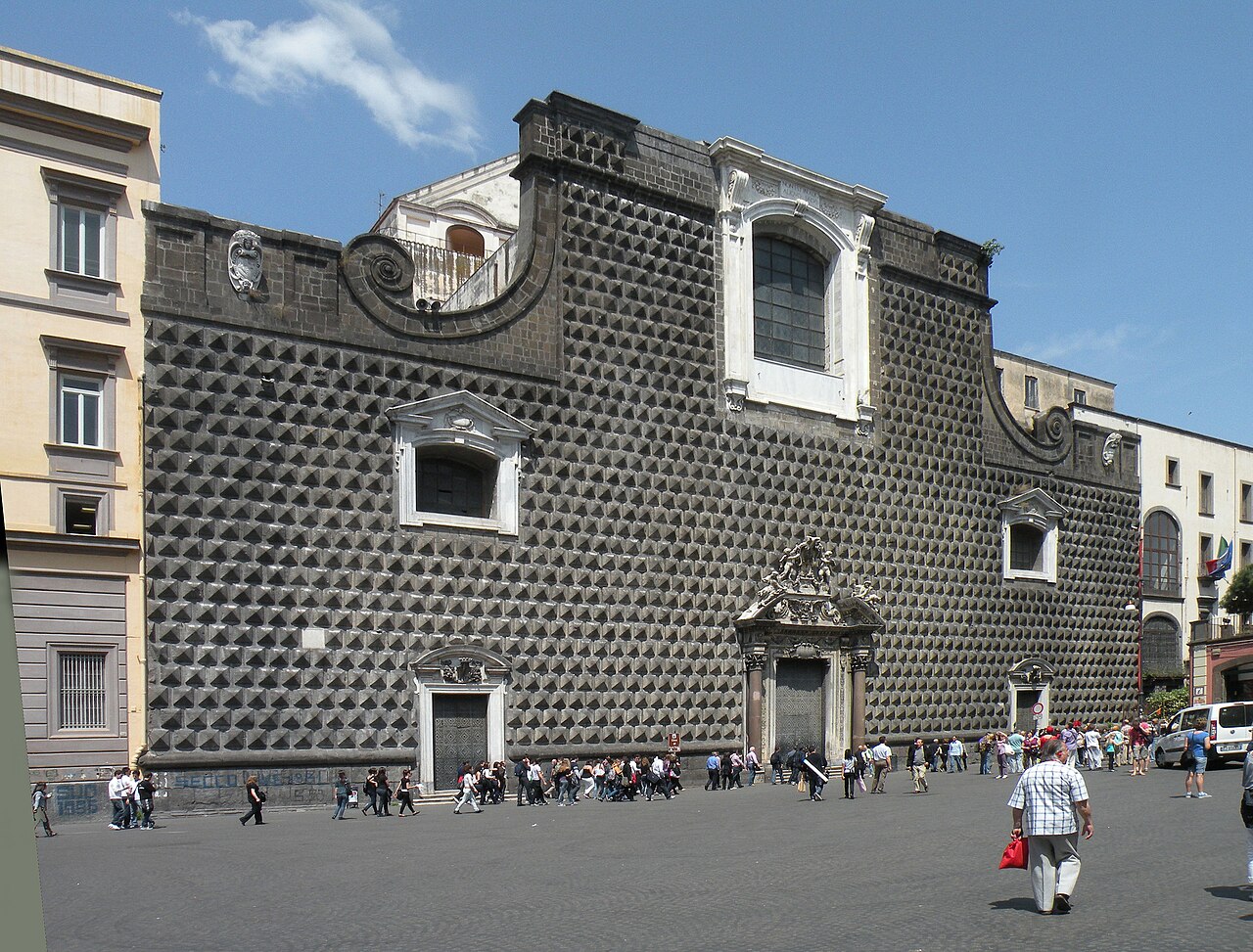
The facade of pyramid-cut piperno stone hides symbols carved into the blocks, while inside the Baroque bursts out in marble and in the memory of the physician Giuseppe Moscati.
 Sacred art
Chiostro di Santa Chiara
Napoli
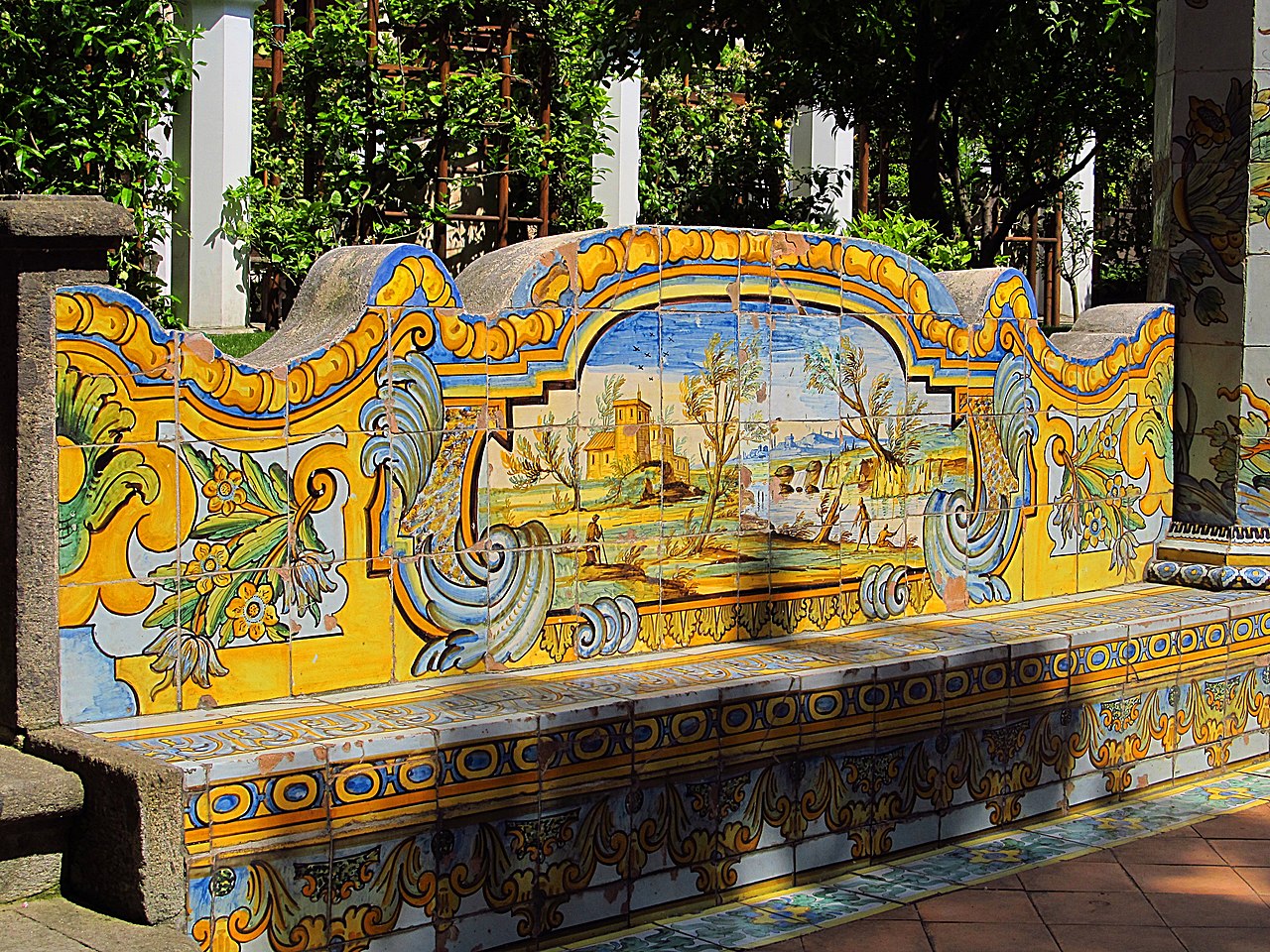
A garden of pillars clad in yellow and blue majolica, where lemon pergolas and eighteenth-century scenes painted on the tiles keep the noise of the city at bay.
 Sacred art
Santa Maria delle Anime del Purgatorio ad Arco
Via Tribunali 39
Bronze skulls stand guard at the entrance, and down in the hypogeum the cult of the anime pezzentelle (adopted souls of the dead) still leaves flowers and prayers beside abandoned crania.