Castello delle Pietre
Capua (CE)
Hidden gemCastles

The story
The Norman keep of 1062 is made out of the Anfiteatro Campano: limestone blocks torn from the gladiators' tiers and reassembled into a fortress. Capua devoured itself in order to survive.
Access
Visible free from outside; interiors not open
The story
The Castle of the Stones — castrum lapidum — is, with the Frederician towers, one of the two medieval castles of Capua to have come down to us in largely legible forms. It owes its name to the reuse of great blocks of limestone, taken by tradition from the Roman amphitheatre of Capua: the white base is almost all ancient spoil material, and in the masonry one recognises carved fragments and an epigraph.
What to see
The castle, today at the centre of the old centre of Capua along the route of the ancient Via Appia, is a massive L-shaped structure. Its interest lies precisely in the dialogue between the Middle Ages and antiquity: the stones of the Roman amphitheatre reused in the medieval walls.
Tips
It is in the heart of Capua, along via Andreozzi: it is visited together with the old centre and the other Capuan monuments. Check hours and visiting arrangements on the official channels (the asset belongs to the Ministry of Culture).
Frequently asked questions
Why is it called the Castle of the Stones?
For the reuse of great blocks of limestone, taken by tradition from the Roman amphitheatre of Capua, which form much of its structures.
What is the Castle of the Stones of Capua?
One of the two surviving medieval castles of Capua, largely legible in its original structures.
Where is the Castle of the Stones?
In the old centre of Capua, along via Andreozzi, in the province of Caserta.
More gems in Capua
 Museums
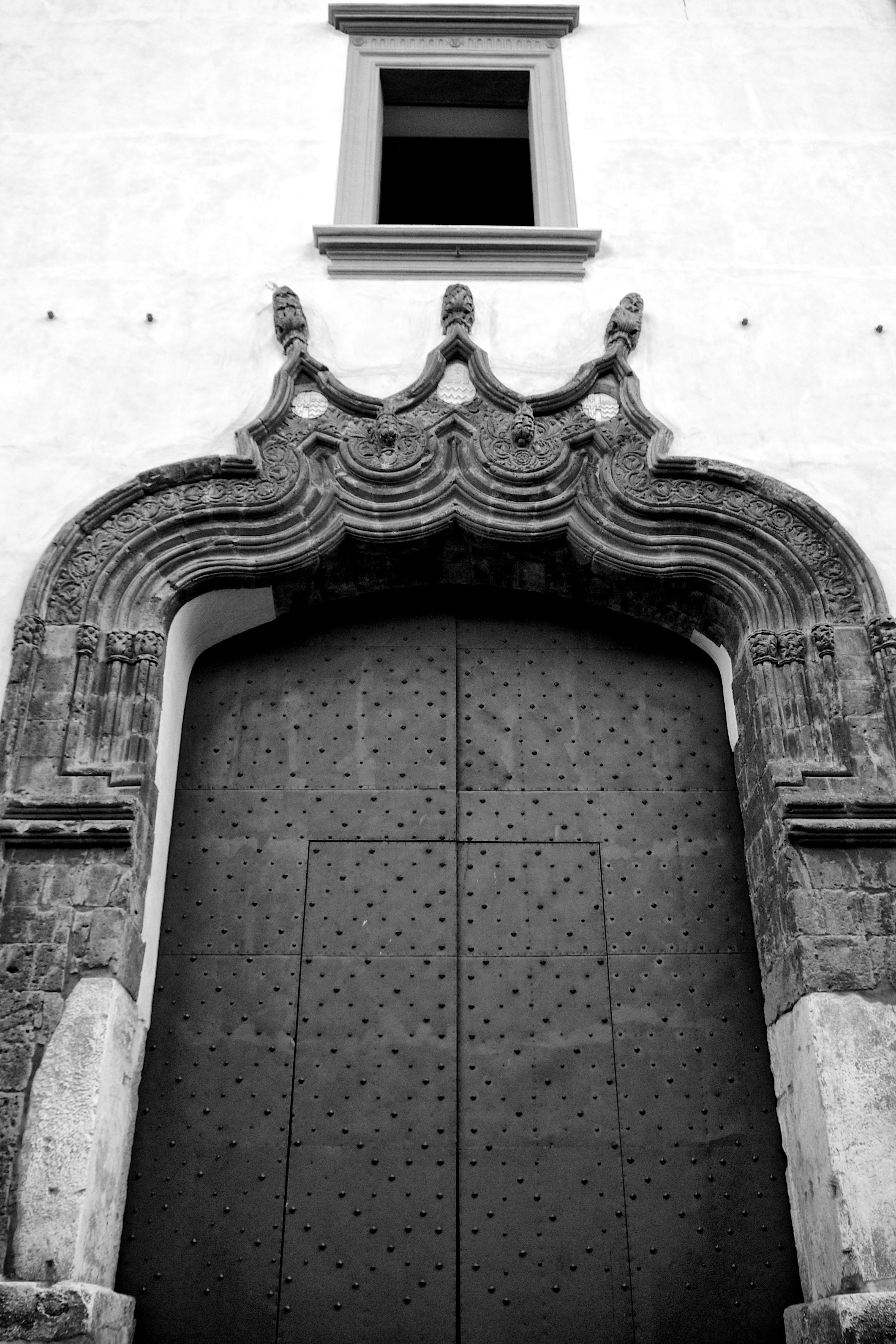
Museo Campano (Matres Matutae)
Capua (CE)
In Capua the Museo Campano lines up the Matres Matutae, dozens of tufo mothers seated with children in their laps: fertility deities worshipped here in ancient Capua.
 Sacred art
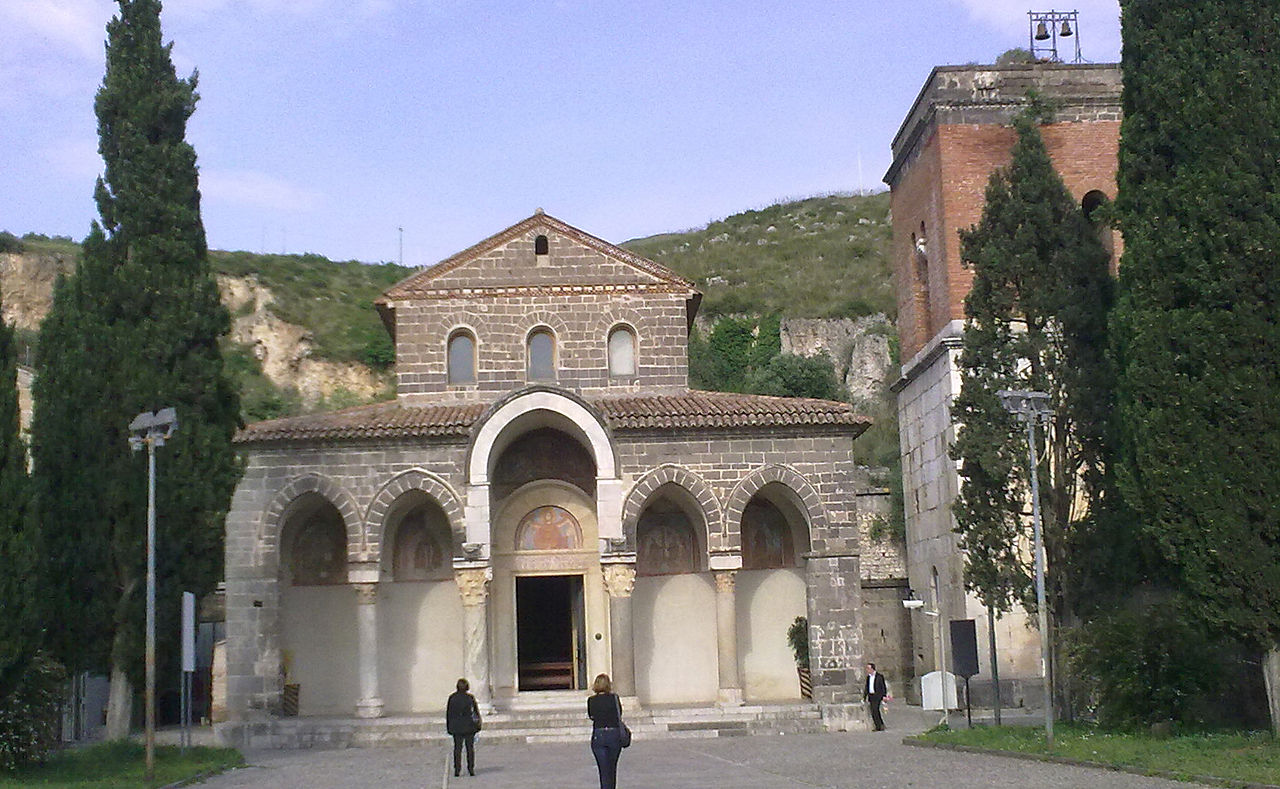
Abbazia di Sant'Angelo in Formis
Capua (CE)
On the slopes of Monte Tifata, above an ancient temple of Diana, the basilica preserves cycles of medieval frescoes that cover the walls like a painted story.
- ◆ Sacred art
Chiesa di San Michele a Corte e cripta longobarda
Capua (CE)
Palatine chapel of the Lombard princes, 10th century: you enter beneath a triple window of palm-leaf capitals and go down into a crypt that turns around a single squat column, where frescoes that resurfaced only in 1876 still survive.
More gems: Castles
 ◆ Castles
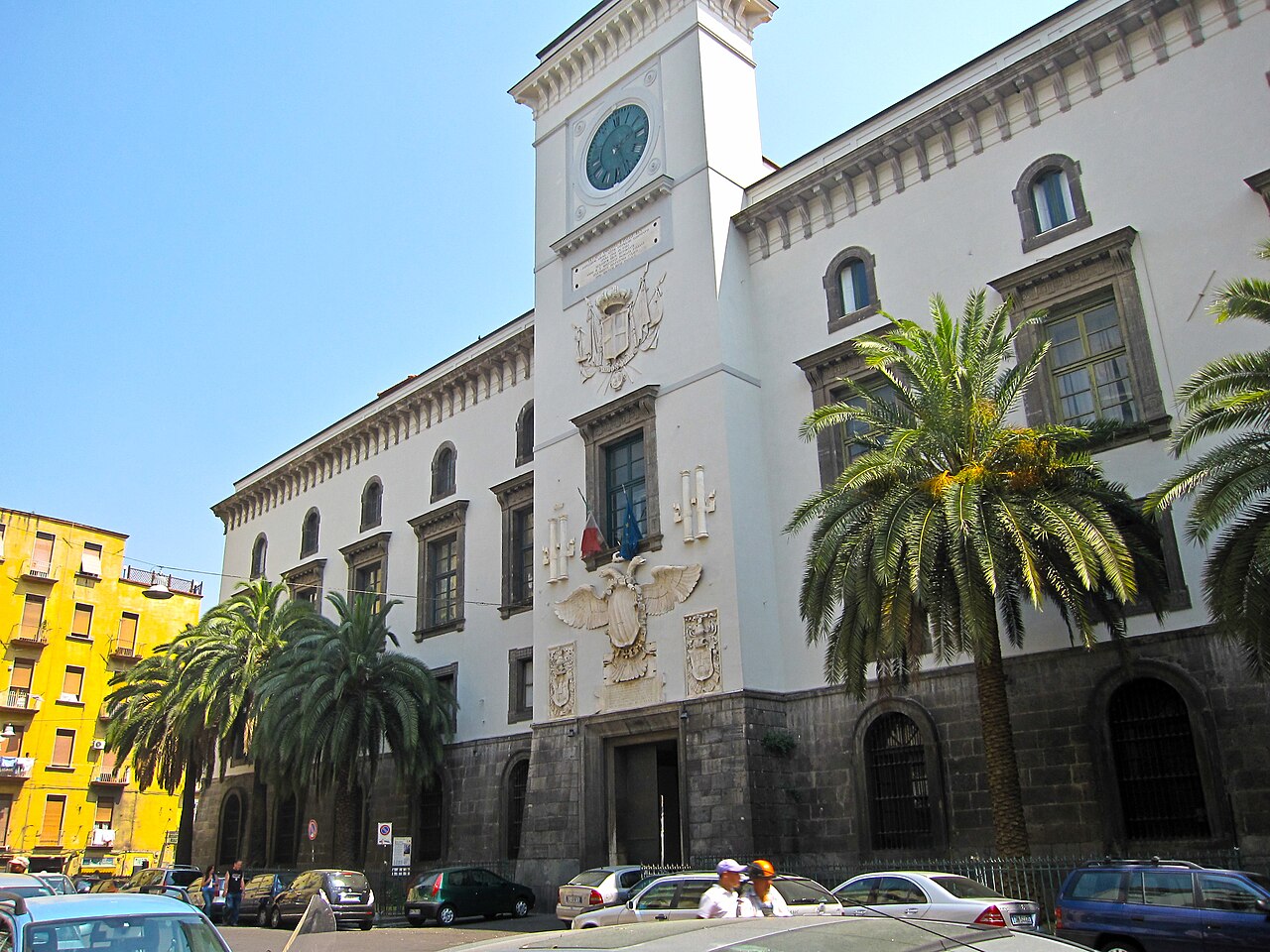
Castel Capuano
zona Garibaldi
An old Norman castle that for four centuries served as the courthouse of Naples: here justice held session in frescoed halls, in the shadow of nearby Porta Capuana.
 ◆ Castles
Palazzo Donn'Anna
Posillipo
The unfinished seventeenth-century palace juts sheer over the water, dark and labyrinthine: through its empty rooms legend has the shadow of Donn'Anna still wandering.
 Castles
Casina Vanvitelliana
Lago Fusaro, Bacoli
An octagonal pavilion that seems to float on Lago Fusaro, a Bourbon hunting lodge reached by a little bridge, among reflections and morning mists.
 ◆ Castles
Palazzo d'Avalos (ex carcere)
Terra Murata
First the palace of the d'Avalos family, then a prison until the late twentieth century: the empty cells command Terra Murata, suspended between the memory of the inmates and the silence that lives there now.
 Castles
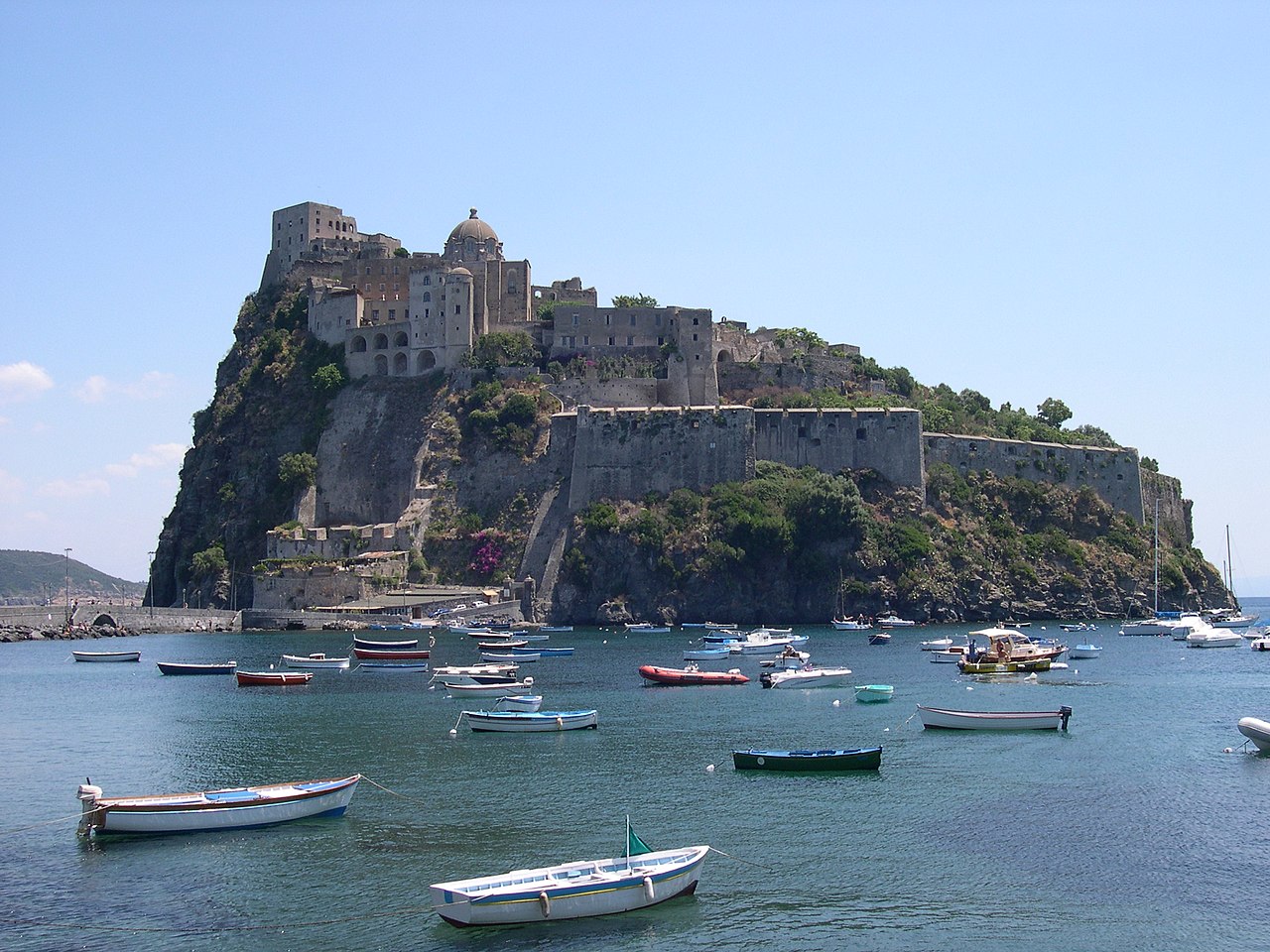
Castello Aragonese
Ischia Ponte
A fortress on a rocky islet tied to Ischia by a stone causeway, layered with millennia of history, the gaze ranging over the bay between walls, courtyards and gardens.
- ◆ Castles
Palazzo Sansevero
P.za San Domenico Maggiore
On the corner of piazza San Domenico the palace of the princes of Sangro still carries the echo of the night when Gesualdo surprised and killed Maria d'Avalos and her lover.